


Table of Contents
A Walmart Buy Box strategy built on price cuts alone is how brands wreck perfectly good margins. Sellers who treat Walmart like a race to the lowest price usually get exactly what they asked for. Lower profit, weaker price integrity, and zero protection when delivery speed or seller performance slips.
A large share of Walmart Marketplace sales flows through the Buy Box. Lose that placement and you lose the default purchase path. That matters. It does not justify panic discounting.
Win rate on Walmart comes from offer quality, not cheapness alone. Price still leads, but Walmart also rewards sellers that ship fast, stay in stock, and keep operational metrics clean. Brands that ignore those factors end up paying for Buy Box share they could have earned through better execution.
That is the mistake. Teams copy an Amazon-first playbook, slash prices, and call it strategy. Walmart is stricter about total offer competitiveness and seller reliability. The win comes from becoming the most eligible seller while protecting margin with disciplined pricing and tight MAP enforcement.
If your Buy Box share is falling, stop reacting one price drop at a time. Fix fulfillment. Fix scorecard health. Control unauthorized sellers before they drag the market below profitable levels.
Price matters. Profit discipline matters more.
If your Walmart Buy Box share is falling and price cuts keep eating margin, get a Profit ROI Forecast to see where your real leak is before you touch another price.
There is no universal “good.” A winning Walmart Buy Box strategy combines a competitive landed price with fast fulfillment, strong seller scorecard health, stable inventory, and clean operational execution. Walmart weighs the total offer, not just sticker price, so brands that protect margin through fulfillment discipline and MAP control hold Buy Box share longer than those that race to the lowest price.
Walmart Buy Box: The default purchase option on a Walmart product listing. When multiple sellers offer the same item, Walmart awards the Buy Box to the seller with the strongest combination of price, fulfillment speed, inventory stability, and account performance. Winning it captures the majority of sales for that SKU.
At a Glance
-
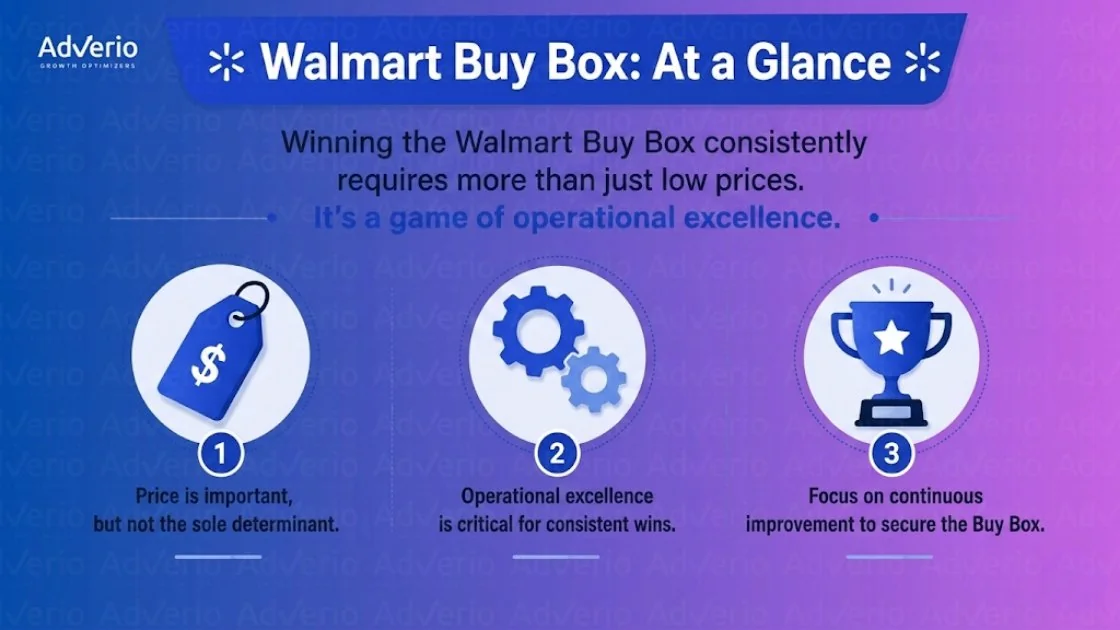
Price matters, but landed cost matters more: Walmart evaluates the full offer, not just the item price. Shipping charges can knock you out even when your sticker price looks competitive.
-
Fulfillment is your best margin-defense lever: Fast delivery and stable execution can keep you competitive without constant price cuts.
-
Seller health is not optional: Weak operational metrics can make a cheap offer irrelevant.
-
Inventory stability protects eligibility: If stock is unreliable, Buy Box ownership gets harder to hold.
-
Unauthorized sellers are a margin leak: A real Walmart Marketplace profit strategy includes pricing control, not just pricing reaction.
How Walmart’s Buy Box Algorithm Differs From Amazon’s
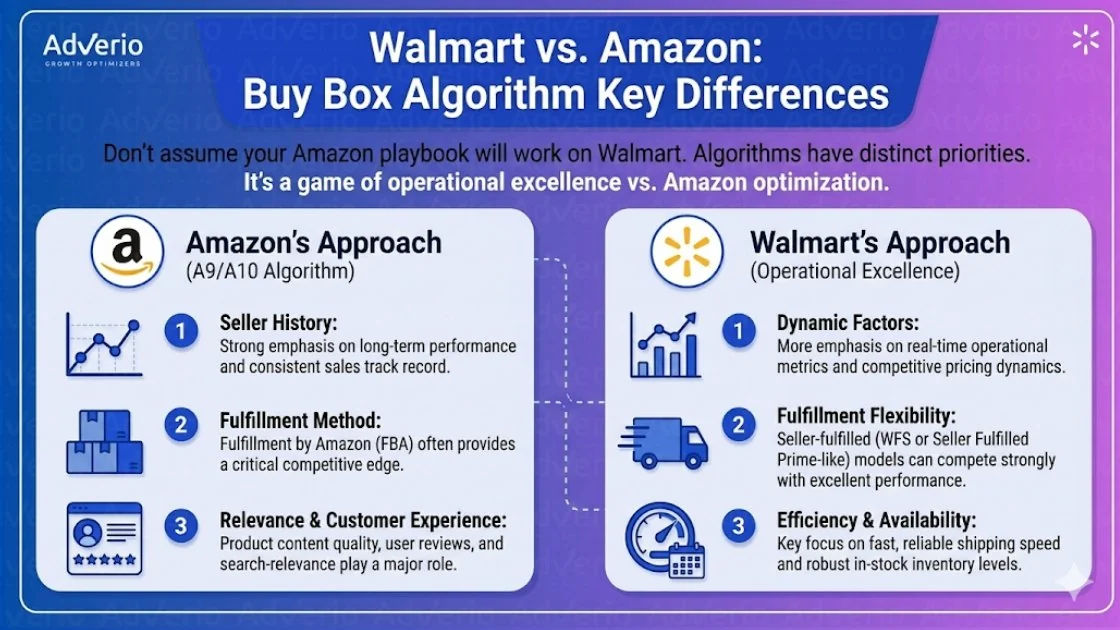
Brands lose money on Walmart when they assume the Amazon playbook will carry over.
Amazon gives sellers more room to win on brand momentum, listing history, and broader account strength. Walmart is harsher and more immediate. If your total offer stops looking competitive right now, the Buy Box moves. That pushes brands into a bad habit: cutting price first and asking margin questions later.
That reaction is lazy, and it usually backfires.
Walmart cares more about present-tense offer quality than marketplace aura. The winner needs to look cheap enough, fast enough, and reliable enough to convert without friction. That is why fulfillment discipline and seller health matter so much on Walmart. They give you another way to stay eligible without racing to the bottom on price.
The practical difference is simple. Amazon often gives strong brands more room to recover from small pricing gaps. Walmart usually does not. If your shipping cost is uncompetitive, your delivery promise slips, or your operational metrics weaken, your offer gets exposed fast.
That is also why cross-channel pricing mistakes hurt more here. If Amazon drags your market price down, Walmart can turn that pressure into a margin loss
If Amazon drags your market price down, Walmart can turn that pressure into margin loss unless you have a plan for a cross-channel Amazon pricing strategy.
Use separate rules for each marketplace. On Walmart, the goal is not to be the cheapest seller in the catalog. The goal is to be the most eligible profitable seller. If you want the Amazon side of the comparison, read Adverio’s guide to winning the Buy Box.
The Five Factors That Determine Walmart Buy Box
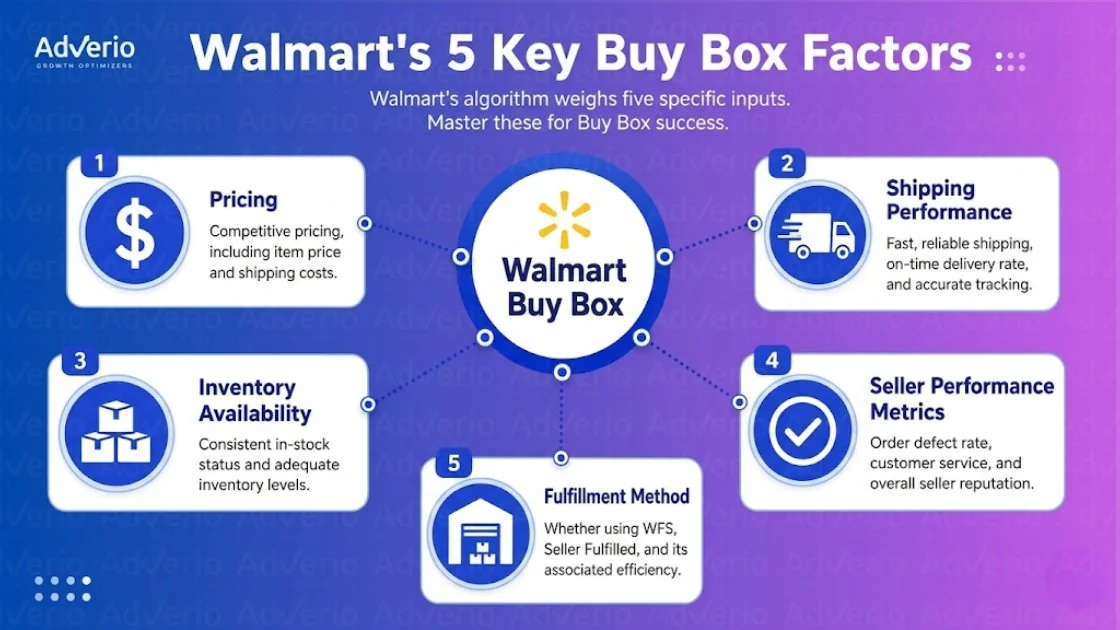
Sellers lose the Walmart Buy Box for predictable reasons. The mistake is treating every loss like a pricing problem.
Price leads the decision, but Walmart does not hand the Buy Box to the lowest sticker price by default. It favors the offer with the strongest total economics for the customer and the lowest execution risk for the marketplace. That distinction matters because it gives disciplined brands room to protect margin while weaker sellers race each other downward.
Factor 1 Price competitiveness
Start with the landed price. That is the number Walmart compares, and that is the number too many teams ignore.
Item price alone is a vanity metric. Shipping fees, prep costs, packaging, and marketplace fees decide whether a sale is profitable and whether your offer still looks competitive. If your repricer watches only the item price, it will cut margin faster than it wins share.
Set a real floor. The right question is simple. What is the lowest profitable landed price that keeps you eligible?
Factor 2: Fulfillment method and speed
Fulfillment gives you pricing room.
Walmart rewards offers that ship fast, arrive on time, and create fewer customer issues. WFS often helps. A well-run seller-fulfilled setup can also compete if delivery promises are tight and execution stays clean. If your operation is faster and more reliable than the seller undercutting you, you do not need to chase every small price drop.
Fast shipping is a Buy Box input, not a nice extra.
Factor 3 Seller scorecard performance
A weak scorecard makes every pricing decision worse.
Late shipments, cancellations, poor tracking, and avoidable service issues tell Walmart your offer is risky. Once your account looks unstable, small price cuts will not solve the underlying problem. This is where a full marketplace account management system protects you. Operations and marketplace teams need the same priorities, the same alerts, and the same accountability.
Fix scorecard issues first. Then decide whether price needs to move.
Factor 4 Item availability and in-stock rate
Inventory instability kills Buy Box share.
Walmart wants a seller that can stay available, especially on core SKUs that drive repeat demand. If your replenishment swings from overstock to stockout, the algorithm has no reason to trust you with consistent placement. Then you pay twice. You lose the Buy Box during the outage, and you come back fighting to recover momentum.
Plenty of brands obsess over repricing while their inventory discipline stays sloppy. That is backwards.
Factor 5 Shipping price
Shipping cost can erase an otherwise competitive offer.
If your item price looks sharp but the customer pays more at checkout, you still lose. Walmart evaluates the total customer cost, not the story your team tells itself about base price. Free shipping is often the cleanest way to stay competitive, but the broader point is cost structure. Reduce shipping friction before you cut product margin.
If your team is still carrying over marketplace habits from Amazon that do not translate cleanly here, start to fix Amazon habits for Walmart. Walmart punishes lazy channel copying.
| Buy Box factor | What to watch | Margin-safe response |
|---|---|---|
| Price | Total landed offer | Reprice with hard margin floors |
| Fulfillment | Delivery speed and reliability | Improve speed before lowering price |
| Scorecard | Account health and service execution | Fix operational failures fast |
| Availability | In-stock consistency | Protect hero SKU inventory |
| Shipping | Total customer cost | Reduce shipping friction before discounting |
How to Check Your Walmart Buy Box Percentage
You cannot manage Buy Box performance from memory or gut feel.
Use Seller Center and check it directly:
-
Go to Reports.
-
Open the Performance section.
-
Select the Buy Box report.
-
Download the report at the item level.
-
Sort for products losing share and investigate the cause.
Do not wait for topline sales declines to tell you something broke. By then, you are already behind.
Use the report like a triage tool:
-
Check price gap first: Compare your landed offer to the winning offer.
-
Review fulfillment next: Confirm delivery promise and shipping setup.
-
Audit stock health: Make sure the SKU is stable and available.
The Margin-Safe Walmart Buy Box Strategy
A profitable Walmart Buy Box strategy is built on margin discipline, not desperate repricing.
Set a price floor before you touch the Buy Box. Base it on MAP where it applies and on your contribution economics. Then define the upper end of your workable range by watching where Buy Box share starts to fade. That range is where smart operators compete. Anything below the floor is a self-inflicted margin loss.
Eligibility matters as much as price. Walmart can sideline offers that trigger unfair pricing concerns, and eligibility may not return immediately after you change price, as noted earlier. That means sloppy repricing can cost you twice. You lose margin first, then you lose visibility.
Protect the parts of the offer Walmart rewards besides raw price. Keep inventory stable. Tighten delivery promises. Fix late shipment risk before it touches your scorecard. A seller with strong fulfillment and clean operational signals can hold more Buy Box share without racing every underpriced offer to the bottom.
One rule matters here: fix operations before you cut price.
Advertising supports this strategy. It does not rescue a weak offer. Once pricing discipline, fulfillment, and seller health are in order, use ads to convert the traffic you already deserve. If your paid setup needs work, use this Walmart Sponsored Products guide to tighten the demand side without using discounts as a crutch.
Want a profit-first read on your current Walmart strategy? Get a Profit ROI Forecast and see exactly where margin is leaking before the next repricing cycle.
How Unauthorised Sellers Suppress Your Buy Box
Unauthorized sellers do not care about your margin structure. That is why they wreck it.
When they list your SKU below the range your brand can support, they drag the market down and force bad choices. If you chase them, you train Walmart to expect lower pricing. If you ignore them, they can keep stealing the most visible purchase path on the listing.
The right response is defensive, not emotional:
-
Identify the seller: Use your Buy Box and offer-level reporting to find who is undercutting.
-
Hold the floor: Do not price below the level your business can support just to win one cycle.
-
Escalate enforcement: Treat this as a channel control problem, not a merchandising problem.
This is the same discipline required in broader MAP violations and pricing enforcement. Different marketplace. Same mistake when brands let unauthorized resellers write the pricing strategy for them.
How Adverio Manages Walmart Buy Box
Brands fail at Walmart Buy Box strategy when channel decisions are split across teams that optimize for different goals. Ecommerce wants share. Operations wants stability. Media wants scale. Finance gets stuck cleaning up the margin loss.
Adverio runs Buy Box management as one system. We monitor ownership daily, tie pricing decisions to margin thresholds, flag fulfillment and inventory issues before they cost eligibility, and coordinate enforcement when unauthorized sellers distort the market. The goal is simple. Win the Buy Box at a price your business can keep.
We also control ad spend with the same discipline. If a listing is weak on price, fulfillment, or seller health, we do not force more traffic into it and hope for a better result. We fix the offer first. Then we scale demand.
If you want us to run your Walmart PPC management, that work sits inside the same profit-first operating model.
Expect a direct assessment, clear priorities, and no agency theater.
Frequently Asked Questions
How long does it take to recover with a new Walmart Buy Box strategy?
It depends on why you lost it. If the issue is simple price competitiveness and your offer becomes competitive again, recovery can happen quickly. If the listing was flagged for pricing policy reasons, there can be a delay before eligibility returns. If inventory or fulfillment reliability caused the loss, recovery usually depends on proving stable execution again.
Can I win the Buy Box without WFS?
Yes. But your seller-fulfilled operation has to be excellent. You need fast delivery, reliable execution, healthy inventory, and strong account performance. WFS is not mandatory. It is often a practical advantage.
What is Walmart Buy Box suppression?
Suppression is when your offer becomes ineligible or the listing loses a normal purchase path because Walmart does not view the pricing or offer quality as acceptable. One common trigger is unfair pricing enforcement. That hidden ineligibility state catches a lot of brands because they keep repricing without realizing the listing is already suppressed.
Does advertising help win the Walmart Buy Box?
Indirectly, yes. Ads can increase traffic and sales velocity, which can strengthen listing performance. But ads will not save a weak offer. If your price, shipping, inventory, or account health are off, media spend just pours more money into a broken listing.
What’s the biggest Buy Box mistake brands make?
They treat price as the whole strategy. It isn’t. Price gets attention, but fulfillment, inventory stability, shipping cost, and seller performance determine whether that price can win profitably and stay eligible.
Read Next
If you’re still treating Buy Box performance like a repricing contest, fix that first. Cheap wins are easy to get and expensive to keep. The better move is to improve the parts of the offer stack that protect margin and keep you eligible longer.
Start with conversion and compliance. Walmart listing optimization helps clean up the product page signals that support stronger performance once traffic hits the listing.
Then audit the operating model behind your marketplace channels. Split ownership, disconnected teams, and channel conflict usually create the same outcome. Slower execution, weaker pricing control, and lower profitability.
References
Adverio helps established brands stop bleeding margin across Amazon, Walmart, and Target. If your team is stuck between flat sales, reseller chaos, and fragmented marketplace execution, Adverio gives you a profit-first growth plan built for operators, not spectators. Book your ROI Forecast and get a clear view of what to fix, what to scale, and where your marketplace profit is leaking.