


Amazon retargeting ads let you reclaim high-intent shoppers who already raised their hand without paying cold-traffic prices. It’s a strategy that puts your brand back in front of high-intent buyers, reminding them why they were interested and pulling them back to finish the purchase. It’s also significantly cheaper and far more incremental than chasing net-new demand before your funnel is ready.
Amazon retargeting ads re-engage shoppers who viewed your PDP, added to cart, or browsed a related category but did not purchase. Retargeting is the highest-ROI Amazon DSP use case because it targets shoppers with demonstrated purchase intent who are still in the decision window.
Retargeting isn’t a nice-to-have channel. It’s the revenue recovery system for traffic you already paid to acquire. The brands that run it profitably aren’t spending more, they’re closing the loop between first-touch ad spend and audiences that already signaled intent but didn’t convert.
The diagnostic maps show that the loop is broken in your account before recommending Sponsored Display, DSP, or both.
We audit your retargeting architecture and model the incremental revenue you’re leaving unrealized. No pitch deck. No commitment.
What Are Amazon Retargeting Ads?
Table of Contents
Picture this: a shopper adds your best-selling product to their cart, gets distracted, and closes the app. Just like that, the sale is gone. This scenario plays out millions of times a day, representing a massive leak in your sales funnel.
Amazon retargeting ads—also known as remarketing—are your secret weapon to bring those shoppers back. This isn’t a complex strategy reserved for mega-brands with huge budgets; it’s a critical profit driver for any brand tired of hitting a growth ceiling.
The Value: Warm Traffic, Low CAC, Higher Conversion
The concept is dead simple: it’s easier and cheaper to convert someone who already knows you than to convince a stranger. By focusing on this “warm” traffic, you accomplish a few key things:
-
Lower Customer Acquisition Costs (CAC): You aren’t paying to introduce your brand from the ground up. You’re reminding an already-interested shopper to finish what they started.
-
Higher Conversion Rates: These shoppers have already signaled interest. A well-timed ad is the final nudge they need to buy, leading to much higher conversion rates than cold traffic.
-
Increased Customer Lifetime Value (cLTV): Retargeting is also a goldmine for re-engaging past buyers with new products, turning one-off purchasers into loyal, repeat customers.
The blunt truth: most first-time visitors won’t convert — and many brands mistake demand capture for growth. Retargeting isn’t a “nice-to-have.” It’s how you reclaim incremental revenue already earned but not yet realized.
Clarify: Sponsored Display, DSP, and Off-Amazon Tools
Amazon gives you a couple of powerful ways to run these campaigns. The two main engines are Sponsored Display and the Amazon Demand-Side Platform (DSP). While they both aim to do the same thing, they’re built for different needs and scales. To really get a handle on them, a solid understanding of Amazon display advertising is crucial.
Sponsored Display is Amazon’s self-serve retargeting engine, designed to re-engage product viewers and category browsers inside the Amazon ecosystem. You can access it right from the advertising console.
Amazon DSP is the governance layer — built for brands that need audience control, frequency discipline, and on- and off-Amazon reach tied to real incrementality, deeper audience segmentation, and the ability to reach shoppers both on and off Amazon.
Ultimately, by using these tools, you stop letting qualified leads walk away. You create a smart, persistent presence that recaptures otherwise lost sales and turns fleeting interest into measurable, profitable growth.
How Retargeting Works on Amazon (and Off Amazon)
Amazon gives you two core engines for your Amazon retargeting ads, each built for different stages of brand growth and strategic goals. Picking the right one isn’t just a tactical choice; it’s a foundational one that dictates your budget, reach, and control. Misaligning your tool with your objectives is a fast track to wasted ad spend.
Think of it this way: Sponsored Display is the agile speedboat, while Amazon DSP is the powerful aircraft carrier. One gets you moving fast and is easy to steer, while the other offers massive firepower and global reach.
Your ad can be shown to a shopper who:
-
Viewed your product but didn’t buy.
-
Searched for related ASINs or categories.
-
Abandoned their cart with your product in it.
-
Bought from you before (perfect for loyalty and repeat purchase campaigns).
This process can happen on Amazon through Sponsored Display and DSP, or off Amazon by driving traffic back to your listings.
Sponsored Display Retargeting (Self-Serve for Most Brands)
For most brands, Sponsored Display is the ideal entry point into Amazon retargeting. It’s a self-serve platform available right in the advertising console, designed for quick setup and immediate impact. You don’t need a massive budget or a dedicated ad ops team to get started.
With Sponsored Display retargeting (or remarketing), you can easily target shoppers based on:
-
Views: Shoppers who have viewed your product pages but didn’t buy.
-
Searches: Shoppers who searched for keywords relevant to your products.
-
Purchase history: Shoppers who previously bought your products.
It’s perfect for quickly launching cart recovery campaigns, testing strategies with smaller budgets, and re-engaging shoppers still browsing on Amazon. For a deeper look, our guide on Amazon Sponsored Display Ads provides a complete breakdown.
Sponsored Display is where most brands start. The mistake is treating it as the destination. If your Sponsored Display retargeting is running but you can’t see incrementality by audience segment — whether you’re actually recovering revenue that wouldn’t have converted without the retargeting touchpoint, that’s the gap that costs the most at scale.
We model your Sponsored Display incrementality and show you whether retargeting spend is recovering revenue or funding conversions that would have happened anyway.
Amazon DSP Retargeting (More Advanced, More Powerful)
Amazon DSP (Demand-Side Platform) is the heavy hitter, the more advanced option for brands ready to scale aggressively through governed Amazon DSP management services. It demands a larger budget and a higher level of expertise, which is why it’s often managed by a strategic partner like Adverio.
DSP unlocks a new level of targeting precision and reach. Unlike Sponsored Display, which is largely confined to Amazon, DSP lets you run Amazon DSP retargeting campaigns across a massive network, including:
-
Amazon.com and its affiliated apps
-
Twitch and Fire TV
-
IMDb
-
Thousands of third-party websites and apps in Amazon’s publisher network
This expansive reach makes DSP ideal for:
-
DTC brands driving external traffic to Amazon.
-
Big-budget product launches needing maximum visibility.
-
High AOV SKUs where every conversion is highly valuable.
The financial upside is undeniable. According to industry benchmarks,well-governed Amazon DSP retargeting often outperforms prospecting on ROAS because it captures previously unconverted demand, not because it creates demand from scratch. For every dollar spent, brands see between $4 and $8 in return—a stark contrast to the 2:1 to 3:1 ROAS often seen with top-of-funnel prospecting. This efficiency is why sophisticated sellers are reallocating budgets to recapture warm leads, a strategy detailed in this Amazon DSP guide from novadata.io.
DSP retargeting works when the conversion floor underneath it can support the CPM cost. Brands that move to DSP before their Sponsored Display is profitable, before their PDP conversion rate is benchmarked, and before their frequency logic is set, end up paying programmatic rates to send audiences back to listings that weren’t ready to close them in the first place.
We model DSP readiness against your current conversion efficiency before recommending a single DSP retargeting campaign.
We run the DSP readiness diagnostic in the first call. If you’re ready, we build the retargeting architecture. If you’re not, we tell you what to fix first.
Amazon retargeting is the practice of serving ads to shoppers who already looked at your product or brand on Amazon but did not buy. It runs through Amazon DSP, using first-party behavioral data to find those shoppers on Amazon and across the open web. This is not the same as retargeting on Meta or Google. The audience signal is stronger because it is built on actual purchase behavior, not page views or cookie trails. These are people who searched, clicked, compared, and walked away. Getting back in front of them at the right moment is the highest-ROI use of DSP spend most brands have access to.
Retargeting Use Cases That Actually Move the Needle
Theory is great, but it doesn’t move the needle. Let’s get into a battle-tested playbook of high-impact retargeting plays that solve real brand challenges. Each play targets a different slice of your audience, from shoppers with cold feet to loyal customers ready for their next purchase.
This decision tree shows the first strategic choice: picking the right tool for your budget and goals. This decision underpins every play that follows.
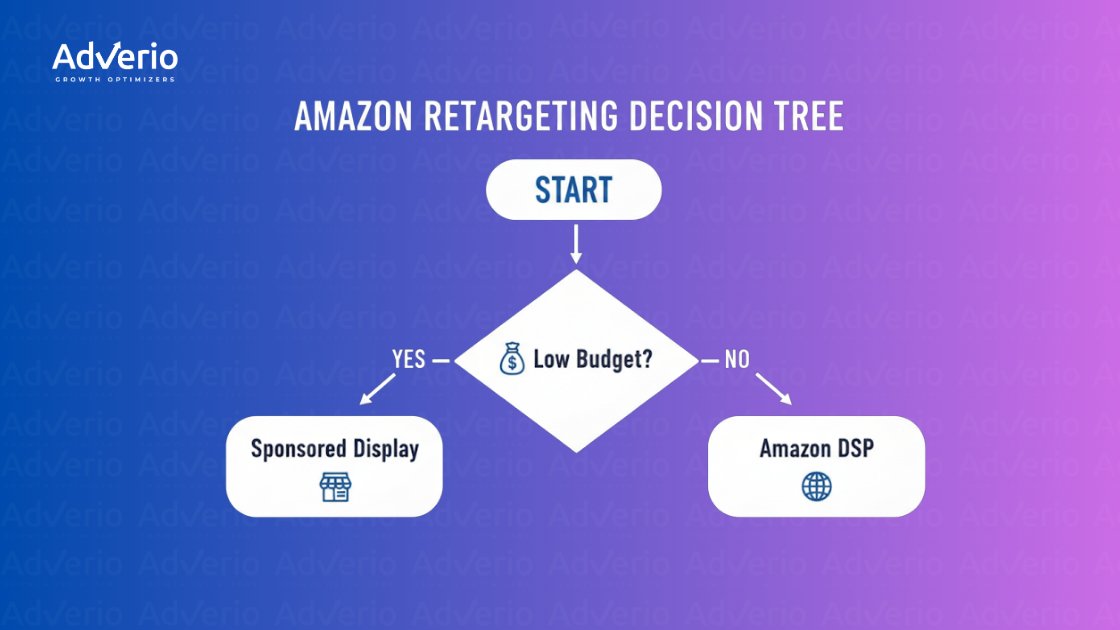
Here are the Amazon retargeting strategy use cases that will drive growth.
| Use Case | How to Execute |
|---|---|
| Abandoned cart | Use Sponsored Display “Views Remarketing” with a strict 7-day lookback to capture peak intent before decay. |
| ASIN views with no conversion | Retarget product viewers on and off Amazon using Sponsored Display or DSP to stay top-of-mind. |
| High-margin SKU upsells | Use DSP to target past purchasers of an entry-level ASIN with ads for a premium version. |
| Repeat purchase campaigns | Target past buyers of consumable products right before they’re due to run out, boosting Subscribe & Save. |
| Win back lapsed customers | Use DSP to segment customers inactive for 180–365 days and test incentive vs message-only reactivation. |
These strategies directly address shopper hesitation and customer lifecycle stages. For brands looking to go deeper, there are plenty of proven strategies to reduce cart abandonment that perfectly complement these ad tactics. Re-engaging past customers and optimizing the journey is also a core part of any strong Amazon conversion rate optimization strategy.
How to Set Up Amazon Retargeting Ads (Step-by-Step)
Let’s swap theory for action. Setting up your first Amazon retargeting ads campaign is less intimidating than it sounds, especially with Sponsored Display. You can get an effective campaign live in minutes to start winning back shoppers who slipped away.
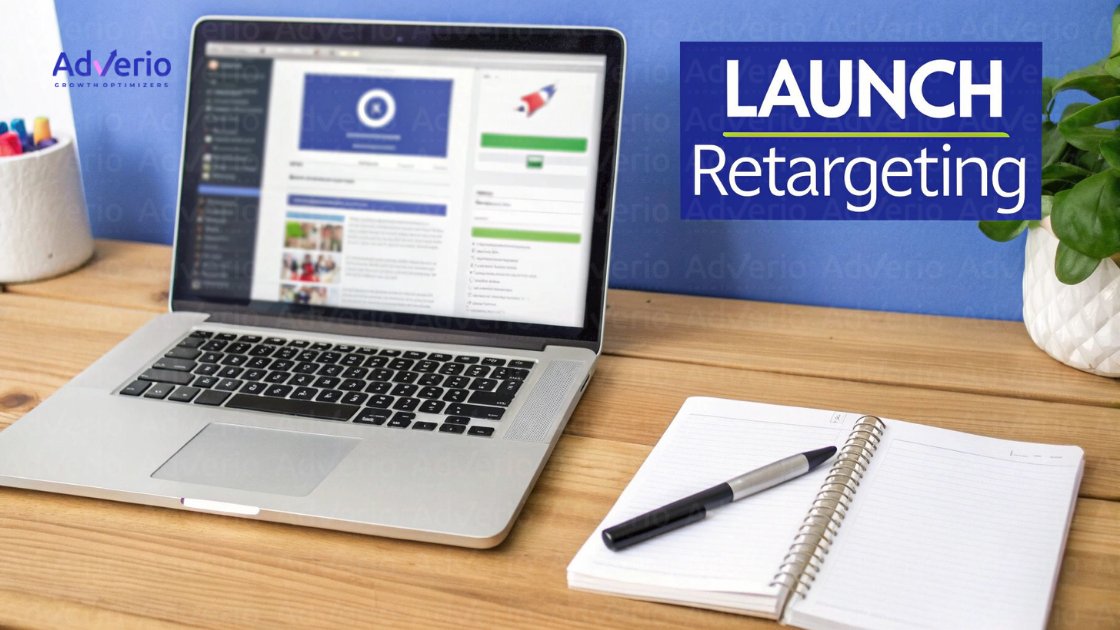
While DSP setup options are best handled by an agency, this Sponsored Display walk-through will get you started.
Your Sponsored Display Campaign Walkthrough
-
Head to Campaign Manager: In Seller Central, go to the Advertising Console. Click “Create campaign” and choose “Sponsored Display.”
-
Define Campaign Settings: Give your campaign a clear name (e.g., “Retargeting – Product Viewers – 7 Day”). Set a daily budget. Start with a controlled test budget ($20–$30/day) to establish clean performance signals before scaling.
-
Choose Your Targeting Strategy: Select “Audiences” as your targeting option. For your first run, choose “Views remarketing” to target shoppers who checked out your product pages but didn’t buy.
-
Select Audience & Lookback Window: Stick with “Advertised products” to focus on people who have already seen your specific ASINs. Next, set the lookback window.
-
7-Day Window: Your high-intent, hot-lead audience. This is your abandoned cart recovery play.
-
30-Day Window: A wider net for shoppers who are less “warm,” better for products with a longer buying cycle.
-
-
Add Products and Launch: Pick the ASINs you want to advertise. Add your brand logo and a custom headline. Click “Launch campaign,” and you’re live.
While Sponsored Display is your go-to starting point, Amazon DSP is a different beast. It’s a complex tool involving intricate audience building, pixel tracking, and frequency caps—tasks handled by a specialized partner. If you want a peek under the hood, our guide on how to use the Amazon Demand-Side Platform breaks down its advanced capabilities.
Best Practices for Amazon Retargeting Success
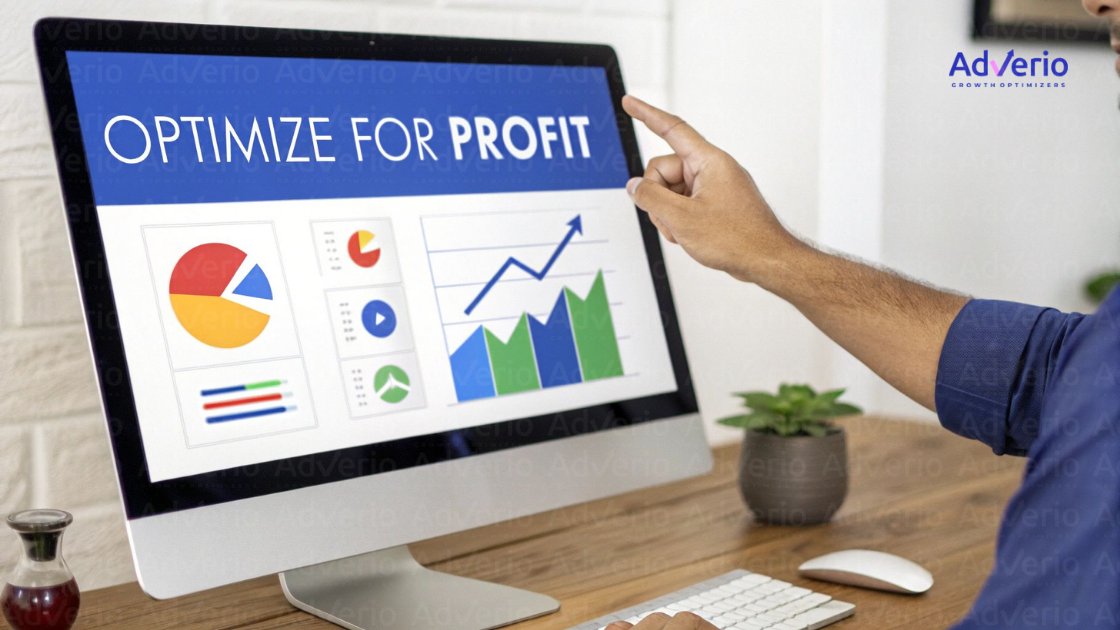
Getting a campaign live is easy. The real work—the stuff that separates flat results from real growth—is in relentless optimization. Profitability isn’t found at launch; it’s earned by refining your strategy until every ad dollar pulls its weight.
-
Use high-quality lifestyle creatives: Your goal isn’t just to remind; it’s to re-engage. A powerful lifestyle image showing your product in action almost always outperforms a sterile, white-background shot. It helps the shopper visualize the benefit, not just the feature.
-
Segment by buyer behavior: Stop showing the same ad to everyone. A shopper who glanced at your product is miles away from someone who added it to their cart. Tailor your message to match their intent.
-
A/B test ad frequency + placements: Nothing kills a sale faster than ad fatigue. Blasting the same person with the same ad 20 times a day isn’t persistent; it’s annoying. Set strict frequency caps within Amazon DSP (e.g., 3-5 impressions per user per week).
-
Control costs with narrow audience timing: A 7-day lookback window is perfect for high-intent products with a short buying cycle. A 30-day window works better for considered purchases like furniture or electronics.
-
Track ACOS, ROAS, and new-to-brand %: True, profitable growth comes from tracking metrics that tell the whole story. Look at Return on Ad Spend (RoAS) to measure efficiency and your New-to-Brand (NTB) rate to see if you’re acquiring new customers.
Off-Amazon Retargeting for Amazon Sellers
Yes, you can run off-Amazon retargeting ads to bring shoppers back to your Amazon listings, but it requires the right tools and a smart approach.
Your main options are using Amazon DSP or combining external platforms like Facebook/Google with Amazon Attribution.
-
Amazon DSP is the cleanest method. It uses Amazon’s first-party data to find your audience across thousands of external websites and apps, serving them ads that link directly back to your product page.
-
Amazon Attribution + External Ads: This involves creating special tracking links with Amazon Attribution. You can then use those links in your Facebook or Google display ads. This allows pixel-based retargeting to drive traffic back to Amazon. However, be aware of the tracking limitations. This approach works best when you have a clear strategy for measuring impact.
Measuring Retargeting Performance
Launching Amazon remarketing ads is one thing; proving they’re making you money is another. Too many brands fall into Optimization Myopia, obsessing over a single metric like ACoS while ignoring the full picture. To truly measure success, you need a more strategic lens.
| Metric | Why It Matters |
|---|---|
| ACOS/ROAS | This is the core profit signal. ROAS (Return on Ad Spend) is the purest measure of efficiency. |
| NTB rate | Your New-to-Brand rate is a crucial growth KPI, proving you’re acquiring new customers, not just re-engaging old ones. |
| View-through conversions | Unique to retargeting, this tracks users who saw your ad, didn’t click, but bought later. It proves the branding impact. |
| Time to conversion | This helps you optimize ad frequency by showing how long it takes for a viewer to become a buyer after seeing your ad. |
Demonstrating the value of your ad strategy is critical, and insights into measuring video marketing ROI can guide your efforts in creative testing. By integrating these KPIs into a unified dashboard, you can build a comprehensive view of performance. Unifying your ads, listings, and sales data through a robust business intelligence platform is the key to making precise, profit-driven decisions.
How Adverio Builds Retargeting That Actually Scales
Retargeting only works when it’s governed, not blindly scaled. Adverio integrates Sponsored Display, Amazon DSP, creative testing, and conversion diagnostics into a single profit system. That means no wasted frequency, no cannibalized branded demand, and no false ROAS confidence.
That system-level governance is why retargeting is managed alongside our Amazon PPC management services, not treated as a standalone tactic.
Retargeting compounds. Every session that doesn’t convert is either recovered through a governed retargeting system or handed to a competitor’s remarketing audience. At scale the math is simple: the brands with the tightest retargeting architecture recover the most revenue per ad dollar spent across every other channel.
If your retargeting today is a set-and-forget Sponsored Display campaign with no incrementality model and no DSP readiness plan, you are not running a retargeting system. You are running a remarketing expense.
Free diagnostic. We audit your retargeting architecture, model the incremental recovery gap, and tell you exactly what to build next.
FAQs
Let’s cut through the noise. Here are the direct answers to the most common questions about Amazon retargeting ads.
Does Amazon allow retargeting?
Yes, they don’t just allow it—they actively encourage it. Sponsored Display offers “Views remarketing” and “Purchases remarketing” as standard targeting options. Amazon DSP is built from the ground up for sophisticated audience building and retargeting based on a huge range of shopping signals.
Do I need DSP to run retargeting ads?
No, you do not. This is the biggest myth holding brands back. You can get started right now with Sponsored Display inside the ad console. It’s the perfect entry point for any brand looking to win back shoppers who browsed but didn’t buy.
What’s the difference between Sponsored Display and DSP?
Think of it like this: Sponsored Display is for on-Amazon retargeting. It’s simple, works with smaller budgets, and is perfect for targeting shoppers who viewed your product pages. Amazon DSP is for brands that need enormous reach and precision, allowing you to retarget shoppers on and off Amazon across a huge network of websites and apps.
Can I retarget people off Amazon?
Yes. Your two main options are Amazon DSP or a combination of external ad platforms (like Facebook or Google) and Amazon Attribution. For most brands seeking clean data and wide reach, DSP is the most effective and direct path for off-Amazon retargeting.
What’s the best strategy for abandoned carts?
The simplest and most effective strategy is a Sponsored Display “Views remarketing” campaign with a tight 7-day lookback window. This concentrates your budget on the highest-intent shoppers. Use a strong lifestyle creative and a direct headline like “Still Thinking It Over?” to close what would have been a lost sale.
Ready to make your ad dollars work harder? At Adverio, we build full-funnel Amazon ad strategies — including retargeting — to help you convert high-intent traffic, increase LTV, and grow more profitably.