



Sponsored Ads are a marketplace product. DSP is a media buying platform that happens to carry Amazon’s data.
Amazon DSP usually arrives as the next thing your rep suggests after Sponsored Ads, and most teams reach for it as though it were Sponsored Products with better targeting.
It is not the same kind of product. Sponsored Ads are a feature of the marketplace you already sell in. DSP buys inventory across the open web using audiences Amazon assembled, on sites Amazon does not own.
One structural difference explains almost everything a brand runs into later. Why the reporting estimates rather than counts. Why creative matters more. Why spend minimums existed. Why a campaign that worked on Sponsored Products does not translate.
This page covers what DSP is, how the buying model works, what formats and targeting it carries, and what it costs to access. Whether you should run it is a separate question, answered on our page covering when to use Amazon DSP.
At a Glance
Table of Contents
Five things to take away
- Sponsored Ads bid for placement inside Amazon. DSP buys inventory across the open web.
- Amazon supplies the data and the buying interface. It does not always supply the shelf.
- Sponsored Ads target a shopper mid-search. DSP targets an audience built from prior behavior.
- The reporting differences follow from that. Amazon cannot observe a path it does not own end to end.
- Amazon removed the self-service spend minimum in November 2025. Managed service still carries one.
Quick Answer:
Amazon DSP is Amazon’s demand-side platform, a programmatic media buying tool that lets brands buy display, video and streaming inventory both on and off Amazon, targeted with Amazon’s first-party shopping data. It is not an Amazon ad format. It is a buying platform, which is why its formats, targeting and reporting all behave differently from Sponsored Products, Brands and Display.
Definition
Demand-side platform is industry vocabulary that predates Amazon. It describes the buying side of programmatic advertising, the software an advertiser uses to bid on inventory that publishers make available.
Amazon DSP is Amazon’s version of that. The Amazon part is the audience data and the interface. The inventory includes Amazon-owned properties and a great deal that is not, including Amazon Publisher Services, third-party exchanges, streaming apps and Twitch.
Sponsored Products, Brands and Display are something else entirely. They are marketplace features. You bid for placement inside a shop you already sell in, on inventory Amazon owns, against shoppers Amazon watches from search to checkout.
BEFORE THE CHANNEL QUESTION
You are working out whether DSP belongs in the plan. The search engine underneath it has not been read in months.
| ✓Your search waste, found before you fund a second channel |
| ✓Your query discipline, checked against what is converting |
| ✓Your headroom, measured rather than assumed |
Show Me What Search Is Still Leaking
20 minutes. Bring your last 90 days of sponsored spend.
1. What Amazon DSP is, structurally
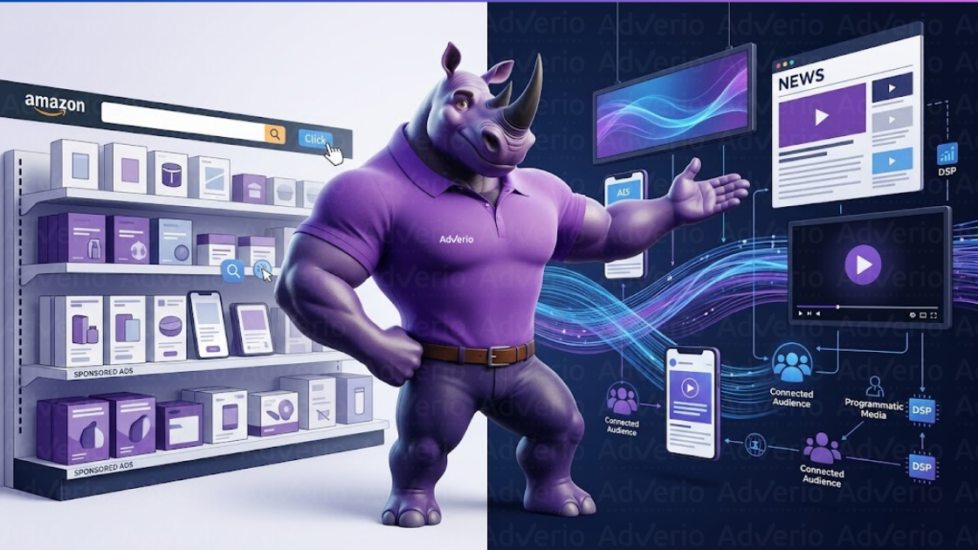
The distinction sits one level below where most explanations stop.
DSP is not a bigger version of Sponsored Ads. It is a different category of product.
With Sponsored Products, you are competing for a slot on a shelf. Amazon owns the shelf, sets the rules, watches the shopper arrive, and can tell you exactly what happened next because the whole path sits inside its own systems.
With DSP, you are buying media. The impression might land on a news site, a streaming app or a retailer that is not Amazon at all. Amazon knows who the person is, because it assembled the audience from shopping behavior it observed elsewhere. What it cannot do is watch the entire journey, because most of that journey happens on property it does not own.
Everything downstream follows from that.
Reporting estimates, it does not count, because a viewable impression on a third-party site is not a traceable session.
Creative carries more weight, because you are interrupting, not answering. Nobody searched for you.
Spend minimums existed because programmatic bidding needs enough conversions to optimize against, and a marketplace click gives a signal that a display impression does not.
A campaign structure that worked on Sponsored Products does not port over, because keyword intent and assembled audiences are not the same input.
What to do
- Learn what you are buying before you learn how to buy it. A brand that understands DSP as media rather than as an ad type asks better questions on the first call.
- Read your Sponsored Ads reporting and your DSP reporting separately. They are measuring different things with different confidence.
- Expect a longer read. Media effects arrive later than marketplace clicks.
What to avoid
- Porting a Sponsored Products campaign structure across and expecting it to behave.
- Judging DSP on last-click attribution. It is the wrong instrument for the purchase.
2. How the buying model works
DSP functions as a control center for programmatic buying. It bids on ad inventory in real time, using programmatic advertising technology to decide which impressions are worth buying and at what price.
The mechanic that matters is where the audience comes from.
Sponsored Ads observe intent. A shopper types a query, and you bid on that query. The intent is live and Amazon is watching it happen.
DSP infers intent. Amazon builds audience segments from prior behavior: what people browsed, bought, considered and abandoned. You buy access to that segment, then reach them somewhere else entirely.
One is intent captured in the moment. The other is intent predicted from history. Both work. They are not interchangeable, and the difference explains why DSP reaches people who are not currently shopping for you, which is the entire point of it.
What to do
- Match the buying model to the job. If you need to be found by someone actively searching, that is Sponsored Ads.
- Treat audience quality as the lever. In DSP the segment matters more than the bid.
What to avoid
- Assuming an assembled audience carries the same intent as a live search. It does not, and pricing it as though it does is how budgets disappear.
3. Ad formats and targeting options
The formats exist because open-web inventory takes them. A marketplace shelf has nothing equivalent.
- Dynamic ecommerce ads. Responsive units that show products based on browsing behavior, adapting to context and interest.
- Static ads. Fixed creative, useful for consistent brand messaging across placements.
- Video ads. Suited to products that need demonstration or storytelling, and usable off Amazon as well as on.
- Over-the-top (OTT) ads. Full-screen video on streaming platforms and apps. Broad reach, no click, measured on recall and downstream lift, not on the ad itself.
Targeting works on five main axes:
- Demographic. Age, gender, income level and similar attributes.
- Behavioral. Past shopping behavior, browsing history and demonstrated interests.
- Contextual. Placement alongside content relevant to what the person is reading or watching.
- Remarketing. People who interacted with your brand or products and did not buy.
- Lookalike. New people who resemble your existing customers.
Every one of those targeting options ends at a product page. Buy an audience with precision, put a compelling format in front of them, and the detail page still decides whether any of it converts. Media buying cannot compensate for a page that does not close. Amazon listing optimization is the variable underneath all five.
Remarketing gives the clearest return in most accounts, because it recovers value your search campaigns already paid to create. The rest reach people who do not know you yet, which is a longer and more expensive proposition, and it depends on having defined your target market before you buy access to it.
What to do
- Start with remarketing. Shortest payback path and the easiest to read.
- Match format to product. Video earns its cost on products that need showing. Static rarely does.
What to avoid
- Buying OTT because it sounds impressive. It is the hardest format to measure and the least forgiving of weak creative.
- Running lookalike audiences before your remarketing pool is large enough to model from.
4. What it costs to access
Amazon runs DSP two ways, and the difference is larger than most explanations suggest.
Managed service. An Amazon team operates the campaigns. It carries a spend minimum of roughly $50,000 per month, varying by country.
Self-service. You or your agency operate the campaigns directly. It carried a minimum until Amazon removed it at unBoxed in November 2025.
So the platform is now open to brands it was previously closed to. What has not changed is the volume of conversions the bidding model needs to optimize against. Practitioner consensus in 2026 puts the practical floor at roughly $10,000 to $15,000 per month, sustained long enough for the data to mean something.
That figure belongs to the algorithm, not to Amazon’s commercial terms. Removing a minimum did not move it.
What to do
- Confirm current terms in Amazon Ads documentation before you budget. Platform terms move, and this one moved recently.
- Budget for the signal, not the minimum. The question is whether the spend produces a readable result, not whether it clears a threshold.
What to avoid
- Reading the removal of a minimum as permission. Availability and advisability are different questions.
THE FLOOR THAT DID NOT MOVE
Amazon dropped the minimum, so the platform is open to you now. The number of conversions the model needs to learn from did not change.
| ✓Your conversion volume, measured against what the bidding model needs |
| ✓Your baseline, set before the spend rather than after |
| ✓Your readable result, defined before you fund one |
Tell Me If My Spend Would Say Anything
20 minutes. Bring 90 days of sponsored data.
Decision grid
Read rows two and three together. Those two rows explain row four, and row four is where brands get surprised.

How Adverio Helps
Adverio is an agency that runs Amazon, Walmart and Target for consumer brands, measured on contribution margin against a baseline set before the work starts.
On a DSP question that means understanding what you are buying before deciding whether to buy it. The formats and targeting above are the easy part. The harder question is whether your account has earned a media channel yet, and that is answered separately in our guide to when to use Amazon DSP, which sets out four scenarios where DSP creates return and five readiness gates it should pass first.
If you already know the answer is yes, Amazon DSP management covers how the engagement runs.
Frequently asked questions
Is Amazon DSP the same as Sponsored Display?
No, and the confusion is common enough to be expensive. Sponsored Display is a marketplace ad format with limited off-Amazon reach and a simple setup. DSP is a full programmatic buying platform with broader inventory, deeper audience construction and considerably more operational overhead.
If the job is on-Amazon retargeting and product page visibility, Sponsored Display usually does it at lower cost. DSP earns its keep when you need reach and control that Sponsored Display cannot provide.
Do you need to sell on Amazon to use Amazon DSP?
No. Brands without an Amazon marketplace presence can use DSP to reach Amazon audiences on other properties. In practice most advertisers using it do sell on Amazon, because the retargeting and product-based formats depend on having a catalog to point at.
How does Amazon DSP measure conversions?
On a 14-day attribution window, with conversions estimated rather than counted and credited across both viewable impressions and clicks. Amazon’s own attribution documentation covers the mechanics.
That is a constraint to plan around, not a feature. Because much of the journey happens on inventory Amazon does not own, the platform models the path instead of observing it. Expect DSP numbers not to reconcile cleanly with your Sponsored Ads reports, and treat that as expected behavior, not a reporting fault.
What does Amazon DSP cost to get started?
Managed service carries a minimum of roughly $50,000 per month, varying by country. Self-service carried a minimum until Amazon removed it in November 2025.
The number that still matters is whether your spend generates enough conversions for the bidding model to optimize against. Confirm current terms in Amazon Ads documentation before budgeting, since this changed recently.
Closing
DSP is media buying with Amazon’s data attached, so buy it like media and read it like media, not like a bigger Sponsored Products campaign.
References
Platform terms move. Figures on this page were checked on 27 August 2026 and should be confirmed before you budget.
- Amazon Ads, programmatic advertising overview. https://advertising.amazon.com/blog/programmatic-advertising
- Amazon Ads, basics of Amazon attribution. https://advertising.amazon.com/library/guides/basics-of-amazon-attribution
- Amazon Ads documentation, managed service minimum spend. https://advertising.amazon.com/solutions/products/amazon-dsp
- Removal of the self-service minimum, Amazon unBoxed, November 2025. https://www.aboutamazon.com/news/innovation-at-amazon/amazon-unboxed-2025
ONE ACCOUNT, TWO KINDS OF BUYING
Search bills on a click and media bills on an impression. One person still has to say whether the account as a whole paid.
| ✓Your marketplace spend and your media spend, on one scoreboard |
| ✓Your blended number, owned by a named person |
| ✓Your weekly profit and loss, read by the operator running it |
Put One Owner On My Whole Account
30 minutes. Bring your last 90 days.