



Table of Contents
Most Amazon brands are optimizing the wrong thing.
They chase ACoS, tweak bids, and celebrate marginal gains—while quietly losing market share where it actually matters.
The Amazon Search Query Performance (SQP) report changes that. It shows exactly how much of the market you own—across impressions, clicks, and purchases—for every relevant search.
This guide breaks down how to use SQP data to measure, diagnose, and systematically steal market share from competitors.
At a Glance
• SQP reveals true market share via impression, click, purchase share
• Split branded vs non-branded to calculate real TAM
• Use funnel gaps (CTR, ATC, CVR) to diagnose leaks
• Turn SQP into PPC + DSP targeting system
• Goal: increase purchase share, not just reduce ACoS
Stop Guessing. Start Measuring Your Real Amazon Market Share.
Most brands are flying blind on Amazon. They’re stuck relying on shaky third-party estimates that do little more than guess at their real market share. They track ACoS with a religious focus, falling into the trap of Optimization Myopia while their actual share of voice slowly disappears.
This is where most brands lose—quietly, consistently, and expensively.
The Search Query Performance (SQP) report is Amazon’s ground truth. It’s a direct feed from the source, showing you exactly where you stand for every single search that matters. This isn’t another report. It’s your competitive scoreboard; it’s a strategic map that measures what actually drives growth: your brand’s impression, click, and purchase share against the entire market.
From Manual Hassle to Real-Time Weapon
The game completely changed in early 2025 when Amazon finally integrated the SQP Report into the Selling Partner API (SP-API). This single upgrade transformed it from a clunky, manual download into a dynamic, real-time data stream.
Before this, you had to wait days for inconsistent updates, missing the perfect window to bid on high-volume queries. Imagine spotting a term like ‘top bamboo pillow‘ pulling 67,000 clicks but being too slow to capture its long-tail variants. The API now pipes in granular metrics—impression, click, and conversion share, at both the brand and ASIN level—instantly.
This shift lets agencies like Adverio build powerful tools that don’t just report on what happened last week but actively shape what happens next. We turn this raw data into a growth engine, moving you from reacting to the market to leading it.
Forget vanity metrics. The only numbers that matter are your share of impressions, clicks, and purchases for the queries that define your category. This is the difference between participating in the market and owning it.
The Metrics That Define Your Market Position
To really understand your performance, you need to master a few core metrics. Each one tells a different part of your customer’s journey and shines a light on specific weaknesses or opportunities in your strategy. The SQP report gives you the data to benchmark your CTR, CVR, ATC rates, and pricing against the competition for every query.
The table below breaks down the key metrics in the SQP report and what they actually tell you about your business.
The Core SQP Metrics You Need to Master
| Metric | What It Reveals About Your Performance | Strategic Implication |
|---|---|---|
| Impression Share | Your Visibility: A low share on a high-volume query means customers don’t even know you exist. You’re invisible. | Indicates a need to increase bids, improve organic rank, or target new placements to show up where it counts. |
| Click Share | Your Relevance & Appeal: High impressions but low click share points to weak creative, bad pricing, or poor reviews. Shoppers see you but scroll right past. | Signals that your main image, title, price, or review rating isn’t compelling enough to earn the click against the competition. |
| Purchase Share | Your True Market Share: This is the ultimate metric. It shows what percentage of all sales for a given search query you captured. | The final report card. Low purchase share despite high clicks means your listing isn’t closing the deal. |
By tracking these three metrics together, you get a complete picture of your funnel. It’s no longer a guessing game; it’s a clear, data-driven path to growth.
When you integrate these KPIs into a cohesive plan, you can calculate your Total Addressable Market (TAM) with startling precision. For a wider view on using competitive data, you can find great info on competitive strategies and broader market insights. This is the foundation of a real business intelligence system for Amazon’s growth that ties data directly to profit decisions.
Using SQP Data to Calculate Your Real Total Addressable Market
Generic market sizing is a dead end. Relying on third-party tools that guess at your Total Addressable Market (TAM) is a surefire way to build flawed strategies and waste a ton of ad spend.
The Amazon Search Query Performance (SQP) report is the antidote. It cuts through the noise, giving you the raw, unfiltered data you need to calculate your actual growth potential on the world’s biggest marketplace.
It’s about building a precise, query-level picture of the entire customer pie so you can finally see how big your market is—and more importantly, how much of it you actually own. This is how you begin to track your true market share on Amazon.
The First Cut: Branded vs. Non-Branded Queries
The very first move in any smart SQP strategy is to split your search data into two distinct buckets: branded and non-branded (or generic) terms. This simple act reveals the foundational health of your brand on Amazon.
-
Branded Queries: These are searches that include your brand name (e.g., “Adverio growth cultivator”). Dominating these terms is non-negotiable. You should be aiming for an 80-90% impression and purchase share. Anything less is a red flag, signaling either brand equity leakage or aggressive competitor conquesting.
-
Non-Branded Queries: This is where your real growth is hiding. These are the generic, problem-aware searches customers use to find solutions, like “bamboo bed sheets” or “heavy duty car cover.” This bucket represents the total addressable market of customers who don’t yet know they want your specific product.
By exporting the SQP report and tagging each query, you can sum the total search volume impressions for each category. This shows you exactly how many customers are actively looking for the products you sell, creating a data-backed TAM. It’s a far more accurate approach than relying on external tools, many of which are some of the less reliable top Amazon product research tools on the market.
A Real-World TAM Scenario
Let’s walk through a common situation. A home goods brand specializing in premium bedding pulls its quarterly SQP report.
The data shows they have a 92% purchase share on their branded terms—fantastic. But when they aggregate the search volume for their top 50 non-branded queries like “queen size cooling sheets” and “1000 thread count cotton sheets,” they discover a massive, untapped market. The total search volume for just these generic terms is 5 million impressions per quarter.
And their current share? A dismal 5%.
This is the moment of clarity for most brands. They realize that while they’ve successfully defended their small branded kingdom, they’re completely ignoring a vast, unconquered territory teeming with potential customers.
This is where strategy shifts from “optimize campaigns” to “capture market share.” The conversation shifts from “How do we get more sales?” to “How do we capture the next 5% of this multi-million dollar generic market?” It pinpoints exactly where millions in untapped revenue are waiting and provides a clear, measurable goal for their growth efforts.
Turning Data Into Actionable Growth Targets
Once you’ve calculated your real TAM and your current share of it, you can finally set intelligent, data-driven goals. You stop chasing vague objectives like “increase sales” and start establishing specific KPIs.
For example: “Increase our purchase share on the top 20 non-branded queries from 5% to 8% this quarter.”
This approach connects every single action—from PPC bidding adjustments to listing optimization—directly back to the goal of capturing a larger piece of the market pie. You move from a reactive stance to a proactive one, armed with the precise data needed to make confident growth decisions. You stop guessing what might work and start executing a plan based on the market’s reality.
Pinpointing Performance Leaks in Your Conversion Funnel
High impressions but nonexistent clicks? A surge in Add to Carts that evaporates before the purchase? These aren’t random market fluctuations. They’re symptoms of a leaky conversion funnel, and the Amazon Search Query Performance (SQP) report is the only diagnostic tool sharp enough to find the holes before your profit drains out.
This is where you stop guessing and start dissecting the customer journey, from the initial search to the final sale. The SQP report’s granular metrics let you benchmark your performance against the query-level average for every critical step: Click-Through Rate (CTR), Add to Cart (ATC) Rate, and Purchase Rate. By understanding where your listing beats or loses to the competition on these metrics, you can diagnose specific problems.
By isolating exactly where your performance drops off relative to competitors, you can stop treating symptoms and start curing the disease.
From Diagnosis to Decisive Action
Isolating the leak is just the first step. The real magic happens when you connect a failing metric directly to a specific, fixable problem. A weak main image will absolutely kill your CTR. Uncompetitive pricing will tank your purchase rate, no matter how great your product is.
This is how a proper Amazon SQP strategy moves from simply looking at data to taking decisive action.
-
Low CTR, High Impressions: Your product is getting seen, but shoppers are scrolling right past it. This almost always points to a weak main image, a confusing title, or a price point that’s immediately disqualifying.
-
High CTR, Low ATC Rate: You’re earning the click, but the listing itself isn’t convincing them to commit. This is a classic sign of a poorly optimized product detail page. Your bullet points might be weak, your A+ content could be uninspired, or your reviews are raising red flags. Fixing this requires aggressive Amazon listing optimization built for conversion, not cosmetic tweaks.
-
High ATC Rate, Low Purchase Rate: The shopper wants your product but gets cold feet at the finish line. This is almost always a pricing or shipping issue. Are your competitors offering a better deal? Is your delivery time too long? This is where you lose the sale you already won.
This decision tree gives you a simplified look at how to use SQP data for market strategy—either defending your branded turf or expanding into new territory.
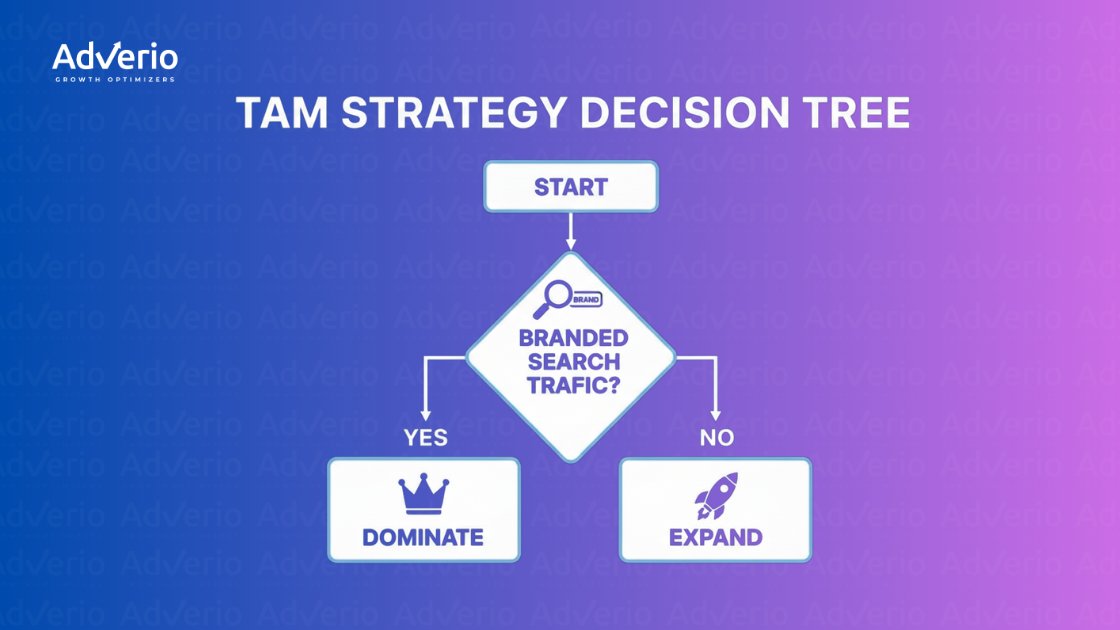
As the chart shows, the first critical question SQP data answers is whether you need to dominate your existing brand space or start expanding into the broader market.
Turning Metrics into Marketplace Dominance
One of the greatest gifts of the SQP Report is access to first-party search query volume—the exact number of customer searches. It’s a rare look behind Amazon’s curtain that lets you chase untapped revenue with incredible precision. At Adverio, we use this to skyrocket client TACoS efficiency by targeting queries where the sales potential dwarfs their current ad spend.
For instance, a generic term might get 185 total clicks quarterly, but your ASIN only captures 15% of the purchase share despite a strong 40% ATC share. That’s a massive red flag signaling checkout friction that our creative CRO team can often fix overnight.
Your competitors are hoping you stick to ACoS. They want you focused on a single, misleading metric while they analyze the entire funnel and steal your customers at every single stage.
This funnel analysis isn’t a one-and-done project; it’s a continuous diagnostic process. By systematically finding the weakest link in your conversion path for your most important queries, you can prioritize fixes that deliver the highest ROI. To dig even deeper, this data-driven playbook for improving e-commerce conversion rates will help you move past generic advice to actionable insights.
This is how you build a resilient, high-converting presence that doesn’t just compete but consistently wins.
Building a Winning PPC and DSP Strategy with SQP Insights
If your PPC strategy isn’t tied to market share data, you’re guessing—and paying for it. A smart Amazon Query Performance (SQP) report strategy isn’t about raw spend; it’s about making precision-guided investments. It’s time to plug SQP data directly into your PPC and DSP campaigns and turn your ad dollars into a true growth multiplier.
This approach takes the guesswork out of the equation. No more budget black holes that plague most Amazon ad accounts. By aligning every ad dollar with real customer search and purchase data, you stop hoping for results and start engineering them.
Finding Your PPC Goldmines
SQP isn’t a report—it’s your targeting system for profitable growth. You’re hunting for the goldmines: search terms where you might have a low impression share but a ridiculously high purchase rate.
These are the queries where the few customers who do find you are practically guaranteed to buy. This is your green light for aggressive bidding. Funneling your budget into these proven winners is a direct investment in profitable growth.
Of course, the report also shines a harsh light on your budget black holes—queries racking up high impression share but dismal clicks and zero sales. These are the terms where you’re just paying for visibility that never converts. Cutting spend here is the fastest way to jack up your overall campaign ROI.
Stop wasting ad spend on queries you can’t win. Your goal isn’t to show up everywhere; it’s to dominate the searches where you have a proven right to convert.
Bridging the Purchase Share Gap
One of the most powerful plays here is building a prioritized target list based on “Purchase Share Gaps.” These are the high-volume queries where your competitors are snatching sales you should be winning.
By analyzing the gap between your click share and your purchase share, you see exactly where your listings fail to seal the deal. This is where you get tactical. You can refine your Sponsored Products match types, tighten up your ad groups, and spin up campaigns built specifically to steal share from your rivals. For a deeper dive on these tactics, our complete Amazon PPC strategy and optimization framework lays out the entire playbook.
From PPC Precision to DSP Dominance
But the insights don’t stop with PPC. A truly advanced Amazon SQP strategy bleeds directly into your DSP campaigns, letting you build smarter, more effective audience segments.
-
High ATC, Low Purchase Rate Queries: These are perfect for deploying Amazon DSP retargeting strategies to recover lost conversions and close the gap. These shoppers were interested enough to add your product to their cart but bailed before checkout. A targeted display ad with a small coupon or a simple reminder can be shockingly effective at pulling them back to close the deal.
-
High Conversion Rate Queries: Pinpoint the queries where your purchase rate crushes the average. Use these search terms to inform your in-market and lifestyle audience targeting. This ensures your top-of-funnel DSP spend is laser-focused on shopper profiles that have already proven they love your products.
Here’s a quick playbook for turning SQP findings into concrete actions across both your PPC and DSP efforts.
SQP-Driven Action Plan for PPC and DSP
This playbook helps translate raw SQP data into specific, high-impact advertising adjustments designed to maximize ROI and capture market share.
| SQP Finding | Your PPC Action | Your DSP Action |
|---|---|---|
| High Purchase Rate, Low Impression Share | Increase bids aggressively, move query to its own exact-match campaign for maximum control. | Build in-market audiences based on these high-intent queries to find new, similar shoppers. |
| High Click Share, Low Purchase Share | Review listing content, price, and reviews. Audit match types to ensure relevance. | Create a retargeting audience for shoppers who searched these terms but didn’t buy. |
| High Add-to-Cart (ATC), Low Purchase Rate | Push for more reviews. Test a small coupon to overcome final purchase hesitation. | Launch a display retargeting campaign targeting these “cart abandoner” queries with a clear call-to-action. |
| Low Impression Share, Low Purchase Share (High Volume) | Add as a negative keyword to prevent wasted spend on irrelevant but high-traffic terms. | Exclude audiences related to these queries from your top-of-funnel campaigns to improve efficiency. |
| Competitor ASINs Appearing in Top Queries | Launch product targeting (PAT) campaigns aimed directly at those competitor listings. | Build audiences based on shoppers who viewed competitor ASINs but did not purchase. |
By systematically applying these actions, you create a powerful feedback loop where insights from one channel fuel the performance of the other, driving a more cohesive and profitable ad strategy.
This data-driven approach transforms ad management from a cost center into a true growth engine. Cross-referencing SQP’s ASIN Share with your PPC ACoS is how you find the real budget bleeders. For a query with 67,000 total clicks, if your ASIN holds 20% impression share but just 8% of conversions while a rival grabs 15%, it’s a glaring signal you’re overbidding. It’s a tactic we use to deliver triple-digit gains for brands battling margin erosion in 2025’s hyper-competitive arena.
Turning Your SQP Analysis into a Growth Engine
A single Amazon Search Query Performance (SQP) report analysis gives you a snapshot. A continuous, operationalized SQP strategy, however, creates a powerful competitive advantage that most brands completely miss.
The final step is to move from one-off analysis to embedding this process into your core growth rhythm. This is how you stop reacting to the market and start leading it.
You have to establish a consistent reporting cadence. For high-velocity categories like apparel or CPG, a weekly deep dive is non-negotiable. For slower-moving industries like automotive parts, a monthly review might be enough. The goal is simple: track market share trends over time, spotting threats and opportunities long before they become obvious to everyone else.
Automating Intelligence for Real-Time Decisions
Manually downloading and manipulating SQP reports every week is a surefire way to fall behind. The game really changed with the SP-API integration, which allows for automated data pulls. At Adverio, we use our own platforms to pipe this data directly into our dashboards, creating a single source of truth for real-time decisions.
This automated system doesn’t just save time; it fundamentally changes your ability to react.
You can spot a competitor gaining impression share on a key query and adjust your bids within hours, not weeks. That speed is the difference between defending your market share and losing it.
An SQP strategy isn’t about building a better spreadsheet. It’s about building a faster, smarter decision-making engine that runs on real-time market data. Static reports are for historians; dynamic data is for market leaders.
Setting KPIs That Actually Drive Growth
With a solid system in place, you can finally move beyond vague goals and set sharp, measurable KPIs rooted directly in SQP metrics. This connects every single action back to the ultimate objective of capturing more market share.
Here are a few examples of KPIs that force the right conversations:
-
Purchase Share Growth: Set a goal to increase your total purchase share on your top 20 non-branded queries by 10% quarter-over-quarter. This focuses your entire team on the metric that actually matters most.
-
Click-Through Rate (CTR) Improvement: Target an increase in your brand’s average CTR by 2% on queries where your impression share is already strong but click share lags. This forces a focus on creative and offer optimization, not just more ad spend.
-
Funnel Leakage Reduction: Aim to reduce the drop-off between Add-to-Cart (ATC) share and Purchase Share by 5%. This KPI drives your team to solve critical pricing, shipping, and checkout friction points that are killing conversions.
By building a framework around these specific outcomes, you give your team clear targets. Every PPC bid adjustment, every listing tweak, and every creative update gets measured against its ability to move these core SQP numbers. This kind of discipline is a key component of a larger strategy to consistently increase your Amazon sales with predictable results.
This structured approach transforms the SQP report from a static, backward-looking tool into the central nervous system of your growth engine. It’s how you operationalize market intelligence, turning raw data into a relentless, repeatable process for winning on Amazon.
How Adverio Turns SQP Into Market Share Growth
Most brands stop at analysis. That’s where they lose.
Adverio operationalizes SQP into a full growth system—connecting data → decisions → deployment across ads, listings, and pricing.
We don’t just show you where you’re losing share. We fix the constraints blocking growth—whether it’s conversion, inventory, or targeting.
If you want to move beyond reports and actually capture market share:
Explore our Amazon PPC Management Services built for incrementality and profit.
Got Questions About the SQP Report?
Jumping into the Search Query Performance report opens up a whole new world of strategy. But with great data comes great questions. Here are the clear, no-nonsense answers you need to cut through the noise and use this tool like a pro.
How Often Should I Analyze My Amazon SQP Report?
There’s no one-size-fits-all answer here. The right cadence depends entirely on how fast your category moves.
For high-velocity categories like apparel or CPG, a weekly analysis is the absolute minimum. Trends can live and die in a matter of days. If you wait a month, you’re already behind. Your competitors are tweaking bids and creative daily, so a weekly check-in is your best defense.
If you’re in a slower-cycle category—think automotive parts or industrial goods—a bi-weekly or monthly deep dive is usually enough to spot meaningful trends. The key, no matter what, is unwavering consistency.
The one major exception? Big sales events. During Prime Day, Black Friday, or any other major promotion, you need to be monitoring your top query performance daily. This is where market share is won or lost in hours, not weeks.
What’s the Difference Between SQP Data and Brand Analytics Data?
A lot of sellers get these two mixed up, but they serve completely different functions. Confusing them can lead to some seriously flawed strategies.
Amazon Brand Analytics gives you the 30,000-foot view. It’s high-level market intelligence, showing you the top search terms for an entire category and which three ASINs got the most clicks for those terms. It’s great for understanding broad market trends.
The SQP report, on the other hand, is hyper-focused on your brand’s performance. It tells you your exact impression share, click share, and purchase share for every single search query where your products showed up.
Think of it like this: Brand Analytics is a map of the city showing you the busiest intersections. The SQP report is the detailed blueprint of your house on that block, showing every window, door, and potential weak spot.
How Can I Use the SQP Report to Find New Keywords?
Forget traditional keyword research tools. The SQP report is a goldmine because it’s built on actual performance data, not fuzzy estimates.
Your first targets should be queries where you have a low impression share but are still getting purchases. These are high-intent search terms where motivated shoppers are actively finding you despite your low visibility. Add these to your manual PPC campaigns with an aggressive bid, and you can capture a ton of sales almost overnight.
Next, look for queries where your Add to Cart (ATC) share is high. This is a huge indicator of strong product-query relevance. A high ATC share means a customer sees your product and thinks, “Yep, that’s the one.” These terms are perfect candidates for both organic optimization in your listing and dedicated ad campaigns.
What’s a Good Impression or Purchase Share to Aim For?
Chasing a single magic number is a fool’s errand. A winning strategy means setting different goals for different types of queries.
Here’s a simple framework to get you started:
-
For your own branded search terms: The goal is total domination. You should be shooting for an 80-90%+ impression and purchase share. Anything less means competitors are successfully stealing your most valuable, high-intent traffic.
-
For broad, high-volume generic queries: Think “running shoes” or “coffee maker.” Here, even a 5-10% purchase share can make you a market leader and generate massive revenue. A small slice of a giant pie is incredibly valuable.
-
For niche, long-tail queries: These are more specific searches like “noise-canceling headphones for air travel.” You should aim higher, maybe 20-30% or more. The search volume is lower, but the purchase intent is way stronger, so you want to own a larger piece of it.
The best move is to stop looking for a universal benchmark and start benchmarking against yourself. Set an incremental goal—like increasing purchase share on your top 50 non-branded queries quarter-over-quarter—and build a strategy to make it happen.
If you’re still optimizing ACoS instead of market share, you’re leaving growth on the table. The SQP report provides the map, but a strategic partner helps you navigate the terrain. Adverio transforms these complex datasets into a clear, actionable roadmap for taking market share and driving profitable growth.