



Launching your first Amazon Seller Central campaigns is easy. Scaling them profitably is where most brands stall. Actually scaling them profitably? That’s where most brands hit a wall. If ad spend keeps climbing while total revenue stays flat, you’ve hit the real ceiling: non-incremental growth.
The ‘set-it-and-forget-it’ mindset guarantees wasted ad spend and capped scale. Too many sellers treat advertising like an on/off switch instead of the dynamic control panel it is, obsessing over ACoS while their total growth stalls.
This isn’t a sign of failure. It’s a signal that your strategy needs to evolve beyond the basics. The tactics that carried you to your first million in revenue won’t get you to the next. To break through, you need to stop making reactive tweaks and start engineering a proactive, profit-first advertising architecture.
Why Seller Central Advertising Is Your Control Panel for Growth
Table of Contents
Your Seller Central ad account is the traffic system, not the growth engine of your Amazon business. Sponsored Products (SP), Sponsored Brands (SB), and Sponsored Display (SD) are the core levers you pull to drive traffic, sales, and organic rank. Managing them properly is the difference between hitting a revenue plateau and scaling profitably.
A smart advertising strategy isn’t just about launching campaigns; it’s about mastering structure, segmentation, and signals. Over-optimizing for ACoS is classic Optimization Myopia, efficiency without incrementality. It tells you how efficient your ads are but ignores the bigger picture: are you actually growing?
This is more critical than ever as competition intensifies. With rising ad costs, brands are forced to pour huge chunks of revenue back into ads just to stay visible. You can explore more data on rising Amazon ad costs to see how crowded the field is getting.
The engine for growth isn’t spending more—it’s building a smarter advertising architecture. Your ad account should be a strategic asset, not just a line item on your P&L.
Many sellers unknowingly sabotage themselves by making high-impact Amazon PPC mistakes that cap incrementality, long before they ever hit a true spend ceiling.
It’s time to stop just managing campaigns and start engineering growth.
Advanced Overview of Ad Types in Seller Central
Relying only on Sponsored Products is how brands trap themselves at the bottom of the funnel. A truly effective Amazon Seller Central advertising strategy uses each ad type for its specialized purpose, deployed with precision across the customer journey.
Sponsored Products (SP): The Conversion Workhorse
Sponsored Products are the undisputed workhorse of Amazon advertising. Their mission is to capture bottom-funnel demand and drive conversions. Appearing directly in shopping results, they target shoppers ready to buy now. A strong SP campaign doesn’t just make a sale today; it builds the organic muscle that drives sales tomorrow.
Sponsored Brands (SB): The Brand Builder
Sponsored Brands control the highest-leverage real estate in Amazon search, and most brands underutilize them. They control the valuable real estate at the top of search results, perfect for:
- Owning your branded search terms to wall off competitors.
- Telling a cohesive brand story with custom headlines and video.
- Funneling shoppers to your Storefront to drive catalog discovery.
Our guide to Amazon Sponsored Brands ad types breaks down advanced tactics for maximizing their impact.
Sponsored Display (SD): The Tactical Defender
Sponsored Display ads are your tactical unit for retargeting and defense. Use SD to:
- Defend your product detail pages by placing your ads in competitor carousels.
- Retarget shoppers who viewed your product but didn’t buy.
- Reach new audiences based on specific shopping behaviors.
Amazon Video + Storefront Ads: The Underused Accelerators
These high-impact formats are chronically underused by most sellers. Sponsored Brands Video and Storefront ads often deliver much higher click-through rates (CTR), creating a powerful halo effect that boosts sales across your entire catalog.
Intermediate-Level Campaign Structuring Tactics
A sloppy campaign structure is the fastest way to burn your ad budget. Getting your structure right isn’t just a “nice-to-have”; it’s the operational upgrade that turns a functional ad account into a high-performance growth machine.
Campaign structure determines whether your spend compounds or cannibalizes itself. A strong, scalable structure gives you precise control over every dollar and a crystal-clear view of performance.
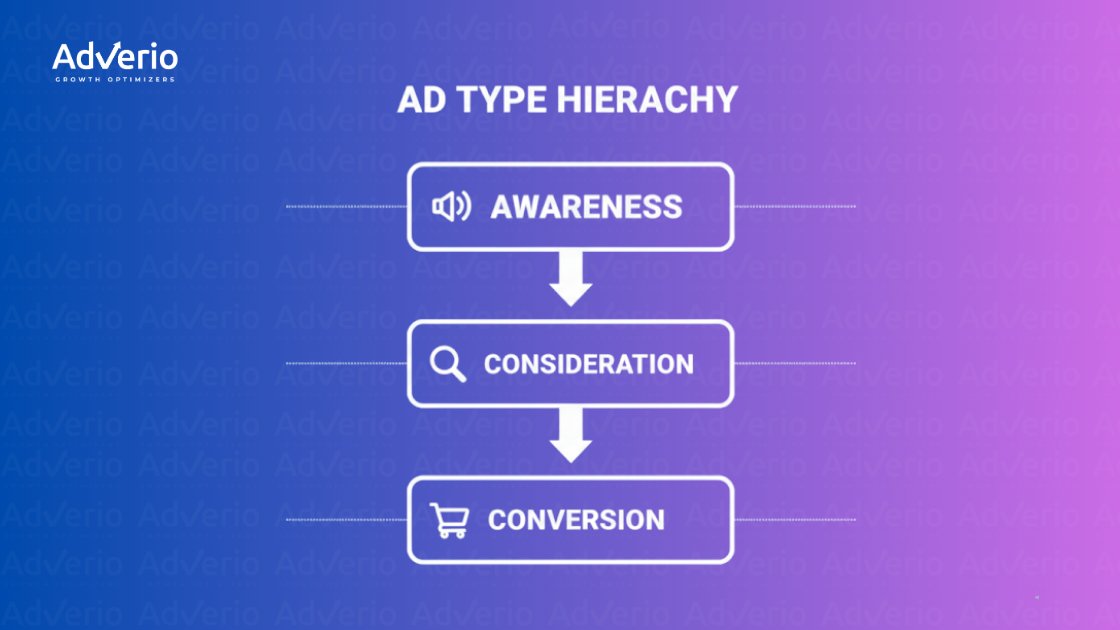
Segment Campaigns by Intent and Structure
The most effective way to build your Amazon campaign architecture is to segment by search intent and match type.
- Branded vs. Competitor vs. Category:
- Branded: Defend your turf and capture high-intent searches for your brand name.
- Competitor: Go on offense by targeting competitor ASINs and brand names to steal market share.
- Category: Target broad, non-branded keywords for discovery and new customer acquisition.
- Match Type (Exact, Phrase, Broad): Isolate match types into their own campaigns or ad groups for granular bid control. This allows you to bid aggressively on proven exact-match terms while using broad match for controlled keyword discovery.
- Product Tier or Lifecycle Stage: Create dedicated campaigns for your best-sellers, new product launches, or seasonal items to manage budgets and strategies independently.
Use Portfolios and Isolate Winners
- Use Campaign Portfolios: Group your Branded, Competitor, and Category campaigns into corresponding portfolios. This simplifies budget management and provides a clean, high-level dashboard of performance.
- Isolate High-Performing SKUs: Pull your top-selling ASINs into their own dedicated campaigns. This gives you granular control over the products driving the most revenue.
- Avoid Ad Cannibalization: A clean structure with meticulous negative keyword management is the only defense against your own campaigns bidding against each other and driving up costs. Learn how to structure Amazon PPC without duplicated campaigns to prevent this common mistake.
Performance Optimization Techniques
Efficiency metrics don’t equal profit if incrementality is missing. A low ACoS is meaningless if your total sales are flat.
Track and Optimize Based on TACoS, Not Just ACoS
Shift your focus to Total Advertising Cost of Sales (TACoS). This metric measures ad spend against total revenue (organic + ad-driven), giving you a clear picture of how ads impact your bottom line. It answers the key question: “Is my ad spend actually growing my entire business?” A declining TACoS signals incrementality — ads driving organic lift instead of just capturing demand.
Mine Data for Smarter Decisions
- Pull Search Term Reports Weekly: This is non-negotiable. Dive in to negate irrelevant terms bleeding your budget and harvest high-converting queries to move into exact-match campaigns.
- Use SQPR and Brand Analytics: Amazon’s Search Query Performance Report and Brand Analytics are your direct lines into the customer’s mind. Use them to align your keyword strategy with actual consumer demand.
- Adjust Bids Based on Placement: Dig into placement reports. If “Top of Search” delivers the highest conversion, increase your bid modifiers for that placement to dominate valuable real estate. Consider dayparting to increase bids during peak shopping hours.
- Split-Test Ad Creatives: Constantly A/B test headlines, images, and videos for your Sponsored Brands and Video ads. Small tweaks can lead to huge lifts in CTR and CVR, a core part of any effective Amazon conversion rate optimization strategy. Remember, driving traffic is only half the battle; you also need to implement proven strategies to increase your e-commerce conversion rate.
When Seller Central Ads Stop Scaling
Every successful brand eventually hits a wall where pushing harder on the same levers delivers diminishing returns. This isn’t failure; it’s a signal your strategy needs to evolve.
Signs You’re Capping Out
- Flat Sales Despite Ad Spend: Your total revenue growth stalls, and your TACoS stops improving.
- High ACoS but Declining CVR: You’re forced to bid higher just to maintain placement, squeezing profit margins.
- Missed Rank Improvements: Despite aggressive campaigns, you can’t gain meaningful ground on critical keywords.
When these signals flash, you’ve likely outgrown your toolkit. You’ve exhausted the bottom-funnel tactics in Seller Central and need to look further up the funnel for new growth.
Time to Explore DSP or External Traffic
When retargeting gaps appear, your LTV:CAC ratio stalls, and you want to influence off-Amazon shopper behavior, it’s time to expand. The next logical step is Amazon DSP (Demand-Side Platform).
Seller Central captures existing demand. DSP influences demand before the search ever happens. Amazon DSP lets you influence the entire weather system, creating demand long before shoppers even think about searching.
While Sponsored Ads capture existing demand, DSP creates new demand by reaching shoppers on and off Amazon with granular audience targeting. For a full breakdown, check out our ultimate guide to what Amazon DSP is.
How Adverio Helps Intermediate Sellers Scale
Hitting a growth plateau isn’t a dead end. It’s a sign your current strategy has maxed out. This is where we come in, moving past simple PPC tweaks to build a genuine e-commerce growth engine with our proprietary Growth Cultivator framework.
We don’t manage ads. We govern growth. Our Amazon PPC management services are built for brands that need governed scale — not more knobs to turn.
From Audit to Architecture
Armed with data, we methodically rebuild your campaign architecture. We create custom portfolios segmented by SKU performance, keyword intent, and strategic goals, immediately stopping waste and providing a clear view of what’s working.
We see advertising as a strategic investment, not an expense. Our goal is to transform your functional ad presence into a sustainable, profitable growth machine that builds long-term brand equity.
From there, we deploy governed execution across ads, catalog, and conversion—not disconnected optimizations—and, when you’re ready, Amazon DSP to shatter growth ceilings for good. This is how we deliver measurable returns, turning plateaued sellers into market leaders.
If your growth has plateaued, the issue isn’t spend it’s structure.
Book Your ROI Forecast
Frequently Asked Questions
How Often Should I Optimize My Seller Central Campaigns?
You should perform tactical optimizations every week. This non-negotiable routine includes digging into search term reports to negate irrelevant queries and harvest high-converting keywords. Bid adjustments and budget shifts should also happen weekly. Beyond that, conduct a full campaign architecture review monthly or quarterly to ensure alignment with your business goals.
What Is a Good TACoS for My Amazon Business?
There’s no magic number. A “good” TACoS depends on your category, profit margins, and current goals. For a mature product, 8-15% is a healthy benchmark. However, during a product launch or an aggressive push for market share, a much higher TACoS is a necessary strategic investment to build long-term organic rank and visibility.
Can I Run Amazon DSP Ads Without an Agency?
Technically, yes, but it’s a different beast than Seller Central advertising. DSP requires a deep understanding of audience building and programmatic bidding. Without that expertise, it’s incredibly easy to burn through a ton of cash with little to show for it. Most brands find they get significantly better results—and avoid costly mistakes—by working with a specialized agency.
At Adverio, we don’t just manage ad accounts; we turn them into predictable, profitable growth engines. If you’ve hit a performance plateau and are ready to break through it, let’s talk.