



Table of Contents
If you’re a $3M to $50M Amazon brand paying an agency and not sure what good actually looks like, this amazon agency benchmark report is for you. Most agencies don’t fail on presentation. They fail on standards. A dashboard can show higher spend, higher sales, and acceptable ACoS while margin erodes, organic rank stalls, and reporting stays too vague to audit. That is not performance management. It is optics.
A proper agency benchmark flips that on its head. It gives operators a hard standard for judging agency quality and turns your next review into an accountability exercise: TACoS, organic share, account health, reporting quality, and whether the agency can explain results in a way finance and leadership can actually audit.
The question is simple. Is your agency creating durable growth, or is it renting short-term visibility at an increasing cost?
If you need a broader operating baseline first, start with this complete Amazon PPC management guide.
Your agency review should sound like an operating review, not a pep talk.
How to Use This Benchmark Report
Treat this like an operating review. Pull a 90-day rolling view, then match each metric to the right revenue tier, category, and brand stage. Skimming once doesn’t help you.
Discipline matters here. One strong week hides structural inefficiency. One bad month triggers the wrong fix. Rolling data gives you a fair read on whether the agency is improving the business or just managing optics.
Apply the benchmarks in layers. Check commercial efficiency first. Then check whether organic share is rising with ad spend, whether account health issues are being corrected, and whether reporting is clear enough for a finance lead to audit. That is the standard. An agency that shows acceptable ad metrics while organic share stalls or reporting stays vague is underperforming.
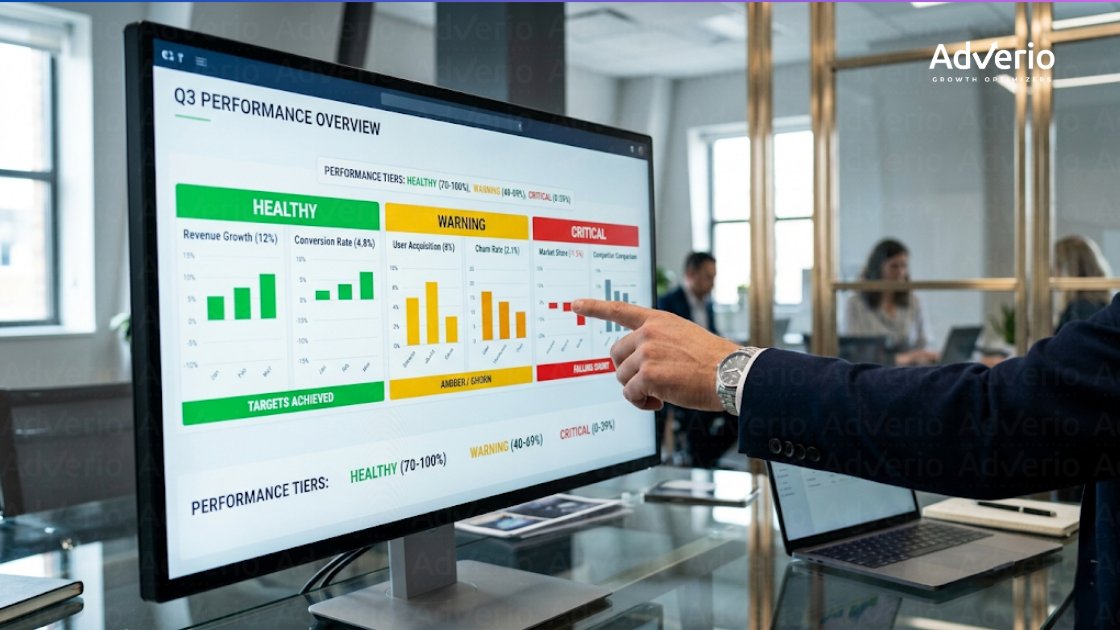
Use a simple escalation rule. One tier below benchmark requires a written diagnosis, owner, and deadline. Two tiers below benchmark is a performance failure. Hold it to that standard.
If your team is also planning marketplace expansion, keep the benchmark logic consistent across channels. The metrics will differ by platform, but the management standard should not. For a practical outside perspective on growth levers, Picjam’s Amazon sales strategies is a useful companion read.
TACoS Benchmarks by Revenue Tier and Category
TACoS is the operating benchmark that exposes whether an agency is building profitable growth or buying revenue at the expense of the P&L. ACoS can look acceptable while total efficiency deteriorates. TACoS closes that loophole.
Use it as an accountability metric, not a reporting decoration. The standard is simple. As revenue scales, TACoS should tighten unless there is a deliberate launch, expansion, or ranking push with a defined payback period. If an agency cannot explain why TACoS is rising, what is causing it, and when it returns to target, performance is off standard.
TACoS benchmarks by revenue and category
| Revenue Tier | Healthy TACoS Range | Watch Range | Action Required |
|---|---|---|---|
| $1M – $3M annually | 10 – 18% | 18 – 25% | Above 25% |
| $3M – $10M annually | 8 – 15% | 15 – 22% | Above 22% |
| $10M – $30M annually | 6 – 12% | 12 – 18% | Above 18% |
| Above $30M annually | 5 – 10% | 10 – 15% | Above 15% |
These ranges are not interchangeable across catalogs. Revenue tier sets the ceiling. Margin profile and category economics determine where within the range a brand should operate.
Category modifier table
| Category Type | TACoS Modifier | Example Categories |
|---|---|---|
| High margin | Can sustain TACoS at top of range | Beauty, supplements, premium home goods |
| Mid margin | Use midpoint of range | Apparel, kitchen, sporting goods |
| Low margin | Must hit bottom of range | Electronics accessories, commodity consumables |
| Highly competitive | Use stricter profit controls | Baby, pet, grocery |
A high-margin brand can tolerate a higher TACoS and still protect contribution profit. A low-margin catalog cannot. The same TACoS figure can represent disciplined growth for one brand and value destruction for another.
Hold agencies to the stricter interpretation. If a $12M brand in a low-margin category is running at 14% TACoS, that is not “close enough.” It sits in the watch range by revenue tier and likely fails the profit test by category. That gap matters. This report is built to expose exactly that kind of underperformance that polished dashboards hide.
If your TACoS sits in the watch range and your agency can’t explain why, that’s the first conversation to have. Adverio’s Amazon PPC management approach is built around TACoS governance, not ad sales optics.
Conversion Rate Benchmarks by Category
Conversion rate is where agencies lose the right to hide behind spend efficiency. A healthy TACoS can still mask weak execution if traffic hits the page and fails to convert. This benchmark matters because it exposes whether the agency is driving qualified traffic into a listing that can close the sale.
Category averages set the baseline. They do not excuse underperformance. If an agency reports strong click volume while CVR stays below category norms, you are not looking at growth. You are looking at waste.
Conversion rate benchmarks by category
| Category | Below Benchmark | At Benchmark | Above Benchmark |
|---|---|---|---|
| Health and Personal Care | Below 8% | 8 – 12% | Above 12% |
| Home and Kitchen | Below 7% | 7 – 11% | Above 11% |
| Sports and Outdoors | Below 6% | 6 – 10% | Above 10% |
| Beauty | Below 9% | 9 – 14% | Above 14% |
| Pet Supplies | Below 8% | 8 – 13% | Above 13% |
| Apparel | Below 5% | 5 – 9% | Above 9% |
| Grocery and Gourmet | Below 10% | 10 – 16% | Above 16% |
| Baby | Below 7% | 7 – 12% | Above 12% |
Use these ranges as an accountability framework, not a vanity table. Audit CVR at three levels: account, category, and hero ASIN. An agency can keep the blended account average respectable while a few core products underperform badly. That is how weak operators make results look acceptable.
A sub-benchmark CVR requires a named cause, an owner, and a deadline. The diagnosis should be specific. Main image weakness. Price mismatch. Review deficit. Poor title clarity. Thin A+ content. Irrelevant search term targeting. Mobile content failure. If your agency cannot identify the exact suppressor, they have not done the work.
Start with the listing before you blame the market. If the fundamentals are weak, tell the team to fix my Amazon listings.
Practical rule: Conversion problems without a documented cause, corrective action, and retest date are not under management. They are being explained away.
Organic Share Benchmarks What Healthy Looks Like
Organic share tells you whether your agency is building brand strength or renting visibility. Paid media should support rank, defend share, and accelerate velocity. It should not become a permanent tax on every sale.
A mature brand with weak organic share is either in a structurally expensive category or trapped in lazy media management. Those are different problems. Your agency should know which one you have.
Organic share benchmarks by brand stage
| Brand Stage | Healthy Organic Share | Watch Range | Action Required |
|---|---|---|---|
| Launch, first 12 months | 30 – 50% | 20 – 30% | Below 20% |
| Growth, 12 to 36 months | 50 – 65% | 40 – 50% | Below 40% |
| Mature, above 36 months | 60 – 75% | 50 – 60% | Below 50% |
A mature brand below the action line needs a hard review of branded search dependence, hero ASIN ranking stability, and whether spend is propping up weak retail fundamentals. If organic share rises while TACoS stays controlled, the agency is creating enterprise value. If organic share is flat while ad spend keeps climbing, they are not.
Account Health Benchmarks
This is the operational floor. Not excellence. Not strategy. The floor.
An agency that misses account health basics isn’t just underperforming. It’s running your brand toward avoidable, fixable risk.
Account health benchmarks
| Metric | Healthy | Watch | Action Required |
|---|---|---|---|
| Order Defect Rate | Below 1% | 1 – 1.5% | Above 1.5% |
| Late Shipment Rate | Below 4% | 4 – 6% | Above 6% |
| Buy Box Percentage on hero ASINs | Above 95% | 90 – 95% | Below 90% |
| Suppressed listings | Zero | 1 – 2 active | Three or more active |
| Policy warnings in last 90 days | Zero | One | Two or more |
| Response time to account alerts | Same day | Within 24 hours | Over 24 hours |
Serious operators monitor this daily. They don’t wait for the brand to notice. If you need a clearer operating lens, start by learning how to understand your Amazon account’s five states.
Reporting Quality Benchmarks
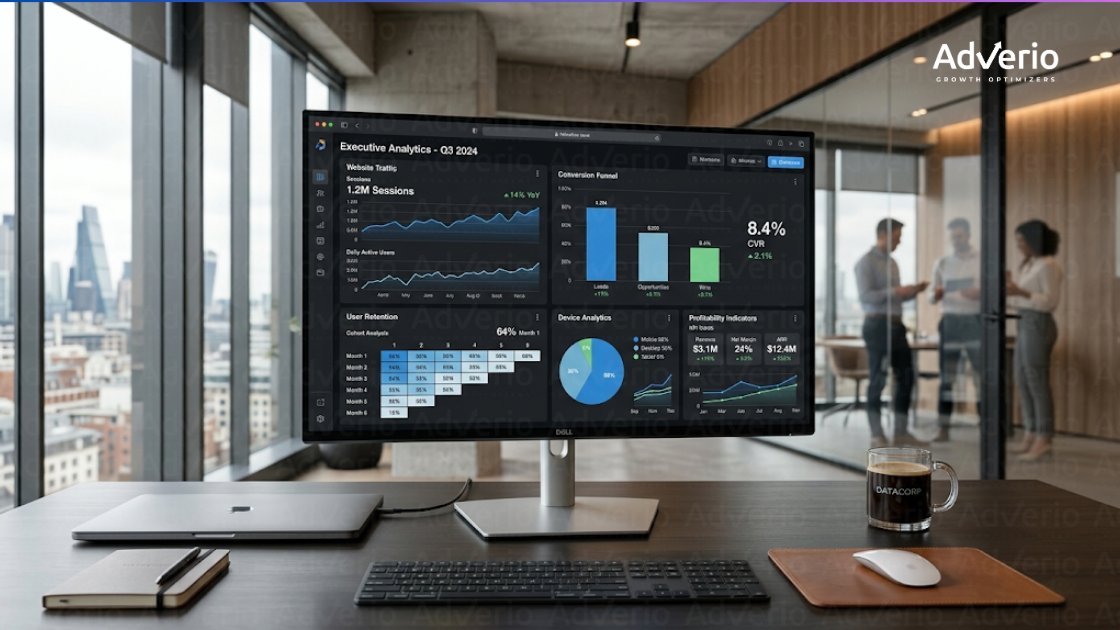
Bad reporting protects the agency. Good reporting exposes performance.
Your report should show whether the agency created profitable growth, improved organic position, and fixed the next constraint in the account. If it cannot connect actions to business outcomes, it is administration dressed up as insight.
Reporting quality benchmark checklist
| Reporting Element | Benchmark Standard | Below Standard |
|---|---|---|
| Reporting frequency | Weekly performance update plus monthly strategic review | Monthly only or ad hoc |
| TACoS coverage | TACoS reported by ASIN every week | TACoS absent or only at account level |
| Organic share tracking | Included in every monthly report | Not tracked or reported separately |
| Contribution margin | Included in monthly review where BI is in scope | Never included |
| Diagnostic priority list | Status updated monthly with completion and impact noted | No priority list exists |
| Before and after tracking | Every optimisation documented with outcome | Activity reported without outcome attribution |
| Lookback comparison period | Clearly defined and consistent | Changes without explanation |
This is an accountability framework, not a gallery of vanity metrics. High-performing agencies report in layers. First, the commercial outcome. Then the driver behind it. Then the action taken, the expected effect, and the result. That structure is what separates a team that manages the business from one that narrates it.
TACoS alone is not enough. Organic share alone is not enough. A useful report shows how paid activity affected organic rank, conversion, contribution margin, and total account efficiency over a consistent period. If your agency only reports ad sales and return on ad spend, you are missing the harder question. Did that spend create incremental growth? Serious operators push for that standard and use resources like Adverio on Amazon ad spend to test whether reported gains are real.
A report that cannot show what changed, why it changed, and what gets fixed next is not management. It is cover.
Agency Responsiveness and Communication Benchmarks
Operators usually feel weak communication before they can define it. Define it anyway. Then hold the line.
Communication and responsiveness benchmarks
| Communication Standard | Benchmark | Below Benchmark |
|---|---|---|
| Response time to urgent account issues | Within 2 hours during business hours | Over 4 hours or next day |
| Response time to general queries | Same business day | Over 24 hours |
| Proactive communication on performance changes | Agency flags before brand notices | Brand always flags first |
| Scheduled call frequency | Weekly or biweekly with agenda in advance | Monthly or ad hoc |
| Escalation path clarity | Named escalation contact documented | No escalation path defined |
| Strategy updates | Quarterly strategic review with updated targets | Annual review only or never |
Proactive communication is the line between a partner and a vendor. Vendors explain after you notice. Partners tell you before you do.
The Full Benchmark Scorecard
A quarterly review is not a performance theater. Run it as an audit. This scorecard gives you a clean way to test whether your agency is protecting profitable growth or just producing activity.
Complete it before the meeting. Use your latest trailing data. Force every line into Green, Yellow, or Red. Agencies can debate tactics. They cannot argue with a scorecard that ties spend, organic performance, account health, and reporting discipline into one operating standard.
The full benchmark scorecard
| Benchmark Area | Metric | Your Current Number | Benchmark Standard | Status |
|---|---|---|---|---|
| TACoS | Account TACoS | See tier table | ||
| TACoS | TACoS trend direction | Declining or stable | ||
| Conversion | Hero ASIN conversion rate | See category table | ||
| Organic share | Organic percentage of revenue | See stage table | ||
| Account health | Buy Box percentage on hero ASINs | Above 95% | ||
| Account health | Suppressed listings | Zero | ||
| Reporting | TACoS in weekly report | Yes | ||
| Reporting | Organic share in monthly report | Yes | ||
| Reporting | Diagnostic priority list updated monthly | Yes | ||
| Communication | Response time to urgent issues | Within 2 hours | ||
| Communication | Agency flags issues proactively | Yes |
Score each row as Green for at benchmark, Yellow for watch range, or Red for below benchmark.
One Red row needs explanation. Multiple Red rows across different categories show a management failure, not an isolated miss. That distinction matters. A weak TACoS month can happen. Weak TACoS, weak organic share, and poor reporting at the same time means the account is being managed without control.
This scorecard works because it blocks vanity reporting. An agency can make CPC, ROAS, and traffic look presentable while margin quality erodes underneath. TACoS exposes spend efficiency across the full account. Organic share shows whether paid media is creating durable demand or renting sales. Reporting quality shows whether the agency can diagnose problems early enough to fix them.
Pro tip: Run this scorecard before your agency’s quarterly review and circulate the marked version internally first. Align your team on where performance is acceptable, where it is drifting, and where you need corrective action. Specific scores produce direct conversations and clear next steps. Vague dissatisfaction produces excuses. Adverio Account Team
If you are reassessing partners, use this scorecard alongside your agency selection criteria and compare fees against what Amazon agency pricing should look like in 2026.
How Adverio Performs Against These Benchmarks
Adverio built its operating model around the same standards in this report because agencies should be judged on control, not presentation. The benchmark framework here is an accountability system. It tests whether an agency can protect margin, grow organic demand, and report performance with enough precision to support decisions.
Our standard is simple. TACoS is governed at the account and ASIN level. Organic share is reviewed monthly to confirm paid media is building durable rank, not just buying temporary volume. Account health is checked daily, and issues that enter watch range are escalated the same day. Reporting includes TACoS by ASIN, organic share movement, a ranked diagnostic list, completion status, and outcome attribution. That is the level of visibility required to separate apparent progress from actual progress.
This also changes how clients evaluate the work. A strong agency relationship starts with target setting against business realities, then measures results against that baseline with no room for vanity metrics. If you want a team to run Amazon account management against profit-first benchmarks, Adverio’s process is built for that standard.
For brands running Amazon DSP alongside PPC, Adverio’s Amazon DSP management applies the same benchmark discipline to audience-based spend, tracking organic lift and incrementality alongside TACoS.
FAQs
How should I use this benchmark report with my current agency? Score the account on a rolling 90-day basis against the correct revenue tier, category, and brand stage. Then require a written action plan for every material gap, with a named owner, deadline, and expected business impact. Use the report to judge execution quality, not presentation quality. What if my agency says these benchmarks don’t apply to my category? Make them prove the exception. The framework already accounts for category economics, margin profile, and brand maturity. If an agency claims your account should be measured differently, it should identify the exact benchmark, explain the reason for the variance, and show which other metric offsets that tradeoff. Why is it so hard to benchmark Amazon agencies specifically? Most public benchmark data focuses on seller outcomes or campaign-level results. That leaves a blind spot around agency operating quality. An agency can post acceptable surface metrics while failing on TACoS control, organic share growth, reporting accuracy, and issue resolution speed. This report closes that gap. What should I do if performance is below standard across several areas? Treat it as an operating problem. Require a remediation plan with owners, deadlines, and expected commercial effect. If the agency cannot produce that plan, or the same failures recur quarter after quarter, replace the agency.
Read Next
Use this the way operators actually run their accounts. It’s a scorecard that ties spend, organic growth, reporting, and execution to commercial outcomes. If your agency looks polished but cannot explain weak TACoS control, stagnant organic share, or poor reporting quality, you do not have a performance partner. You have a presentation problem.
Read these next if you want to pressure-test the account with stricter standards:
-
Amazon PPC audit checklist
References
The benchmark framework in this report is informed by category-level advertising data, Amazon Ads reporting updates, and broader market benchmark studies cited earlier in the article.
A serious brand needs a verdict, not more reporting. If you want Adverio to benchmark your Amazon business against profit-first standards and identify exactly where execution is falling short, book your Profit ROI Forecast.