


Table of Contents
A CFO-focused framework to turn Amazon ad spend into measurable, margin-driven growth. Amazon PPC isn’t a marketing channel—it’s a capital allocation decision. Yet most finance leaders treat it like a black box on the P&L. That’s how profitable growth quietly turns into wasted spend. It’s a CFO’s playbook for turning PPC from a marketing cost into a measurable, high-return investment that builds enterprise value.
At a Glance
• ACoS ≠ profitability — TACoS does
• PPC must be governed like capital, not spent
• Profit leaks hide in keywords, margins, and inventory
• CFOs should optimize for contribution margin, not ROAS
Turning Amazon Ad Spend from Black Box to Profit Center
Your marketing team lives and breathes acronyms like ACoS and ROAS, but those metrics don’t tell the whole story. They measure campaign efficiency in a silo, completely missing the one question the C-suite actually cares about: Is this ad spend driving profitable growth for the business as a whole?
This narrow focus is a trap we call ‘Optimization Myopia,’ and it’s one of the quickest ways to burn through cash chasing vanity metrics.
A CFO’s lens connects advertising activity to real financial outcomes. It treats every dollar spent not as an expense, but as an investment that must answer to the metrics that truly matter—namely, contribution margin and Total Advertising Cost of Sales (TACoS).
This mindset shift is critical for a few key reasons:
-
Smarter Capital Allocation: PPC budgets stop being a marketing slush fund and are treated with the same rigor as any other capital investment—this is the foundation of an Amazon PPC strategy built for profit.
-
Real Accountability: Teams are held accountable for profitable growth, not just hitting some arbitrary ACoS target that might be quietly eating away at your margins.
-
Accurate Forecasting: You can finally build reliable forecasts that connect ad spend directly to its impact on market share and the overall health of the P&L.
-
Strategic Partnership: Your role shifts from being a financial gatekeeper to a strategic partner who pulls the levers of advertising to drive growth.
The sheer size of this channel demands this level of financial discipline. Amazon’s U.S. digital ad revenue is projected to hit $56.21 billion by 2025. That firehose of cash is fueled by its massive user base of roughly 98 million monthly app users in the US alone.
This isn’t just another marketing channel; it’s a multi-billion-dollar ecosystem where your competitors are actively buying market share every single day. Without a finance-first framework, you’re not just spending money—you’re ceding ground. This guide gives you the playbook to take control, crack open the black box, and turn your Amazon ad budget into a predictable profit center.
Deconstructing PPC Economics with KPIs That Matter
If your marketing team is still reporting ACoS in isolation, you’re flying blind. One that translates marketing jargon into actual financial results. Too many agencies get fixated on metrics that look good on a PowerPoint slide but hide serious profitability issues. It’s time to move past the marketing scorecard and start using KPIs that actually mean something to the P&L.
This is how you pivot the conversation from “campaign performance” to “business impact.” The aim is to make sure every dollar spent is driving profitable growth, not just pumping up top-line revenue that evaporates by the time it hits the bottom line.
Beyond ACoS: The Metrics That Reveal True Profitability
ACoS tells you how efficient a campaign is. It does not tell you if you’re making money. That’s where most brands lose margin—optimizing for efficiency while profitability quietly erodes.
The metric that actually ties ad spend to business performance is Total Advertising Cost of Sales (TACoS).
TACoS = Total Ad Spend ÷ Total Revenue (Ad-Driven + Organic)
This single KPI gives you a panoramic view of your advertising’s true leverage. When TACoS is trending down, it’s a clear signal that your ad spend is creating a flywheel effect, boosting your organic rank and driving more sales over time without more ad dollars. TACoS tells you if you’re building a sustainable business asset or just renting revenue. If you’re new to the term, you can learn more about what ACoS is and see why it’s only a tiny piece of the puzzle.
If you’re not measuring TACoS, you’re not measuring impact—you’re just tracking spend.
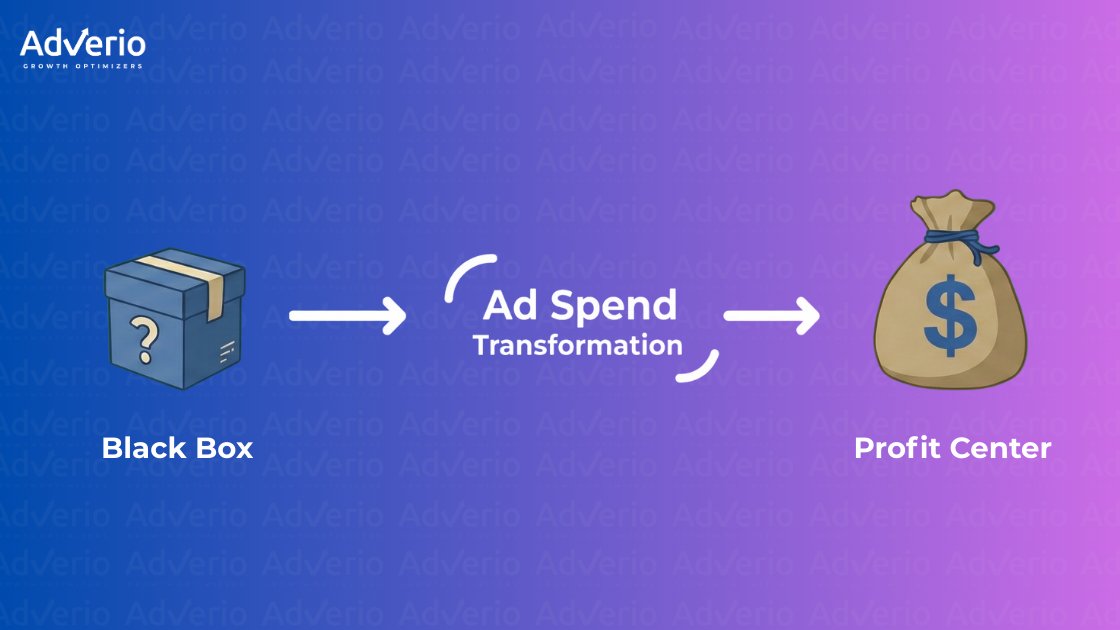
This process moves you from isolated, confusing data points to a unified, profit-focused framework. That’s the kind of clarity you need to allocate capital with confidence.
From Marketing Metrics to Financial KPIs
Most PPC reporting is built to impress marketers—not CFOs. This table translates the common traps into the language of financial oversight, showing what CFOs should actually be measuring.
| Marketing Metric (The Trap) | What It Measures | Financial KPI (The Truth) | Why It Matters to a CFO |
|---|---|---|---|
| ACoS | Ad spend as a percentage of ad revenue. | TACoS | Measures the leverage of ad spend on total business growth, not just ad sales. It proves your marketing is building a long-term asset. |
| ROAS | Gross revenue generated per dollar of ad spend. | Contribution Margin After Ad Spend | Reveals the actual profit generated per sale after all variable costs, including the ad spend itself. This is your true profitability litmus test. |
| Clicks/Impressions | Top-of-funnel engagement and visibility. | Customer Lifetime Value (cLTV) | Focuses on acquiring profitable long-term customers, not just generating one-time transactions. It connects ad spend to sustainable enterprise value. |
By focusing on the right-hand column, you ensure that every conversation about advertising is grounded in real financial impact, not just marketing activity.
Building a Financial Scorecard for Amazon PPC
To gain full control, you need a scorecard that connects every ad dollar to its impact on your P&L—this is exactly where Business Intelligence systems become non-negotiable. Beyond TACoS, a few other metrics are non-negotiable for any CFO who’s serious about making Amazon PPC a profit driver.
-
Return on Ad Spend (ROAS): While often used as the inverse of ACoS (ROAS = 1 / ACoS), its framing is much more powerful for a finance leader. It shifts the conversation from “cost” to “return.” It asks the simple, direct question: “For every dollar I put into ads, how many dollars in ad revenue do I get back?” It’s an investment-centric view that belongs in any financial discussion.
-
Contribution Margin After Ad Spend: This is the ultimate test. It cuts through the noise to tell you whether an advertised sale is actually making you money after you factor in COGS, all of Amazon’s fees, and the ad spend that generated the sale. If this number is negative, you’re literally paying Amazon for the privilege of losing money.
Finally, you have to consider Customer Lifetime Value (cLTV) within the Amazon ecosystem—this is where strategies like Amazon DSP management become critical for driving repeat purchases and long-term value. Tracking it can be tricky, but for brands with high repeat-purchase rates, it’s essential. Good advertising doesn’t just get you a single sale; it acquires a customer who comes back again and again, driving long-term value that makes the initial acquisition cost look like a bargain.
Leading these data-driven conversations with your marketing teams is the first step toward building a truly bulletproof financial strategy for your Amazon channel.
Want to see how your ad spend translates to actual profit?
→ Get your Amazon PPC profit analysis
Building a Bulletproof Governance and Budgeting Framework
If your PPC budget is reactive, your margins are already leaking. If you want to govern ad spend with the same financial discipline you apply to any other capital investment, you have to shift from a reactive posture to a strategic, forecast-driven model. This is where you build the financial guardrails that tie marketing activity directly to P&L outcomes.
A bulletproof framework isn’t about arguing over keyword bids; it’s about setting the strategic direction. It’s about defining what the money is supposed to do—whether that’s hitting a specific contribution margin, stealing market share, or bankrolling a new product launch. This governance model ensures your marketing team can execute tactically—something only possible with structured Amazon account management. but always within a structure that serves your top-level financial goals.
From Ad-Hoc Approvals to Strategic Allocation
The first step is to kill the idea of a single, monolithic PPC budget. This is especially critical for brands with large multivariant catalogs (think 250+ SKUs). Not every product is a star, and they certainly don’t all deserve the same investment.
Instead, your budget allocation needs to be dynamic, mirroring the strategic role of each product segment in its lifecycle:
-
Launch Phase: New products need an aggressive cash injection to get off the ground, build sales velocity, and rack up reviews. A high TACoS here isn’t a problem; it’s a necessity.
-
Growth Phase: These are your rising stars. They need sustained funding to snatch market share from competitors and climb the organic rankings. Budgets should be ready to capitalize on momentum.
-
Maturity Phase: For your established cash cows, the game changes from growth to profit maximization. Ad spend should be fine-tuned for efficiency, defending rank while optimizing for every last point of contribution margin.
-
Decline Phase: For products nearing the end of their life, ad spend should be minimal. The only goal is to profitably liquidate what’s left in the warehouse.
This portfolio approach makes sure your capital flows to where it generates the highest return, aligning every dollar spent with a clear financial objective.
Establishing Flexible and Data-Driven Budgeting
A rigid annual budget is dead on arrival in the Amazon marketplace. Things just move too fast. Your framework needs to be agile enough to react to seasonality, competitor moves, and inventory levels. That means building a model based on real-time financial inputs, not just what you spent last year.
A huge piece of this puzzle is understanding the platform’s cost dynamics. For example, the average Amazon cost-per-click (CPC) hovered around $1.04 in 2025, a massive leap from the $0.71 it was before 2020. Translation: you’re paying more for the same attention—unless your strategy evolves. On top of that, costs swing wildly by category—some health sectors see CPCs around $1.41. Grasping these numbers is non-negotiable for any CFO working on Amazon PPC for CFOs, as they directly feed into your ROI models and highlight the need for a flexible budget.
The goal is to create a ‘guardrails, not handcuffs’ approach. Define the non-negotiable financial outcomes (e.g., a minimum contribution margin), then give your team or agency the room to adjust spending within those guardrails to pounce on opportunities as they pop up.
Building this system requires a true financial partner, not just a tactical campaign manager. A good agency will help you model different budget scenarios, forecast outcomes based on live data, and create the reporting you need to maintain oversight without killing agility—this is exactly what strong Amazon PPC management services should deliver. When you understand how to establish efficient budgets for a tailored promotion, you can turn your budgeting process from a painful chore into a powerful strategic weapon.
Identifying and Plugging Common Profit Leaks in PPC
Most PPC accounts don’t fail because of bad ads. They fail because of broken systems behind them. From a financial oversight perspective, your role isn’t about tweaking keyword bids. It’s about spotting the systemic flaws that are quietly draining profit from the bottom line. Think of this as a diagnostic toolkit—one designed to help you catch the hidden drips before they become a flood on the balance sheet.
These leaks often hide in plain sight, sometimes disguised as “marketing best practices” or buried so deep in campaign reports that they go unnoticed. They are the silent margin killers that even seasoned marketing teams can miss when they’re too close to the action.
Leak 1: Wasted Spend on Irrelevant Keywords
This is the classic, and often most expensive, profit leak. It’s what happens when campaigns are bidding on broad, vague search terms that attract window shoppers with zero intent to buy—and why brands that actively reduce wasted Amazon PPC spend outperform those chasing volume. Imagine a company selling premium leather dog collars bidding on the term “dog stuff.” They’ll rack up thousands of clicks and burn through their budget with almost nothing to show for it in sales.
-
What to Look For: Ask for the Search Term Report. Scan it for high-spend, low-conversion keywords that are obviously a poor match for your products.
-
How to Fix It: This is where a rigorous negative keyword strategy comes in. By proactively telling Amazon not to show your ads for those junk terms, you can plug this leak instantly.
Leak 2: Cannibalizing Organic Sales with Brand Bids
We call this Brand Drain, and it’s a hot-button issue. This leak happens when you pay for clicks on your own brand name—terms a customer was already using to find you. While some defensive bidding can be smart, pouring too much budget here means you’re just paying Amazon for sales that were already yours.
-
What to Look For: Get a breakdown of your ad budget. What percentage is going to branded keywords versus non-branded terms that drive new customer discovery?
-
How to Fix It: Run a simple test. Pause your branded campaigns for a week or two and watch what happens to total sales (ad sales + organic sales). If the total number holds steady, you’ve just found a major profit leak you can patch up immediately.
Leak 3: Over-Investing in Low-Margin Hero Products
It feels intuitive to throw ad dollars behind your best-selling “hero” products. The problem is, if those products have razor-thin margins, you could be spending your way into a net loss on every single advertised sale. Pushing a product with a 15% contribution margin is a completely different financial ballgame than advertising one with a 40% margin.
Your advertising strategy must be weighted by profitability, not just sales volume. Ignoring the contribution margin of the products you advertise is a direct path to unprofitable revenue growth.
Of course, a crucial part of preventing this is to constantly look for ways to improve gross profit margin through smarter pricing or cost controls.
Leak 4: Disconnecting Ads from Operational Reality
Your PPC campaigns don’t exist in a bubble—without strong Amazon listing optimization, even the best ads will fail to convert. A perfectly crafted ad campaign is worse than useless if it drives traffic to a product that’s about to stock out or is saddled with a 3-star rating. Spending money to send more customers to a listing with operational issues is like pouring gasoline on a fire. You’re just wasting capital and making the problem worse.
-
What to Look For: Cross-reference your highest-spending ad campaigns with real-time inventory levels and product review data.
-
How to Fix It: Your ad strategy needs to be hardwired to your operational data. Build a system that automatically pauses or pulls back bids on SKUs with low inventory or sinking ratings. This stops the bleeding before it starts.
Leak 5: The Hidden Costs of Black-Box Tech
If you can’t explain where your ad dollars go, you don’t have a strategy—you have a liability. Black-box platforms hide decisions, mask inefficiencies, and make real financial accountability impossible.
This is exactly why we built Adverio’s Profit Pulse System (PPS). It was designed from the ground up to provide a transparent, P&L-level view of performance, connecting every ad dollar to its real impact on your bottom line.
How to Vet an Agency as a True Financial Partner
Hiring a PPC agency is a capital allocation decision. Treat it like one. You’re not just hiring someone to fiddle with keywords. You’re entrusting a partner with a significant chunk of your growth budget and expecting a measurable return that strengthens your P&L.
Slick case studies and promises of a lower ACoS are just table stakes. A true financial partner speaks your language—profit, margin, and enterprise value. This calls for a different kind of vetting process, one that goes beyond surface-level marketing metrics and digs deep into the financial engine powering their recommendations. You need to ask the tough questions that reveal whether you’re talking to a tactical campaign manager or a strategic growth partner.
The Scorecard for Financial Alignment
To separate a true partner from a typical vendor, you need a scorecard focused on their financial acumen and operational depth. An agency that stumbles on these questions isn’t equipped to manage your investment.
Here are the non-negotiable evaluation criteria:
-
Reporting and P&L Insights: Do their reports stop at ACoS and ROAS, or do they connect the dots to TACoS and contribution margin? Ask them to walk you through a sample report and explain how it helps a CFO understand the real profitability of the channel.
-
Large-Catalog Profit Optimization: For brands with 250+ SKUs, a one-size-fits-all approach is a recipe for margin erosion. How do they allocate budget across a diverse product catalog? A sophisticated partner will have a clear methodology for tiering investment based on product lifecycle, sales velocity, and, most importantly, contribution margin per unit.
-
Forecasting Sophistication: Ask to see their forecasting model. A top-tier partner won’t just drag last month’s numbers into next month’s column. Their models will incorporate seasonality, competitor activity, inventory levels, and market share data to project the actual P&L impact of different budget scenarios.
-
Team Structure and Expertise: Who is actually managing your account? You need a dedicated pod of strategists—what we call Growth Evangelists and Growth Optimizers—not a junior account manager juggling 30 clients. This structure ensures you get strategic oversight backed by tactical excellence.
Asking the Right Questions
When you get them in the room, skip the fluff. Go straight for the questions that expose their financial thinking.
A partner focused on Amazon PPC for CFOs will welcome a deep dive into financial metrics. They understand that their job isn’t just to drive clicks but to generate profitable, sustainable growth that shows up on the bottom line.
There’s a good reason for this scrutiny. Amazon ads convert at an average rate of around 9.96%, which is roughly seven times higher than the typical e-commerce conversion rate of 1.33%. This efficiency is a powerful lever, but only if the agency pulling it is focused on profit, not just volume.
To make sure you’re working with an agency that truly gets your financial goals, exploring potential solutions for PPC agencies can give you a behind-the-scenes look at their capabilities. By asking the right questions, you can find a partner who thinks like an investor, not just a marketer. A crucial first step is understanding the landscape of hiring Amazon PPC management services to ensure you select a partner who is completely aligned with your financial objectives from day one.
Your Roadmap from Financial Oversight to Strategic Leadership
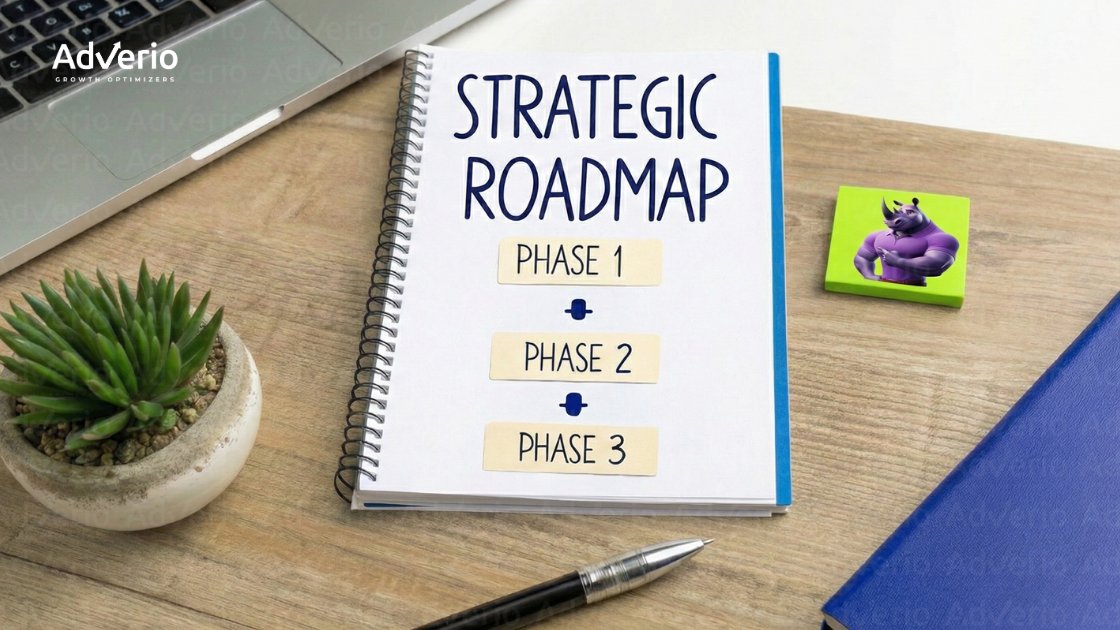
Shifting from a financial gatekeeper to a strategic leader in the Amazon channel demands a clear, deliberate plan. This isn’t about getting bogged down in keyword bids; it’s about building a robust financial framework that ties every ad dollar directly to your P&L goals.
Here’s the operating model to take control of your Amazon ad spend—and turn it into a predictable growth engine.
Phase 1: Audit and Diagnosis
Your first 30 days are all about a deep dive into the data. The objective is to get an unvarnished look at where your money is actually going and what it’s accomplishing, establishing a true financial baseline.
-
Establish a Financial Scorecard: Make an immediate shift in reporting. Move away from ACoS and focus on TACoS and Contribution Margin After Ad Spend. This is your new non-negotiable standard.
-
Conduct a Profit Leak Audit: Use the frameworks we covered earlier to hunt down every dollar of wasted spend. You need to know exactly what percentage of your budget is lost to irrelevant keywords or Brand Drain.
-
Segment Your Catalog: Go deep on SKU-level profitability. Identify your high-margin heroes, your low-margin volume drivers, and the products that are actively losing you money once you factor in ad spend.
Phase 2: Strategy and Governance
With a clear diagnosis in hand, the next 60 days are about putting financial guardrails in place to protect the bottom line. This is where you move from being a reactive budget approver to the architect of a proactive governance model.
-
Implement a Portfolio Budgeting Framework: Get rid of the one-size-fits-all budget. Start allocating capital based on a product’s lifecycle stage and its margin profile. This ensures your most profitable SKUs get the fuel they need to grow.
-
Set Clear Financial KPIs for Your Team: Mandate that all performance discussions are grounded in TACoS and contribution margin. Set clear, realistic targets for these metrics and hold the team accountable to them.
Phase 3: Partnership and Scale
The final phase is all about execution and hitting the accelerator. You’ve built the financial framework; now it’s time to bring in a strategic partner who can operate within it to drive profitable growth. This is where a team like Adverio, armed with systems like our proprietary Growth Cultivator, can make all the difference.
True partnership isn’t about outsourcing tasks; it’s about aligning with a team that thinks like an investor and is held accountable for generating a measurable return on your capital.
By following this roadmap, you systematically turn Amazon PPC from an unpredictable line item into a powerful, financially-driven growth engine for the business.
How Adverio Turns PPC into a Profit Engine
Most agencies optimize campaigns. We optimize the business behind them.
Adverio’s Profit Pulse System (PPS) connects your ad spend directly to contribution margin, inventory reality, and market share—so every dollar has a job.
If you need a partner that treats PPC like capital—not clicks—this is where the shift happens.
→ Explore Amazon PPC management services
Frequently Asked Questions
When it comes to Amazon PPC, finance leaders want straight answers that connect ad spend to the bottom line. Here are some of the most common questions we hear from CFOs and the no-nonsense answers you should expect.
What Is a Good TACoS for an Established Brand on Amazon?
There’s no magic number for a “good” Total Advertising Cost of Sales (TACoS). A healthy TACoS isn’t some generic industry benchmark; it’s a strategic number tied directly to your P&L goals.
For a mature brand laser-focused on profit, a TACoS between 8-12% is often a sweet spot. It signals strong organic sales and efficient ad spending. But what about a brand in an aggressive growth phase? They might strategically push their TACoS to 15-25% to steal market share from competitors. The right number is dictated entirely by your financial strategy. A true financial partner helps you model TACoS targets that actually support business goals, not just chase marketing metrics.
How Can I Reliably Forecast the ROI of an Increased PPC Budget?
To get an accurate forecast, you have to look far beyond simple ROAS projections. A budget forecast a CFO can actually trust needs to be built on a foundation of multiple financial and operational variables.
A solid forecast has to integrate:
-
Historical performance data to build a reliable baseline.
-
Seasonality and market trends to account for predictable peaks and valleys in demand.
-
Competitor share of voice to realistically model the cost of getting noticed.
-
Inventory levels and operational capacity to make sure you can actually fulfill the demand your ads generate.
A sophisticated partner will use proprietary forecasting models, like our Growth Cultivator, which weighs all these complex inputs. This approach transforms a budget increase from a risky gamble into a calculated investment, grounded in contribution margin and real incremental sales growth.
Our Agency Focuses Heavily on ACoS. Why Is That a Red Flag?
An obsessive focus on Advertising Cost of Sales (ACoS) is a classic sign of Optimization Myopia. It’s a huge red flag because while ACoS tells you how efficient a single ad campaign is, it says absolutely nothing about the overall financial health of your Amazon business.
This tunnel vision leads to terrible capital allocation. Think cutting spend on top-of-funnel ads that are quietly driving your organic sales, just because their direct ACoS looks high. A financially savvy partner knows the real goal is profitable growth for the entire channel. They will always anchor their reporting and optimization strategy to TACoS and contribution margin—the only metrics that show the true impact on your bottom line.
If your Amazon ad spend still sits on your P&L as a question mark, it’s time to fix that. Adverio brings the financial rigor and strategic expertise needed to drive measurable growth. Book your Amazon ROI forecast and see what a true financial partner can deliver.
Read next: Reducing Amazon PPC Ad Spend the Smart Way