


Table of Contents
Most Amazon sellers launch Walmart Connect assuming the playbook transfers. Same Sponsored Products format. Same bidding interface. Similar dashboards.
That assumption is the most expensive mistake Amazon-native brands make on Walmart.
Walmart Connect is not Amazon PPC running on a different platform. It is a retail-first ad system built by a company whose entire business model is operational excellence. It rewards fulfillment reliability, pricing discipline, and listing completeness before it rewards bidding sophistication. Brands that do not understand that distinction burn budget at scale and blame the platform.
This guide covers how Walmart Connect actually works, when it compounds, when it fails, and how Amazon sellers specifically should approach it in 2026.
How Walmart Connect Actually Works — The Retail-First Mechanics
Walmart’s ad platform is an extension of its retail operating model. The algorithm prioritises items that are in stock, competitively priced, and operationally reliable before it gives them ad visibility. A brand with a strong bid on an out-of-stock item gets no impressions. A brand with an average bid on a reliably fulfilled item with strong reviews gets consistent visibility.
The implication is direct: ad performance on Walmart is a lagging indicator of operational health. If fulfillment is unstable, ads throttle. If pricing is not competitive, conversion rate drops regardless of placement. If reviews are thin, click-through rate underperforms even at top-of-search placement.
This is different from Amazon where a strong bid on a weak listing can still generate impressions and clicks — the conversion rate pays the price but the traffic still arrives. On Walmart the system gates traffic at the impression level based on retail trust signals.
For brands managing Amazon PPC management alongside Walmart Connect, understanding this distinction is what separates brands that scale both channels from brands that subsidise one with the other.
| Signal | Amazon Weighting | Walmart Connect Weighting |
|---|---|---|
| Bid amount | High — primary placement driver | Moderate — gated by retail signals first |
| Fulfillment reliability | Indirect — affects rank over time | Direct — gates ad visibility immediately |
| Pricing competitiveness | Indirect — affects conversion | Direct — affects impression eligibility |
| Review count and rating | Affects conversion rate | Affects impression eligibility and conversion |
| Listing completeness | Affects relevance score | Direct eligibility requirement |
| Keyword relevance | Primary targeting signal | Important but subordinate to retail signals |
Why Walmart Advertising Breaks for Most Brands
If your Walmart ad campaigns are sputtering, it’s rarely because you picked the wrong keywords. The problem is almost always structural. Most brands fail because they treat Walmart as a carbon copy of Amazon — a fundamental mismatch that poisons their strategy from the start.
Walmart Is a Retail Channel First
Before it’s an ad platform, Walmart is a retail engine. Your success isn’t determined by your ad budget — it’s dictated by your operational excellence.
On Walmart, ads cannot override weak retail signals. If your fulfillment is spotty, your in-stock rates are poor, or your product reviews are thin, no amount of ad spend will save you. Ads only amplify what’s already there. If the foundation is cracked, pouring money on top just makes the cracks bigger.
Amazon Playbooks Don’t Transfer
The second critical mistake is copy-pasting your Amazon strategy. The platforms operate on completely different principles and attract shoppers with different mindsets.
Walmart shoppers are famously price-sensitive. Amazon shoppers often prioritize convenience and speed. That one distinction changes everything.
- Different Shopper Behavior: Walmart shoppers hunt for value. Amazon shoppers often default to brand trust and social proof.
- Different Auction Dynamics: The bidding systems behave differently. The same bid strategy will produce wildly different results on each platform.
- Different Attribution Logic: How each platform measures ad success is unique. Relying on Amazon’s attribution model to gauge Walmart performance leads to poor decisions.
When Amazon logic is copy-pasted, Walmart efficiency collapses. A robust Walmart Connect advertising plan requires a ground-up build that respects the platform’s unique ecosystem. If structural inefficiencies are suppressing performance, our Walmart Connect management team rebuilds campaigns around contribution margin, fulfillment leverage, and incrementality control.
What Actually Determines Walmart Ad Performance
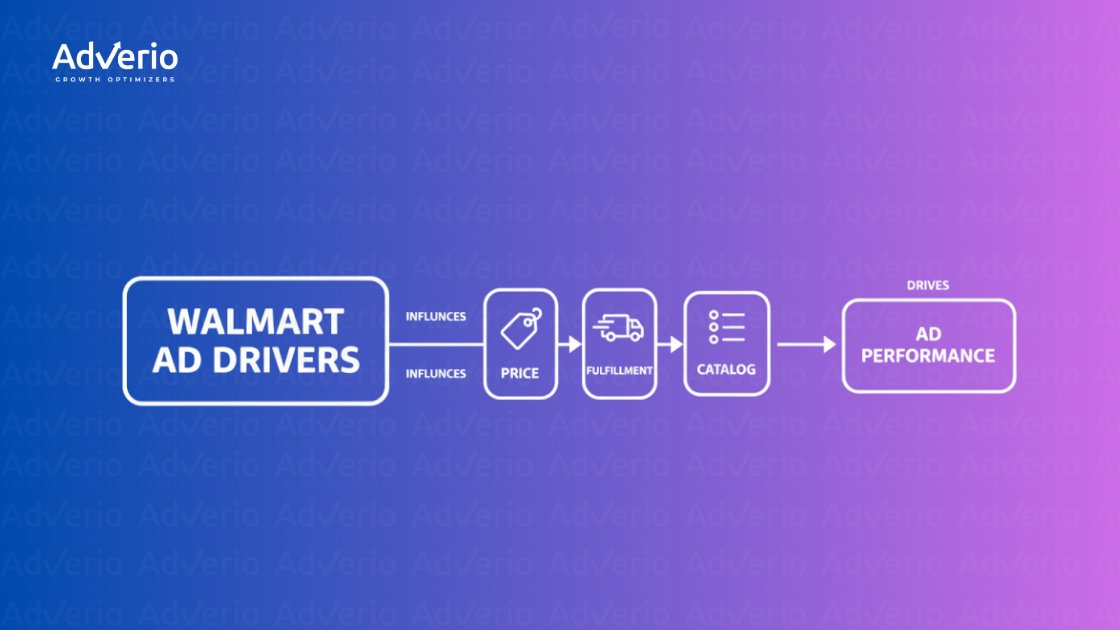
If your Walmart advertising is underperforming, the last place to look is your ad console. Tweaking bids is like rearranging deck chairs if your retail fundamentals are sinking the ship. Ad performance is an output, not an input.
Offer & Price Integrity
Walmart’s identity is built on price. Shoppers come to the platform hardwired to hunt for value, and the algorithm aggressively rewards products that win on price.
- Margin errors surface faster. If your landed price isn’t razor-sharp, you won’t just lose sales — you’ll lose the Buy Box and your ad eligibility.
- Promo misuse destroys contribution. Running promotions without a clear understanding of your contribution margin can quickly turn a high-ROAS campaign into a loss leader.
Fulfillment & Availability Signals
Your ability to get products to customers quickly and reliably is a powerful signal to Walmart’s algorithm. There’s a massive performance gap between orders fulfilled via Walmart Fulfillment Services (WFS) and those handled by third-party sellers.
Stockouts kill learning and momentum. A stockout doesn’t just pause sales — it erases all the ranking momentum and algorithmic learning you paid to acquire. Consistent availability is non-negotiable for any brand serious about scaling Walmart advertising.
Catalog & Variant Structure
A clean, logical catalog is the bedrock of both customer experience and algorithmic discovery — which is why Walmart Listing Optimization is foundational before ad scale. When your product variations are a messy tangle of duplicates or incorrect groupings, it creates friction for shoppers and confuses the ad platform.
Poor variant logic limits distribution. Ads amplify catalog flaws. A click that leads to a chaotic page tanks your ad’s quality score and torches your budget. Maintaining an excellent Walmart Listing Quality Score is essential to avoid these issues.
Incrementality (Not ROAS)
This is the metric that separates brands that are actually growing from those just spinning their wheels. A high ROAS often just means you’re paying to capture sales from customers who were going to buy your product anyway.
True growth comes from proving that every ad dollar is expanding your total market share and driving genuine, profitable growth — not just claiming credit for existing demand.
Walmart Connect Campaign Structure: How to Build It Right
Most brands launch all campaign types simultaneously and then cannot diagnose what is working. The right approach is sequential — one campaign type at a time, with 30 days of clean data between each layer.
Auto campaigns for discovery
Start with auto campaigns on your top five priority ASINs. Auto campaigns on Walmart function similarly to Amazon — they discover search terms you have not targeted manually. Let them run for 30 days before mining the search term report. Do not optimise bids in week one. The platform needs data before any signal is meaningful.
Manual exact match campaigns for proven terms
Import your top 20 converting Amazon search terms as exact match keywords in a separate manual campaign. These are your Walmart seed keywords — terms with proven purchase intent from a platform with similar buyer demographics. Start bids at the suggested bid level and adjust after 30 days of data.
Product targeting for conquesting
Once auto and manual campaigns have 30 days of clean data, launch product targeting campaigns against the top three to five competitor items in your category. Walmart’s product targeting is less sophisticated than Amazon’s but the mechanic is the same — intercept shoppers considering competitors at the point of decision.
Pro tip: Never launch all three campaign types simultaneously on a new Walmart item. Start with auto only for 30 days. Then add manual exact match. Then add product targeting. Sequential launch means you can attribute performance to specific campaign types. Simultaneous launch means you cannot diagnose what is working. — Adverio Account Team
How to Use Your Amazon Data to Win on Walmart Connect Faster
Your Amazon Search Query Performance report contains conversion-validated keyword data that transfers directly to Walmart Connect. Export your top 50 converting search terms from the SQP report — terms sorted by purchases not clicks. These are your Walmart exact match seed keywords.
Your Amazon conversion rate by ASIN tells you which products to prioritise on Walmart Connect. ASINs with above-category-median conversion on Amazon have demonstrated product-market fit that transfers across platforms. Launch Walmart Connect budget on your highest-converting Amazon ASINs first.
Your Amazon review velocity tells you which products have enough social proof to convert Walmart traffic efficiently. Products with fewer than 50 Walmart reviews need review syndication before significant Connect budget is allocated — the conversion rate drag from thin reviews will undermine any campaign performance regardless of bid.
For a deeper breakdown of how to transfer Amazon intelligence to Walmart Connect, that framework covers the full data migration process from SQP export to keyword validation to ASIN prioritisation.
For brands also managing the broader cost of running these channels separately, understanding the hidden costs of split marketplace management is a useful complement to this data transfer approach.
Walmart Advertising vs Amazon Advertising — Critical Contrast
Assuming Walmart and Amazon are interchangeable ad platforms is the fastest way to burn cash. While both are retail media giants, the way they work, the shoppers they attract, and what it takes to succeed are worlds apart.
| Factor | Walmart Advertising | Amazon Advertising |
|---|---|---|
| Auction dynamics | First-Price Auction. You pay exactly what you bid. This demands tight budget controls and precise bidding. | Second-Price Auction. You pay just one cent more than the next highest bidder. More forgiving for aggressive bidding. |
| Conversion drivers | Price and Availability. The lowest landed price and reliable in-stock status are primary. | Reviews and Brand. Social proof and brand authority heavily influence buying decisions. |
| Fulfillment impact | Direct and Severe. WFS gives a massive boost in ad visibility. A stockout instantly kills ad momentum. | Important but Broader. FBA is crucial but strong sales history can sustain visibility through temporary stock issues. |
| Attribution reliability | Developing and Omnichannel. ROAS often fails to capture true incremental lift. | Mature and Platform-Focused. ACoS and TACoS provide a clearer picture of ad efficiency. |
| When ads should scale | After Operational Excellence. Ads are the accelerator, not the engine. | For Discovery and Momentum. Ads are a key lever for launching new products even before operations are perfect. |
| Common failure modes | Operational Weakness. Campaigns fail because of uncompetitive pricing, spotty fulfillment, or messy catalog data. | Tactical Mismanagement. Failure often comes from poor keyword strategy, inefficient bidding, or weak creative. |
For the latest data on Walmart’s retail media growth, Walmart’s official advertising resource center covers platform updates and performance benchmarks directly from the source.
When Walmart Advertising Actually Makes Sense
The biggest mistake brands make with Walmart advertising isn’t picking the wrong ad type — it’s starting in the first place. If your fundamentals are shaky, ads will just throw a spotlight on the flaws.
Before you earmark a single dollar for a campaign, get brutally honest about your retail readiness.
- Inventory stability: You need consistent, reliable stock levels, ideally managed through WFS. Running ads on products with patchy inventory is like paying for traffic to a closed store.
- Competitive landed pricing: Your final landed price has to be sharp. Walmart shoppers are driven by value, and the algorithm aggressively punishes overpriced items.
- Proven Amazon demand (not reliance): You need validated product-market fit. Walmart is not the place to test unproven products — it’s where you scale your winners.
- Operational readiness to scale: Your systems must be robust enough to handle the surge in demand that effective ads will generate.
If these aren’t true, ads hide problems instead of solving them. You might see decent ROAS figures, but your total sales and profitability will remain stubbornly flat.
How Adverio Manages Walmart Connect

Adverio manages Walmart Connect as part of a unified multi-marketplace operating model — not as a standalone channel. Amazon search term data, conversion intelligence, and audience signal flow into the Walmart Connect strategy from day one. Campaign structure is built sequentially — auto first, manual exact second, product targeting third — so performance is attributable and the learning curve is compressed.
TACoS on Walmart is governed by the same margin discipline applied to Amazon so every dollar is judged against the same profit standard regardless of which platform it runs on.
If your Walmart Connect performance is not keeping pace with your Amazon performance the Profit ROI Forecast shows you exactly where the gap is and what is causing it.
Ready to Build a Profitable Walmart Connect Program?
Walmart Connect rewards brands that get the operational foundation right before they scale spend. If your current campaigns are generating ROAS but not incremental growth, the foundation is the problem — not the bids.
Adverio runs Walmart Connect as part of a unified multi-marketplace system where Amazon intelligence, margin discipline, and sequential campaign structure drive every decision. The result is a Walmart program that compounds instead of one that just reports.
Frequently Asked Questions
Why does my Walmart Connect ROAS look good but growth is flat?
High Walmart Connect ROAS typically means you are capturing existing demand not creating new demand. You are likely paying for clicks from shoppers who would have purchased anyway — either from organic search or direct navigation. The test is incrementality: run a holdout test by pausing spend in one audience segment and measuring total Walmart sales impact. If total sales do not decline meaningfully the ROAS was not incremental.
Should I use the same keyword list on Walmart Connect that I use on Amazon PPC?
Start with your top 50 Amazon converting search terms as your Walmart exact match seed list — these are conversion-validated by purchase behaviour not just clicks. Then verify each term has meaningful Walmart search volume before funding it. Some high-converting Amazon terms have near-zero Walmart search volume. The Amazon list is the starting intelligence. Walmart’s search data validates which terms to fund.
What is the minimum operational readiness required before running Walmart Connect ads?
Three gates must be passed. In-stock rate above 95 percent on advertised items. Minimum 20 reviews at 4.0 stars or above on the hero SKU. Competitive pricing within 5 percent of the category price leader. If any of these three conditions are not met, ads will either be throttled by the algorithm or generate traffic that cannot convert. Fix the foundation before funding the ads.
How long before Walmart Connect campaigns show meaningful data?
Allow 30 days of clean data before making any optimisation decisions. Walmart Connect’s algorithm needs time to gather impression and click data before bid adjustments are meaningful. Brands that optimise in week two are adjusting noise not signal. Set budgets, let campaigns run for 30 days, then diagnose based on search term report data and item-level ROAS.
Read Next
- The complete multi-marketplace strategy guide
- How to use Amazon data to win on Walmart Connect
- Hidden costs of managing Amazon and Walmart in silos
- Walmart PPC management
Ready to Build a Profitable Walmart Connect Program?
Walmart Connect rewards brands that get the operational foundation right before they scale spend. If your current campaigns are generating ROAS but not incremental growth, the foundation is the problem — not the bids.
Adverio runs Walmart Connect as part of a unified multi-marketplace system where Amazon intelligence, margin discipline, and sequential campaign structure drive every decision. The result is a Walmart program that compounds instead of one that just reports.