Amazon Data Analytics and Agency Strategy [Saras Analytics Podcast]
The eCommerce Analytics Show.
Episode Overview
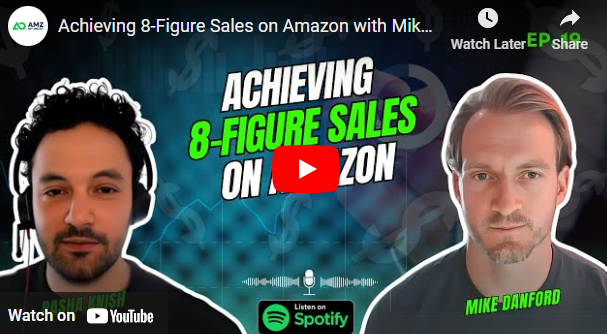
In this episode of The eCommerce Analytics Show by Saras Analytics, Krishna Poda speaks with Mike Danford, Chief Strategy Officer at Adverio, about how Amazon agencies are using data analytics to improve advertising performance and strategic decision-making.
Mike shares insights from more than a decade of experience working in the Amazon ecosystem, explaining how the platform has evolved from a relatively simple advertising environment to a highly complex data-driven marketplace. As Amazon has expanded its APIs and reporting capabilities, agencies now have access to far more performance data than ever before.
The translation challenge. Mike emphasizes that access to data alone is not enough. The real challenge lies in understanding why performance changes occur and translating raw metrics into meaningful insights that guide strategic decisions.
Mike also discusses how agencies are increasingly leveraging automation, AI, and machine learning to analyze large datasets and identify growth opportunities more efficiently. Combined with structured Amazon account management and strategic Amazon PPC management, these data-driven approaches allow brands to make smarter decisions and scale effectively.
For agencies and sellers alike, this episode highlights how data analytics is becoming one of the most powerful competitive advantages in the modern Amazon marketplace.
What You'll Learn in This Episode
- How Amazon's advertising and analytics ecosystem has evolved over the past decade
- Why data alone does not drive growth without understanding the why behind performance changes
- How agencies analyze large product catalogs using custom reporting tools
- Why Amazon agencies build internal dashboards and analytics workflows
- How automation, AI, and machine learning improve Amazon advertising strategies
- How effective Amazon PPC management uses data to optimize campaigns
- Why structured Amazon account management helps brands scale through data-driven decisions
Highlights
- 00:04 Why understanding data's limitations improves advertising strategy
- 02:50 Amazon becoming more open with data
- 08:04 How custom solutions evolve from basic tools to advanced analysis
- 10:48 Customizing workflows and analysis for each brand's needs
- 16:04 Using data to sharpen internal discussions and performance analysis
- 18:39 Data insights for proactive trend management
- 23:21 Building custom tools to streamline processes and add client value
- 26:12 Balancing agency growth with internal resource needs
- 31:30 Empowering teams through collaboration and data-driven autonomy
- 34:00 Balancing experience and training in agency hires
- 39:04 Understanding year-over-year performance and leveraging generative AI
- 41:29 Embracing AI for efficient data management on Amazon
- 46:24 How standardization helps brands succeed on Amazon
Episode Transcript
Krishna Poda: Hey everyone, this is Krishna here, co-founder of Saras Analytics, and I oversee our product and data teams. I have with me Mike Danford. This is an opportunity to learn and share that learning with the audience. Mike, do you want to give a quick introduction?
Mike Danford: Yeah, sure. Mike Danford here, chief strategy officer for Adverio. I have been in the space since around 2014. Started out as a seller doing some arbitrage, reselling Nikes, and through that, one of my most expensive hires when I started doing private label was advertising. I realized it was numbers, and I like numbers, so I started doing it for myself. At that time a lot of Facebook groups were posting results, and others asked if I would help them out and were willing to pay for it, and the advertising agency is the history from there.
Krishna Poda: So is it fair to say you have been working on the Amazon ecosystem for about 10 years now?
Mike Danford: Yeah, since late 2014, early 2015.
Krishna Poda: If you were to quickly run through your journey from then to now, how do you think about running advertising on Amazon, especially now with Amazon ramping up its ad products and launching new features?
Mike Danford: Much simpler and much cheaper in terms of clicks 10 years ago. Obviously they have developed, which has been great, and they are definitely giving us more data than they used to. It is hard not to have shiny object syndrome because of the rate they release things, and AMC makes it even more complex, is the juice worth the squeeze, but I love where they are heading. It does seem like they are investing more in that. Seller support is always the lag, but it is definitely a more interesting platform, a lot more creative, you can get more copy involved, different types of ad placements.
Krishna Poda: My observation, and I would love your thoughts, is that Amazon has been a lot more open with respect to the data they are sharing. Do you see that data being a big unlock for you at Adverio?
Mike Danford: Absolutely. Some of the back-end data they give at the product and keyword level, they are opening up even more in the API, allowing us to do more. Lots of things that have been around for a while in platform you can actually now export, you do not have to do bots or scrapes yourself. I think they are still figuring out what to do with it, but it is a lot more data in the last year or so than we have ever seen, certainly with the 1P data.
Krishna Poda: Do you see that same pattern on the advertising and the seller and vendor side as well?
Mike Danford: I think 1P is always their beta, where they test and give different sets of data, and then push it out to 3P later. They are trying to figure out what data is important to us and does not give away their competitive advantage. Amazon wants more data on their platform, and since day one they have lost a lot of advertising optimization to third parties, so they are building their platform so you can stay on it more with a lot more automation, like Google. So that is where I see it going next. I was a part of a project where they were trying to build a programmatic platform inside the advertising platform, so they are definitely trying to bring more of that in house to keep that data there.
Krishna Poda: Taking a step back, Amazon is pivoting toward being more open, sharing much more timely data with marketing stream, giving intraday data, the latency is getting much better, the coverage of APIs is broader. From your perspective running strategy at an Amazon agency, how do you think about data and its impact on the business and decisions?
Mike Danford: At first it is trying not to get over-inundated, not have that shiny object syndrome when they release something, understanding whether it is valuable, and trying to do it at scale. That is an advantage with an agency that sees multiple brands, you can compare and see what is of value. Sometimes you just have to get in there and play around with it. Most brands really just need to focus on the basics. A lot are chasing what is being released and failing on the basics, both incorporating the data and leveraging and reading it. We have brands come to us saying we want AMC, and I am like, you are only running sponsored products, not even doing brands, videos, DSP, sponsored display. The data is there, but what are you going to do with it, you are not going to have a big impact on your tactics. And we work with large catalogs, so a lot of out-of-the-box platforms give you the KPIs everyone can communicate on, but if you want to drill down and understand what products are pulling or pushing or changing over time, that is where we get into custom solutions. Smaller brands should stick to something simple and straightforward that does the heavy lifting, and then as they figure out what data sets they want to go after for their competitive advantage, they can start going, because it is not just Amazon data, there is a lot of 3P data. So what can you access, what is cost-effective access, and what can you leverage it for, those are the questions we ask over and over.
Krishna Poda: You probably did not end up with a custom solution on day one, it was a journey and an investment over the years. Walk us through that journey.
Mike Danford: In the beginning it was using Excel and VBA locally, and being able to answer the why behind what is happening is where we started to realize we have to dig deeper. A lot of data providers go after data we feel is not as beneficial, heavy and muddy, and we have our own logic for how we would manually do root cause analysis for a product or keyword or group of products. So we started building those in, so that as soon as you pop in it says here is what is going on, and you can get to the next level of questions. Now we are trying to build in more of the machine learning and AI pieces, NLP and other aspects to be more intuitive, here are the 10 checkpoints, which one are we at. And now being more proactive, we see a trend going favorable or unfavorable, let us take a look. I think you call it a watchdog alert, very similar. It helps understand, if it is going well let us pump gas on it, if not, why not and how do we fix it. Working with large catalogs it can get noisy, so how do we not make it too sensitive but sensitive enough for a good reaction time. It is limitless, you are never satisfied, and doing it at scale, being able to see those trends across multiple brands, sectors, categories, and platforms helps us understand what is most beneficial at scale. We work with mid-seven, mid-eight figure brands, very established, and they could be on 10 different marketplaces, so how do we bring all that data together and reduce that noise. Each brand is a little unique, but we build it for one brand and then figure out how to scale it to all the others, and we think about that while building it.
Krishna Poda: Is it fair to say that at an agency you have a point of view on how to analyze the brand and its performance, and that translates to a set of workflows with data points fueling them and triggering actions your team takes? And is that a driving factor from a training your team perspective?
Mike Danford: Yeah, absolutely. If we are running beta tests, we want more of an internal view first, to filter that data. There is a lot we report on internally that we do not surface externally, to reduce the noise for the brands, especially during a trial or beta phase. We have our own POV depending on what we are working on for the brand. Some brands we work on primarily marketing and advertising on-platform, others go off-platform, others go all across the platforms like a CMO role, and some we get into creatives and copy. We also try to pull in other signals like pricing optimization and inventory management, and the more we can share about the impact upstream or downstream, the more it helps. The brand also has their POV and goals. Some brands are backed and have different pressure points and timelines, others have been around for decades and are more patient, so it is navigating that and building the view that reduces friction for them. Here is a report we have internally, and if they have to report to someone else, how can we help them do that and paint that narrative. It is a collaborative process.
Krishna Poda: With the solutions you have in place, your teams look at the dashboards and take certain actions. It would be great to get a perspective from both an operational and executive standpoint on how you leverage data.
Mike Danford: We are constantly trying to standardize the core of our program. We have what we call a growth marketing action plan, and historically that has been separate from our reporting and KPIs. A lot of those questions can be answered through the reporting and data we have on the advertising and listing management side, so we are trying to bring that in. It is always trying to get the core internally, if you do these 20 percent you get 80 percent of what you are looking for, and then focusing on the rest with the more manual touch to get that extra incrementality. Standardizing the core lets you spend more time on the human intelligence piece and less on machine reliance. The other piece is having it all integrated and central, so we are building one central unit, and now we expose more of the operational node, not just tactical KPIs, but here is what we are doing, why, and what the impact is going to be, setting that expectation as opposed to just looking after the fact. Growth is great, but there are also the soft skills of communication, understanding why things worked or did not, and creating that expectation. Some folks want to know more about the sauce as opposed to just the performance, and the more questions we can answer for them, even outside our scope, the better.
Krishna Poda: Internally, do you use the tools when you gather as a team reviewing metrics, so everybody has access to the same numbers and the debates on performance are more objective around results driven versus subjective?
Mike Danford: Yes, internally the objective is a lot easier with the data being there and standardized so you have a comparison across each brand. The cross-functional teams meet once or twice a week to talk about what they are seeing and trends, because data only tells you what happened, it does not tell you why. If you do not have those event markers, someone can spin their wheels trying to find out why sales popped or dropped on a day, when it was we ran a promotion or changed the main image. Tearing down those silos as much as possible is a large part, internal and external. We just switched to a new project management platform for that reason. We have to work with brands to understand how much data they care about and sculpt around that, some are super data intensive and want to be in the weeds, others just want once a month with a checklist, and if sales are down they want to know why ahead of time. It is dynamic, different personalities, cultures, time zones, but that is the fun part.
Krishna Poda: Is it fair to say your team spends more time investigating the why, because the what is taken care of quickly? You spot a trend across 20,000 SKUs quickly, and the discussion is more around the why and the actions to take.
Mike Danford: Yes, we try to have as much automation in the why. Things happen that are unexpected, favorable or unfavorable, and then you are trying to figure out why. If we are constantly having to ask a why manually, then we ask, can we build a view for that, a report, an alert, can we be proactive or at least reactive whenever it happens, here are the next 10 things we would check. That is where we bring machine learning and AI to do that dynamically. As humans we can only digest a certain number of data points, and with large catalogs the machine can see more trends, whether they matter or not we are figuring out. The why is definitely what we want, so we can either replicate it or hedge it in the future, and that is what the brand is going to ask. It is the five whys, getting down to the core.
Krishna Poda: In your case you have your own data warehouse with data piping in, consolidated. Does that give you more control to instrument alerting so that when an undesirable event happens, you catch it earlier and stop the leak?
Mike Danford: Going back to why we went from out of the box to custom, part of it was getting more of the why, which we could not do inside the box, and the other is the pure volume of data, it is expensive with out-of-the-box solutions that charge by product or ASIN. The next layer is brands have really specific questions, and we need to build something custom for them to answer themselves, as opposed to coming to our brand managers. That control is being ahead of it, but it comes with issues, data management is larger, a lot more technical team, software engineers, data scientists, and that is fun for me. So that is part of why we have that, to have that control and a little sandbox.
Krishna Poda: How do you think about having a data team at an agency? Is it a cost of doing business, or do you look at data as the highest ROI channel?
Mike Danford: It is definitely changing. For us, the order is data scientists, let us have the data and manipulate it in a static environment and build a lightweight report to understand what it is, so we can be nimble and fast. And if it makes sense and the brand loves the output, then we come back to the more sophisticated team to figure out how to do it automated and systematic at scale. Now I have a dedicated data scientist assigned to me and all my projects, which keeps me out of Google Sheets. We build these one-off tools that are valuable, and we give them out for free to folks who visit our website, because we know the value, and most people have a very similar question. So it is not a truly sunk cost, it is a lighter-weight, more nimble solution for brands that do not have massive data pipelines and just need to pull a static report.
Krishna Poda: At what point does hiring a team internally versus having a vendor manage that infrastructure make sense? For an agency managing less than a hundred brands, does an internal data team make sense?
Mike Danford: Great question. We had that ourselves and went full circle. We had a quasi internal team, and our hurdle is we are on multiple platforms, Amazon, Walmart, Target, Google, Shopify. The advertising on those platforms is unique and different, the code, the APIs to process the data is different. We basically had one person like a fractional CTO, and it is overwhelming to keep up if you are the main source and need a dedicated specialist for each platform. I like having a deeper bench, it becomes an HR role when we hire internally. I like having more people involved asking those questions, strategic partners, just like we would for our brands. It is a significant scale from where we are to go internal, and a lot of out-of-the-box things are built that we can expand on, whereas we would have to start from scratch every time we have a new idea, so speed to launch is much faster. For now we like being nimble, and if we pay a little more for that, that is okay, because it is changing so fast. It was a certain number of accounts, and really the consistency and frequency of the data was a big part of going from a simple to a custom solution.
Krishna Poda: What kind of risk does attrition in the data or tech team pose to the initiatives you undertake?
Mike Danford: For now we do not have that. We have broken it up enough, and that is why we have partners with a deeper bench, so we do not have to scramble, because we rely on the data so much. Our internal data science is pretty easy to plug and play and expand and contract as we need. So far it is not a concern, largely because partners can handle that for us and are more tech savvy in understanding what skill set to find in the talent pool, which is not something we do on a regular basis, so we trust them for that.
Krishna Poda: From an agency perspective, when you are hiring people into the team or improving performance on an account, how do you drive that culture of being data driven?
Mike Danford: Part of it is leveling the playing field as much as possible, answering as many questions for whoever is working on the brand through automation and simplicity, and then giving them the freedom and autonomy to look at the data their own ways and collaborate. A brand asked for this, I know where to find it or how I would do it, do we have it, and if not we dig in and it goes into our queue to see if other brands could benefit. So it is giving them the freedom to ask questions while answering the core questions for them so they do not waste their time and energy. We do test for data literacy, do you know where to find this, do you understand what this is, there are a couple of tests before you can submit an application, because our role is heavy data centric and communicative. The other piece is more consultative, reporting performance is easy, but what is next, what is the data not telling us, where else can we go that we have not told the data to look. We want a collaborative culture, not our way or no way, because everybody thinks differently and has different backgrounds. I just hired six new people in the last month supporting our advertising team, most a little more green to Amazon advertising, and they are asking questions we have not asked ourselves in years, which reminds us of things we can come back to. We are figuring out the right blend of experience and fresh viewpoints, because someone brand new we can mold takes a longer timeline. Working with larger, established brands we do need a certain level of seniority to communicate to the brands, which can be expensive. So now we are bringing new people in behind the scenes for longer than we used to, we used to release them to the customer faster than we should have, because we want to give them confidence before the pressure from the brand. Running a mock internally, here are five or six questions the brand will ask, and running through those trials has been huge.
Krishna Poda: Wrapping up, what advice would you give agencies thinking about their own data stack, considering technology selection, team selection, cost, and how much customization?
Mike Danford: That is a loaded question. It boils down to, we have a new view or data set or pipeline, and at first we just try to do it static. Then we ask, how often do we need to report on this, is monthly enough or does it need to be weekly, daily, intraday, more detailed, is it just a report or are there questions. Cadence is number one. Then the complexity, we have multiple data sources and platforms to aggregate, which adds complexity quickly. The next layer is how large is the data. And one thing I had to learn is how dirty and commingled the data is, each platform is unique. Instead of trying to decipher and clean the data later, we do it on the front end with the way we set up our campaign structure, ad groups, and naming conventions to make the data easier to report on. A naming convention inside the product plus a product category node cleans the data so fast, as opposed to a super complex way of splitting and mirroring the data. So cadence first, then the size and amount of data.
Krishna Poda: The cadence can change, you might start monthly and grow to weekly, and your brand marketers spend a couple hours every week preparing. That can be quite productive.
Mike Danford: Yeah, absolutely. One thing we found, I have a bit of a trading background, looking at moving averages was impactful. Smoothing the data over a seven-day moving average has been really impactful, not being knee-jerk, a couple days down, a couple up, and it levels out at the week. The second part is year over year, we are always trying to look at year over year. A lot of brands historically looked month over month. The hard part is the product level year over year, because on most platforms the granular product data only goes back 60 or 90 days when you connect a new brand, so it takes 10 months before you can do a year over year, so we are working on that. There are so many tangents to this, so many ways you can look at this stuff.
Krishna Poda: Lastly, you have been excited about generative AI, and there is recent news that people can buy on TikTok and get products delivered by Amazon. Anything with the recent technical trends you are excited about?
Mike Danford: Yes and no. The TikTok and Amazon integration is fairly recently released, and they have not figured out their attribution, it is difficult when you use a link in the back end and once it comes from TikTok over to Amazon you lose it. But to Bezos's point about focusing on what is going to be here for the next 10 years, AI is going to be here, so how do we build and scale that AI, and how are we able to bolt on and off the new things coming quickly, as opposed to trying to do everything at once. We have large data sets, how can we increase the efficiency of managing and analyzing them, and how can the machine give us a different perspective. We can train or untrain the model and interact with it in a more conversational tone to make it easier for the entire team. If you are not getting involved in AI, or at least staying in tune with it and thinking about how to integrate it, you will get left behind. Amazon is pushing out automatic updates to copy, I think it goes live in a couple days, where if you are using emojis and other things in your copy it will automatically update, a big shift from keywords. Keywords are still important, but there is more of a conversational and situational answering, how would I use this product, a lifestyle question. And your images, a lot of brands have not focused on images, but people are very visually stimulated, and now they are scraping the images and incorporating that, indexing based on what is or is not in the image. We have been playing around with Amazon Rekognition for a while, what does it scrape and how does Amazon take it into consideration, that is our more recent shiny object.
Krishna Poda: I am assuming with the AI stuff the pace of change on Amazon will increase, listings and images might change more frequently, and the analysis might end up more frequent as the numbers move more.
Mike Danford: Yeah, I am actually excited about that. It takes a little of the advantage away from us on certain aspects. A lot of brands are not dynamically testing copy, images, or pricing, and now Amazon says, we have a lot of data and think you should add this image, we gave you recommendations in the past and you still have not added it, so now we are going to do it. Amazon sees a lot more data than we can, they only give us a small sliver, and their goal is to make money, so if they see an opportunity to increase conversion or click-through and think they can help the seller, they will. The other side is I do not want them to control my listings, things are going to happen, they have been messing up listings since they started, delisting for random reasons or tagging a category wrong. But I do think it will bring more uniformity and standardization to the shopping experience, like Google doing updates to its SERP and getting away from stuffing and cramming. Walmart has been strict since day one on their quality score and style guides by category, it is simple and clean, focus on the images, get them to click through, and then educate them. I honestly think Amazon is taking a page out of Walmart's book, and Target as well, more standardized. They have been sitting on the data, their Cosmo report is long and insightful, and the big thing was a sliver of a percentage they could increase revenue as a result, and across billions of dollars that is a big lift, and the cost to implement is low because they already have the data. I like the standardization and creating that shopper experience, helping brands just getting started that do not have the wherewithal or capital. I think newer products will do better than they used to in some cases and not as well in others, you cannot hack the system. We are just at the beginning of it, very early curve.
Krishna Poda: Absolutely, we are excited about the AI trend for sure. Thanks a lot for the insight, Mike. If a brand wants to reach out to you, how would they get in touch?
Mike Danford: Thanks for having me. On LinkedIn, but more directly we have a toolkit, those one-off tools I mentioned that we built and give to folks who come to our webpage. You can go to our download resources section as well. Look forward to connecting and revisiting in the future.
Krishna Poda: Lovely chatting with you. Hope to talk to you soon.
See how AI shopping reads your catalog
A shopper asked AI for the best in your category and it did not name you. Run the three-layer AI Shopping Readiness check and see where you are losing the sale, ranked by impact.
Get My Products Named by AITakes 2 minutes. No call required.
Prefer to talk it through? Map your profit leaks with a strategist