


Table of Contents
Most brands treat CTR like a vanity metric. That’s why they overpay for traffic and stall growth. This guide shows how to turn CTR into a profit lever that lowers CPC, improves rank, and unlocks scalable growth.
Your Amazon Click Through Rate (CTR) is the percentage of shoppers who see your product and actually click on it. Most brands treat it like a vanity metric. That’s exactly why they stay stuck. A high CTR tells Amazon’s algorithm your product is the right answer to a search, unlocking better ad placements and higher organic rank.
A low CTR silently kills your growth by inflating ad costs and burying your products. Let’s fix that.
Amazon CTR measures how often shoppers click your listing after seeing it in search results. Low CTR means your main image, title, price, or review count is losing to alternatives on the same SERP. CTR is the first gate; if shoppers do not click, conversion rate cannot fix anything.
Most brands discover their CTR problem by looking at rising CPCs and wondering where their margin went. By that point they’ve been funding a broken signal for months. CTR is the first gate — if the click doesn’t happen, nothing downstream can fix it.
We audit CTR, impression share, and click share together before recommending a single creative or bid change. No pitch deck. No commitment.
What Is Amazon Click Through Rate (CTR)?
CTR isn’t just an ad metric—it’s your gatekeeper to growth. It’s the gatekeeper to your entire Amazon sales funnel. It answers one simple question: of all the shoppers who saw your product, what percentage was intrigued enough to click?

The formula is straightforward: (Total Clicks ÷ Total Impressions) x 100 = CTR. But the real challenge isn’t the math; it’s understanding where those clicks happen and why they matter differently.
The Three Faces of Amazon CTR
To diagnose performance, you have to stop looking at a single, blended CTR. Break it down into three distinct types:
-
Ad CTR: The metric you see in your ad console for Sponsored Products, Sponsored Brands, and Display ads. It’s a direct report card on your ad creative and targeting.
-
Organic Search CTR: Found in the Search Query Performance report, this shows how often shoppers click your product in non-paid search results. It’s a pure measure of your listing’s appeal against the competition.
-
Listing-Level CTR: This isn’t a reportable metric, but a critical concept. It refers to clicks inside your detail page—to your brand store, variations, or A+ Content modules.
Why Amazon Click-Through Rate (CTR) Drives Profit, Not Just Traffic
A strong Amazon click through rate is one of the most powerful signals you can send to the A9 algorithm. It tells Amazon, “Shoppers see my product, and they think it’s the right answer to their search.” This triggers a feedback loop that lowers costs and increases visibility.
A high CTR is Amazon’s best pre-purchase indicator that a product will satisfy a customer. The algorithm rewards these listings with greater visibility at a lower cost, creating a significant competitive advantage.
When your CTR is high, Amazon’s algorithm trusts your listing. That trust pays off in tangible benefits: lower Cost-Per-Clicks (CPCs), better ad placements (like the coveted Top of Search spot), and a tangible lift in organic search rankings. It’s the foundational metric that makes profitable scaling possible.
A compelling offer that wins the click is the core of effective Amazon listing optimization. Without a solid CTR, even the largest ad budgets won’t deliver sustainable growth.
Amazon CTR vs. Conversion Rate: The Difference Most Brands Miss
Think of your Amazon presence like a retail store. Your Click-Through Rate (CTR) is your curb appeal—the window display that gets people to walk through the door. Your Conversion Rate (CVR) is what happens inside—the product quality and merchandising that convinces them to buy.
One attracts, the other converts. Too many brands obsess over their A+ Content (the in-store experience) while their digital curb appeal is a disaster.
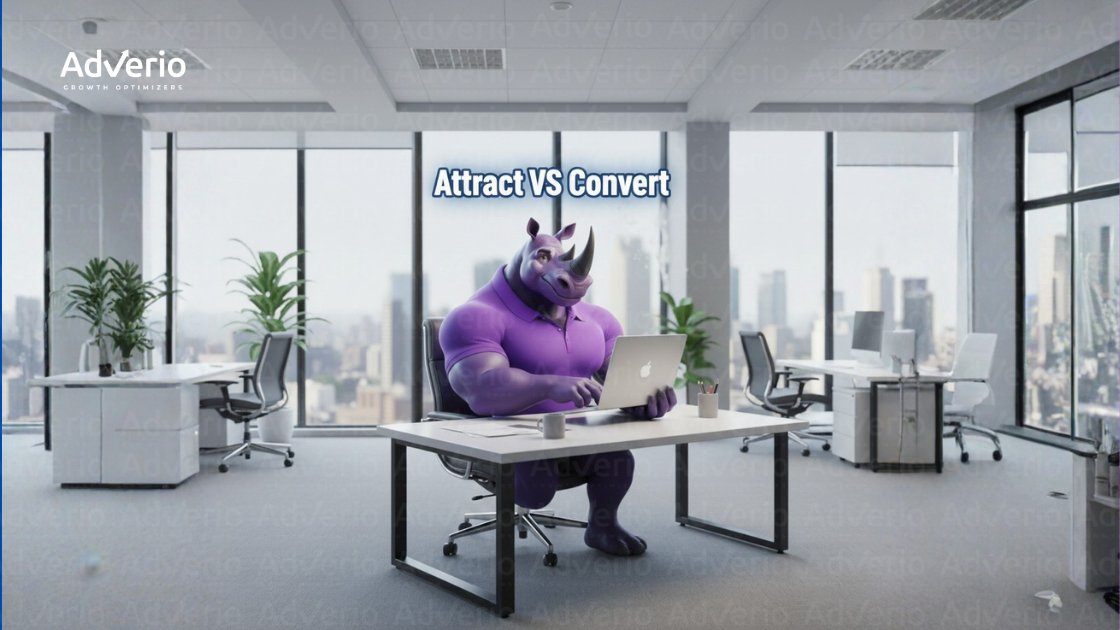
This creates a massive bottleneck. A low CTR starves your high-converting detail page of qualified traffic, putting a hard ceiling on your growth.
How to Diagnose CTR vs. CVR Issues on Amazon
To scale, you must diagnose whether your problem is attraction (CTR) or persuasion (CVR). A lopsided relationship between them points to a clear strategic flaw. High CTR and low CVR means your curb appeal writes checks your product page can’t cash. Low CTR and high CVR means you have a great product that no one is bothering to look at.
Use this framework to pinpoint your bottleneck:
| Scenario | What It Means | Strategic Focus |
|---|---|---|
| High Impressions, Low CTR | Your product is visible, but the main image, title, or offer fails to capture attention on the search results page. The problem is attraction. | Optimize the main image, title, price, and review count. Test coupons and promotional badges to improve the offer’s appeal. |
| High CTR, Low CVR | Your ad successfully attracts clicks, but the product detail page isn’t persuasive enough to close the sale. The problem is conversion. | Enhance A+ Content, bullet points, and secondary images. Address negative reviews and re-evaluate price competitiveness. |
| Low Impressions, High CTR | Your listing is compelling, but not visible enough. The problem is reach. | Increase ad bids, broaden keyword targeting, or improve your organic SEO to boost overall visibility. |
A common blind spot for brands is chasing conversion improvements while ignoring a fatal CTR issue. You can’t convert traffic you never get. Fixing the click is the most impactful first step to unlocking scale.
A winning strategy optimizes the entire journey. Mastering both sides of this equation is where real growth happens, and learning the art of split testing small tweaks that drive big results on Amazon is the fastest way there.
What a “Good” Amazon Click Through Rate Looks Like
Every brand wants the magic number for a “good” CTR. Chasing a generic industry average is a rookie mistake. The truth is your ideal CTR depends entirely on your market, ad type, and keyword intent.
The average click-through rate for Amazon ads hovers around a humbling 0.34%. Even in competitive categories like Electronics, the CTR often barely scrapes past 0.45%. You can get a better sense of the competitive landscape by exploring key Amazon advertising statistics on sequencecommerce.com.
Context Is Everything
Instead of fixating on a universal number, understand what a strong CTR looks like for your brand in your niche. A 0.5% CTR might be fantastic for a broad, non-branded keyword, but that same 0.5% would be a massive red flag for a branded campaign where shoppers are searching for your name.
Put your performance into the right context:
-
Brand vs. Non-Brand: Clicks on your brand name will always have a higher CTR than clicks on generic category terms. Analyze them separately.
-
Ad Type and Placement: A Sponsored Brands video ad at the top of search is a different beast than a Sponsored Products ad on a competitor’s product page. Every placement has its own baseline.
-
Category and Price: High-ticket products naturally have lower CTRs than impulse buys. Shoppers are more selective when more money is on the line.
The only benchmark that truly matters is your own historical data versus your direct competitors. The goal isn’t to hit an arbitrary number—it’s to consistently out-click the other listings in your specific arena.
If your CTR is below your category median on your top three keywords, that’s not a creative problem yet, it’s a diagnostic problem. You need to know whether you’re losing the click on image, price, reviews, or offer framing before changing anything. We pull that breakdown in the first call.
See How We Fix Listing CTR at the Source→
We connect CTR diagnosis to listing optimization, so the fix sticks, not just the test.
Focus on systematic improvement. Dive into Amazon’s Search Query Performance report, compare your CTR to the market average for your top keywords, and turn CTR from a vanity metric into a competitive weapon.
Amazon click-through rate (CTR) is the percentage of shoppers who see your listing in search results and actually click on it. Four things control it: your main image, your price, your review count, and how relevant your title looks against the query. A low CTR does not just mean fewer eyeballs on your listing. It sends a direct negative signal to Amazon’s algorithm. Organic rank drops. Paid placement gets more expensive. The longer it stays low, the harder the hole is to climb out of.
The Real Drivers of Amazon CTR (It’s Not Just Keywords)
Many brands think the secret to a better CTR is a higher bid or a perfect keyword. This fundamentally misunderstands shopper behavior. The decision to click happens in a split second on a crowded search page, and it has almost nothing to do with your backend ad settings.
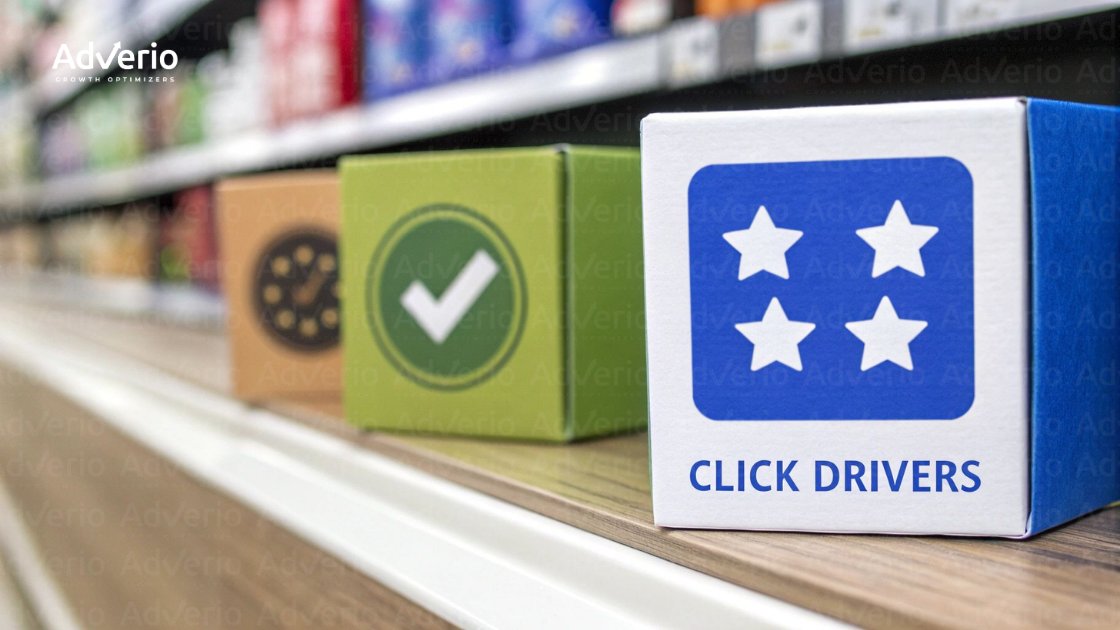
Winning the click isn’t about outbidding; it’s about out-merchandising your rivals right on the results page.
Search Result Visuals
Your main image is your single most powerful click driver. It must interrupt a shopper’s scroll and instantly communicate value.
-
Clarity and Contrast: Your product must pop against the white background. This is why high-quality renderings often outperform standard photos—they allow for perfect lighting and exaggerated details.
-
Packaging and Scale: Including clean, professional packaging immediately boosts perceived value. Ensure your product fills over 90% of the frame so it looks substantial, not lost.
-
Mobile-First Design: The majority of Amazon traffic is mobile. Your image must be compelling on a tiny screen. If a shopper has to squint, you’ve lost.
Price & Offer Framing
After the image, eyes jump to the price. But CTR isn’t just about being the cheapest; it’s about presenting the most compelling offer. A bright orange coupon badge or a “Limited Time Deal” flag creates urgency. Even displaying the pack size, like “Pack of 12,” can signal better value than a competitor’s single unit.
Social Proof Signals
When two products look similar, social proof is the tiebreaker.
A product with 1,500 reviews and a 4.5-star rating will almost always beat a product with 50 reviews and a 4.8-star rating. Sheer volume signals market acceptance and reduces perceived risk.
The Prime badge is another non-negotiable trust signal. It guarantees fast, reliable shipping, a core expectation for nearly every Amazon shopper. Together, these elements directly impact your Amazon Listing Quality Score and its ability to win the click.
How Low CTR Quietly Kills Amazon PPC Performance
A low CTR isn’t just a number on a dashboard; it’s a silent profit killer. It actively makes every effort to scale your brand more difficult and expensive.
Amazon’s ad algorithm is a click-based auction built to reward listings with a proven history of earning clicks. When your CTR is low, the algorithm assumes your product is a poor match for the search query, triggering a negative feedback loop.
The Downward Spiral of Low Relevance
First, the algorithm deprioritizes your ads. Your impression share drops, especially in valuable top-of-search placements. To compensate, Amazon forces you to pay higher costs-per-click (CPCs) just to maintain visibility. Your budget suddenly buys you fewer clicks, and campaign efficiency plummets.
This isn’t a bug; it’s a feature. Amazon’s algorithm heavily favors historical click-through rate data—which is why Amazon PPC management isn’t just about bids, but about fixing the signals that drive performance. Ads with a proven click history consistently outperform newer or lower-performing ones, as detailed in reports about how Amazon’s algorithm uses click history on tinuiti.com.
Why Scaling Becomes Unprofitable
This cycle makes scaling ad spend unprofitable. Throwing more budget at a low-CTR campaign is like pouring water into a leaky bucket. Your CPCs will continue to climb, and your return on ad spend will crater.
A low CTR is a direct signal to Amazon that your offer is unappealing. The platform will not reward an unappealing offer with cheap, high-quality traffic, no matter how much you’re willing to bid.
Low CTR and high ad spend is the most expensive combination on Amazon. You’re paying a premium for placements the algorithm is already deprioritizing. Every dollar you spend in that state funds the gap instead of closing it. The diagnostic shows you which ASINs are in that state and what the actual cost is.
We model the CPC premium you’re paying for low-CTR ASINs before recommending a single bid change.
You get trapped overpaying for mediocre placements while competitors with higher CTRs get preferential treatment and lower costs. Fixing low CTR isn’t just a tweak; it’s a strategic necessity for effective Amazon PPC optimization.
How to Improve Amazon Click Through Rate (Strategic Levers)
Improving your Amazon click-through rate isn’t about chasing “hacks.” It’s about pulling strategic levers that make your product the most obvious choice on a crowded search page.
The goal is to engineer a listing that stops the scroll and makes clicking an instinctive reaction for your target customer.
1. Listing Creative Optimization
Your main image is your most powerful CTR weapon. Its only job is to interrupt a shopper’s scroll with a visual that screams value in less than a second. You must be A/B testing different main images to find the undisputed champion that consistently wins the click.
For practical tips that make a real difference, check out these design hacks to skyrocket your ad click-through rate. These principles apply just as much to your main product image as to ad creative.
2. Offer & Pricing Alignment
At a glance, your price and offer must make sense. A shopper makes a split-second value judgment based on your price, coupon badges, and other deals. If your offer feels out of step, you’ll lose the click before they consider your product’s features. This means strategically using coupons to create the perception of a better deal.
3. Pack Architecture
How you structure your product variations and pack sizes directly impacts CTR. A “Pack of 6” might be a far more compelling offer than a single unit for a consumable product. Test different pack configurations to discover what your market truly values, as this can be a powerful lever to differentiate from competitors.
4. Ad Structure & Placement Control
Not all ad placements are created equal. A click from the top of search is infinitely more valuable than one from a competitor’s product page—but the real leverage comes from owning the full funnel, not just search, which is where Amazon DSP management plays a critical role. Improving your overall ad CTR requires structuring campaigns strategically—this is where Amazon ad placement strategy becomes critical. This concentrates your ad spend where it delivers the biggest punch.
A low CTR, often caused by a weak offer or boring creative, can kick off a nasty downward spiral of low relevance and even fewer impressions.
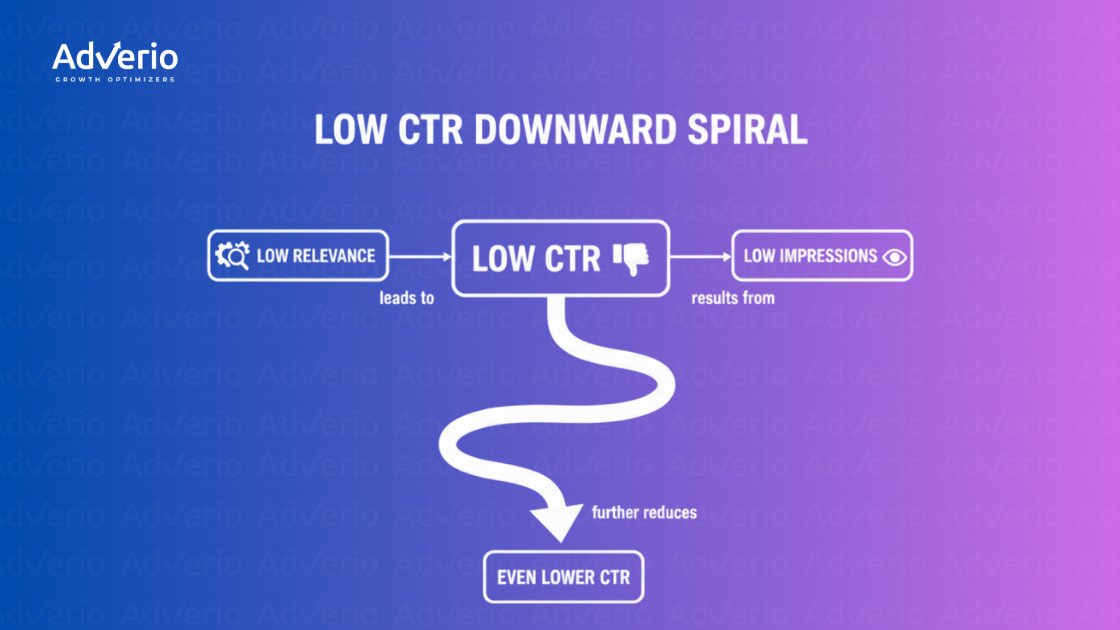
This flowchart shows the direct link between shopper appeal and algorithmic punishment—a perfect illustration of why getting CTR right is critical.
These levers work in isolation. They compound when they’re pulled in the right sequence: image first, then offer framing, then placement structure. The diagnostic maps that sequence for your catalog so you’re not running A/B tests on symptoms while the structural issue stays intact.
We sequence your CTR fixes by highest-leverage ASIN first. 15-minute call. No commitment.
Why CTR Optimization Is a System, Not a One-Time Fix
Treating CTR optimization as a one-time project is a recipe for failure. The Amazon marketplace is a dynamic environment. Your click-through rate is constantly under pressure from shifting variables:
-
Seasonality: Customer search behavior changes dramatically throughout the year.
-
Competitive Pressure: New entrants with aggressive pricing or superior creative can erode your CTR overnight.
-
Pricing Changes: A competitor’s promotional blitz can make your offer look stale by comparison.
Effective brands build a system for continuous monitoring and optimization. They don’t just “set it and forget it.” They use tools like the Search Query Performance report and A/B testing to stay ahead of market shifts and maintain a competitive edge. This ongoing process turns CTR from a reactive metric into a proactive lever for sustained growth.
When Amazon CTR Problems Signal a Bigger Issue
Sometimes, a low CTR isn’t just a tactical problem—it’s a symptom of a much deeper strategic flaw. Before you start A/B testing images, ask if your falling click-through rate is pointing to one of these bigger issues:
-
Misaligned Pricing: Your product is positioned as a premium offering, but it’s competing in a price-sensitive category without sufficient brand equity to justify the cost.
-
Wrong Pack Strategy: You’re selling single units in a market that overwhelmingly prefers multi-packs, making your offer fundamentally less appealing.
-
Poor Brand Positioning: Your branding and messaging fail to resonate with your target audience, causing them to scroll right past you.
-
Over-Reliance on Ads: You’re using PPC to force visibility for a fundamentally weak listing, hoping to compensate for a poor offer with a bigger budget.
If any of these sound familiar, no amount of creative tweaking will fix the core problem. Low CTR is your early warning system that something is fundamentally broken in your market strategy.
FAQs About Amazon CTR
Why did my CTR drop but conversions stayed the same?
This usually means your listing is losing the click on the search results page—not failing to convert. A competitor likely improved their image, pricing, or reviews.
What is a good CTR on Amazon?
There’s no universal benchmark. A good CTR depends on keyword type, placement, and competition. The only real benchmark is outperforming your direct competitors.
What impacts CTR the most?
Main image, price, reviews, and badges (Prime, coupons) have the biggest influence. Keywords and bids don’t win the click—merchandising does.
Should I fix CTR or conversion rate first? Fix CTR first. You can’t convert traffic you’re not getting.
How Adverio Turns CTR Into Profit
CTR isn’t a metric we “improve.” It’s a signal we decode.
We break down where your funnel is leaking—impression share, click share, conversion—and fix the constraint that’s actually limiting growth.
That means aligning:
• Listing creative with shopper psychology
• Pricing and offers with market expectations
• Campaign structure with incrementality
The result: lower CPCs, better placements, and scalable growth without wasted spend.
CTR isn’t a number to chase. It’s a signal that tells you exactly which part of your listing is losing the click, and at what cost. We decode that signal, sequence the fix, and model the profit impact before touching a single creative asset or campaign.
Free diagnostic. We find where your click share is leaking and what it’s costing you per ASIN.