


Table of Contents
Choosing an Amazon agency on the strength of a polished pitch is how brands buy expensive underperformance.
Process slides, dashboards, team charts, and cherry-picked case studies tell you almost nothing about how an agency operates once your margin gets squeezed and the easy wins disappear. Any competent sales team can rehearse those answers. What matters is harder and far more revealing: how they judge success, what they do when targets slip, how they report bad news, and whether their fee model pushes them to protect profit or just spend more of your money.
Amazon is too important for lazy due diligence. You are hiring a team to make decisions inside a brutally competitive channel where small mistakes in bid strategy, retail readiness, or inventory coordination can wreck contribution margin fast. The agency’s operating model decides whether they act like owners or presenters.
That is the lens for this article. These are not softball questions built to reward confidence on a sales call. They are a due diligence framework built to expose incentive alignment, metric discipline, and underperformance behavior. If an agency cannot answer clearly, you already have your answer.
Start with the numbers that govern the account. strategic Amazon KPIs for profit gives the baseline. Then use these questions to find out whether the agency manages toward those numbers or hides behind prettier ones.
If you’re comparing outside support against building internally, review the complete Amazon agency vs in-house decision guide.
At a Glance
-
Standard agency questions measure presentation quality, not operating quality.
-
Strong due diligence exposes how the agency handles profit pressure, missed targets, and conflicting incentives.
-
A true test is not what they say when performance looks clean. It is what they do when it does not.
-
Focus on five areas: metric governance, reporting transparency, underperformance protocols, operational capability, and fee structure.
-
If an agency gets paid more when spend rises, avoids specifics on misses, or blames the algorithm, treat that as a warning, not a quirk.
Why Standard Agency Questions Get Standard Agency Answers
“Can you share a case study?”
“What’s your process?”
“How often do you report?”
Those questions aren’t useless. They’re just too easy.
A weak agency can answer them well because they’ve heard them a hundred times. A strong agency can answer them well too. That means the questions don’t separate anyone. They create false confidence.
What does separate agencies is what they do when the easy story falls apart. When ROAS looks good but profit is getting crushed. When branded traffic is hiding weak new-to-brand performance. When ad spend should come down but their fee model rewards spend expansion. That’s where the truth lives.
Standard questions test memory. Hard questions test behavior.
The 15 questions below are built for amazon agency due diligence. They force the agency to reveal how it governs metrics, how it handles failure, and where its incentives sit.
The 15 Questions Organised by Category
1. Category 1 Metric Governance & Profit Accountability
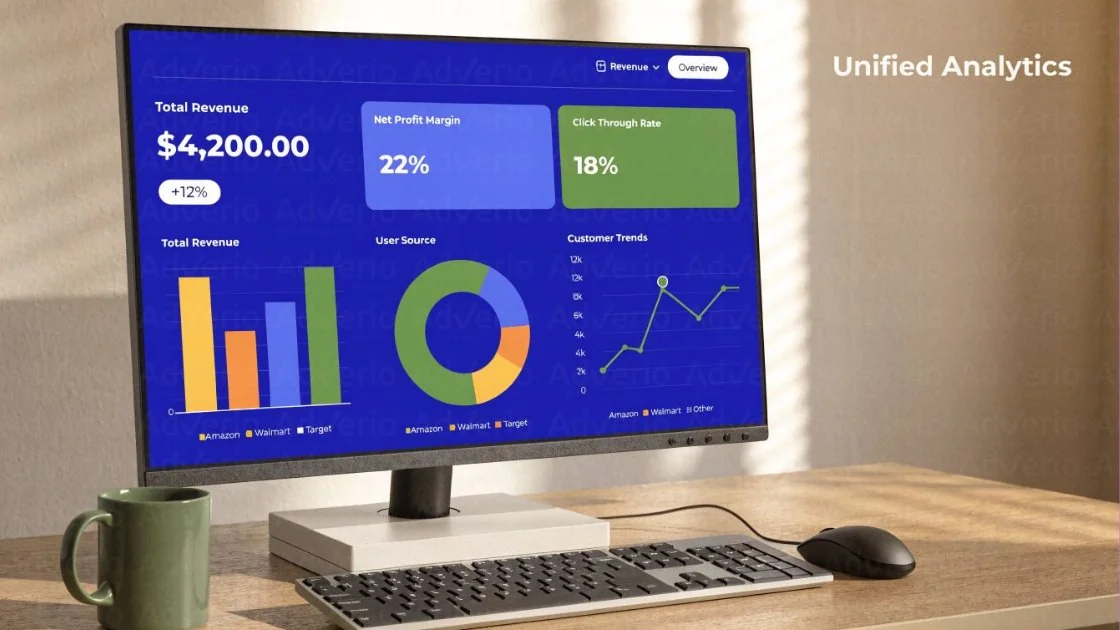
Agencies love metric talk because weak buyers let them stay vague.
Your job is to demand precision. Ask what metric governs decisions, how targets get set, and what happens when efficiency looks good while the business gets worse. That is how you expose an agency’s operating model instead of getting trapped in presentation polish. If you need a sharper baseline first, review strategic Amazon KPIs for profit.
What metric governs your campaign decisions. TACoS or ROAS
What a good answer sounds like
They tell you TACoS governs account-level decision-making because it ties advertising to total revenue performance, not just paid efficiency. Then they explain where ROAS and ACOS fit. Those are diagnostic metrics used to assess campaign-level efficiency, branded versus non-branded mix, and whether spend is creating incremental demand or just harvesting existing demand.
That distinction matters.
An agency that runs on ROAS alone can make the dashboard look clean while your margin erodes and your organic position weakens.
Brands that want PPC governed by profit, not vanity metrics, need a Amazon PPC management strategy built around TACoS from day one.
What a bad answer sounds like
“We focus on ROAS because it gives us the clearest performance view.”
It gives them the clearest ad-platform view. That is not the same thing as business control.
How do you set TACoS targets for a new client
What a good answer sounds like
They refuse to give you a target in the first five minutes. Good. Serious operators want margin structure, contribution economics, inventory reality, pricing flexibility, category behavior, and the current split between branded and non-branded sales before they commit to a number.
They should also tell you what can distort that target. Poor listing conversion, weak creative, and retail readiness issues all change what “healthy” TACoS looks like. If your PDPs are underperforming, ad efficiency targets are fantasy until the page improves.
What a bad answer sounds like
“We usually push for aggressive efficiency in month one.”
That answer tells you they sell confidence before they do diagnosis.
How do you handle an account where ROAS looks strong but TACoS is rising
What a good answer sounds like
They can walk you through the mechanics without rambling. Branded campaigns may be masking weak prospecting. Organic rank may be slipping, so paid spend is replacing demand you used to earn. Conversion may be soft because pricing drifted, reviews stalled, or the listing is losing the click before the ad ever had a fair shot.
Then they explain the response. They separate branded defense from growth campaigns, audit search term quality, check whether spend is overconcentrated on low-incremental traffic, and review listing and retail factors that are inflating ad dependency. That is profit accountability.
What a bad answer sounds like
“If ROAS is strong, we keep scaling.”
End the call.
Practical rule: If an agency cannot explain the difference between efficient spend and incremental spend, they are optimizing media costs while your business absorbs the downside.
2. Category 2 Reporting & Full-Funnel Transparency
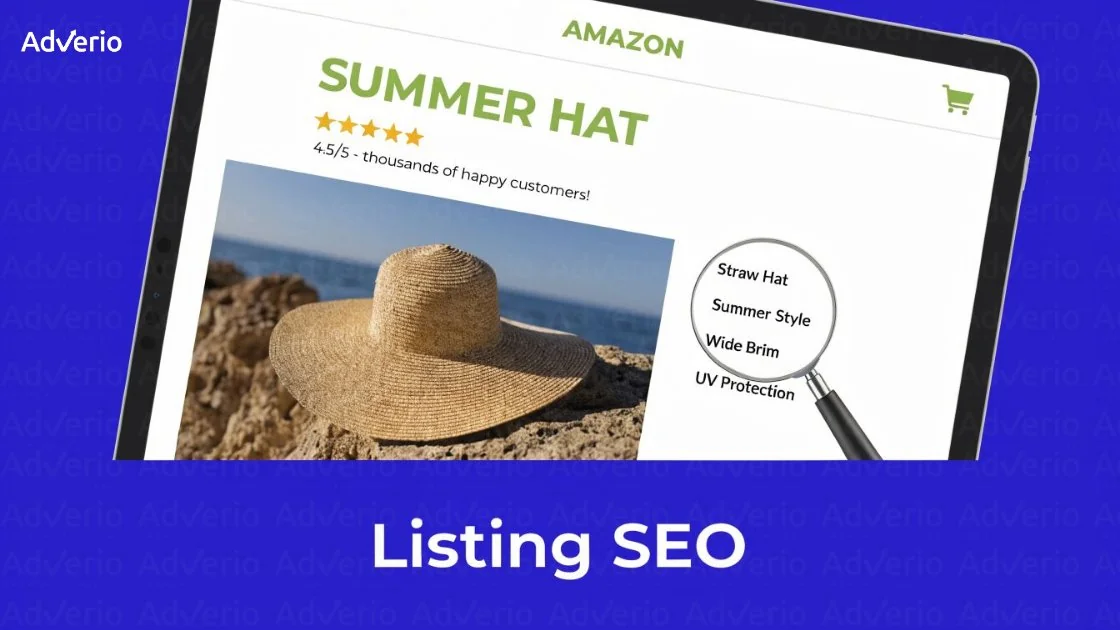
Bad reporting hides the operating model.
Any agency can send a polished monthly deck with green arrows and tidy charts. That tells you almost nothing. Real transparency shows decisions, owners, tradeoffs, and the current bottlenecks choking growth. If your brand also sells on Walmart, Target, or DTC, disconnected dashboards create fake channel wins and bad budget calls. Adverio connects ads, catalog, pricing, and inventory data across channels so your team evaluates performance across the whole business, not just one channel at a time.
Can you show me a sample report before we sign
What a good answer sounds like
They show a real anonymized report built for operators, not prospects. You can see what changed, who made the change, what problem triggered it, what still needs fixing, and what happens next. The report separates activity from business impact. If they launched campaigns, changed bids, tested creative, or updated content, they should also show whether those actions improved traffic quality, conversion, margin pressure, or organic visibility.
You are not reviewing design. You are inspecting discipline.
What a bad answer sounds like
“We customize reporting for every client, so we’ll build it after onboarding.”
That usually means the reporting process is improvised, and improvisation is where accountability goes to die.
Does your reporting include organic share movement
What a good answer sounds like
They track paid and organic together because that is how the business works. They can explain how rank movement, share of voice, search query trends, click-through rate, and PDP conversion affect the interpretation of ad performance. If sponsored sales rise while organic visibility slips, they call that out. If branded demand is masking weak category growth, they call that out too.
Agencies with a real Amazon DSP management approach use retargeting to address funnel gaps directly, not spray budget at an audience and hope attribution catches it.
Good agencies know ads can prop up a weak retail engine for a while. Strong agencies report when that is happening.
They should also connect listing quality to performance reporting. If image sequencing changes and conversion drops, that belongs in the report.
What a bad answer sounds like
“We focus on media first. Organic comes later.”
Then they are measuring the rented traffic and ignoring the asset you are supposed to be building.
How frequently do you update the diagnostic priority list
What a good answer sounds like
They keep a live priority list and update it on a fixed cadence. Weekly is common. The list should include the issues that distort performance. Suppressed listings. Broken variation structures. Weak images. Review velocity problems. Inventory risk. Branded overdependence. Pricing gaps. Content changes that hurt conversion.
Then they show how reporting ties back to that list. If a top ASIN starts losing conversion after a PDP edit, they do not wait for the monthly meeting to mention it. They flag the issue, adjust traffic strategy around the damaged page, assign ownership, and track whether the fix restores performance.
That is what operational transparency looks like.
What a bad answer sounds like
“We review everything in the monthly meeting.”
Monthly recaps are for spectators. Operators run an active issue log.
If an agency cannot show how reporting drives decisions, you are not hiring a growth partner. You are hiring a presentation team.
3. Category 3 Accountability & Underperformance Protocols
Any agency can look polished in a growth cycle. A proper evaluation starts when performance drops and the story gets uncomfortable.
This category exposes the agency’s operating model. Not their pitch. You are testing what they do when targets are missed, whether they protect margin or media spend, and how much pain they are willing to absorb with you. That tells you where their incentives sit.
What happens to your engagement if you miss the targets we agree on
What a good answer sounds like
They explain the contract in plain English. What counts as a miss. What review window triggers intervention. Who diagnoses the issue. What changes after a failed target period. Whether scope, fee, targets, or ownership get reset. Whether you can exit cleanly if results keep slipping.
Push for mechanics, not philosophy. “We believe in partnerships” means nothing. You want to hear the protocol for underperformance.
What a bad answer sounds like
“Amazon is unpredictable, so we don’t tie the engagement to outcomes.”
That answer protects them, not you. Amazon is volatile. A serious agency still defines accountability before the volatility hits.
When did you last recommend a client cut ad spend
What a good answer sounds like
They can give you a recent example without dancing around it. Branded campaigns were soaking up budget and inflating the numbers. Inventory was too tight to justify scaling. Conversion had weakened and traffic would have made the economics worse. Retail readiness was not there, so more spend would have bought more waste.
Agencies that deserve trust will reduce spend when spend stops making sense. If they never recommend restraint, they are managing a billing engine.
What a bad answer sounds like
“We rarely advise reducing spend because growth requires investment.”
Growth requires judgment. Spend is a tool, not a religion.
Can you describe a client relationship that did not work and why
What a good answer sounds like
They answer fast and specifically. Access was blocked. Margin expectations were fantasy. The client wanted scale while refusing to fix pricing, inventory, or content problems. Their own team missed the mark on communication or execution. Then they explain what changed in their process after that failure.
That last part matters. Failure is common. Learning from it is not.
What a bad answer sounds like
“We have not really had bad-fit clients.”
That is fiction. Use it as one of the warning signs for Amazon brands. Agencies that cannot discuss failure usually hide it, repeat it, or blame the client after the fact.
You are not hiring an agency to perform when things are easy. You are hiring their response when the account misses plan.
4. Category 4 Operational Capability & Team Integration
Plenty of agencies can talk strategy. Far fewer can run an account without creating internal drag.
Amazon performance breaks when teams operate in lanes and call it collaboration. Ads push traffic. Listings fail to convert. Inventory slips.
A coordinated Amazon account management system solves this. One operating model, one priority stack, one commercial goal.
Images get rejected. Account health issues sit in a queue while media spend keeps running. Then the agency blames the algorithm.
You are not screening for talent in isolation. You are testing whether the agency has one coordinated operating model or a set of disconnected specialists.
Do your ads and listings teams work together
What a good answer sounds like
They explain the actual workflow, not the org chart. Search term data changes titles, bullets, images, and A plus content. Listing conversion issues trigger bid, budget, and placement changes.
That is only possible when listing optimization for conversion is treated as part of the same workflow, not a separate queue.
Creative tests inform both retail content and media decisions. One team meeting, one priority stack, one set of commercial goals.
That is what a real operating model looks like. A connected framework like a profit-first operating system outperforms separate channel owners protecting their own metrics.
What a bad answer sounds like
“Our PPC team handles ads, and our content team supports when needed.”
That answer tells you exactly how the account will run. Late handoffs, slow fixes, and wasted spend.
How do you handle account health issues
What a good answer sounds like
They have a response plan with named owners. Suppressed listings, stranded inventory, compliance problems, broken variations, image rejections, Buy Box loss, and retail readiness problems get triaged by revenue impact and fixed fast. They can tell you who diagnoses the issue, who contacts support, who updates the asset, and who decides whether spend should pause.
Ask for an example. If a main image gets rejected, a serious agency fixes the retail blocker before sending another paid click. If you need a reference point on current requirements, review 2026 Amazon image specs.
What a bad answer sounds like
“We alert the client if something comes up.”
Weak answer. You are hiring them to manage the issue, not forward the problem.
Do you manage Walmart or Target
What a good answer sounds like
They answer with precision. Either they manage other marketplaces and can explain how assortment, pricing, content, and promotional strategy are coordinated across channels, or they do not and they say so plainly. Clear scope beats fake range.
This question is not about collecting extra services. It is about exposing how they think. An agency that cannot separate channel-specific mechanics from broader commerce strategy usually gives generic advice and calls it expertise.
What a bad answer sounds like
“We’re Amazon-first, but the principles apply everywhere.”
That is presenter language. Different marketplaces have different economics, ranking systems, content rules, and operational constraints. If they flatten those differences, they will flatten your results.
5. Category 5 Fee Structure & Incentive Alignment
Fees expose the truth faster than a pitch deck ever will.
An agency’s operating model shows up in how it gets paid. If revenue rises when your ad spend rises, do not expect objective budget advice. Expect polished justification for more spend, more campaigns, and more “testing.” That is not strategy. That is incentive drift.
Is any part of your fee tied to ad spend volume
What a good answer sounds like
They give you the formula immediately. No throat-clearing. No jargon. They explain whether fees are fixed, tiered, performance-based, or blended, and they spell out what happens when spend goes up or down.
The right answer protects you from spend inflation. A serious agency can show why its compensation does not increase just because it pushed more money into campaigns that were already saturating.
What a bad answer sounds like
“Yes, but that’s how the industry works.”
Industry habits are irrelevant. You are not hiring the industry. You are hiring a decision-maker whose incentives will shape your P and L.
What incentivises you to cut non-incremental spend
What a good answer sounds like
They explain what they protect. Margin. Contribution. Incrementality. Total account health. They can tell you when they reduce spend, why they reduce it, and what signals separate productive budget from budget that only makes dashboards look busy.
That answer matters because ROAS-first management often rewards the wrong behavior. If you want the mechanics behind that failure, read the dangers of ROAS-first Amazon strategies.
A real partner does not need high spend to justify its value. It needs results.
What a bad answer sounds like
“We optimize until the system finds efficiency.”
That is filler. Systems do not own commercial judgment. People do.
What does the exit clause look like if we need to leave
What a good answer sounds like
They answer like adults who have done this before. Contract term. Notice period. Asset ownership. Campaign history access. Reporting exports. Handoff process. No vagueness, no pressure, no attempt to turn basic account access into a negotiation.
Pay attention to speed here. Agencies that hesitate on exit terms usually know the relationship is harder to keep on performance alone.
What a bad answer sounds like
“Our agreements are standard. Legal can explain later.”
Wrong. You need the commercial reality now, not after signature. If the contract is doing more work than the service model, you have your answer.
5-Point Amazon Agency Questions Comparison
| Category | Implementation complexity | Resource requirements | Expected outcomes | Ideal use cases | Key advantages |
|---|---|---|---|---|---|
| Metric Governance & Profit Accountability | Medium–High, requires profit models and KPI integration | Financial data, analytics tools, analysts, cross-functional input | Profit-focused growth, improved TACoS, strategic budget allocation | Brands prioritizing profitability and P&L clarity | Aligns ad decisions to total business results; reduces optimization myopia |
| Reporting & Full-Funnel Transparency | Medium, dashboarding and data-normalization work | Reporting platforms, data engineers, sanitized sample reports | Real-time visibility, actionable insights, measured paid vs organic impact | Brands needing transparent metrics and attribution | Accountability through clear reports; faster decision making |
| Accountability & Underperformance Protocols | Low–Medium, contractual and process design | Legal/contract support, SLAs, performance tracking, escalation owners | Clear remediation, financial consequences for misses, improved ownership | Brands seeking risk mitigation and performance guarantees | Financial alignment and tangible incentives to deliver results |
| Operational Capability & Team Integration | High, cross-team workflows and SOPs required | Multidisciplinary teams (PPC, SEO, ops, creative), monitoring tools, dedicated leads | Integrated campaigns, faster issue resolution, better listings & conversions | Complex catalogs, multi-marketplace expansion, high operational risk | Holistic execution that prevents silos and improves resiliency |
| Fee Structure & Incentive Alignment | Low–Medium, pricing model and bonus structures | Contract design, agreed performance metrics, transparent billing | Reduced conflicts of interest, incentives to cut waste and improve profit | Brands focused on long-term efficiency and true partnership | Aligns agency incentives with brand profit; clearer exit terms |
From Answers to Action Scoring Red Flags and The Adverio Model
Good questions are step one. Scoring the answers is step two.
Don’t overcomplicate it. Use a simple 0, 1, or 2 for each answer.
How to Score the Answers
-
2 points
Specific. Operational. Profit-aware. The agency gives concrete examples, clear decision rules, and direct ownership. -
1 point
Directionally fine, but soft. They understand the concept, but the answer lacks systems, examples, or conviction. -
0 points
Vague, evasive, defensive, or incentive-conflicted. Red flag.
Your score is out of 30.
-
24 to 30
Strong candidate. This agency likely operates like a strategic partner. -
15 to 23
Proceed carefully. There are gaps, and you’ll need tighter controls. -
Below 15
Eliminate. You’re looking at activity management wrapped in polished sales language.
The Three Questions You Should Ask Last
Save these for the end, when the agency relaxes and drops the rehearsed voice.
-
Walk me through the last client you lost and why.
You’re testing ownership. -
What is the single biggest strategic mistake you’ve made with a client in the last 12 months.
You’re testing learning ability and honesty. -
If you had to identify one weakness in your service model today, what would it be.
You’re testing self-awareness.
The content of the answer matters. The posture matters more. Strong operators don’t pretend they’re flawless. They show you how they think when reality gets messy.
Red Flags in the Answers
Kill the evaluation if you hear any of these patterns.
-
They blame the algorithm for weak performance without naming controllable factors
-
They anchor everything to ROAS and avoid TACoS, margin, or organic share
-
They won’t show a sample report
-
They can’t explain what happens when targets are missed
-
They make more money when your spend increases
-
They treat Walmart or Target as interchangeable with Amazon
Those aren’t minor concerns. They’re operating model defects.
How Adverio Answers These Questions
Adverio answers them directly. The model is profit-first, not activity-first. The team works across Amazon, Walmart, and Target. Reporting connects ads, catalog, pricing, inventory, and reviews in one view.
Fees are built around accountability, and Adverio offers a 40% refund clause in its ROI-backed delivery model. If you want to pressure-test your own account instead of another agency’s pitch,
FAQs
What are the most important questions to ask amazon agency partners first?
Start with metric governance, reporting transparency, and fee incentives. Ask what metric governs decisions, whether reporting includes organic movement, and whether any fee is tied to ad spend. Those three questions expose more than the usual sales-call script.
Should I prioritize category experience or operating discipline?
Operating discipline wins. Category experience helps, but a weak operating model with category familiarity is still weak. You need an agency that can explain decision logic, accountability, and how teams work together.
What should I ask if my brand also sells on Walmart or Target?
Ask whether the agency manages those channels directly and how it measures incrementality across marketplaces. If it can’t explain cross-channel profit logic, it may grow one channel by cannibalizing another.
How do I know if an agency is obsessed with activity instead of profit?
Listen for reporting that focuses on tasks completed, spend increased, and ROAS snapshots without explaining impact on total channel efficiency, margin, or organic share. Activity sounds busy. Profit accountability sounds precise.
What if the agency refuses to answer difficult questions directly?
Walk. Evasive answers during the sales process become worse after the contract is signed. If they can’t handle due diligence, they won’t handle pressure well inside your account.
Read Next
If you’re done vetting other agencies and want to see what profit accountability looks like in your own account, book your ROI Forecast and find out exactly where your growth is leaking.