



Table of Contents
Choosing between Amazon Vendor Central and Seller Central is a profit decision—not an operational one. This decision directly determines your margin structure, pricing power, and long-term scalability on the world’s largest marketplace. With Vendor Central (1P), Amazon becomes your direct wholesale customer—a seemingly simple path that comes at the cost of steep margin concessions and zero pricing control. On the other side, Seller Central (3P) puts you in the retailer’s seat, giving you full command over pricing, inventory, and your brand’s narrative.
Most brands default into one of these models without modeling the downstream impact on margin without a clear financial forecast, bleeding profit without even realizing it. The debate isn’t about which platform is “better.” It’s about which engine truly aligns with your business goals and protects your bottom line.
This guide moves beyond surface-level comparisons to give you a profit-first framework for your decision. We’ll expose the real strategic and financial implications of your choice so you can decide which model genuinely serves your brand.
Before choosing a model, you need to answer one question:
Which one actually produces higher net profit for your current catalog?
Decoding the 1P vs 3P Business Models
The fundamental difference between Vendor Central and Seller Central is who sells to the end customer. It’s a simple distinction with massive consequences.
As a first-party (1P) vendor, you operate as a wholesale supplier. Amazon sends you bulk purchase orders, takes ownership of your inventory, and then handles everything else—pricing, fulfillment, and customer service. This path is often invitation-only and traditionally suited for brands with high-volume, low-margin products looking to offload operational headaches. You can dig deeper into the wholesale model’s impact on brand control on bebolldigital.com.
In contrast, as a third-party (3P) seller, you sell through Amazon’s marketplace directly to consumers. You own your inventory right up until the point of sale, which means you have complete control over retail pricing, listing content, and brand messaging.
Vendor Central (1P) vs Seller Central (3P) At a Glance
Here’s the operational reality—no fluff. This table lays out the operational realities of each model side-by-side.
| Attribute | Vendor Central (1P) | Seller Central (3P) |
|---|---|---|
| Business Model | Wholesale Supplier to Amazon | Direct-to-Consumer Retailer |
| Pricing Control | None. Amazon sets the retail price. | Full. You control your pricing strategy. |
| Inventory Control | Amazon manages via purchase orders. | You manage your own stock levels (FBA/FBM). |
| Customer Data | Limited, aggregated data access. | Direct (but limited) access to customer insights. |
| Payment Terms | Longer wholesale cycles (60-90 days). | Faster payment cycles (approx. 14 days). |
| Onboarding | Typically invitation-only. | Open to almost anyone. |
The fundamental question is one of control versus convenience. Are you building a retail business where you command the brand experience, or are you a supplier focused on fulfilling large, predictable orders?
This decision will ripple through your entire operation, affecting everything from your net profit per unit to your ability to launch new products quickly. Don’t just choose a platform; choose a strategy. Before you commit, you need a clear-eyed view of how each model will impact your true costs and operational reality.
Decoding The True Cost of Selling on Amazon
Top-line revenue doesn’t matter if your unit economics are broken. The financial DNA of Vendor and Seller Central couldn’t be more different, and ignoring the nuances is the fastest way to bleed your margins dry. Brands get mesmerized by massive purchase orders from Vendor Central, only to realize months later that their net profit has been hollowed out by fees they never saw coming.

Choosing between these models isn’t an operational headache—it’s a critical financial decision that dictates your brand’s profitability on the world’s biggest marketplace. Let’s cut the fluff and expose the real costs.
Vendor Central: The Black Box of Profitability
Vendor Central looks simple on paper—but it’s where margins quietly get compressed: you agree on a wholesale price with Amazon. But that’s just the opening bid in a negotiation where Amazon holds all the cards. They demand a massive margin upfront, often a 40-60% discount off your retail price.
Then the “hidden” costs start stacking up. These aren’t just line items; they are mandated deductions that steadily chip away at your bottom line.
- Co-Op Fees: Non-negotiable contributions to Amazon’s marketing and operational machine. Expect them to take another 5-10%.
- Marketing Accruals: A fund set aside for promotions that Amazon, not you, controls.
- Chargebacks: Punishing fees for tiny logistical mistakes. An incorrect label or a late ASN can wipe out the profit on an entire shipment.
Your purchase orders might look predictable, but your actual net profit becomes a complete mystery. To top it off, you get paid on longer terms (typically 60-90 days), creating a cash flow crunch while Amazon uses your money to fuel its own growth.
Seller Central: Transparent Costs, Direct Control
Seller Central (3P), on the other hand, operates on a fully controllable cost structure tied directly to revenue. The costs are clear, predictable, and tied directly to sales. You know exactly what you’re paying for, and when.
- Referral Fees: A straightforward percentage of the final sale price, usually 8-15%, depending on your product category.
- Fulfillment Fees (FBA): If you use Fulfillment by Amazon, you pay set fees for storage, picking, packing, and shipping. These are calculated based on size and weight, making it easy to model profit per unit.
- Advertising Costs: You are in the driver’s seat. You control every dollar spent on Sponsored Products, Brands, and Display campaigns through Amazon PPC Management with clear metrics like ACoS and RoAS to track performance.
This model puts you in complete control of your retail price. You can adjust pricing to protect margins, run promotions on your own terms, and directly manage your profitability SKU by SKU.
Calculating Your True Net Profit
To make an informed decision, you have to look past the top-line numbers and calculate your true net profit for both models. Don’t fall into the trap of comparing a wholesale PO value to retail revenue—it’s an apples-to-oranges comparison that will mislead you every time.
Vendor Central (1P) True Profit Formula:
(Wholesale PO Value) – (Cost of Goods Sold) – (Co-op Fees + Marketing Accruals + Freight Allowances + Chargebacks + Other Deductions) = Net Profit
Seller Central (3P) True Profit Formula:
(Retail Price x Units Sold) – (Cost of Goods Sold) – (Referral Fees + FBA Fees + Ad Spend + Other Seller Fees) = Net Profit
Running this analysis is non-negotiable. A detailed grasp of your unit economics is the first step toward profitable growth. When brands actually map out these costs, they often find that the perceived simplicity of Vendor Central comes at too high a price. Want to see which model actually maximizes your profit?
Get your ROI Forecast
Choosing Between Total Control and Outsourced Convenience
This isn’t a platform debate—it’s a control vs margin decision: do you want to captain the ship or just supply the cargo? This choice defines your day-to-day reality, your brand’s agility, and ultimately, your relationship with the customer. It’s a core strategic decision.
The Vendor Central Model: Hands-Off and High-Volume
As a first-party (1P) vendor, you’re essentially outsourcing your entire retail operation to Amazon. You hand over the keys and let them drive. Your primary job is to fulfill massive purchase orders flawlessly. This model often suits brands with lean teams or those who see Amazon as just another wholesale account, not a primary growth engine.
The convenience is real, but it comes with serious trade-offs:
- Pricing Impotence: Amazon sets the retail price. You have zero say if they decide to tank it, wrecking your brand equity across every other channel.
- Inventory Blindness: You lose direct control over your stock. Amazon’s ordering can be erratic, leading to surprise stockouts or overstock situations you’re powerless to fix.
- Customer Anonymity: You have no direct contact with the end customer. Amazon handles all services, returns, and communication, building a wall between you and your buyers, which also limits your ability to manage perception through Amazon Critical Review Removals
You offload operations—but lose control over pricing, inventory flow, and brand positioning- but you become a passenger in your own brand’s journey on the platform.
The Seller Central Model: In Command and In Control
As a third-party (3P) seller, you are the retailer. Every decision—from pricing to inventory to customer service—is yours. This hands-on command is a must for brands obsessed with protecting brand equity, owning the customer experience, and executing an agile strategy.
You dictate retail pricing, manage your stock levels, craft your own listing content, and own the customer relationship (within Amazon’s rules). This control is a massive strategic asset.
- Total Pricing Autonomy: You set your prices, run your own promotions, and manage margins on a SKU-by-SKU basis.
- Agile Inventory Management: You decide how much inventory to send to FBA, letting you react instantly to market shifts and dodge costly stockouts.
- Direct Brand Storytelling: You control your listings, A+ Content, and Brand Store through Amazon Listing Optimization, ensuring your brand’s story is told exactly the way you want it.
The operational burden of 3P is significant, but it buys you something invaluable: strategic power. For brands with large, complex catalogs, this control is the only way to manage that complexity and optimize for profit.
Choosing the right operational model is foundational. While the autonomy of Seller Central is compelling, the day-to-day grind can easily overwhelm unprepared teams. For brands that want control without building a massive internal department, partnering with top-tier Amazon account management companies provides the expertise to manage the 3P model without the operational drag.
Unlocking Your Advertising and Data Levers
Growth on Amazon is driven by data visibility and how efficiently you convert it into profit—it’s driven by the advertising tools and data you can actually use. When you look at Vendor Central vs. Seller Central, you’re choosing between two completely different arsenals. One gives you a megaphone, the other a microscope.
Vendor Central (1P) gives you access to powerful, top-of-funnel weapons like exclusive marketing programs and more direct support for high-impact Amazon DSP campaigns through Amazon DSP Management. This is great for broad-stroke brand awareness, but there’s a major catch: the data is aggregated and lacks detail. You’re essentially advertising to support Amazon’s retail business, not your own.
You’re buying billboards on a highway Amazon owns, with no real idea who’s driving by or where they’re going next. The visibility is impressive, but the intelligence is shallow.
The Seller Central Data Advantage
Seller Central (3P) flips the script. It hands you the keys to a rich data environment, allowing for a much more surgical approach to growth. You get direct access to customer data (within Amazon’s terms), detailed sales reports, and precise PPC management tools.
This level of detail is a game-changer for sophisticated brands. It lets you:
- Optimize for Real Profit: You can track performance down to the individual SKU, adjusting bids based on true profitability, not just a fuzzy ACoS. This is the bedrock of any intelligent Amazon advertising strategy that maximizes ROI.
- Run Market Basket Analysis: See which of your products are frequently bought together. This insight is gold for creating smart bundling strategies and cross-selling campaigns.
- Generate Clear Customer Insights: Get a clear line of sight into metrics like customer lifetime value (cLTV) and repeat purchase behavior—impossible to see inside the Vendor Central black box.
For any brand that wants to build a direct relationship with its audience and optimize for profit, the granular data in Seller Central is an undeniable advantage.
Choosing Your Growth Engine
The choice boils down to your primary goal. Are you focused on massive, top-of-funnel reach, or are you building a profitable, data-driven retail operation?
Vendor Central prioritizes reach. Seller Central prioritizes profit optimization—great for hitting the masses but terribly inefficient for targeted action. You fund the campaign, and Amazon reaps the long-term benefit of owning the customer relationship.
Seller Central is your own proprietary intelligence hub. It provides the hard data needed to build a true growth marketing strategy, where every dollar spent is tracked, measured, and optimized for maximum impact on your bottom line.
No matter which model you choose, it’s critical to avoid the common errors in Amazon advertising to get the most out of your campaigns. The best data in the world means nothing if the execution is flawed. For brands serious about scalable growth, the superior data and control offered by Seller Central provide the necessary foundation.
A Strategic Framework for Choosing Your Model
“Which is better?” is the wrong question. That’s the wrong question.
The only question that matters is: which model aligns with your brand’s specific business objectives right now? This isn’t about a generic pro/con list; it’s about matching the platform to the mission.
The image below breaks down the fundamental difference in the tools at your disposal—broadcasting your message with Vendor Central versus analyzing granular data with Seller Central.
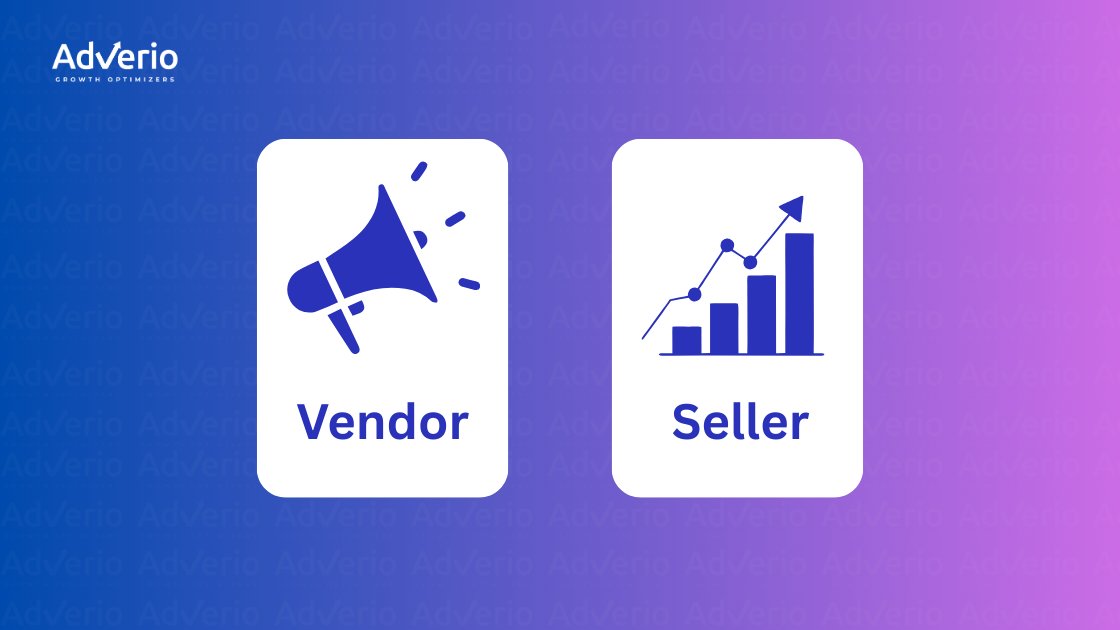
This visual highlights the core trade-off: Vendor Central’s megaphone for mass-market reach versus Seller Central’s data-driven microscope for surgical precision and profit optimization.
Aligning Your Model with Your Business Goals
Let’s get practical. Your choice should be dictated by your immediate and long-term business strategy.
- Goal: Maximum Profit Per Unit and Brand Equity Protection.
For brands obsessed with margin integrity and controlling their brand story, Seller Central is non-negotiable. The ability to set your own retail prices and directly craft listing content is essential for protecting brand value and maximizing profit. - Goal: Simplified Operations for a Planned Business Exit.
If you’re engineering an exit, Vendor Central can be attractive to certain buyers. The predictable wholesale revenue and simplified logistics look cleaner on a P&L for purchasers who lack deep e-commerce expertise. - Goal: Combatting Unauthorized Resellers.
When your brand is plagued by third-party resellers undercutting your price, Seller Central provides the direct control needed to enforce MAP policies and manage the Buy Box. You can’t fight a pricing war when you’ve already surrendered control of pricing to Amazon. - Goal: Liquidating Excess Inventory.
For offloading large volumes of excess inventory quickly, Vendor Central’s wholesale model can be efficient. Amazon can absorb large quantities in a single purchase order, clearing your warehouse without the complexity of managing individual B2C sales.
The platform is a tool, not the strategy itself. The critical mistake is choosing a tool that fundamentally works against your primary business objective.
Making the Decision with a Profit-First Mindset
Your analysis must always circle back to profit. Don’t be swayed by the vanity metric of large wholesale purchase orders from Vendor Central if the resulting net margin is unsustainable. Conversely, don’t chase the higher gross margins of Seller Central if your team lacks the operational discipline to manage it profitably.
The choice between Vendor Central vs Seller Central is ultimately a calculation of control, cost, and strategic alignment. Before you commit, map out your brand’s primary goals for the next 12-24 months. Use this decision matrix to guide your thinking.
Decision Matrix: Model vs. Brand Goal
| Business Goal / Situation | Recommended Model | Strategic Rationale |
|---|---|---|
| Maximize Profit Per Unit | Seller Central (3P) | Direct control over retail price allows for dynamic margin management. |
| Protect Brand Equity | Seller Central (3P) | Full control over listing content, pricing, and customer service ensures brand consistency. |
| Engineering a Business Exit | Vendor Central (1P) | Predictable wholesale revenue and simplified operations can be more attractive to non-expert buyers. |
| Launch New Products Rapidly | Seller Central (3P) | No need to wait for Amazon’s approval or POs. Launch, test, and iterate on your own timeline. |
| Liquidate Excess Inventory | Vendor Central (1P) | Amazon can absorb large quantities of stock via bulk purchase orders, simplifying clearance. |
| Lean Operational Team | Vendor Central (1P) | Outsources logistics, customer service, and inventory forecasting to Amazon, reducing internal workload. |
This framework forces you to align your Amazon model with your actual business strategy. Choose the path that empowers your goals, not one that creates friction.
Stop Choosing a Platform. Start Building a Strategy.
The whole Vendor Central vs. Seller Central debate misses the point. Brands get bogged down comparing platform features, but the real question isn’t which dashboard you prefer. It’s how you’re going to build a profitable, scalable marketplace engine that serves your bottom line.
If you’re clinging to a model that kills your margins, hides your customer data, or forces you to surrender brand control, you’re setting yourself up for stagnation. That’s a tactical choice that ignores the bigger strategic picture. The platform is the vehicle; your business goals should be driving.
From Vendor to Strategic Partner
Whether you’re a 1P vendor getting squeezed by Amazon’s relentless margin demands or a 3P seller drowning in operational headaches, the answer isn’t a different platform—it’s a smarter strategy. You need a system that delivers predictable, profitable growth, regardless of the model.
The goal isn’t just to sell on Amazon. It’s to build a resilient, profitable business that uses Amazon as a powerful channel without becoming dependent on its whims.
This takes a fundamental shift. Instead of seeing yourself as just another vendor, you have to operate like a strategic financial partner. Every decision must be based on clear ROI and long-term value.
Implementing a Profit-First Growth Engine
To make this jump, you need an operational framework that puts profit ahead of vanity metrics. We built Adverio’s proprietary Growth Cultivator framework for this. It’s designed to optimize your entire Amazon presence by focusing on the levers that actually matter.
This means putting systems in place for:
- Profit-Driven Catalog Optimization: This is more than updating listings. It’s strategically managing your entire catalog for maximum margin, leveraging tools like our SKU Resurrection process to bring underperforming assets back to life.
- Intelligent Growth Marketing: We’re talking sophisticated, full-funnel advertising strategies across PPC and Amazon DSP that are measured against true profitability—not just a surface-level ACoS.
- Holistic Marketplace Conversion: Systematically improving every touchpoint, from creative assets to customer reviews, to boost conversion rates and customer lifetime value.
When you transform your approach, Amazon stops being a demanding retail channel and becomes a predictable growth engine. Stop letting the platform dictate your strategy. It’s time to build a strategy that dictates your success on the platform.
Ready to stop choosing and start strategizing? Get your ROI forecast, and let’s build a plan that puts your bottom line back in control.
Frequently Asked Firedrills
Choosing between Vendor and Seller Central always kicks up the same critical questions. There’s no single right answer—it all comes down to your brand’s strategy, operational muscle, and where you’re headed. Here are the straight answers to the questions we hear most from established brands.
Can I Use Both Vendor Central and Seller Central?
Absolutely. This is a hybrid or “2P” model, and for brands that know what they’re doing, it’s a powerful strategy. The typical play is to sell your core, high-volume products through Vendor Central to lock in predictable wholesale orders and get the “Sold by Amazon” badge.
At the same time, you use Seller Central as your strategic sandbox. It’s perfect for launching new products, testing price points, or selling items with demand so unpredictable that Amazon won’t touch them as a 1P vendor. This setup gives you stable wholesale cash flow while keeping you agile. Just be warned: running a hybrid model is operationally intense and demands sharp inventory management to avoid creating a price war between your own 1P and 3P listings.
How Difficult Is Switching from Vendor to Seller Central?
Moving from a 1P to a 3P model is a major strategic overhaul, not just flipping a switch. Think of it as a deliberate migration that needs careful planning. The process starts with winding down your vendor relationship with Amazon, a delicate dance on its own.
From there, you have to build from the ground up:
- Set up a new, professional Seller Central account.
- Migrate your entire product catalog, making sure your ASINs and Brand Registry follow you.
- Build out your own operational machine for everything from inventory forecasting and pricing to running ads and handling customer service.
The biggest landmine is the “inventory blackout”—that gap where your products go out of stock as Amazon’s 1P supply runs dry before your 3P FBA inventory goes live. It’s complex, but for the right brand, the long-term win of total control and fatter margins is well worth the short-term headache.
Which Model Is Better If I Plan to Sell My Business?
This completely depends on who you’re trying to sell to. A traditional private equity firm or a buyer with zero e-commerce experience might get excited about the simplicity of a Vendor Central business. The steady POs and outsourced logistics look clean on a P&L and feel less operationally messy.
However, a savvy e-commerce aggregator or a strategic buyer will see far more value in a dialed-in Seller Central operation. A profitable, systemized 3P account proves you have direct customer access, higher margin potential, and a goldmine of performance data. That direct control shows the business is a self-sufficient asset, not just a supplier, and can often fetch a much higher valuation.
How Do Advertising Options Differ Between the Platforms?
Both platforms give you the keys to Sponsored Products, Brands, and Display ads. Historically, Vendor Central was the only way to get direct access to premium, top-of-funnel tools like Amazon DSP and other exclusive marketing programs. While Amazon is opening up DSP to more sellers, vendors often still get more white-glove support for major campaigns.
On the flip side, Seller Central gives you vastly more granular, real-time data for your PPC campaigns. This lets you optimize with a scalpel, focusing on ROI in a way that’s just not possible in the Vendor Central black box. The choice boils down to strategy: if you’re playing the long game of brand awareness, the vendor tools are potent. If you’re obsessed with direct-response profitability and squeezing every drop of return from your ad spend, Seller Central’s data-rich environment wins every time.
The endless debate between Vendor Central vs Seller Central often distracts from the real goal: building a profitable, scalable marketplace strategy. Stop letting the platform dictate your results.
Book Your ROI Forecast