



Table of Contents
If your return rate is quietly destroying your conversion rate and organic rank, this guide shows how to fix the root cause — not just the symptom.
That “Frequently Returned” badge isn’t a glitch. It’s a public signal from Amazon that your product isn’t meeting buyer expectations, and it’s a direct threat to your conversion rate, brand trust, and long-term visibility. Most brands react emotionally. The smart ones treat it like a conversion-quality diagnosis. There’s no support ticket or magic email that makes this go away. You don’t “remove” the badge. You correct the conversion breakdown that triggered it. This guide explains why the badge appears and, more importantly, what actually works to get it removed for good.
For multi-variant brands and high-SKU catalogs, this badge compounds fast. One underperforming variation can drag down the parent ASIN — and your entire advertising efficiency.
At-a-Glance — Amazon Frequently Returned Badge
-
Algorithmic, Not Manual: The badge is driven by your return rate exceeding the category average, not by reviews or a manual penalty.
-
No Direct Removal: There is no support case or manual process to have the badge removed.
-
Traffic Can Hurt: Driving unqualified traffic to a flagged listing will worsen your return rate and keep the badge in place longer.
-
Fix the Root Cause: Removing the badge requires fixing the expectation gap between your listing and the actual product.
What the “Frequently Returned” Badge Actually Means
The badge is Amazon’s way of managing buyer trust and reducing its own operational costs from returns. It’s a data-driven flag triggered when your product’s return rate climbs significantly above the norm for its specific category. It isn’t a subjective penalty; it’s a reflection of customer behavior.
For shoppers, it’s a clear warning sign that stops them in their tracks. It erodes trust before they even have a chance to read your reviews or A+ Content, directly impacting their click behavior and your conversion rate. It’s Amazon signaling buyer risk before your brand gets a chance to sell the story.
Why Products Get the Frequently Returned Badge
The badge appears because of a disconnect between what customers expect and what they receive. To diagnose the problem, you need to look at every touchpoint that sets those expectations.
Expectation Mismatch on the PDP
This is the most common culprit. Your product detail page is making promises the product can’t keep.
-
Images Oversell: Overly edited or lifestyle photos can misrepresent a product’s true size, color, or quality.
-
Titles Imply False Features: A title that suggests functionality or benefits the product doesn’t have is a direct path to a return.
-
Missing Clarity: Lack of clear sizing charts, compatibility guides, or material specifications forces buyers to guess—and they often guess wrong.
Offer or Variant Confusion
Confusion is a conversion killer. If a customer is even slightly unsure about what they’re ordering, the probability of a return skyrockets.
-
Wrong Variation Default: A customer might accidentally order the wrong size or color because the default option wasn’t what they intended to select.
-
Unclear Bundles: If it’s not immediately obvious what is and isn’t included in a bundle, buyers will feel shortchanged and initiate a return.
Fulfillment or Quality Inconsistency
Sometimes, the listing is perfect, but the physical product or its delivery is the problem.
-
Poor Packaging: Flimsy packaging that leads to damaged products on arrival creates a negative first impression that almost always ends in a return.
-
Inconsistent Lots: Variations in quality between manufacturing batches can trigger waves of returns and negative feedback.
Returns usually spike because buyers feel surprised—not because the product is bad.
Why You Can’t “Remove” the Badge Directly
Let’s cut right to it: there is no support case you can open or escalation path you can follow to have the badge manually removed. Wasting time arguing with Seller Support is a losing game because the badge isn’t a human decision; it’s an algorithmic one.
Amazon’s system is impartial. It doesn’t care about your seller feedback or ad spend. It cares about one thing: customer return data.
-
No Case Path for Removal: The system is automated. There’s no “appeal” button.
-
Support Escalations Don’t Work: Front-line support has no power to override the algorithm.
-
Improvement is the Only Path: The badge disappears only after your return rate drops below the category threshold and stays there.
Stop wasting cycles arguing with support Trying to remove the badge directly is like trying to fix a fever by breaking the thermometer. The badge isn’t the problem; it’s just reporting the problem. Your focus must be on fixing the cause, not arguing about the symptom.
If you’re unsure whether the issue is pricing, positioning, or traffic quality, request a Marketplace Profit Analysis before making random changes.
What Actually Fixes the Frequently Returned Badge
If you want the badge gone, fix the system — not the symptom. It’s about making your listing so clear, and your product so accurately represented that the wrong customer never clicks “Add to Cart.”
A high return rate doesn’t just hurt conversion. It weakens your incremental growth. When Amazon sees repeated buyer dissatisfaction, your visibility share erodes — impression share drops first, then click share, then purchase share.
Fix Buyer Expectations Before Purchase
Your product detail page is a contract with the buyer. Stop breaking it.
This is where strategic Amazon listing optimization services become non-negotiable.
-
PDP Clarity: Rewrite your copy to be brutally honest. Ditch the hype and focus on clear, factual information.
-
Image Honesty: Use infographics with precise dimensions. Show the product from all angles, in realistic settings. If a specific accessory isn’t included, show that visually.
If you’re serious about how to reduce Amazon return rates strategically, this is where expectation management starts — before the sale happens.
-
Explicit Limitations: State what your product doesn’t do. Call out compatibility issues or use-case limitations directly in your bullets and A+ Content.
Reduce Accidental Purchases
Mistaken orders are a silent killer of your return rate. Make it impossible for customers to get it wrong.
-
Size Charts: Make your size chart the second image. Include measurements, model specs, and fit comparisons.
-
Compatibility Callouts: For electronics or auto parts, use clear charts and diagrams to show exactly which models are compatible.
-
Use-Case Exclusions: Clearly state who the product is not for. This helps filter out buyers who would otherwise be disappointed.
Stabilize Conversion Quality
Here’s the reframe: your goal isn’t more sales. It’s more of the right sales. Driving unqualified traffic to a flagged listing only pours fuel on the fire.
Lower returns come from fewer wrong buyers—not more sales.
This is a conversion quality problem. Strategic Amazon PPC management helps refine targeting toward long-tail, high-intent keywords that bring the right buyers—not just more traffic. Use negative keywords to filter out shoppers looking for features you don’t offer. By attracting better-qualified buyers, you naturally improve your return rate. The badge disappears as a byproduct of a healthier, more profitable sales process.
Frequently Returned Badge vs Other Amazon Risk Signals
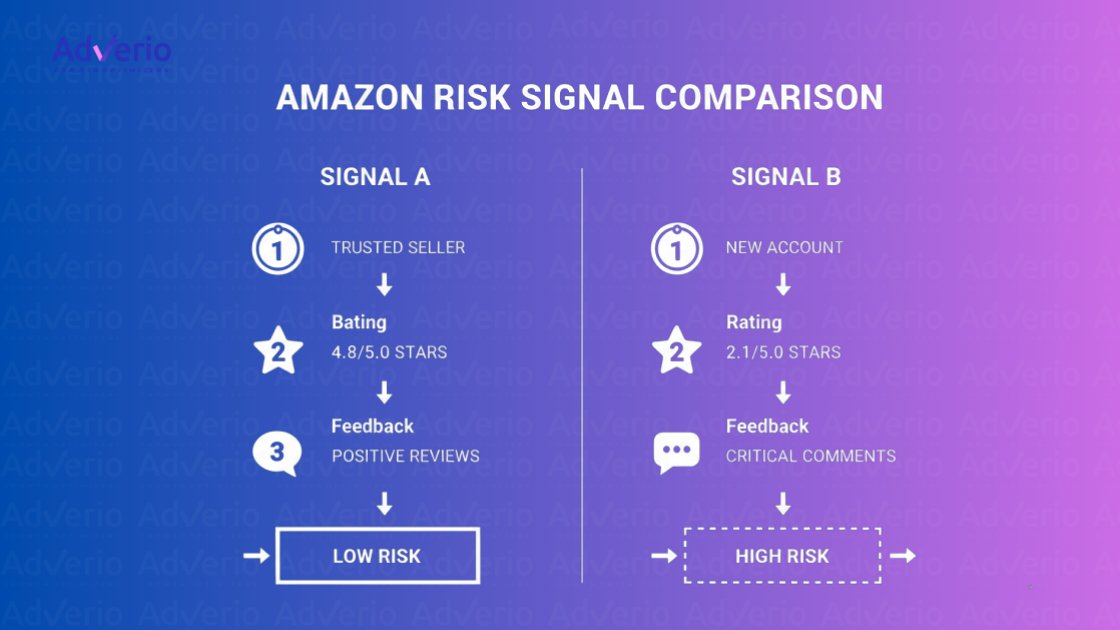
The “Frequently Returned” badge is a serious threat, but it’s just one of many risk signals on Amazon. Understanding how it differs from others is key to deploying the right strategy. A low star rating points to a product quality issue. Negative seller feedback indicates a fulfillment problem. The returns badge is unique: it flags a mismatch between promise and reality.
If you’re also battling suppressed rankings, read our breakdown on Amazon ranking drops and recovery strategy.
| Risk Signal | What triggers it | Where it shows | Impact on CVR | How it’s fixed |
|---|---|---|---|---|
| Frequently Returned badge | Return rate is significantly higher than the category average. | Product Detail Page, near the Buy Box. | High. Creates immediate buyer doubt and can trigger competitor suggestions. | Listing optimization, image honesty, clarifying product limitations, and improving sizing/compatibility info. |
| Low star rating | An accumulation of negative product reviews. | Search results, Product Detail Page, ad placements. | Moderate to High. Erodes trust before a buyer even clicks. | Improving product quality, addressing specific customer feedback, and generating new positive reviews. |
| Negative seller feedback | Poor customer experiences with shipping, packaging, or communication. | Your Seller Profile page. | Low to Moderate. Primarily impacts Buy Box eligibility; less visible to buyers. | Improving fulfillment processes, customer service responsiveness, and requesting the removal of invalid feedback. |
| Buy Box instability | Losing the Buy Box due to price, seller metrics, or inventory issues. | Product Detail Page. | Very High. Your “Add to Cart” button effectively disappears, halting sales. | Strategic pricing, better inventory management, and maintaining strong seller performance metrics. |
How Adverio Fixes Return-Driven Revenue Leakage
We treat the Frequently Returned badge as a profitability leak — not a compliance issue.
Using our Profit-Driven Catalog Optimization framework, we isolate:
Variation-level return spikes
Conversion-to-return tradeoffs
Inventory + expectation mismatches
Incrementality erosion inside paid traffic
Then we deploy coordinated changes across Ads, Catalog, and Merchandising — because fixing only one lever doesn’t move the system.
How Adverio Helps Brands Recover from Return Signals
We see returns as a critical conversion intelligence signal. Fixing the badge isn’t about a quick-fix campaign; it’s about embedding sustainable improvements into your marketplace operations.
Our fixes live inside our core strategic pillars:
-
Amazon listing optimization: We rewrite copy for clarity over hype and overhaul imagery to manage expectations perfectly.
-
Offer Architecture: We restructure confusing variations and add explicit callouts in A+ Content to prevent accidental purchases.
-
Catalog Structure: We ensure your product groupings and navigation are intuitive, reducing customer confusion from the start.
Effective Amazon account management means treating your catalog as an ecosystem that must be optimized for clarity. For us, badge removal is a byproduct of a smarter, more profitable strategy, not the end goal itself.
👉 If your return rate is quietly draining profit, it’s time to quantify the damage.
Book Your ROI Forecast and see what fixing conversion-quality could unlock.
FAQs
Can you remove the Amazon Frequently Returned badge?
No, not directly. You cannot request its removal through Seller Support. The only way to remove it is by lowering your product’s return rate to below the category average. Once the data improves for a sustained period, Amazon’s algorithm will automatically remove the badge.
How long does it take for the badge to go away?
Faster-selling SKUs recover faster because the algorithm recalculates with more data. Slower SKUs typically require 30–60 days of sustained lower return rates before the badge disappears.
Does the badge affect ranking or just conversion?
It affects both. The immediate impact is on your conversion rate, as it creates instant buyer doubt. Long-term, a high return rate is a negative signal to Amazon’s A10 algorithm, which can lead to suppressed organic ranking over time.
Are returns worse than bad reviews?
In many ways, yes. While bad reviews erode trust, the “Frequently Returned” badge can trigger Amazon to actively suggest competitor products on your listing. It’s a more direct and immediate threat to your sales than a poor star rating.
Should you pause ads if the badge appears?
No. Pausing ads cuts off the data flow you need to diagnose the problem. Instead, refine your ad targeting. Focus on long-tail, high-intent keywords to attract better-qualified buyers who are less likely to return the product. This turns your ad spend into a tool for recovery.