
Amazon Account Management for Brands That Cannot Afford to Lose Control

Turn Growing
Pains into Profit

Account management should not feel like submitting tickets and waiting. It should feel like compounding revenue with control. We run the full growth system across pricing, inventory, catalog, listings, PPC, DSP, and BI, so you scale without chaos and without margin erosion.

Built for brands managing catalogs from dozens to thousands of SKUs · Powered by AMOS, our marketplace operating system

What it covers

What Amazon account management covers

Amazon account management is the operational governance of everything that touches your P&L on Amazon: pricing, inventory, catalog structure, listings, advertising, and compliance. At scale these systems stop behaving independently. A pricing shift breaks Buy Box stability. A listing change moves ad efficiency. Coordinating them is the job.

PROFIT-FIRST GROWTH

The Work Is Getting Done. The Profit Isn't Moving. Those Are Different Problems.

Even a 1% margin leak doesn't stay 1%. It compounds quarterly through loss of market share, pricing drift, catalog decay, and unchecked ad inefficiency to name a few. The bleed usually goes unnoticed until it reaches 10 points. We find it in one session. We find it in one session.

Client Logo Fytertech logo Client Logo Client Logo Client Logo Client Logo Client Logo Client Logo Client Logo Client Logo Wildflower Logo Macnaught Logo MK Supplements Logo JS Logo Hello Health Logo Tea Zone Logo Telk Protek Logo Crazy Dog Logo Karat Logo Levtex Baby Logo QPS Logo Client Logo Shoe Bond Logo

Why This Matters (Now)

Amazon account management that integrates pricing, listings, ads, catalog, and BI into one governed growth system.

Growth is rarely lost because of effort. It is lost because complexity compounds faster than governance.

  • Pricing shifts without elasticity testing
  • Buy Box instability
  • Catalog structure decay
  • Ads scaling before margin discipline
  • Inventory misalignment

At scale, Amazon stops behaving like a channel. It becomes a system.

If Amazon feels fragile instead of predictable, governance is missing.

Principles:

Adverio - big bullet

No Box, no boost.

We don't promote a shaky Buy Box or margin-negative price. Our experts enforce this standard across our Amazon account management service.

Adverio - big bullet

Dual-key changes.

Revenue-critical actions require dual approval and pre-flight checks. No unilateral decisions that expose margin or account health.

Adverio - big bullet

Receipts over reports.

Every move ties to measurable impact: contribution margin, conversion efficiency, or velocity lift. No dashboard theater.

More than 60% of Amazon's total sales come from third-party sellers, with over 2 million active sellers on the platform globally, according to Amazon's 2024 SMB Impact Report. At that density, account governance isn't optional, it's the difference between compounding and chaos.

Account Management

Ready to Take Control of Your Amazon Growth?

Since you’re evaluating account management, we can map out where your current system is breaking and how to fix it with proper governance.

Map My Account Gaps

We work from the data you already have.

Every Engagement Starts With a Profit Diagnostic

Before we scale anything, we diagnose.

Every engagement begins with a comprehensive review of:

Listing integrity and conversion efficiency
Pricing elasticity and margin guardrails
Buy Box ownership stability
Catalog structure and indexing
Incremental lift across paid media, so budget follows net-new revenue rather than revenue you already owned
Inventory health and operational risk
The scoreboard

What KPIs should you track if you hire full-service account management?

Hold the partner to the numbers that move the P&L, not the ones that flatter a dashboard.

  • Contribution margin by SKU
  • Buy Box ownership
  • TACoS rather than campaign ACoS
  • Conversion efficiency
  • Order defect rate and account health signals
  • Inventory position against demand
  • Catalog error rate

If a monthly report cannot show movement on those seven, it is describing activity rather than governance.

Why Adverio Is Different

Amazon account management should not be task fulfillment.
It should be outcome enforcement.

Outcomes, Not Services

  • We don't sell PPC.
  • We don't sell listings.
  • We don't sell retainers.

We sell measurable outcomes. Every lever exists to expand contribution margin.

If it doesn't move profit,
it doesn't ship.

Governance, Enforced

Every revenue-impacting action is approved, tracked, and tied to margin impact.

  • Attribution is mandatory.
  • Guardrails are mandatory.
Growth without governance becomes chaos.

System, Not Tasks

Pricing, listings, ads, catalog, and BI operate as one governed system, not disconnected execution.

  • No white-labeled SOPs.
  • No reactive firefighting.
  • No growth at expense of margin.
We don't patch issues.
We run the machine.

Only 7.3% of Amazon sellers report annual profits exceeding $250,000, according to Jungle Scout's 2025 State of the Amazon Seller Report. The gap between revenue and profit is almost always a governance problem, not a volume problem.

Governance before headcount

Why does adding people not fix an account that is already busy?

The usual response to a stalling account is capacity. Another specialist, another vendor, another set of hands on the queue.

Each addition optimises its own slice. Pricing moves without inventory knowing. Ads scale behind a listing nobody checked. The reporting multiplies and nobody owns the blended number. Activity rises and margin does not, which is exactly how the work gets done while the profit sits still.

Put one owner on the blended number first, then add capacity underneath it.

Governance before headcount, because headcount without governance buys more of the same problem.

Typical setup vs Adverio

Anyone can run the campaigns. Only one setup has someone accountable for the number at the bottom.

Most comparisons come down to a monthly rate. The difference that shows up in your P&L is who owns the margin when three channels start pulling against each other.

The typical setup

You hire three agencies. Nobody owns the blended number.

Each one optimizes its own channel and reports its own ROAS. Every report looks healthy on its own. No single party is looking at contribution margin across all three shelves, and when the channels disagree, you arbitrate.

The structural risk

The cost is not just the bloat from three separate retainers. It's also the additional margin leaking between them, even if every channel report comes back green.

The Adverio model

You hire one operator group. One governed system across every shelf.

Amazon, Walmart and Target run through the same operating layer, with catalog, pricing, inventory and media governed together. One team. One point of contact. One margin number, reviewed weekly against the P&L.

The structural advantage

The partnership funds the governance that stops the channels from working against each other.

Decision point The typical setup Adverio
Who owns the margin number The typical setupEach channel reports its own "efficiency" metric. The blended contribution number belongs to nobody, so it gets reviewed quarterly at best by the CFO. AdverioOne operator owns net margin across all shelves, reviewed weekly, with the metric set to incrementality and profit lift, rather than marketplace ROAS.
What happens when channels conflict The typical setupAd spend, Pricing, inventory, and Buy Box decisions get made channel by channel, each blind to the others. You find out they collided after the fact. AdverioGlobal Ad Spend prioritization, Pricing parity, Inventory, and Buy Box exposure are governed as one system, so a Walmart or Target decision cannot quietly break the Amazon shelf.
Who decides where the next dollar goes The typical setupEvery vendor argues its own channel deserves more budget. That is scope defense, not allocation strategy. AdverioAllocation is decided on measured incrementality across every shelf, so spend follows net-new growth and profit rather than channel advocacy.

Either setup can run campaigns. Only one of them can tell you what those campaigns did to your profit across the business.

That is the comparison that matters. Not just the monthly rate(s). The blended P&L across every shelf you sell on.
Find My Margin Leaks

We either find leaks or confirm you are already optimized.

The specifics

Positioning is easy to write. Below is a slice of our operating commitments we defend in a room against anyone.


What most of this list depends on

Your P&L gets read every week. Not just the ad report.

Contribution margin is reviewed weekly, not monthly, because weekly is where a margin leak gets caught while it's still small.


Detail page traffic and search traffic run as separate campaigns.

Blend them and a detail page that converts well quietly subsidizes a search term that doesn't, because the placement control inside one campaign moves every target at once. Run them apart and each placement gets its own bid, budget, and read. Amazon offers no true placement exclusion, so this is deliberate weighting, gated on click volume.

Catalog work is versioned, governed, and on a contracted cadence.

Listing changes are version tracked, so we can show you what changed and when. Backend search terms are managed at the listing and variation level. Refresh is prioritized by our Revenue Impact Formula rather than a fixed calendar, because sometimes new content beats refreshing what is already there, and seasonality changes which one wins.

The forecast is built on your search query data, not on category averages.

Total category size tells you the ceiling. It doesn't tell you what you can reach this year. We build both from your own search query performance, then model the share you can realistically reach at 90 and 365 days and price what it costs to get there.

What You Get

Communication & Reporting

Marketplace Governance

  • Case Management & Escalation
    We resolve high-impact cases before they snowball, with escalation paths, clean documentation, and paper trails Amazon actually responds to. Our experts manage this as part of our Amazon account management service, ensuring issues are handled quickly and correctly the first time.
  • Account Health
    Amazon throttles growth before any flag appears. We monitor ODR, VOC, IPI, NCX, and A-to-Z signals early, remediate fast, and set SLAs so you never find out the hard way.
  • Appeals, POAs & Reinstatements
    When issues surface, speed and precision matter. We use proven SOPs and policy-aligned language to secure reinstatements without triggering repeat risk.

Brand & IP Protection

  • Trademark & Brand Registry
    Brand Registry gives you control long before enforcement begins. We handle search, approval, and setup so Enhanced Brand tools are live when you need them.
  • Hijacked Listings & Buy Box
    Bad actors don't just steal listings, they quietly erode rank and margin. We identify hijacks early, stabilize the Buy Box, and restore control before performance slips.
  • Policy-Compliant Enforcement
    Aggressive enforcement can backfire. We use Brand Registry tooling with policy-aligned execution to remove abuse without putting the account at risk.

Catalog & Content Ops (at Scale)

  • Bulk File Creation & Data Quality
    Catalog debt compounds faster than it looks. We execute accurate, high-velocity bulk updates as catalogs scale cleanly from dozens to 500+ SKUs.
  • Variations & Attributes
    Broken variations silently kill conversion. We merge and unmerge ASINs, fix browse nodes, and restore missing BSR so PDPs fulfill buyer and crawler expectations.
  • LQS System (CRO:SEO)
    Listing optimization is infrastructure work, not a one-time refresh, prioritized based on LQS, AI compliance, and revenue impact. We fix copy, media, offers, and reviews to 8.0/10 before scaling traffic.
  • Access & Expansion
    Category & Brand Ungating / Hazmat & Pesticide Corrections: Get approved, get listed, get selling.
  • Omnichannel Listing Syndication
    Walmart, Target, Shopify, and 80+ marketplaces, synchronized content, inventory, and pricing.
  • Machine readability.
    Catalog health now has a second audience. Alexa for Shopping (formerly Rufus) and Amazon's COSMO layer read listing data to decide what to surface, so a catalog that is clean for a human can still be hard for an assistant to interpret. We score that separately, because it fails separately.

Inventory, Pricing & Recovery

Pricing, inventory, and recovery work as one system. Our Amazon account management approach follows proven principles for achieving optimal pricing on Amazon, protecting margin while sustaining velocity.
  • FBA Reimbursements
    We review lost, damaged, and misclassified inventory, accounting for policy and fee changes such as Amazon's 2024 low-inventory updates.
  • Repricing Automation & Feeds
    We manage repricing with contribution-margin guardrails so the Buy Box is won without unnecessary erosion.
  • Buy Box & Price-CVR
    Protect margin; stop promos that hurt profit. We stabilize Buy Box ownership and pricing so promotions support conversion without margin bleed.
  • Dynamic Pricing Strategy
    Pricing isn't coupons or random deals. It's tied to BSR, Buy Box, and contribution margin, coordinated with ads and inventory.

Amazon FBA fulfillment fees increased an average of 5.2% in 2024, with fees now representing 15-35% of selling price depending on product size and category, per Jungle Scout's 2024 FBA fee analysis. Unreviewed reimbursements and unchecked fee changes compound quietly, until they don't.

Every one of those checks runs through the same decision layer rather than six separate reports. That layer is our business intelligence stack, and it is where the governance actually lives.

Not ready for a conversation yet?

Map who currently owns each lever in your account: pricing, inventory, catalog, listings, ads, compliance. Mark whether each has a guardrail, and whether anyone owns the blended number. The gaps show up as a picture.

Score My Account

No call required.

Your Adverio Team

Operators, not order-takers.

One operator owns the outcome, with the full bench reachable behind them.

Your point of contact Brand Strategist

One operator owns your P&L, the roadmap, and the number you are measured on. Before your first strategy call they pull two years of account history and 90 days of advertising detail, then build the plan from your raw data rather than from a sales deck.

The person who builds the strategy is the person who runs the account.

We match your strategist to your catalog, your category, and the shelves you run, then name them at signature. That is why this seat carries a role instead of a headshot.

Amazon Walmart Target Plus

Marketplace specialists inform the plan for every shelf you run. The strategy stays one strategy. What changes by shelf is which levers exist to deliver it.

What that seat carries
Customer experience and conversion

What happens after the click. Detail page, offer posture, and the path from shelf to cart.

Search visibility

Organic rank and the terms your catalog is actually indexed for, not the ones you hoped for.

AI and agentic shopping

Whether an AI assistant quotes your listing when it decides what to add to a cart.

Catalog operations

Variations, flat files, inventory health, and the cases that keep listings live and indexed.

Creative and video

Copy, imagery, A+ content, and video across the listing and the storefront.

Margin recovery

Reimbursements owed back on fulfilled orders, plus carrier and freight overcharges.

Adverio leadership at the San Francisco operations summit

Your leadership team at our San Francisco operations summit.

MDMike DanfordCSO and Co-founder
SGSaket GoenkaDirector of Operations
AWAlden WonnellCEO and Co-founder

San Francisco Operations Summit

Behind that seat sits the execution bench you can reach directly, covering advertising, copy, design, video, catalog, brand protection, freight, and reimbursements. You deal with one operator. You are never waiting on a queue to reach a specialist.

Advertising Specialist
Campaigns built to margin and TACoS.
Copywriter
Search-led detail page, mobile, and storefront copy.
Graphic Designer
Storefronts, A+ content, and detail pages.
Video Production
Listing, A+, Sponsored Brands, and storefront video.
Catalog Manager
Variations, flat files, inventory, and cases.
Brand Protection
IP and MAP, unauthorized sellers, policy review removals.
Carrier & Freight Auditor
Audits contracts and recovers overcharges.
Reimbursements Specialist
Recovers reimbursements owed on fulfilled orders.

One team. Every lever. Built around your P&L.

Governance-first growth in practice.
What You’ll See in 30 / 60 / 90 Days

This is how complexity stabilizes and operators get their time back.

Read: Common Growth Pitfalls for Mid-Sized Brands
30 Days

Phase 1 Clarity & Control

  • Immediate risk containment
  • Governance baseline established
  • Margin leak diagnostics delivered
  • Executive visibility into true contribution margin
60 Days

Phase 2 Stability & Margin Discipline

  • Health metrics improving
  • Catalog corrections live
  • Pricing guardrails active
  • Incrementality measured
90 Days

Phase 3 Governed Growth Engine

  • Stable Buy Box
  • Margin leakage reduced
  • Weekly: what moved, why it moved, and what changes next, in priority order. Board-ready reporting tied to profit by day 90.
  • Advanced levers deployed with guardrails
Results are directional, not guaranteed. Impact depends on catalog size, inventory position, competitive pressure, and seasonality.
Working together

How this works best

This fits brands where the work is getting done and the profit still is not moving. Usually that means several people or vendors each own a piece, nobody owns the blended number, and the founder has become the integration layer by default.

It also helps when someone on your side can approve a fix quickly. Governance only works if decisions can actually get made.

If you are earlier than that, the first conversation is about sequence rather than scope, and that is a useful conversation to have.

Proof / Snapshots

Results from brands using our Amazon account management services across Seller Central and Vendor Central.

Adverio - BeyBerk 1

+407% Profit Gains in 25 Months

Product Category: Home & Kitchen

Explore Case StudyAdverio Logo
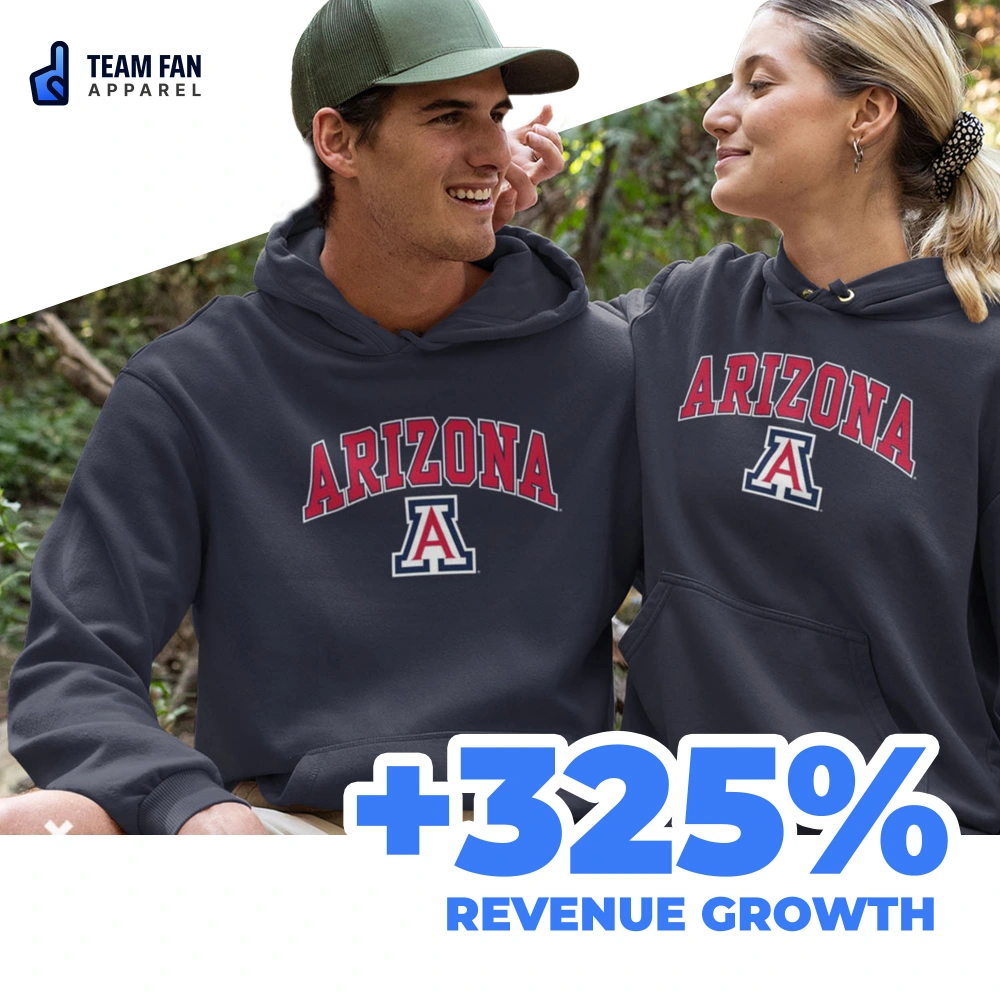
Adverio - Campus Colors Team Fan Apparel 2

Full-Catalog Acceleration in Just 6 Months

Product Category: Softlines > Clothing, Shoes, & Jewelry > Novelties

Explore Case StudyAdverio Logo

Adverio - HemRid 1

+414% Profit Gains in 9 Months

Product Category: Health & Household > Health Care > Over-the-Counter Medication (OTC)


Explore Case StudyAdverio Logo

Verified Reviews

Testimonials

Verified on Clutch, YouTube, and Upwork. Names and links included.

 Clutch reviews · 5.0 ★ 6 YouTube testimonials + Upwork reviews · 5.0 ★

Frequently Asked Questions

Is this just ticket handling?

No. We run account governance as a profit system, not a queue. Every action, from policy cases to catalog fixes, is tied to brand protection, advertising efficiency, and Buy Box stability, not just ticket resolution.

We can act as your dedicated Amazon account management team or operate as a force-multiplier alongside your internal staff. Either way, our service brings structure, SLAs, and operator-level decisioning that supports your brand and improves the customer experience.

Critical issues are addressed immediately, with early stability often visible within 30 to 60 days. By 90 days, gains usually compound across account health, advertising performance, and overall customer experience.

Our account management service is built for Seller Central brands, where we can control catalog health, advertising strategy, and brand protection more directly. That focus is what makes the results faster and more predictable.

Pricing is structured as a flat-rate service or an aligned revenue-share, depending on your business and goals. The math comes first. You see the value, the impact, and the numbers before anything goes live.

Flat rate or aligned revenue share, depending on catalog size and scope. What matters more than the structure is what the engagement is expected to move and over what window: contribution margin first, then stability in Buy Box and account health, then compounding growth once the guardrails hold.

You see that math before anything is signed. Timelines are directional and depend on catalog size, inventory position, competitive pressure, and seasonality.

What should you fix first?

If revenue is growing and margin is not, the cause is usually coordination rather than effort. Pricing, inventory, catalog, listings, and ads all move the same P&L, so a change in one shows up in another. Put one owner on the blended number, set guardrails before scaling spend, and make every revenue-critical change traceable. Activity is easy to add. Governance is what makes it compound.

References

  1. Amazon 2024 SMB Impact Report. https://www.aboutamazon.com/
  2. Jungle Scout, 2025 State of the Amazon Seller Report. https://www.junglescout.com/resources/reports/
  3. Jungle Scout, 2024 FBA fee analysis. https://www.junglescout.com/resources/

Amazon growth should feel controlled, not chaotic.

If you’re scaling revenue but losing predictability, it’s time to install governance.

Book the call, or share read-only access and we start from your numbers.