


Table of Contents
A profit-first framework to defend your premium brand, absorb price pressure, and scale without margin erosion. When low-cost competitors enter your category, most brands react the wrong way—they drop prices. That move doesn’t just compress margin; it permanently resets your pricing ceiling across every channel.
The smarter move is deploying a fighter brand strategy—a portfolio-level system designed to absorb price pressure, protect your premium positioning, and capture value-tier demand without sacrificing profitability.
Fighter Brand Strategy — At a Glance
• Protect premium pricing without discounting flagship SKUs
• Capture price-sensitive demand without cannibalization
• Requires channel-specific SKU, pricing, and packaging design
• Works best when margin pressure comes from low-cost competitors
What Is a Fighter Brand (and What It Is Not)

Think of a fighter brand as a purpose-built boxer you send into the ring for one specific job: to take on aggressive, low-price challengers head-on. It’s engineered from the ground up to compete in the price-sensitive trenches of marketplaces like Amazon, Target, and Costco.
This keeps your premium brand out of price wars entirely, maintaining its price point and positioning. Instead of devaluing your hero product, you create a strategic buffer that gives price-conscious shoppers a compelling option within your ecosystem, preventing them from defecting to a competitor.
The Strategic DNA of a True Fighter Brand
A true fighter brand has its own distinct identity. It is not just your main product in cheaper packaging. It’s a completely separate entity with its own name, branding, and value proposition tailored specifically for the value-tier customer.
This separation is absolutely critical. A fighter brand works independently to capture a specific market segment, effectively shielding the parent brand’s hard-won market share. For a deeper look at the foundational principles needed to shape your brand’s identity, this ultimate guide to branding strategy is an essential read.
What a Fighter Brand Is Not
Getting this wrong is expensive, so let’s be crystal clear. Common misconceptions lead to costly mistakes that cannibalize the very brand you’re trying to protect.
A fighter brand is not:
-
A Temporary Discount: It’s a permanent, strategic addition to your brand portfolio, not a seasonal sale or a promotional markdown on your premium product.
-
A Rebranded Old Product: You can’t just slap a new label on unsold inventory and call it a day. The product must be cost-engineered from scratch to hit its target price point profitably.
-
A Private Label: Retailers like Costco (Kirkland Signature) or Target (Good & Gather) own private labels. A fighter brand is owned by the manufacturer to compete directly against those store brands and other low-cost competitors.
-
A Cheap Knock-Off: While it’s built for value, a fighter brand must maintain a baseline of quality. You can’t afford to damage your parent company’s reputation by association, even if that connection is invisible to the consumer.
Understanding this distinction is the first and most important step. Misdiagnosing the threat or deploying a half-baked solution will only accelerate margin erosion and end up hurting the flagship brand you set out to defend.
Why Fighter Brands Work Across Amazon, Target, and Costco
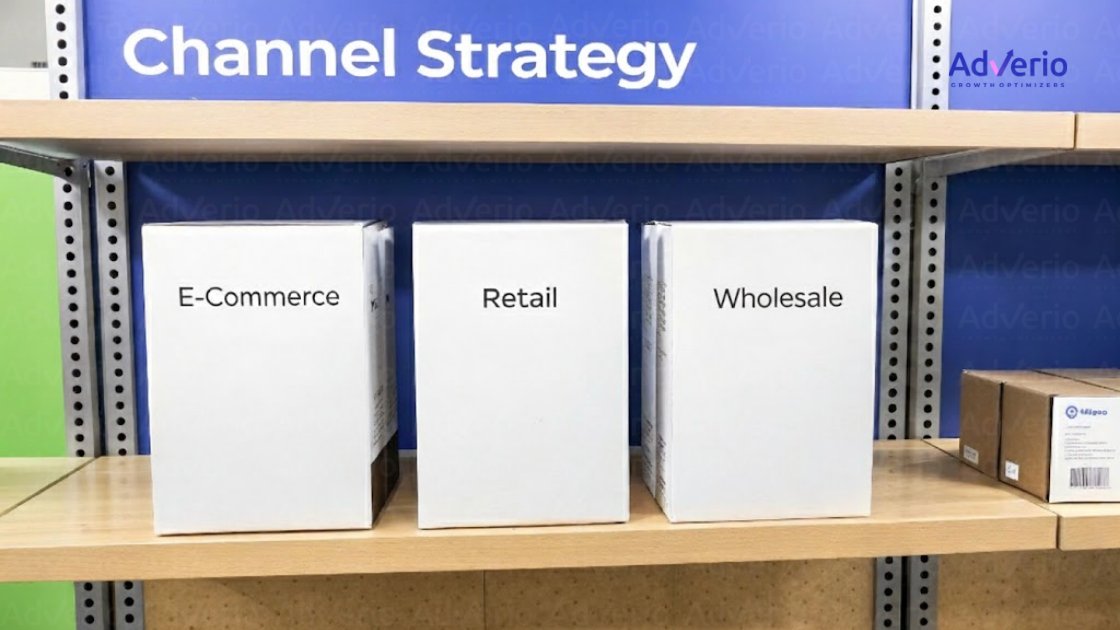
A fighter brand only works when it’s engineered for specific channel economics—Amazon, Target, and Costco all demand different rules of engagement. Its real power comes from adapting the strategy to the specific retail battleground you’re entering. The main goal—protecting your flagship—never changes, but the rules of engagement for Amazon, Target, and Costco are wildly different.
Trying to deploy the same product or strategy across all three is a recipe for failure. Each channel has a completely different economic model, customer expectation, and competitive landscape that demands a purpose-built approach. This is where a fighter brand becomes such a versatile tool in your omnichannel arsenal.
Amazon Growth Strategy and Margin Defense
Amazon is a high-velocity, price-driven battlefield. Your premium brand is constantly under assault from a relentless wave of low-cost third-party sellers, private labels, and aggregator-owned brands that completely dominate value-tier search results.
On Amazon, a fighter brand becomes your incrementality buffer—absorbing low-price demand without forcing your premium ASINs into margin-destructive competition. See how this fits into a full Amazon growth strategy and margin defense system. It’s engineered from the ground up to—supported by a strong Amazon listing optimization strategy that ensures value-tier SKUs still convert:
-
Absorb Price Pressure: It can compete directly on price without forcing you to discount your flagship product, preserving your premium brand’s perceived value and hard-won profitability.
-
Capture Value-Driven Search Traffic: It goes after keywords and customer segments that your premium brand would never win, steering budget-conscious shoppers to a product in your portfolio instead of a competitor’s.
-
Create a Strategic Moat: By occupying the lower price tier, it makes the market less attractive for new, cheap competitors to enter, protecting your overall market share.
A well-executed fighter brand on Amazon doesn’t just compete; it builds a defensive wall around your premium listings, shielding them from the constant downward price pressure that defines the marketplace.
Meeting Target’s Uniqueness Mandate
Target isn’t a price battlefield—it’s a merchandising gatekeeper. If your product isn’t differentiated, it doesn’t get ranged. They are curators, not just a marketplace. Their brand promise of “Expect More. Pay Less.” means they demand unique, differentiated products that feel like a discovery, not just another commodity.
Simply listing a cheaper version of your main product won’t work—success here requires a structured Target catalog optimization strategy aligned with how buyers evaluate assortment. Target’s buyers will reject it flat out. This is where a fighter brand strategy is essential for gaining entry into a valuable, but walled-off, retail ecosystem. It allows you to:
-
Satisfy SKU Exclusivity: You can create a distinct fighter brand with unique features, colorways, or bundle configurations exclusively for Target, meeting their strict merchandising requirements.
-
Fill a Price Gap Strategically: It lets you offer a more accessible price point that aligns perfectly with Target’s value proposition without making your entire brand portfolio feel cheap.
-
Access a Loyal Customer Base: It unlocks access to Target’s dedicated shoppers who might not otherwise be exposed to your premium offerings, creating a brand new customer acquisition channel.
A fighter brand for Target is less about aggressive price competition and more about smart product differentiation to fit into a carefully curated retail environment. Understanding these nuances is key, as we break down in our marketplace strategy breakdown across Walmart, Target, and Amazon.
Conquering Costco’s High-Volume Model
Costco operates on fixed margin thresholds—if your unit economics aren’t engineered upfront, you lose pricing control across all channels. If your unit economics aren’t engineered before the pitch, you lose control of pricing everywhere else. It’s governed by brutally low markup expectations. Their entire business model requires massive unit sales at wafer-thin margins—a proposition that can be fatal for a premium brand’s positioning. Forcing your flagship product to meet Costco’s pricing demands would completely destroy its value everywhere else.
A fighter brand, on the other hand, is purpose-built to thrive in this environment. It’s engineered from the ground up—from sourcing and packaging to logistics—to be profitable at Costco’s required price-per-unit. This approach lets you tap into their massive sales volume without ever sacrificing your premium brand’s integrity.
How Channel Economics Shape Fighter Brand Design
Strategy without governance fails at scale. Fighter brands only work when pricing, packaging, and catalog structure are engineered together. This is where most fighter brand initiatives fall apart—not in the boardroom, but on the digital shelf. A winning fighter brand requires a completely different playbook for Amazon, Target, and Costco, because each operates under its own distinct economic and merchandising rules.
Trying to force a one-size-fits-all product across these channels is a recipe for channel conflict and margin erosion. Instead, you have to architect your approach for each specific retail environment. That means engineering the product, packaging, and pricing from the ground up to win in that arena. This is the tactical core of a successful fighter brand strategy.
It’s also crucial to remember the fundamental difference in ownership shown here—your fighter brand is an asset you control, unlike a retailer’s private label.
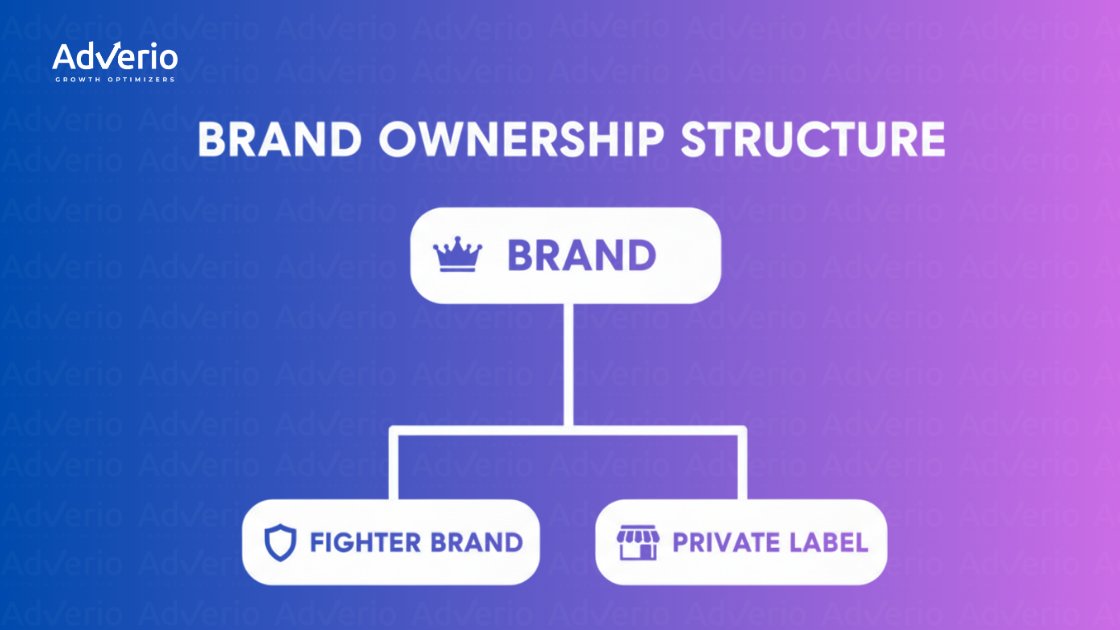
Here’s the reality: you own and direct the fighter brand’s mission to protect your flagship. A private label serves the retailer’s agenda.
Fighter Brand vs Private Label: Key Differences
Confusing fighter brands with private labels is one of the fastest ways to destroy pricing leverage. People often lump fighter brands and private labels together because they both compete on price. But their mission, ownership, and strategic purpose are worlds apart. Confusing them is like mistaking your shield for the enemy’s sword—you’ll end up using it wrong and leaving your margins wide open for attack.
Let’s draw a hard line in the sand right now.
A fighter brand is a tool created by a manufacturer. You, the brand owner, build it with one very specific mission: to intercept low-price competitors and shield your premium flagship brand from a direct price war.
A private label, on the other hand, belongs to the retailer. Think of Costco’s Kirkland Signature, Target’s Good & Gather, or Amazon’s AmazonBasics. The retailer creates these brands to compete with every national brand in the category, including yours. Their goal is to drive loyalty to the store, not to any single manufacturer.
The Real Difference Is Who’s in Control
The most critical distinction comes down to who holds the reins. With a fighter brand, you maintain total control. You dictate the product specs, pricing strategy, supply chain, and brand story. This allows you to engineer the product to be profitable at its lower price point while ensuring it doesn’t cannibalize your main brand.
Private labels are the complete opposite. The retailer owns the brand, calls the shots on the product, and sets the price. You might be the one manufacturing the product for them, but you have zero strategic input. You’re just a supplier executing their vision for their store brand.
A fighter brand is an asset you build to defend your entire portfolio. A private label is just a product you make for a retailer to help them build their asset. The difference in strategic value is immense.
Let’s break down the core differences in a way that leaves no room for confusion.
Fighter Brand vs Private Label Strategic Breakdown
This table cuts through the noise and shows exactly how these two concepts differ in purpose and execution. While they may look similar on the shelf, their strategic DNA is completely different.
| Attribute | Fighter Brand | Private Label |
|---|---|---|
| Ownership | Manufacturer-Owned | Retailer-Owned |
| Primary Goal | Protect the parent brand’s market share and margins. | Increase retailer’s margins and customer loyalty. |
| Target Competitor | Low-price rival brands and private labels. | All national brands within a specific category. |
| Strategic Control | Full control over product, price, and branding. | Zero control; dictated by the retailer’s needs. |
| Brand Focus | Builds a standalone brand identity. | Builds the retailer’s store brand equity. |
| Market Position | Serves as a strategic buffer in a brand portfolio. | Acts as a direct competitor to manufacturer brands. |
As the table shows, a fighter brand is a strategic extension of your company, designed to protect your interests. A private label is a retailer’s tool, designed to advance theirs—often at your expense.
The Mission Is Everything
At the end of the day, a fighter brand’s mission is to serve and protect its parent. It’s deployed to absorb price shocks in the market, get into trench warfare with low-cost rivals, and give price-sensitive shoppers a solid option within your ecosystem. Its success is ultimately measured by the health and profitability of your flagship brand.
A private label’s mission is to serve the retailer. It aims to offer better value than national brands, capture a larger share of the customer’s wallet for the store, and reduce the retailer’s dependence on brands like yours.
Understanding this isn’t just academic—it’s the key to a successful fighter brand strategy. Knowing exactly what you’re building and why is the only way to avoid accidentally creating a new competitor that eats your own sales from the inside out.
SKU, Packaging, and Pricing Rules by Channel
Amazon
On Amazon, the fight is won or lost on price perception and your ability to turn a profit at scale. Your fighter brand has to be lean enough to go toe-to-toe with aggressive third-party sellers while still protecting your own margins.
Winning on Amazon requires cost engineering with margin accountability, not cheaper products, but controlled economics.
-
Distinct, Value-Driven SKUs: Never, ever use the same SKU as your premium product. You need to create a new one with slightly different specs—think fewer features, alternative materials, or simpler construction—that gives you a clear justification for the lower price point.
-
Cost-Effective Packaging: Swap out those premium, retail-ready boxes for simple poly bags or plain brown corrugate. It might not feel sexy, but this single change can shave critical points off your cost of goods sold (COGS) and enable much more competitive pricing.
-
Profit-First Pricing: Your price has to be low enough to win over the value-conscious shopper but high enough to stay profitable after Amazon’s fees and ad costs. This isn’t about a race to the bottom; it’s about owning a profitable price tier.
Amazon is a zero-sum pricing environment—if you don’t control your price tier, competitors will. Take the combat sports products market, valued at $8.89 billion in 2024. It’s projected to hit $9.54 billion in 2025, driven by the rising popularity of MMA and more youth participation. This kind of growth creates massive opportunities for fighter brands to dominate niche segments with targeted, value-engineered products that cater to new enthusiasts.
Target
Target doesn’t want another cheap product on its shelves; it wants an exclusive value proposition. Their buyers are gatekeepers of a curated experience and will immediately reject a fighter brand that just looks like a watered-down version of something sold on Amazon.
Your strategy here isn’t about being the cheapest—it’s about creating perceived exclusivity.
-
Channel-Exclusive Configurations: Offer unique colorways, different pack counts, or special bundles that are only available at Target. This satisfies their “uniqueness” mandate and, just as importantly, prevents direct price comparisons with other channels.
-
Distinct Branding and UPCs: The fighter brand must have its own identity and unique UPCs to be managed separately within Target’s system. For their buyers, this is completely non-negotiable.
-
Compliance and Catalog Integrity: Target’s backend systems are notoriously complex. Your fighter brand’s listings have to be perfectly compliant from day one. For brands new to this, our guide on Target catalog optimization framework for retail compliance provides a detailed roadmap for getting it right.
Costco
Costco’s model is brutally simple: high volume, low markup. Your fighter brand has zero chance of succeeding here unless it’s designed from the ground up to meet their stringent margin and price-per-unit targets.
Don’t even try to adapt an existing product for Costco. You must build a Costco-specific fighter brand from the supply chain up.
The rules of engagement are crystal clear:
-
Bulk or Multi-Pack Formats: The product must be configured for bulk sale. This usually means creating large multi-packs or club-sized versions that deliver an undeniable price-per-unit value that shoppers can spot from across the aisle.
-
Stripped-Down Packaging: Packaging here is purely functional. Think “shelf-ready” pallets and minimal branding. It’s all about reducing costs to hit that required price point.
-
Supply Chain Efficiency: You absolutely must have the logistical capability to handle Costco’s massive, consistent order volumes. Any disruption can jeopardize the entire relationship.
Each channel presents a unique puzzle. Solving it requires a bespoke fighter brand designed not just to compete, but to win on that specific battlefield.
How Brands Use Fighter Brands to Protect Premium Lines
A fighter brand isn’t just a cheaper product in your lineup; it’s a strategic fortress you build around your flagship brand. A fighter brand functions as a pricing firewall—it absorbs price-sensitive demand so your premium SKUs don’t have to.
This protection works in three key ways. Each one is designed to intercept a specific threat, allowing your premium lines to hold their ground on pricing, perception, and profitability without having to compromise.
Diverting the Price-Sensitive Shopper
On a crowded marketplace like Amazon, a huge chunk of search traffic is driven by one thing: price. When shoppers sort by “Price: Low to High,” your premium product is immediately at risk. Getting into a price war here is a fatal mistake that will permanently torch your brand equity.
A fighter brand acts as a strategic diversion. It’s built to show up in those low-price search results, grabbing the attention of budget-conscious shoppers and giving them a solid option within your brand family. This stops them from defaulting to a competitor’s cheap alternative and keeps your premium listing out of the race to the bottom.
Preventing Customer Defection
Without a value-tier option, you leave a massive, gaping hole in your product catalog. When a price-sensitive customer can’t find an affordable entry point to your brand, they don’t just wait—they bolt to a competitor who offers one. Your fighter brand slams that exit door shut.
It satisfies the demand for a lower-priced alternative, keeping that customer inside your portfolio. This is especially vital in fast-growing, competitive categories. For instance, the global MMA equipment market is projected to hit $2.13 billion by 2033, which means a huge wave of new, recreational users hunting for affordable gear. As detailed in IMARC Group’s market analysis on MMA equipment, a fighter brand can capture this entry-level segment without forcing your pro-grade equipment to compete on price.
Preserving Premium Brand Integrity
The single biggest payoff of a fighter brand is the freedom it gives your flagship. With a separate brand handling all the value messaging and price battles, your premium brand can focus exclusively on its core story: quality, innovation, and superior performance.
A fighter brand creates a firewall between price and perception. It handles the dirty work of price competition so your premium brand never has to.
This separation lets you maintain premium pricing without alienating a huge part of the market. You’re no longer forced to water down your brand story or justify your price point against low-cost rivals. This clear division also helps you sidestep unintentional pricing conflicts that can lead to retailers flagging your products. Maintaining a strict pricing architecture is non-negotiable, as we cover in our guide to MAP violation prevention strategy for Amazon pricing control.
Imagine a premium bedding company known for its thousand-thread-count Egyptian cotton sheets. Launching a fighter brand of durable, affordable microfiber sheets for college dorms doesn’t devalue the flagship. In fact, it protects it. It captures a completely different customer with a purpose-built product, preserving the parent brand’s luxury position and, most importantly, its margins.
Common Fighter Brand Mistakes That Kill Margin
On a whiteboard, a fighter brand strategy looks brilliant. In the real world, though, it’s a high-stakes play riddled with traps that can turn a smart defensive move into a margin-destroying nightmare.
Get it wrong, and you won’t just fail to beat the competition—you’ll become your own worst enemy, cannibalizing your flagship product from the inside out. Let’s cut the theory. Here are the most common, and costly, mistakes that kill fighter brands before they ever get off the ground.
Making the Brand Association Too Obvious
This is the cardinal sin. The entire point of a fighter brand is to create a strategic buffer between your premium offering and the low-price trenches. If customers can easily connect the dots back to your parent company, that buffer vanishes instantly.
Suddenly, your fighter brand isn’t fighting off competitors; it’s fighting your own flagship. The lower price point devalues your premium product in the shopper’s mind, making them wonder why they should ever pay more. You’ve just built a direct internal competitor that systematically eats away at your high-margin sales.
Botching the Cost Engineering
A fighter brand that isn’t profitable on its own isn’t an asset; it’s a liability bleeding cash. Many companies make the fatal mistake of simply slapping a new label on an existing product, assuming they can sell it for less and make up the difference on volume. This never works. This is where most brands lose margin silently—especially when returns and operational leakage aren’t accounted for. Fixing that requires a system for protecting margin across Amazon’s pricing systems.
True cost engineering is non-negotiable. You have to build the product from the ground up to be profitable at its target price point. This means scrutinizing every component:
-
Raw Materials: Sourcing more cost-effective, yet still reliable, inputs.
-
Packaging: Shifting from premium retail boxes to simple poly bags or brown corrugate.
-
Features: Ruthlessly cutting non-essential features that add cost but little value for a price-sensitive shopper.
Failing to do this work upfront creates a product with unsustainable margins. You’ll be forced to either raise the price—making it uncompetitive—or burn cash with every single sale. Poor cost management often leads to high return rates, which further erodes profitability. Building effective Amazon return recovery strategies is crucial to protect your bottom line from this hidden margin drain.
Mismanaging Cross-Channel Strategy
Launching the exact same fighter brand SKU on Amazon, Target, and Walmart is a recipe for chaos. Each retailer has different margin expectations, fee structures, and merchandising rules. Listing an identical product across all channels just invites direct price comparisons, creating conflict with your retail partners and sparking a race to the bottom that you will always lose.
A fighter brand isn’t one product. It’s a portfolio of channel-specific solutions, each engineered to win in its unique environment.
You must create distinct SKUs, bundles, or configurations for each channel. An Amazon-specific product should be built for aggressive pricing, while a Target version might need perceived exclusivity. Ignoring this creates a brand civil war where your own products are competing against each other for the lowest price.
Creating a Generic, Soulless Brand
In the rush to cut costs, many companies strip out the one thing that actually makes a brand work: a distinct identity. A fighter brand can’t just be “the cheap option.” It needs its own name, its own simple story, and a clear reason to exist beyond its price tag.
Without it, your product is just another generic commodity floating in a sea of low-cost alternatives. It will get completely lost in the noise, fail to build any customer loyalty, and ultimately just bleed marketing dollars with nothing to show for it.
When a Fighter Brand Makes Sense (and When It Doesn’t)
A fighter brand isn’t a silver bullet. It’s a specialized tool for a specific problem: defending premium brands against low-price commoditization. Deploying it in the wrong scenario is like bringing a hammer to a sword fight—it’s the wrong weapon for the job and will likely do more harm than good.
Here’s when a fighter brand strategy is your sharpest play:
-
When low-cost competitors are eroding your market share. If your premium product is steadily losing ground to cheaper alternatives, a fighter brand can intercept that downward pressure.
-
When your premium brand cannot compete on price without destroying its equity. If discounting your flagship would permanently damage its perceived value, you need a separate brand to absorb the price war.
-
When there’s a clear, underserved value-tier segment. If a significant portion of the market is inaccessible to your premium brand due to price, a fighter brand can capture that volume.
And here’s when you should keep it on the shelf:
-
When your flagship brand already has price elasticity. If you can lower prices or run promotions without damaging the brand, you don’t need a fighter brand.
-
If the cost to launch and support it outweighs the potential ROI. Building a new brand is expensive. If the numbers don’t add up, it’s a losing battle.
-
When the risk of cannibalization is too high. If your products are too similar, or your customer base isn’t clearly segmented, a fighter brand will likely just steal sales from your flagship.
How to Launch a Fighter Brand Without Cannibalizing Your Flagship
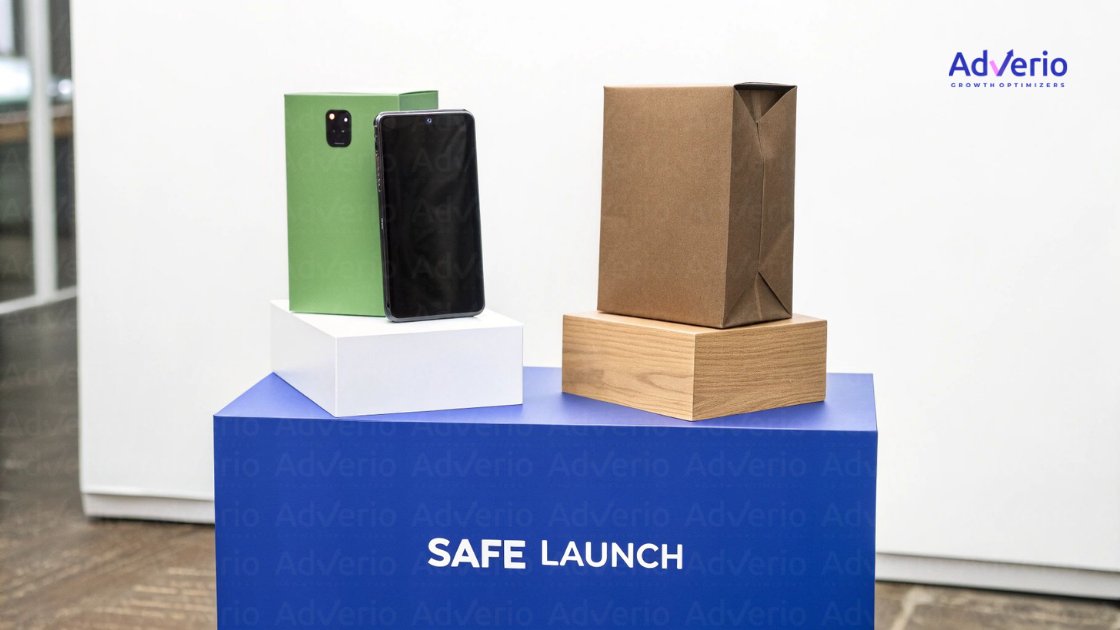
The single biggest fear holding brands back from launching a fighter brand is cannibalization. And it’s a valid concern. Get this wrong, and you don’t just fail to win new market share—you actively destroy the profitability of your flagship products.
To avoid this self-inflicted wound, your launch needs to be built on strategic separation, not just a lower price tag. This isn’t about a simple product launch checklist; it’s about a high-level, cross-channel roadmap that builds bulletproof guardrails to protect your core business from day one.
The Foundation of a Safe Launch
Success hinges on creating clear, undeniable daylight between your flagship and fighter brands. Before you launch a single SKU, you need a non-negotiable set of safeguards in place. Think of it as a pre-launch checklist to prevent internal competition and margin erosion.
Your framework absolutely must include:
-
Distinct Brand Identity: This means a completely separate brand name, logo, and visual design. The fighter brand cannot look or feel like a cheaper version of your premium brand. Period.
-
Separate Customer Avatars: Define exactly who the fighter brand is for—and who it isn’t for. Your marketing campaigns should target different keywords, demographics, and pain points to attract a value-driven shopper, not your flagship’s loyal customer base.
-
Airtight Pricing Ladders: There can be zero price overlap between your brand tiers. The fighter brand has to own a distinct, lower price point. A well-defined Amazon anchor pricing strategy is a critical lever to create clear value separation between your different offerings.
Executing a Phased, Cross-Channel Rollout
Whatever you do, don’t launch everywhere at once. A controlled, channel-by-channel rollout—guided by disciplined Amazon account management systems—allows you to gather data, fine-tune your approach, and minimize risk. Start where the price pressure is most intense—which is almost always Amazon.
Once you’ve validated the model on Amazon, you can then adapt the fighter brand for other channels like Target or Costco, always sticking to the principle of channel-specific SKUs. A fighter brand built for Target might need unique features or bundles, while a Costco version would require a bulk configuration. This deliberate separation prevents the channel conflict that triggers a race to the bottom on price.
A fighter brand launch isn’t a single event; it’s a disciplined strategic sequence. The goal is to build a firewall that protects your premium brand, allowing it to maintain its pricing and positioning without compromise.
This guide serves as the upstream strategy that ensures your execution on any single marketplace fits into a bigger, safer, and more profitable cross-channel architecture. For a deeper Amazon-specific guide on execution, see our playbook for defending against knock-offs.
How Adverio Builds Fighter Brand Systems
Most brands don’t fail because the strategy is wrong—they fail because execution isn’t governed across pricing, catalog, and ads.
Adverio builds fighter brand systems using a profit-first framework:
-
Pricing architecture that prevents channel conflict
-
SKU segmentation aligned to incrementality
-
Catalog + PPC alignment across Amazon, Target, and Walmart
-
Margin tracking tied to real contribution—not vanity ROAS
If your brand is already seeing price pressure, the issue isn’t traffic—it’s strategy deployment.
Fighter Brand Strategy FAQs
What is a fighter brand strategy?
A fighter brand is a separate brand designed to compete in lower price tiers without impacting your premium positioning.
Will a fighter brand cannibalize my flagship?
Only if pricing, audience, and SKU differentiation are not clearly separated.
Should fighter brands be sold across all channels?
No. Each channel requires a different SKU, pricing model, and packaging strategy.
When should you NOT launch a fighter brand?
If your flagship can compete on price without damaging brand equity.
If your margins are under pressure, the problem isn’t competition—it’s lack of control over your pricing architecture.
Book Your ROI Forecast and see where your margin is leaking—and how to fix it before competitors take it.