



How to choose an Amazon agency is one of the most expensive decisions a brand will ever get wrong.
Most $5M–$50M Amazon brands make the same mistake when hiring an agency: they treat it like a vendor selection instead of a governance decision. The agency touches your media spend, catalog, pricing logic, and reporting. That means they touch your margin. Pick wrong, and you’re not just wasting a retainer. You’re handing over operational control to someone with no skin in the outcome. This guide gives you the exact framework, scorecard, and contract controls to hire an actual profit partner, and it starts where the agency vs in-house decision ends. Not a polished pitch deck. If you want to know what a real ROI-backed engagement looks like before reading further, book your ROI Forecast with Adverio.
Why Most Agency Selection Processes Fail Before They Start
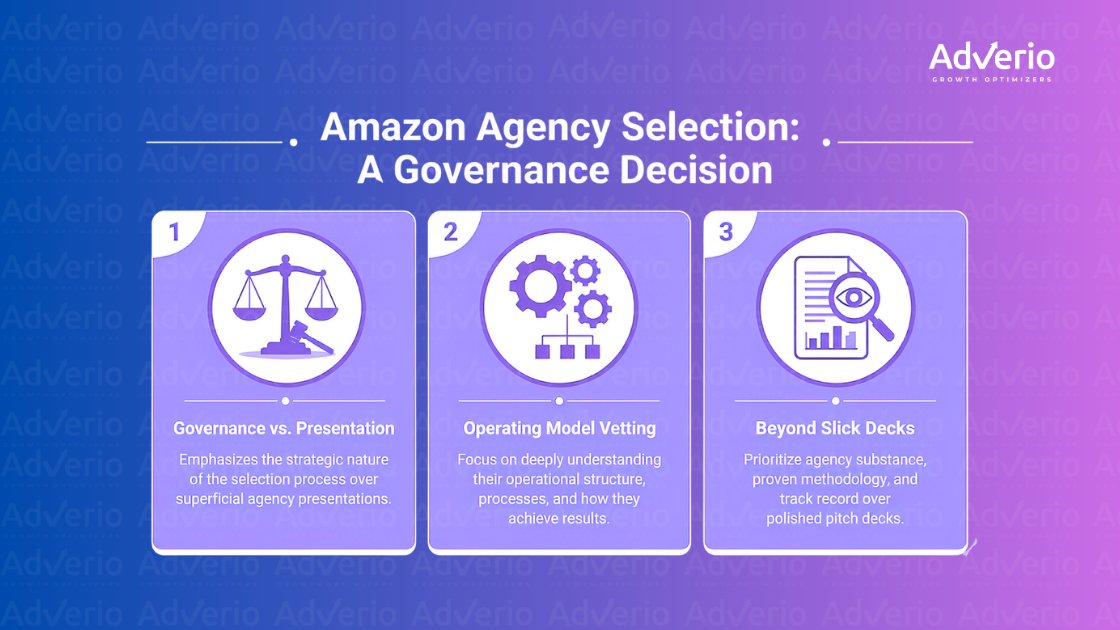
Agency selection usually fails before the shortlist is built. The brand has no governing standard for what a good agency relationship looks like — so the agency sets the standard for them. That is how mediocre operators win business. They control the frame, define success in convenient terms, and sell activity as progress.
The two root causes are well documented. First, most agencies are structurally incentivized to grow your ad spend, not your profit — the fee model rewards the wrong behavior before the engagement even starts. See how each pricing model aligns or misaligns agency incentives →
Second, most agencies optimize for ROAS instead of contribution margin — a metric that can look healthy while your P&L gets weaker. Why most Amazon agencies focus on ROAS instead of profit →
This guide skips the sales pitch analysis and goes straight to the governance layer — the framework, scorecard, and contract controls that protect you once the honeymoon period ends.
What disciplined buyers evaluate instead
Use this filter before you review a proposal:
-
Business problem: State the exact issue you are hiring to solve — margin compression, wasted ad spend, low catalog conversion, weak new-to-brand acquisition, or stalled expansion.
-
Decision rights: Define who owns what. Media, creative requests, pricing coordination, listing fixes, inventory risk, and escalation paths cannot stay fuzzy.
-
Reporting standard: Require sample reports before signing. You need to see what they track, how often they report it, and whether the report is built for decisions or for theater.
-
Failure protocol: Get the remediation process in writing. If two reporting periods go sideways, what changes, who gets involved, and what financial protection do you have?
For a broader comparison of agencies before you go deep on this framework, see how the top Amazon account management companies compare →
The Three Things That Actually Determine Agency Quality
Agency quality shows up after the contract is signed. Any firm can look polished in a pitch. The real question is what controls exist when performance slips, who is accountable, and whether the agency’s economics suffer when yours do.

Three things separate a profit partner from a service vendor.
- Accountability structure
Start here because weak agencies usually break at this point.
Ask one question and do not let them dodge it: If you miss our agreed target for two consecutive reporting periods, what changes?
Fee, staffing, scope, leadership involvement, and contract terms. Make them answer in specifics.
A credible agency has a defined failure protocol. They can tell you who reviews the account, how root cause is diagnosed, what gets changed first, and what protection you have if the recovery plan fails. An agency without that structure will talk about market volatility, attribution noise, and how Amazon is complicated. None of that pays for wasted spend.
What good looks like:
-
Named owners — you know who owns media, catalog issues, creative blockers, and executive escalation
-
Written remediation — the response to underperformance is documented, timed, and attached to real actions
-
Commercial consequences — renewal terms, make-good work, fee pressure, or exit rights exist if they miss
What bad looks like:
-
Vague accountability — everyone is involved, which means nobody is
-
No downside for the agency — they collect the retainer whether your margin improves or not
-
Post-sale disappearance — senior people sell, junior people inherit the mess
- Infrastructure
Reporting is where agency quality becomes visible. Plenty of firms send dashboards. Very few produce reporting that helps an operator decide what to cut, what to scale, which ASINs are draining margin, and where execution is stuck outside ads.
Ask to see a real report before you sign. Not a screenshot or a slide with three cherry-picked wins. A real client report with commentary, priorities, and next actions. Use Adverio’s Amazon account management system as a reference point for the level of metric discipline a serious agency should demonstrate without hand-waving.
What good looks like:
-
Business-level KPIs: TACoS, contribution impact, conversion trends, organic movement, inventory context, and ASIN-level priorities
-
Interpretation: they explain what changed, why it changed, and what decision follows
-
Cadence and comparability: the format stays consistent enough to spot deterioration early
What bad looks like:
-
Platform theater: ROAS, clicks, and impressions presented without profit context
-
Data dumps: exported tables with no judgment attached
-
No operating signal: you still leave the meeting unsure what should happen next
3. Capability coverage
A lot of agencies are media shops wearing strategy language.
They optimize bids while your listing optimization for conversion goes untouched, your review velocity stalls, and your retail readiness quietly breaks the economics.
Then they call the account “challenging.” That is not strategy. That is scope hiding.
Ask this directly: Which revenue and conversion drivers do you own, which do you influence, and which do you escalate? If the answer is fuzzy, the operating model is weak.
What good looks like:
-
Connected execution: media, content, catalog, and analysis work from the same commercial plan
-
Clear handoffs: if they don’t own a function, they have a defined process to surface issues and force decisions
-
Channel awareness: they can support Amazon without creating confusion if Walmart or Target enters the mix later
What bad looks like:
-
PPC-only delivery: they manage spend while ignoring the conversion system around it
-
No full catalog management system: listing suppression, variation issues, and ASIN-level problems get left unresolved
-
Partner dependency: critical work gets outsourced with no single owner
-
Functional silos: specialists protect their lane while nobody owns total account performance
The 5-Step Framework for How to Choose an Amazon Agency
Agencies love a loose buying process because loose processes reward confidence theater. Tight processes reward operating discipline. Use this framework in order. If an agency pushes you to skip steps, shorten diligence, or “just start with ads,” that is your answer.
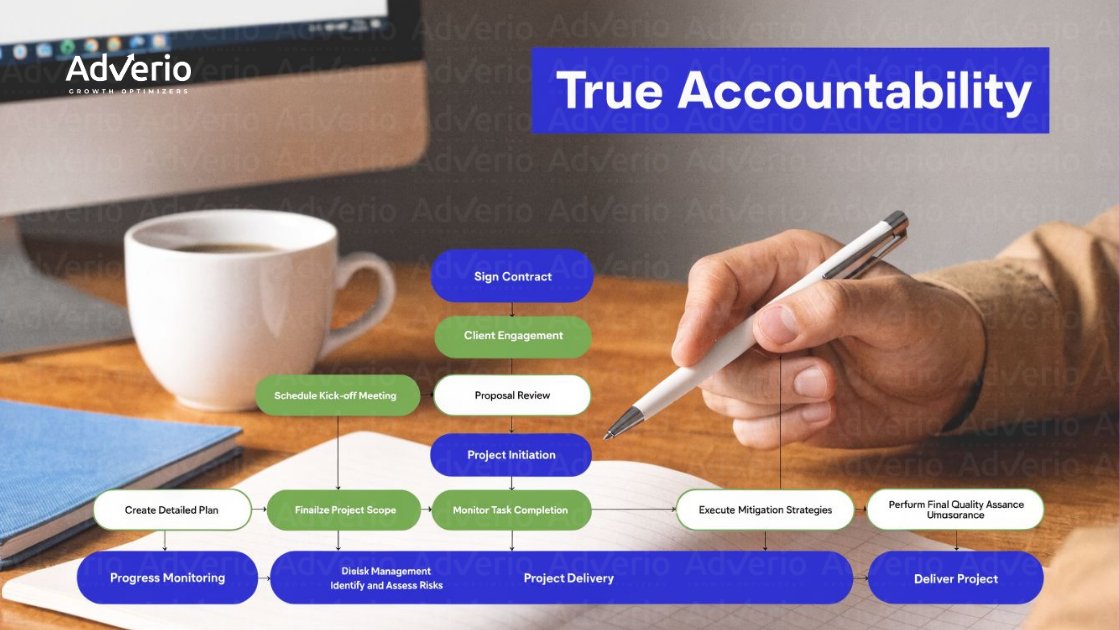
Step 1: Define the commercial problem in operator language
Start with the business constraint, not the service wish list. “We need better PPC” is not a diagnosis. Write down the top three issues hurting contribution margin or limiting growth:
-
Efficiency problem: Ad spend rises faster than profit
-
Conversion problem: Traffic exists, but listings, pricing, reviews, or content don’t convert it well
-
Execution problem: Inventory, account health, catalog changes, or internal approvals slow down basic work
-
Expansion problem: You need a model that can hold together if retail complexity increases across other channels later
This step matters because every agency will frame your problem around its billable scope. Your job is to stop that before it starts.
Step 2: Build the shortlist around governance, not chemistry
Do not start with portfolios, founder charisma, or brand-name logos. Start with operating structure. Ask each agency four things before you grant a second call:
-
Who owns the commercial outcome
-
How performance is reviewed internally
-
What happens when targets are missed
-
Who has authority to change strategy without waiting three weeks
If the answers sound polished but vague, cut them. Good agencies can explain accountability in plain English because they are accountable. Weak agencies hide behind process slides and channel jargon.
Step 3: Run a diagnostic that exposes how they really operate
If you are weighing whether an agency or in-house team makes more sense before going further, see the Amazon agency vs in-house management guide →
Use these seven questions:
-
What exact outcomes do you own, and what sits outside your scope?
-
What is your response process when performance drops for reasons you did not expect?
-
How do media, content, catalog, and operations issues get surfaced and assigned?
-
How do you judge incrementality instead of taking platform attribution at face value?
-
Do you run an Amazon DSP retargeting approach separate from your Sponsored Products strategy, or are you treating all paid traffic as one bucket?
-
Who owns account access, historical data, and creative assets during and after the engagement?
-
When does senior leadership step in, and what triggers that escalation?
-
What will you change in the first 30 days, and what will you leave alone until you have enough evidence?
Do not help them answer. Silence is useful here. So is discomfort.
Step 4: Audit the reporting before you audit the pitch deck
Sample reporting tells you more than case studies ever will. Case studies are edited. Reporting habits usually are not.
Request one real client report with names removed. A useful report should answer four questions fast:
-
What changed
-
Why it changed
-
What the agency will do next
-
Who owns the next action
Kill the deal if the report is full of screenshots, blended metrics, or ad platform trivia with no commercial interpretation. If they cannot connect ad activity to margin pressure, organic movement, conversion quality, and operational blockers, they are producing decoration.
Step 5: Put downside protection into the contract
The contract is where agency quality becomes real. Everything before that is theater. Your SOW should define:
-
Success metrics: The business outcomes being judged
-
Review cadence: How often results are assessed
-
Intervention points: What changes when targets are missed
-
Data and asset control: What access you keep at all times
-
Exit terms: How you leave without losing momentum, data, or account integrity
Don’t obsess over price before you fix incentives. The real question is who feels the downside first if performance stalls. If it’s only you, keep looking. See how fee structures determine who absorbs the downside →
The Agency Selection Scorecard
Agencies win a lot of business on confidence, chemistry, and polished theater. None of that protects margin. A scorecard does.
Use it to judge governance quality, not sales quality. You are not picking the team with the nicest deck. You are picking the team you can hold accountable when profit slips.
For context on what each criteria should look like in practice, the Amazon agency pricing guide covers fee alignment in depth, and the account management companies comparison gives you a side-by-side view of how agencies differ on capability coverage.
| Criteria | Weight | Score (1–5) | Notes |
|---|---|---|---|
| Accountability structure | 20 | Who owns misses, deadlines, and recovery plans | |
| Reporting quality | 20 | Clear commercial interpretation, next actions, and owner assignment | |
| Capability coverage | 15 | Ads, listings, retail ops, analytics, and cross-functional problem solving | |
| Fee alignment | 10 | Incentives that do not reward wasted spend or low-quality growth | |
| Onboarding process | 10 | Controlled diagnosis, access plan, and priority sequencing | |
| Incrementality measurement | 10 | Can they separate real lift from branded capture and existing demand | |
| Multi-marketplace capability | 10 | Ability to operate across Amazon, Walmart, and Target without siloed decisions | |
| Client retention rate | 5 | A basic signal that clients do not flee after the honeymoon period |
Score each finalist. Multiply by the weight. Then read the notes column harder than the total. Set a passing line before the calls start. A useful threshold: 75 overall, with no score below 3 in accountability structure, reporting quality, or fee alignment. If an agency fails one of those, they fail the process.
Ready to see what a governed engagement actually looks like? Get your ROI Forecast from Adverio before you shortlist anyone else.
What to Do If No Agency Passes the Framework
Walk away.
A bad agency is usually worse than no agency. Bad partners create fake progress: they spend money, flood you with activity, miss the actual constraint, and leave your team sorting through broken attribution and no clear owner for the damage.
Hold the controls that protect profit in-house. Keep forecasting, margin rules, target setting, reporting review, and final call authority on your side. If you still need outside help, hire for a narrow lane only — PPC execution, creative testing, retail ops cleanup. Give them a boxed scope, a short leash, and a scoreboard they cannot hide from.
A trial can work if you treat it like vendor probation, not the start of a relationship. Set a short term. Define the operating rules before access is granted. Require weekly readouts, named owners, and a written recovery plan for misses. If they fail on discipline in month one, they do not improve in month six.
This matters even more if your plan includes broader marketplace expansion across Amazon, Walmart, and Target → Weak governance gets exposed fast once Amazon is no longer the only channel.
The wrong agency doesn’t just waste budget. It corrupts your decision-making and hands your team a cleanup bill they weren’t prepared for.
How Adverio Approaches New Client Evaluation
Adverio starts by deciding whether the account is worth touching.
The first step is an ROI forecast built before the engagement begins. That means looking at catalog condition, contribution margin, ad efficiency, price stability, inventory risk, and operational bottlenecks before anyone starts selling tactics. Good agencies do this early because governance starts with economic reality. If the numbers do not support a real path to profit improvement, the answer should be no.
That filter matters. Agencies that accept every account usually make their money on retainers, not outcomes. An evaluation process with teeth protects both sides because it forces a hard question up front: is there enough controllable upside here to justify the fee, the access, and the distraction?
If the answer is yes, the conversation shifts from diagnosis to operating structure.
Adverio then defines ownership, reporting cadence, decision rights, and the execution lane. That includes a dedicated Amazon PPC management strategy structured around margin improvement, not spend growth.
That matters more than a polished pitch deck because profit gets lost in unclear handoffs, slow issue resolution, and reporting that never ties back to margin.
The standard is simple. No clear return, no engagement. Clear return, clear accountability, then proceed.
FAQs
How many agencies should I shortlist?
Shortlist three. Four if you enjoy wasting executive time. A long list usually means your selection criteria are weak. Tight filters produce better decisions.
Should I prioritize category experience or operating model?
Prioritize operating model. Category knowledge matters, but it does not fix sloppy reporting, unclear ownership, or a team that disappears when inventory, pricing, or contribution margin starts breaking. A disciplined operator can learn a category. A disorganized agency will stay disorganized in every category.
Are case studies useless?
Case studies have one job: they show the agency has touched accounts that look vaguely like yours. They do not prove the team that won that account will touch yours. They do not show fee alignment, how the agency reports on profit, handles missed targets, or escalates a catalog problem before it burns a month of revenue. Treat case studies as supporting material, not selection criteria.
What is the biggest red flag on a sales call?
Evasive answers about accountability. Ask who owns outcomes when ads miss target, listings break, retail support stalls, or inventory constraints distort performance. If you get polished generalities instead of named owners, reporting cadence, and escalation rules, end the process.
Should I hire an Amazon-only agency if I also sell on Walmart or Target?
Usually no. Once budget, inventory, and pricing decisions affect multiple channels, isolated marketplace management creates blind spots. You get conflicting recommendations, duplicated work, and reporting that flatters channel metrics while total margin slips. Hire for operating control across the business problem, not just platform specialization.
Ready to Hire an Agency That Owns the Outcome?
Most brands spend weeks on a selection process that was broken from the start. If you’ve used this framework and want to see whether Adverio clears its own bar, start with an ROI Forecast. No pitch deck. No vague capability claims. Just a real diagnosis of what’s controllable in your account and what a profit-first engagement would look like.
Read next: Amazon Account Management: What a Real Operating Partner Looks Like