


Here’s the hard truth: Amazon Coupons, Best Deals, and Lightning Deals aren’t interchangeable tactics. Choosing the wrong one is like lighting money on fire. The real difference comes down to intent and cost. Coupons are your steady, always-on tool for an incremental conversion bump. In contrast, Best Deals and Lightning Deals are high-stakes, timed events built for a massive, short-term sales spike. Your choice hangs on a simple question: do you need a consistent sales driver or a powerful, temporary surge?
Decoding Amazon’s High-Stakes Promotional Choices
Choosing between Amazon’s promotional tools isn’t a casual decision; it’s a strategic move that can either torch your profits or slingshot your growth. Picking between Coupons, Best Deals, and Lightning Deals is a complex calculation where a wrong turn means wasted ad spend and zero movement in market share.
This is truer now than ever. Take Amazon’s recent fee overhaul, which completely changed the math on coupons. Between June 2 and June 16, 2024, only 9.1% of products on Amazon U.S. had a coupon. That’s a massive 33% drop from the 13.6% we saw in the same window last year, showing just how fast sellers backed away from the suddenly more expensive tool. You can dig into the coupon adoption data yourself over at SellerApp.com.
This guide cuts through the noise with a direct, no-fluff comparison. We’re breaking down how each tool actually performs under pressure—looking at the hard differences in cost, visibility, and strategic fit. This is the playbook you need to build a promotional strategy that hits real business goals, whether that’s liquidating old stock or gunning for market dominance.
Quick Comparison: Amazon Promotional Tools
Before we dive deep, here’s a high-level look at how these three tools stack up. Think of this as your cheat sheet for making faster, smarter decisions on the fly.
| Promotional Tool | Primary Use Case | Cost Structure | Visibility Impact |
|---|---|---|---|
| Amazon Coupons | Consistent, everyday conversion lift; new product launches; review velocity | Redemption fee per unit sold | Green badge on search results & product page |
| Best Deals | Sustained sales momentum; building brand presence over 1-2 weeks | Higher flat fee per deal | Featured placement on Amazon’s Deals page |
| Lightning Deals | Rapid inventory liquidation; creating massive, short-term sales spikes | Moderate flat fee per deal | High-urgency placement on Deals page with a countdown timer |
Each tool has its place, but using the wrong one for the job is a surefire way to burn cash and kill momentum. Now, let’s get into the tactical details.
Comparing The Mechanics of Coupons vs. Deals
Let’s get straight to it. A promotion is only as good as its operational fit. Picking the wrong tool for the job is a guaranteed way to burn cash and kill your margins.
If you’re serious about profitable growth, you have to understand the core mechanics of Coupons, Best Deals, and Lightning Deals. This isn’t just about comparing features; it’s about knowing which lever to pull, and when. We’re going to break down the operational DNA of each tool—eligibility, fees, visibility, and constraints—so you can stop guessing and start executing with precision.
Eligibility and Control: Who Gets to Play?
Amazon doesn’t just give away its prime promotional real estate. Eligibility for its top-tier deals is a gatekeeper, designed to separate proven, high-velocity products from the rest of the pack.
- Coupons are your most accessible option. They are a self-service tool available to nearly all professional sellers with positively-rated products. You get almost total control over the budget, duration, and which ASINs get the offer, making them a flexible, everyday tool for boosting conversions.
- Best Deals & Lightning Deals are strictly invitation-only. Amazon’s algorithm calls the shots, selecting products based on a strong sales history, high conversion rates, and deep inventory. You can’t just decide to run a Best Deal; your product has to earn its spot. This means consistent performance is the price of admission to Amazon’s high-traffic Deals page.
Think of it this way: Coupons are your utility player, always ready to jump in the game. Deals are your star players, reserved for specific, high-impact moments when Amazon gives you the nod.
Cost Structure: The New Math of Promotions
The fee structure is where the strategic lines are drawn most clearly, especially after Amazon’s recent changes. For years, coupons were a low-cost staple for sellers. In fact, digital coupons saw impressive 33.3% redemption rates in 2023, driving up click-through rates and pushing down ACoS.
That all changed after the June 2024 fee hike. Amazon moved to a flat rate plus a percentage of sales, causing coupon usage to plummet to just 9.1%. The new math punished higher-priced items and made costs unpredictable. This shift completely re-frames the cost-benefit analysis of each tool.
- Coupons now operate on a variable cost model. This can get risky during major sales events where high volume can cause your fees to skyrocket unexpectedly.
- Best Deals & Lightning Deals stick to a fixed-fee model. You pay a flat rate ($300 for Best Deals, $150 for Lightning Deals during non-peak times) for premium placement. This gives you cost certainty, letting you forecast ROI with precision, no matter how many units you move.
This quick visual breaks down how each promotional tool stacks up at a glance.
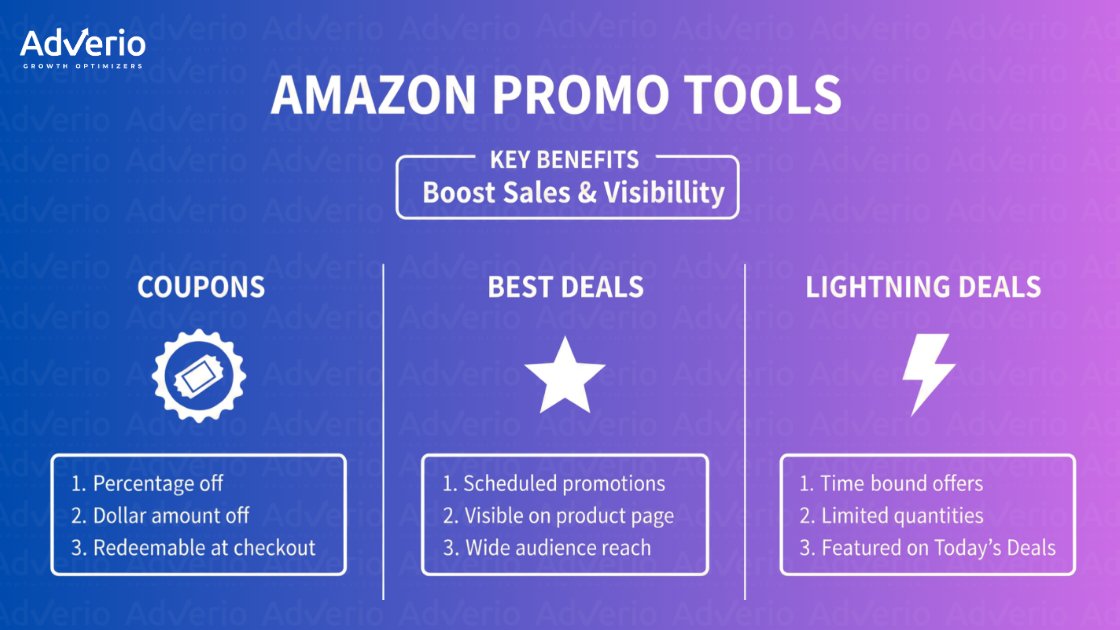
As you can see, while Coupons offer flexibility, Lightning Deals and Best Deals provide unmatched access to high-traffic, urgency-driven placements that can transform a product’s trajectory.
Detailed Performance and Operational Breakdown
To make the right choice, you need to see how these tools stack up side-by-side on the metrics that actually matter. This table cuts through the noise and gives you a granular look at performance, costs, and operational constraints.
| Criteria | Amazon Coupons | Best Deals | Lightning Deals |
|---|---|---|---|
| Primary Goal | Increase conversion on existing traffic | Drive high-volume sales, boost ranking | Create urgency, drive immediate sales spike |
| Placement | Search results, product detail pages, ads | Dedicated “Today’s Deals” page | “Today’s Deals” page, with countdown timer |
| Eligibility | Open to most pro sellers with 3.5+ star rating | Invitation-only, based on sales velocity & history | Invitation-only, based on sales velocity & history |
| Control | High (you set budget, discount, ASINs) | Low (Amazon dictates timing, placement) | Low (Amazon dictates timing, placement) |
| Cost | Variable redemption fees (can be unpredictable) | Fixed fee (e.g., $300), predictable ROI | Fixed fee (e.g., $150), predictable ROI |
| Duration | Flexible (1-90 days) | Up to 2 weeks | 4-12 hours |
| Discount Req. | 5% – 80% | At least 15% off 30-day low price | At least 15% off 30-day low price |
| Key Benefit | “Always-on” conversion lift, enhances ads | Sustained visibility to new deal-hunting shoppers | Massive, short-term traffic burst, halo effect |
This breakdown makes it clear: your choice depends entirely on your objective. Are you trying to optimize your current funnel or build a completely new one? The answer dictates which tool you should deploy.
Visibility and Placement: Where Your Discount Shows Up
On Amazon, visibility is everything. Where your promotion appears directly controls its impact on your bottom line.
A coupon’s real power is its ubiquity. That little green badge shows up everywhere: in search results, on your product detail pages, and even inside your Sponsored Products ads. It’s a persistent, effective nudge that improves the click-through and conversion rate of your existing traffic.
Deals, on the other hand, play in a different league. They land you a coveted spot on Amazon’s “Today’s Deals” page—one of the most visited sections on the entire site. This isn’t about converting your current traffic; it’s about introducing your product to a massive new audience of shoppers actively hunting for a deal.
- Lightning Deals weaponize urgency with a ticking countdown timer and a stock-level progress bar.
- Best Deals give you sustained placement for up to two weeks, letting you build sales momentum over time.
For brands looking to break through and reach customers beyond their established base, the discovery potential of the Deals page is unmatched. Coupons optimize the funnel you have. Deals build an entirely new one.
And when you get really tactical, you can layer these promotions. Pairing a broad deal with targeted offers to specific customer segments can be incredibly effective. To see how, you can dive into the strategies for Amazon Brand Tailored Promotions in our detailed guide. This kind of synergy ensures you’re capturing every possible sale.
Matching The Right Tool To Your Business Goal
Running promotions without a clear goal is like lighting money on fire. The real question isn’t which deal offers the biggest discount—it’s which tool’s mechanics align perfectly with what you’re trying to achieve.
Thinking you can use a Lightning Deal for a slow-burn brand awareness campaign is a classic rookie mistake. So is relying on a simple coupon to liquidate a warehouse full of aging inventory. This is where strategy separates high-growth brands from the ones stuck in a cycle of reactive, unprofitable discounting. Let’s move from just running promotions to executing a goal-oriented playbook.
Goal 1: Accelerate Review Velocity For New Launches
For a new product, social proof is everything. Your goal isn’t profit; it’s building a foundation of credible reviews as fast as possible to get the sales flywheel spinning. In this scenario, Coupons are your most precise and effective weapon.
Why do Coupons win here?
- Targeted Control: You can set a specific budget and let the coupon run for an extended period, like 30-60 days, to ensure a steady stream of initial sales. This avoids the chaotic, short-term spike from a deal that might overwhelm a new listing before it has a chance to breathe.
- Cost-Effective Volume: The immediate objective is getting units into customers’ hands to generate reviews, not hitting a massive sales target on day one. A well-priced coupon makes the purchase decision easier for early adopters without the hefty fixed fee of a deal.
- Synergy with PPC: Pairing a coupon with a targeted Sponsored Products campaign is a textbook launch play. That little green badge boosts the ad’s click-through rate, driving initial traffic that converts, which in turn fuels the review cycle.
A Lightning Deal would be complete overkill for a new launch. You don’t have the sales history to justify the cost or the visibility, and a massive, short-lived sales spike won’t build the sustained momentum you need.
Goal 2: Liquidate Aging or Seasonal Inventory
When you have excess stock tying up capital and inching closer to long-term storage fees, your objective shifts. You need speed, urgency, and volume. This is the exact scenario a Lightning Deal was built for.
The urgency created by the countdown timer and the “percent claimed” bar is a powerful psychological trigger. It pushes shoppers who were on the fence to buy now or risk missing out. It’s the brute-force approach you need to clear hundreds or even thousands of units in just a few hours.
Don’t mistake inventory liquidation for a brand-building exercise. This is a purely financial move to free up cash and avoid penalties. The goal is velocity, not margin. A Lightning Deal delivers that velocity in a way no other tool can.
A Best Deal is too slow for urgent liquidation, and a coupon simply lacks the powerful scarcity triggers needed to drive a massive, immediate sell-through.
Goal 3: Boost Organic Rank and Reduce TACoS
This is a more advanced objective for established products. The goal here isn’t just a temporary sales lift; it’s about using a promotion to permanently improve your organic search ranking. A higher rank means less long-term reliance on paid ads, which directly reduces your Total Advertising Cost of Sales (TACoS).
For this strategic play, the Best Deal is the clear winner.
Here’s the logic:
- Sustained Sales Velocity: A Best Deal runs for up to two weeks, providing a consistent, elevated sales velocity over a meaningful period. Amazon’s A9 algorithm rewards sustained performance far more than it does a one-day spike.
- The Halo Effect: The increased sales volume from the deal directly improves your Best Sellers Rank (BSR). This lift in BSR signals to the algorithm that your product is highly relevant, which leads to a higher organic ranking for your target keywords.
- Long-Term Efficiency: As your organic rank climbs, you can strategically pull back on aggressive PPC bidding for those same keywords. Your product now captures more free, organic traffic, directly lowering your TACoS and improving overall profitability.
A Lightning Deal creates a spike that’s too short to have a lasting impact on organic rank. A coupon can provide a lift, but it’s rarely enough to generate the velocity needed to unseat top competitors in search results. The Best Deal hits the sweet spot between duration and volume to make a real, lasting impact on your organic visibility.
Winning High-Traffic Events Like Prime Day
Prime Day isn’t just another sales event. It’s a high-stakes battle for visibility where the gap between a winning and losing promotional strategy is measured in millions of dollars. During these peak traffic moments, the nuanced differences between coupons and deals become a chasm. Relying on a coupon-led strategy during Prime Day is like bringing a knife to a gunfight—you’re outmatched from the start.
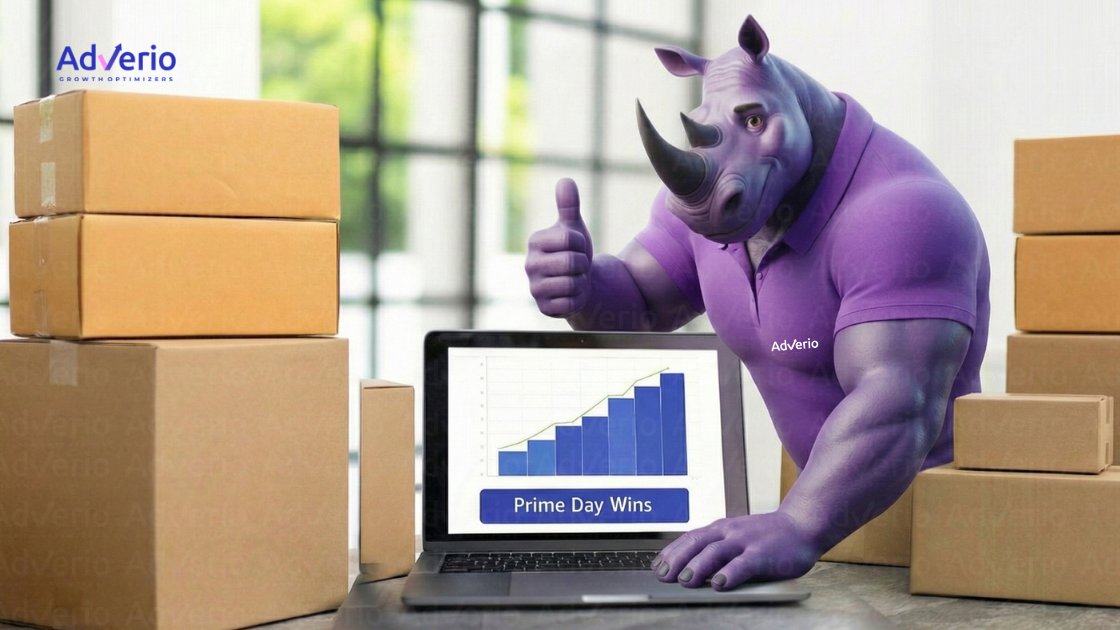
The data from recent events tells a clear story: ‘Deals Only’ promotions consistently crush coupon-led strategies. During Prime Day, brands that leaned into Best Deals or Lightning Deals saw significantly higher revenue gains. But the real game-changer is what happens after the event ends.
The Power of The Halo Effect
Deals create a powerful “halo effect” that keeps sales elevated for days, sometimes even weeks, after the promotion is over. This happens because the massive sales velocity from a Best Deal or Lightning Deal dramatically improves your Best Sellers Rank (BSR) and organic keyword ranking. You’re not just getting a temporary sales spike; you’re getting a long-term visibility boost.
In contrast, sales driven by coupons tend to fall off a cliff the moment the promotion ends. Coupons just don’t provide the same sustained lift to organic visibility, leaving your product right back where it started.
Recent performance data confirms this divide. During Amazon Prime Day 2023, products running ‘Deals Only’ promotions saw markedly higher average revenue gains compared to ‘Coupons Only’ cohorts. More importantly, the deal-driven products maintained elevated sales the following week, while coupon-driven sales dipped below their pre-Prime Day averages.
Cost Certainty in a High-Velocity Environment
Another critical factor is cost control. During a frenzy like Prime Day, a coupon’s variable, per-unit redemption fee becomes a massive liability. As your sales skyrocket, so do your promotional costs, making it nearly impossible to accurately forecast your ROI. It’s a recipe for margin erosion when you can least afford it.
This is where the fixed-fee structure of Best Deals and Lightning Deals becomes a huge strategic advantage. You pay a single flat fee, regardless of whether you sell 100 units or 10,000. This cost certainty protects your margins and allows for precise, predictable profit planning even in the most chaotic sales environments.
The Prime Day Deals Playbook
To maximize your ROI during a major sales event, your strategy must be built around deals. Here’s a stripped-down playbook for a full-funnel assault.
- Secure Your Spot Early: Amazon’s deal submission deadlines for Prime Day are months in advance. Don’t wait. Identify your hero ASINs and submit them for Best Deal and Lightning Deal consideration as soon as the window opens.
- Align Inventory: Make sure you have enough stock to cover the projected sales spike. Stocking out mid-deal not only costs you sales but also completely negates the potential ranking benefits you’re paying for. To plan effectively, check out The Ultimate Guide for Sellers to navigate Amazon Prime Day.
- Amplify with PPC and DSP: Don’t rely on the deal placement alone to do the heavy lifting. Run Sponsored Products campaigns to drive traffic directly to your deal. At the same time, deploy Amazon DSP ads to retarget shoppers who viewed your deal but didn’t purchase, creating an omnipresent brand experience.
When strategizing for these major sales periods, understanding the psychological drivers behind Amazon Prime Day’s success can give you an invaluable edge. This isn’t just about offering a discount; it’s about tapping into a powerful sense of urgency and exclusivity. By pairing the right deal with a smart, full-funnel ad strategy, you don’t just participate in Prime Day—you dominate it.
Building A Data-Driven Promotional Calendar
A reactive promotional strategy is a losing game on Amazon. Throwing discounts at the wall to see what sticks is a fast track to margin erosion and brand dilution. High-growth brands don’t just run promotions; they architect them, building a dynamic calendar that treats every discount as a calculated investment with a measurable return.

This isn’t about setting a schedule in January and forgetting about it. It’s about creating a systematic framework for testing, measuring, and refining your approach month after month. The goal is to evolve from guesswork to a predictable engine where every promotion is smarter than the last. Building this correctly requires a deep understanding of your data, aligning perfectly with the core tenets of effective data-driven marketing strategies.
A Framework For Systematic Testing
Your promotional calendar should be built around a cadence of testing and scaling. Never jump straight into a high-stakes Best Deal without first understanding how your product actually responds to a discount.
Start small to gather baseline data:
- Initial Elasticity Test (Weeks 1-4): Kick things off with a small-batch coupon test. Run a modest discount (5-10%) on a key ASIN for a few weeks. The goal here isn’t a massive sales lift; it’s to measure the initial price elasticity and see the real impact on your conversion rate. This is your low-risk baseline.
- Conversion Velocity Test (Weeks 5-8): If the first test shows promise, bump the coupon discount up to 15-20%. Now you’re looking for a more significant jump in sales velocity. Keep a close eye on how this affects your sessions, unit session percentage, and, most importantly, your TACoS.
- Seasonal Peak Scaling (Quarterly/High-Traffic Events): Now that you’re armed with data on how your product performs under discount pressure, you can confidently deploy a Best Deal or Lightning Deal during a peak traffic event like Prime Day or the Q4 rush. You’re no longer guessing; you’re executing a validated strategy.
This tiered approach minimizes risk and maximizes learning. It ensures your biggest promotional investments are built on a foundation of hard data, not just hope.
Measuring What Actually Matters
Most brands stop at measuring sales lift. That’s a critical mistake. A truly effective promotional calendar tracks the metrics that drive long-term profitability and organic growth.
The most important question isn’t “How many units did we sell?” but “What did this promotion earn us in the long run?” This means looking beyond the immediate revenue spike to measure incrementality, profit impact, and sustained changes in organic rank.
Key metrics you absolutely must track for every promotion:
- Incremental Sales: How many sales were genuinely new versus sales you would have gotten anyway at full price? This is the ultimate measure of your promotional ROI.
- Profit Impact: After you factor in the discount, all the Amazon fees, and any ad spend, was the promotion actually profitable? A deep understanding of your costs is non-negotiable, which is precisely why utilizing SKU economics on Amazon is so fundamental to success.
- Organic Rank Shift: Did the sales velocity from the promotion lead to a lasting improvement in your organic keyword rankings? Even a 10% lift in organic rank can slash your long-term ad dependency and significantly lower your TACoS.
- Halo Effect Duration: For deals, track how long the elevated sales velocity and BSR improvement last after the promotion ends. A three-day halo effect is good; a ten-day effect is a total game-changer.
By continuously tracking these deeper metrics, your calendar evolves from a simple schedule of events into a strategic growth weapon that drives predictable, profitable results.
Moving Beyond Discounts With A Full-Funnel Strategy
Promotions are a powerful tool, but relying only on discounts is a race to the bottom. Winning on Amazon isn’t about who offers the steepest price cut; it’s about weaving your promotional calendar into a full-funnel growth engine. This is where most brands get stuck, mistaking a temporary sales bump for a long-term victory.
Real growth means moving past basic ACoS management. At Adverio, our Growth Cultivator framework changes the conversation entirely. We blend smart growth marketing with profit-driven catalog and conversion rate optimization, turning your promotions into strategic assets instead of just another line item on the P&L. It’s a fundamental shift from tactical discounting to strategic brand building.
From Vendor To Financial Partner
Our teams use proprietary tools like the Profit Pulse System (PPS) to make sure your promotional calendar is perfectly synced with high-performance PPC and advanced DSP strategies. We go deeper than just comparing coupons vs. deals. We model the financial impact of every move, mapping out how a Lightning Deal can juice your DSP retargeting pool or how a Best Deal can permanently lower your TACoS by boosting organic rank.
The goal isn’t just to run a successful deal; it’s to transform your brand into a predictable financial asset. Stop treating promotions as an expense and start using them as a catalyst for sustainable, profitable growth.
We don’t just run your campaigns. We build a strategic roadmap that ties every single action—from a simple coupon test to a massive Prime Day deal—directly to your core financial goals. It’s a full-funnel view that turns scattered tactics into a cohesive growth machine.
Ready to see what a full-funnel strategy could mean for your bottom line? Let’s move beyond the discount debate.
Frequently Asked Questions
When you’re in the trenches with Amazon promotions, a few key questions always come up. Here are the straight answers to the most common ones we hear from brands.
Can You Stack Amazon Coupons With Deals?
Yes, technically you can. But should you? Probably not. Stacking a coupon on top of a Lightning or Best Deal is a high-risk play that can absolutely crush your margins. The discounts add up, and if your financial model isn’t airtight, you’ll end up losing money on every sale.
This tactic is really only for one specific goal: liquidating old inventory. When you just need to burn through stock and recover any cost possible, stacking makes sense. For everything else, run these promos one at a time to keep a firm grip on your final sale price.
What Are The Eligibility Requirements For Lightning Deals?
Getting access to Lightning Deals isn’t something you can just switch on; it’s an invitation from Amazon’s algorithm. While Amazon keeps the exact recipe under wraps, we consistently see a few key ingredients that matter most:
- Strong Sales History: Your product needs to have a proven track record of consistent sales.
- High Product Rating: Aim for a solid 3.5 stars or higher. Anything less is usually a non-starter.
- Sufficient Inventory: You must have enough units on hand to handle the massive sales spike the deal will generate.
- Prime Eligibility: Your product has to be FBA or Seller Fulfilled Prime. No exceptions.
Amazon updates eligibility every week, so keep a close eye on your Deals Dashboard in Seller Central. If you see an opportunity, you have to act on it.
Which Promotion Is Best For A New Product Launch?
For a new product, Coupons are the only right answer. It’s not even a close race. When you’re launching, your goal isn’t a massive, one-day sales explosion. It’s about getting those first crucial sales, sparking some review velocity, and building the social proof you need to compete.
Coupons give you the sustained visibility and control a launch needs. You can set one to run for 30-60 days, sync it up with targeted PPC campaigns to drive initial traffic, and manage your budget down to the dollar. A Lightning Deal is the wrong tool for the job—a new product won’t have the sales history to qualify, and you wouldn’t want to pay the hefty fee for that kind of intense, short-term volume anyway.
At Adverio, we don’t just run one-off promotions. We build a full-funnel growth engine where every tactic—from deals to PPC and DSP—is aligned with your bottom line. Our Growth Cultivator framework makes sure your entire strategy works together to drive profitable, sustainable growth.