


Table of Contents
If you’re running a 7-figure Amazon brand with hundreds of SKUs, your pricing isn’t “off”—it’s silently killing your margin.
Most brands don’t lose profit because of ads. They lose it because pricing, inventory, and demand signals aren’t aligned.
This guide breaks down how to build a profit-first Amazon dynamic pricing strategy—one that protects margin, improves conversion, and actually scales revenue.
At a Glance
• Dynamic pricing aligns price, demand, and margin in real time
• Pricing must sync with ads, inventory, and Buy Box ownership
• Key levers: anchor pricing, bundling, promotions, elasticity testing
• Goal: maximize profit—not just conversions or ACoS
Why Your Amazon Pricing Strategy Is Leaking Profit

The single biggest mistake we see brands make is treating pricing as a passive, reactive chore. They slash prices to chase a low Advertising Cost of Sales (ACoS), falling into a trap we call Optimization Myopia. This narrow focus on a single metric is a race to the bottom that ultimately destroys profitability.
In reality, a sophisticated Amazon pricing strategy is a proactive weapon. It’s not just about undercutting the competition; it’s about mastering the intricate dance between price, perceived value, and sales velocity—all while protecting your margin.
The Marketplace Never Sleeps
Amazon’s dominance is built on its relentless obsession with competitive pricing. Its algorithms crunch millions of data points to find the perfect price, constantly updating them—sometimes every 10 minutes—factoring in everything from competitor inventory levels to real-time conversion rates.
This means a static price list isn’t just outdated; it’s a liability. If you’re not adjusting your prices based on what the market is telling you right now, you are either leaving money on the table or losing sales to rivals who are.
Moving Beyond Simple Repricing
A true profit-first framework requires a shift in thinking. Instead of just reacting to competitors, your strategy must align every price adjustment with your broader business goals.
This means integrating your pricing decisions with:
-
Inventory Levels: Using price to accelerate sales on aging stock or to slow things down and prevent a stockout on a bestseller.
-
Advertising Spend: Bidding more aggressively when your price is most competitive to maximize conversions, and pulling back when your offer isn’t as strong. This is fundamental to how Amazon PPC and pricing work together.
-
Profitability Goals: Understanding the precise impact of a 1% price change on your bottom line for every single product.
“If you haven’t tested pricing, do it today. Don’t wait. There’s no better time than right now. If you tested it a year ago and you haven’t touched it, or you did it six months ago, do it again. The market is constantly changing.”
This is where you graduate from basic repricing to strategic profit optimization. By analyzing the unique financial drivers of each product, you can make smarter, more profitable decisions. The first step is utilizing SKU economics on Amazon to build a pricing model that reflects the true cost and potential of every item in your catalog.
Using Dynamic Pricing to Outmaneuver Competitors
On Amazon, a static price isn’t just outdated—it’s a liability. Millions of price changes happen every day. If you’re not adjusting your prices based on real-time market signals, you’re letting competitors dictate your profitability and market share.
This is where dynamic pricing becomes your sharpest tool. Think of it as an intelligent thermostat for your sales. It senses what’s happening in the market and automatically adjusts your prices to hit the best possible outcome, whether that’s maximizing profit, moving old inventory, or fending off a new rival. This is especially critical when implementing a seasonal pricing strategy on Amazon. It’s about moving from a reactive stance to a proactive strategy that keeps you one step ahead.
The Brains Behind the Operation: Algorithmic Pricing
Modern dynamic pricing isn’t about setting simple “if this, then that” rules. It’s powered by AI and machine learning algorithms that chew through a constant stream of data to pinpoint the perfect price at any given moment. These systems don’t just glance at the Buy Box; they analyze a complex web of factors that influence a sale.
This algorithmic approach is non-negotiable for brands with large catalogs. Manually repricing hundreds or thousands of SKUs is an impossible task. A basic rule-based repricer might win a race to the bottom, but a true dynamic system finds the highest price you can charge while still securing the sale and protecting your margin.
These sophisticated systems are constantly fed data points, including:
-
Competitor Stock Levels: When a key competitor is about to run out of stock, the algorithm can intelligently raise your price to capture higher-margin sales from shoppers who need the item now.
-
Sales Velocity: If a product’s sales suddenly spike, the system can test a slightly higher price to see if demand holds, maximizing profit on a hot-ticket item.
-
Historical Performance & Elasticity: The algorithm learns from every price change. It knows how a $1 adjustment impacts conversion rates for a specific product during a certain time of year, helping you understand Amazon price elasticity and CVR.
-
Promotional Calendars: It knows Prime Day or Black Friday is coming and adjusts prices to capitalize on the surge in traffic and buying intent.
For example, imagine a popular home goods product priced at $49.99. A key competitor runs a Lightning Deal, dropping their price to $39.99 for six hours. A dynamic pricing system detects this immediate threat to the Buy Box and strategically lowers your price to $42.99—not to match, but to remain a viable, high-quality alternative for shoppers who might miss the deal. Once the deal ends, your price automatically reverts to the optimal $49.99, preventing a permanent margin drop.
Why Algorithmic Beats Rule-Based Every Time
A simple, rule-based repricer is a blunt instrument. You can program it to “stay $0.01 below the lowest FBA offer,” but it has zero understanding of the context. This leads to predictable, and often disastrous, price wars that destroy your bottom line.
It can’t tell the difference between a legitimate competitor and a low-quality seller with terrible ratings that you shouldn’t be competing with on price at all. That’s a critical distinction. Dragging your premium brand into a price war with a cheap knockoff is a fast way to destroy your brand equity.
An algorithmic repricer, on the other hand, understands the nuances. It can be programmed to ignore sellers with poor feedback scores or to weigh FBA offers differently than FBM. It analyzes the entire competitive landscape to make a strategic decision, not just a knee-jerk reaction. This is the difference between simple repricers and a human-governed strategy.
To be truly effective, this approach needs continuous market intelligence. Getting a deeper feel for customer sentiment and what competitors are planning can be a huge advantage. Many brands use forum search engine tools for competitor insights to stay ahead of the curve. This holistic view ensures your pricing strategy is always working to maximize profit, not just win a meaningless race to the bottom.
Moving Beyond Basic Repricing to Advanced Strategies
A winning Amazon pricing strategy isn’t about just reacting to what competitors do. It’s about proactively shaping how a customer sees your product’s value. Once you’re past the simple, tit-for-tat repricing game, you can start using price as a lever to guide buying behavior, boost order value, and build a far more profitable business.
These are the advanced plays where established brands really pull away from the pack. They demand a sharper understanding of shopper psychology and a commitment to testing how different price structures actually impact your bottom line.
Implementing Anchor Pricing for Higher Margins
For any brand with a catalog full of variations—think apparel with different sizes and colors, or tools with various attachments—anchor pricing is a must. The whole idea is to use one price as a reference point to make another option look much more appealing. By strategically setting the price of a single variant, you can “anchor” the customer’s perception of value and steer them toward a higher-margin purchase.
It works like this:
-
Set a High Anchor: Price a less popular color or size just a bit higher. Suddenly, your best-selling core product looks like a fantastic deal in comparison, which can give its conversion rate a nice little bump.
-
Create a “Good-Better-Best” Model: If you have tiered product lines, anchor pricing makes the value of each step-up crystal clear. The price gap should instantly communicate the jump in features or quality.
-
Guide Purchase Decisions: The goal isn’t always to sell the anchor product. Its job is to make the product you really want to sell the most logical and attractive choice for the shopper.
This subtle psychological nudge helps stop customers from automatically picking the cheapest option. Instead, it encourages them to choose the one that feels like the best overall value. Mastering this is key to building a robust Amazon anchor pricing strategy.
Strategic Bundling to Increase Average Order Value
One of the fastest ways to grow revenue isn’t finding thousands of new customers, but selling more to the ones you already have. Your Average Order Value (AOV) is the metric to watch here, and strategic bundling is the perfect tool to drive it up.
Bundling is simply offering several products together for a single, often slightly discounted, price. It’s incredibly effective because it simplifies the buying decision and gives customers the feeling they’re getting more for their money.
“A lot of times being on more marketplaces doesn’t raise the entire tide, right? It doesn’t raise all the ships. Sometimes you just lose the sales from Amazon and they end up going through Walmart… it’s how can I bring other products in looking at market basket analysis? What would be commonly purchased with my products?”
Amazon’s own Market Basket Analysis report is a goldmine for this. It literally shows you which of your products are frequently bought together. Use that data to create bundles that feel completely natural to your customers—like a camera with a lens and memory card, or a set of skincare products that make up a full routine.
Leveraging Promotions and Subscriptions for Predictable Growth
Promotional tools and subscription models are all about turning one-time sales into predictable revenue and creating powerful bursts of sales velocity when you need them.
Promotions: Coupons vs. Lightning Deals
Coupons and Lightning Deals look similar on the surface but serve very different strategic roles. Coupons are fantastic for long-term visibility and targeting specific customer groups. They show up as a bright orange badge in search results, grabbing the shopper’s eye and boosting click-through rates. They’re a great tool for winning the coveted Amazon Lowest Price in 30 Days badge strategy.
If you’re choosing blindly, you’re burning margin—fast. Use this breakdown of Coupons vs Best Deals vs Lightning Deals to match the right promotion to your objective.
Lightning Deals, on the other hand, are built for short, intense sales spikes. They create a powerful sense of urgency that can clear out aging inventory in a flash or give a new product a massive launch-day sales push.
Understanding which tool to use when is critical. We created a head-to-head comparison to make the decision easier.
For segmented offers that don’t kill margin, explore Amazon Brand Tailored Promotions.
Promotional Tactics Comparison: Coupons vs. Lightning Deals
This table breaks down the two most popular promotional tools on Amazon. It’s designed to help you decide which tactic fits your specific goals, whether you need to drive immediate sales velocity, increase long-term brand visibility, or just liquidate some inventory.
| Feature | Coupons | Lightning Deals |
|---|---|---|
| Primary Goal | Sustained visibility, increased Click-Through Rate (CTR), long-term conversion lift. | Short-term sales velocity, liquidating inventory, launching new products. |
| Duration | Flexible, can run from 1 day up to 90 days. | Very short, typically 4-12 hours on a specific day. |
| Visibility | Orange badge in search results, on product page, and dedicated coupon pages. | “Today’s Deals” page, limited-time badge on the product page. High visibility but for a short window. |
| Urgency | Moderate. The discount is available for a longer period. | Extremely high. The deal is time-sensitive and stock is limited, creating strong FOMO (Fear Of Missing Out). |
| Cost Structure | Pay-per-redemption. You are charged a $0.60 fee for every coupon clipped and used. | A flat fee to run the deal (e.g., $150), which can vary by time of year and product category. |
| Best For | Driving consistent traffic, rewarding loyal customers, improving rank over time. | Product launches, clearing excess stock before long-term storage fees hit, creating a “halo effect” for your brand. |
Knowing the difference is key to using them effectively. Our complete breakdown of Coupons vs. Best Deals vs. Lightning Deals can help you pick the right tool for your next campaign.
Subscribe & Save for Recurring Revenue
For any consumable product, the Subscribe & Save program is a total game-changer. It lets customers get your product on a recurring schedule at a discount, which locks in future sales and builds incredible customer loyalty.
The predictable revenue it creates gives your business a stable foundation, making your forecasting and inventory planning far more accurate. The trick is to offer a discount that’s compelling enough to get people to sign up, without eating so far into your margins that it’s not profitable in the long run.
Connecting Your Pricing, PPC, and Buy Box Strategy
An Amazon pricing strategy that ignores advertising is fighting with one hand tied behind its back. Running ads for a product when you don’t own the Buy Box is like pouring water into a leaky bucket—a complete waste of ad spend and a direct path to margin erosion. This is where most brands get it wrong—pricing and advertising are treated separately. In reality, they must work together. See how this is executed with our Amazon PPC Management approach.
Every single dollar you spend on PPC or DSP for that listing sends a customer directly to a competitor’s offer. It’s that simple.
The connection here is brutally direct: your price heavily influences your ability to win the Buy Box, and owning the Buy Box is non-negotiable for your ads to even function. Amazon’s algorithm massively favors competitively priced, FBA-fulfilled offers for that coveted spot.
Synchronizing Price Adjustments and Ad Bids
Treating your pricing and advertising as separate functions is a rookie mistake. They are two sides of the same coin, and they have to move in lockstep to drive profitable growth. A smart, timely price adjustment can dramatically increase your ad conversion rates, which in turn lowers your ACoS and feeds your bottom line.
The key is to create a system where pricing changes automatically trigger corresponding adjustments in your ad bids.
-
When Your Price is Most Competitive: This is the moment to get aggressive. When your dynamic repricer finds an optimal price point and secures the Buy Box, your ad bids should automatically increase. You are in the strongest possible position to convert a shopper, and you have to capitalize on it by pushing for maximum visibility.
-
When Your Offer is Weaker: On the flip side, if a competitor undercuts you and you lose the Buy Box, continuing to bid high is just burning cash. Your system should automatically pull back on ad spend for that ASIN, preserving your budget until your offer is competitive enough to win again.
This constant, data-driven sync ensures you’re spending money when it has the highest probability of generating a return and pulling back the second it doesn’t.
This visualization breaks down how advanced tactics like anchor pricing, bundling, and subscriptions all feed into a cohesive growth strategy.
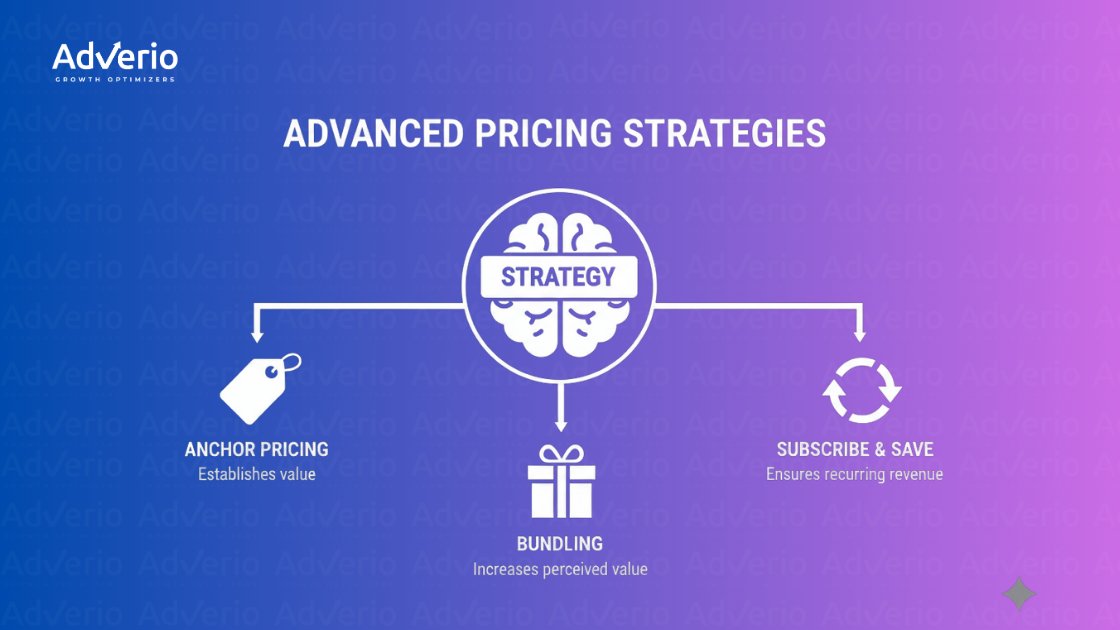
Each branch represents a proactive method to influence customer perception and boost profitability, moving far beyond simple, reactive repricing.
The Profitability Flywheel Price Creates
Winning the Buy Box isn’t just about turning your ads on; it’s about making them brutally effective. A competitively priced offer that owns the Buy Box sees a natural, immediate lift in conversion rates. Customers see your offer first and are far more likely to just click “Add to Cart” without scrolling down to comparison shop. That only works if your product page can convert. This is where Amazon Listing Optimization becomes critical—ensuring your pricing advantage actually turns into revenue.
This higher conversion rate sends a powerful signal to Amazon’s ad algorithm that your product is highly relevant, which can lead to:
-
Lower Cost-Per-Click (CPC): Amazon rewards high-converting ads with better ad placements at a lower cost.
-
Improved Ad Rank: Your ads get shown more prominently, stealing impression share from the competition.
-
Better ACoS and ROAS: Higher conversion and lower costs translate directly to more efficient ad spend and a healthier P&L.
Your goal is to keep the Buy Box so you can at least run advertising and keep steady traffic to the listing. Losing a Buy Box is very painful. If it’s a high-volume product, you can’t run advertising if you’re not in the Buy Box.
This creates a powerful, self-reinforcing cycle. A good price wins the Buy Box, which makes your ads more effective, which drives more sales, which improves your organic rank. This flywheel is the real engine of sustainable growth on Amazon.
For brands struggling with inconsistent sales, a deep dive into your Buy Box strategy for Amazon sellers is often the first and most critical step to recovering lost momentum.
If your pricing, ads, and inventory aren’t aligned, you’re leaking profit every day.
Book your ROI Forecast and see exactly where your margin is being lost—and how to fix it.
Why Dynamic Pricing Must Be Governed (Not Automated)
Most brands automate pricing—and lose control of their margin.
Dynamic pricing without governance leads to race-to-the-bottom behavior, where algorithms optimize for conversion instead of profit.
-
A profit-first system sets constraints:
-
Minimum margin thresholds
-
Inventory-aware pricing rules
-
Buy Box ownership targets
-
PPC efficiency alignment
Without this, you’re not running a strategy—you’re reacting to the market.
How to Conduct a Profit Leak Audit on Your Catalog
Hidden profit leaks are quietly bleeding your bottom line. A “set it and forget it” pricing model might feel efficient, but it’s really an open invitation for margin erosion as market conditions, competitor tactics, and your own costs shift daily.
Think of a comprehensive pricing audit as your roadmap to reclaiming lost profits. This isn’t about a quick glance at your top sellers. It’s a deep, systematic review of your entire catalog to pinpoint exactly where your strategy is breaking down and turn pricing from a liability into a strategic asset.
Start with Your Hero ASINs
Your top-performing ASINs—the ones driving the bulk of your revenue—are often the biggest source of untapped profit. Because they sell so consistently, many brands are terrified to touch their pricing, fearing they’ll disrupt sales velocity. This is a critical mistake.
First, isolate the top 20% of your SKUs that generate 80% of your sales. For each one, you need to ask some hard questions:
-
Have we tested for price elasticity? Small, incremental price increases of just 1-3% can often be absorbed by the market with little to no impact on unit sales. That difference drops straight to your gross profit.
-
What does the competitive landscape look like? Are you priced way below competitors who have similar review counts and ratings? If you are, you’ve got room to move up.
-
How strong is our brand equity? If you have superior reviews, better A+ content, and stronger branding, you’ve earned the right to charge a premium. Stop pricing your premium product like a commodity.
Hunt Down Pricing Inconsistencies
For brands with large catalogs full of variations, pricing inconsistencies are a common and costly problem. When a customer sees illogical pricing across different sizes or colors of the same product, it creates confusion and friction. That hesitation kills conversion rates.
Comb through your parent ASINs and look for these red flags:
-
Illogical Variant Pricing: Is a size Small priced higher than a Large? Is an unpopular color more expensive than your bestseller? These discrepancies shatter a customer’s perception of value.
-
“Orphaned” Variants: Sometimes, a child ASIN can become detached from its parent listing. When this happens, it loses all its variation context and is often priced incorrectly relative to its siblings.
Fixing these is low-hanging fruit. You get an immediate lift just by creating a smoother, more logical shopping experience.
Evaluate Your Discounting Strategy
Discounts are a powerful tool, but they can quickly become a cash-burning crutch if you’re not using them strategically. An audit of your promotional activity will reveal whether your discounts are actually paying off or if you’re just giving away margin for no reason.
If you are having high competition and thin margins on advertising, and advertising is just squeezing more of your profits, go to your pricing. There are usually two to three percent more margin and contribution dollars available for you if you look at your pricing, especially in a larger catalog.
Review your past promotions—Lightning Deals, coupons, Prime Exclusive Discounts—and dig into the data. Did the sales lift actually justify the cost? Did you see a sustained increase in organic rank after the promo ended, or did sales immediately tank back to the baseline? A smart audit separates the profit-driving promos from the margin killers.
This process is also tied directly to your operational efficiency. You can’t do a real profit analysis without a firm grasp on your total costs, from sourcing to storage. Effective Amazon inventory management is critical here, as it ensures you aren’t forced into panic-liquidations that destroy your pricing structure. Beyond operations, a full audit also has to consider tax efficiencies. Learning how to file taxes as a reseller can help make sure you’re not leaking profit through inefficient tax practices.
Let’s Put Your Amazon Pricing Strategy to Work
Theory is one thing, but execution is everything. A winning Amazon pricing strategy isn’t some standalone tactic you set and forget; it’s the high-performance oil for a full-funnel growth machine. Most agencies treat pricing as reactive. We treat it as the control layer of your growth system—where margin, demand, and scale actually align. This is also where our Amazon DSP Management strategy comes into play—capturing demand beyond search and reinforcing pricing-driven conversion gains.
This means we never make pricing decisions in a vacuum. Every adjustment is deliberately synced with high-octane PPC campaigns, advanced DSP targeting, and relentless listing optimization. It’s a closed-loop system designed to make sure every price change fuels your bigger business goals, from boosting ad efficiency to moving inventory faster.
Your Strategic Financial Partner
Most agencies see pricing as a defensive shield—a way to react when a competitor makes a move. We see it as the single most powerful offensive lever you can pull to drive profitable growth. Our teams of Growth Evangelists and Optimizers are more like strategic financial partners than account managers. We get into the weeds of your SKU-level economics to figure out where the real profit is hiding in your catalog.
We use our own proprietary tools like our Profit Pulse System (PPS) and AMOS to build a transparent, ROI-backed model for everything we do. This is how we stop just managing your account and start actively building its value.
“A lot of brands just haven’t done the basics, or they’re like pre COVID, they still haven’t tried the new things that are different since COVID hit… a lot of times being on more marketplaces doesn’t raise the entire tide, right? It doesn’t raise all the ships.”
Our whole approach is built on three core pillars:
-
Profit-Driven Catalog Health: We find and plug margin leaks, surgically optimize your catalog for maximum profitability, and use data to bring underperforming SKUs back from the dead.
-
Intelligent Growth Marketing: We align your ad spend with your pricing. This means bidding aggressively when your offer is strongest and strategically pulling back when it’s not, so you’re not just throwing money away.
-
Holistic Conversion Optimization: We test everything. From anchor pricing strategies to bundling opportunities, we find the perfect combination to drive up your Average Order Value (AOV) and customer lifetime value (cLTV).
This integrated system puts an end to the constant battle against margin erosion. It’s how we turn your pricing from a reactive headache into a proactive tool for building a scalable, profitable brand on Amazon. Your competitors are probably still using an old, outdated playbook; it’s time to make them react to you.
If your pricing strategy isn’t built around profit, you’re scaling the wrong thing.
Frequently Asked Questions
Your top questions about building and executing a killer Amazon pricing strategy, answered by our experts.
How Often Should I Change My Prices on Amazon?
In competitive categories, prices need constant attention. For brands managing this manually, you should be reviewing your top 20% of ASINs daily and the rest of your catalog at least weekly.
Dynamic pricing tools, on the other hand, can make multiple adjustments per day based on what the market is doing. The old ‘set it and forget it’ approach is a surefire way to get left behind on a marketplace this active.
Can a Low Price Strategy Hurt My Brand on Amazon?
Absolutely. Constantly racing to the bottom is a losing game. It erodes your margins, devalues your brand equity, and tends to attract one-time bargain hunters instead of the loyal customers you actually want.
A smart strategy finds the sweet spot that balances competitiveness with profitability. You use value signals—like killer branding, A+ Content, and a mountain of positive reviews—to justify a price that protects your bottom line.
A promotional price will not affect your business prices and quantity discounts managed by Automate Pricing. Automate Pricing will continue to reprice the selected SKUs based upon the most recent standard price submitted.
This is a critical distinction. It means you can run deals for regular shoppers without accidentally kicking off a price war that devalues your B2B offers.
What Is the Difference Between Rule-Based and Algorithmic Repricing?
Think of a rule-based repricer as a simple robot following basic ‘if-then’ commands, like ‘stay $0.01 below the lowest FBA offer.’ It’s purely reactive and often gets dragged into pointless price wars that chew through your margins.
An algorithmic (AI-powered) repricer is a strategist. It analyzes dozens of data points—sales velocity, competitor stock levels, your own profit margins—to figure out the highest possible price that can still win the Buy Box and maximize your profit. It’s playing chess while the other guys are playing checkers.
Stop scaling revenue that doesn’t translate into profit. At Adverio, we turn pricing from a defensive tactic into a powerful weapon for market domination.