

If your Amazon sales have plateaued despite rising ad spend, the problem isn’t traffic — it’s conversion.
Too many brands pour money into PPC, DSP, and new keywords while ignoring the one asset that actually determines profitability: the product detail page. When listings don’t convert, every click becomes more expensive, margins shrink, and growth stalls.
Amazon conversion rate optimization (CRO) isn’t about cosmetic tweaks or keyword stuffing. It’s about engineering listings that turn traffic into revenue, and revenue into scalable profit.
This guide breaks down how top-performing Amazon brands identify conversion leaks, fix underperforming ASINs, and build a profit-first CRO system that compounds over time.
If ads are driving traffic but not profit, you don’t have a traffic problem; you have a conversion problem. Book Your ROI Forecast
Stop Blaming Your Ads. Start Fixing Your Listings.
Table of Contents
I see it all the time. Brands get stuck in a cycle of “Optimization Myopia”—obsessively tweaking ACoS and CPCs while their product pages quietly bleed profit.
They pour thousands into PPC and DSP, drive floods of qualified traffic, and then wonder why sales have hit a wall. The problem isn’t traffic, it’s what happens after the click.
An unoptimized product detail page is like a leaky bucket. You can pour as much water (traffic) into it as you want, but you’ll never fill it up. This is where a strategic approach to Amazon conversion rate optimization becomes critical. It shifts the focus from simply buying clicks to maximizing the value of every single visitor.
Moving from Tactic to Strategy
Too often, brands treat their Amazon presence as a series of disconnected tasks—PPC management in one silo, listing updates in another. This fragmented approach is a recipe for stalled growth and margin erosion.
At Adverio, we see the marketplace differently. We operate on a simple, powerful principle: advertising and conversion are two sides of the same coin.
The most expensive click you can buy on Amazon is the one that doesn’t convert. It not only wastes your ad spend but also tells the algorithm your product is less relevant, hurting your organic rank over time.
This is why we developed the Growth Cultivator framework. It’s a methodology designed to break down these internal silos and transform your mindset from a reactive vendor into a strategic financial partner in your own success. It forces a critical look at how every element works together, from ad creative to the final “Buy Now” click.
To truly fix a leaky funnel, you have to understand the health of its foundation. A critical starting point is evaluating your listings against proven benchmarks, which is why understanding your unique Amazon Listing Quality Score is a non-negotiable first step. It’s time to stop patching holes and start rebuilding your conversion engine for sustained profitability.
Finding The Leaks: A Data-Driven Diagnosis
Before you rewrite a single bullet point or swap out a hero image, you have to know exactly where your funnel is failing. Real Amazon conversion rate optimization isn’t about guesswork; it’s a forensic analysis of your performance data to find the ASINs bleeding your budget dry.
This is the moment you stop throwing money at the wall and start making calculated, profit-driven decisions.
Most brands have a vague sense of their overall conversion rate, but honestly, that’s a vanity metric. True insight comes from digging deeper. You need to diagnose performance at the individual ASIN level to figure out which products are your growth engines and which are just dead weight. This data-backed approach is what separates market leaders from the brands stuck in a cycle of plateaued growth.
Your Diagnostic Toolkit: Amazon’s Native Reports
Your two most powerful resources for this initial deep dive are:
- Business Reports: This is your home base for performance. Dig into the “Detail Page Sales and Traffic By Parent Item” report to see the Unit Session Percentage for every product in your catalog. This metric is just Amazon’s term for conversion rate, and it’s the clearest indicator of a listing’s health.
- Search Query Performance (SQP) Dashboard: This tool is an absolute game-changer. It doesn’t just show you the search terms driving traffic; it reveals your brand’s conversion rate (CVR) on those terms compared to the category’s top competitors. It’s a direct, unfiltered look at where you’re winning and, more importantly, where you’re getting crushed.
This is the costly journey of ad spend when it hits an underperforming listing. It’s a direct line from wasted budget to zero profit.
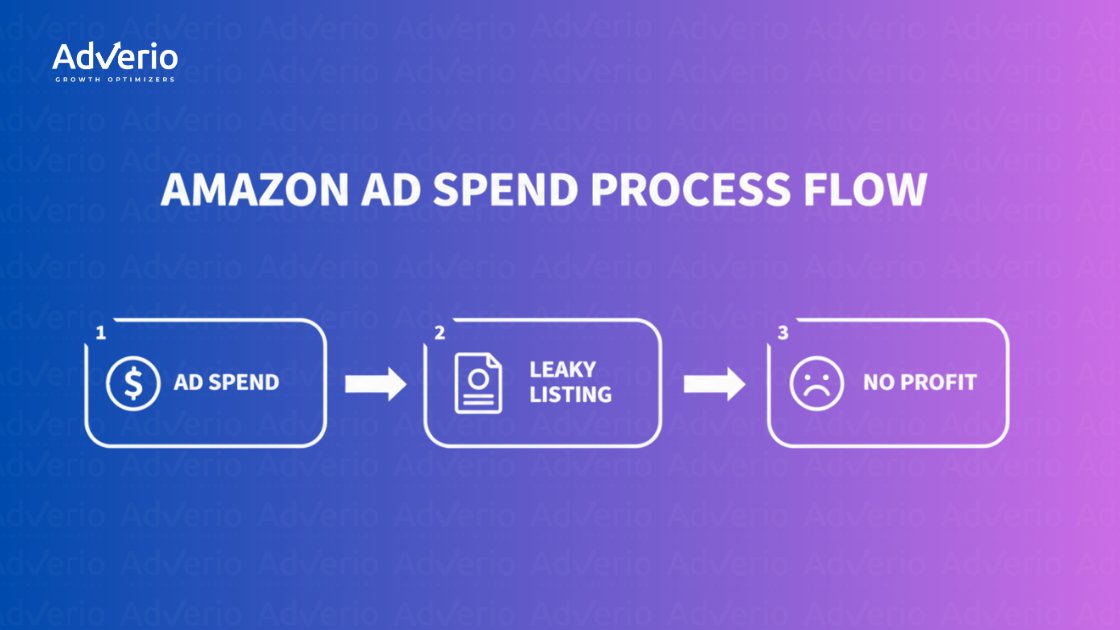
The visual underscores a critical reality: every dollar spent driving traffic to a “leaky” page is a dollar that could have been reinvested into profitable growth.
Interpreting The Data To Build Your Roadmap
Once you have the numbers, the real work begins. Start by sorting your products by sessions in your Business Reports. Your highest-traffic ASINs with the lowest Unit Session Percentages are your biggest liabilities. These are the listings hemorrhaging cash and creating the most significant drag on your profitability.
Don’t get distracted by low-traffic, low-conversion listings yet. Fixing a product that gets 5,000 sessions a month and converts at 5% will have a much larger impact on your bottom line than optimizing one with 50 sessions converting at 2%. Focus on the biggest leaks first.
From here, cross-reference these underperformers with your SQP data. Are your competitors doubling your conversion rate on your most important keywords? This is the evidence you need to justify a complete overhaul of that listing—from images and copy to pricing and promotion strategy. It tells you that demand exists, but your offer is failing to connect with customers.
This methodical, data-first process forms the foundation of systems like Adverio’s Listing Quality Score (LQS). It removes emotion and opinion, replacing them with cold, hard data to build a prioritized action plan. You’ll know precisely which ASINs to fix, in what order, to achieve the maximum impact on your profit. Making sense of this complex data is a core function of our customized business intelligence dashboards.
To help you get started, here are the key diagnostic metrics you should be pulling from Amazon Seller Central and how to turn them into strategic action.
Key Amazon CRO Diagnostic Metrics
| Metric (Source) | What It Tells You | Adverio Strategic Action |
|---|---|---|
| Unit Session Percentage (Business Reports) | This is your baseline conversion rate. It shows how many units are purchased per 100 sessions. | Isolate your top 20% of ASINs by traffic. Any with a U.S.P. below your account average are immediate optimization targets. Start with the highest-traffic offenders. |
| Sessions (Business Reports) | This measures raw traffic to your product detail page. High sessions with low conversion are a red flag. | Prioritize high-session, low-conversion ASINs. This is your biggest “leaky bucket” and represents the largest opportunity for immediate profit gain. |
| Brand Conversion Share (Search Query Performance) | Compares your conversion rate on a specific search term to the top competitors for that same term. | If competitors are converting 2-3x higher on your top keywords, it confirms your listing is the problem, not the traffic. It justifies a full creative and copy overhaul. |
| Your Brand Clicks vs. Top 3 Clicks (Search Query Performance) | This shows if you are winning the click on the search results page, even before the conversion happens. | If you have low click share but high conversion share, it means your listing is great, but your main image and title are weak. Optimize your SERP assets first. |
By systematically analyzing these metrics, you move from reactive adjustments to a proactive, data-driven optimization strategy that directly targets your biggest profit drains.
High sessions. Low conversion. Rising CPC. Those aren’t isolated problems; they’re symptoms of broken listings.
Adverio’s Listing Quality Score (LQS) pinpoints which ASINs are leaking profit and exactly what to fix first.
Building A High-Conversion Product Page: The Pillars of Amazon CRO
Think of your product page as your single most valuable asset on Amazon. It’s your 24/7 salesperson, your brand ambassador, and the final hurdle between a customer’s click and your bottom line. Getting it right isn’t about pretty pictures; it’s about engineering a powerful conversion engine.
Most brands treat their product pages like a digital garage sale—a jumble of mediocre images, keyword-stuffed bullets, and a price tag. This isn’t just lazy; it’s a direct path to eroding your margins. To win, you have to deconstruct the page into its core pillars and rebuild it with a singular focus: turn browsers into buyers.
1. Visual Merchandising That Sells
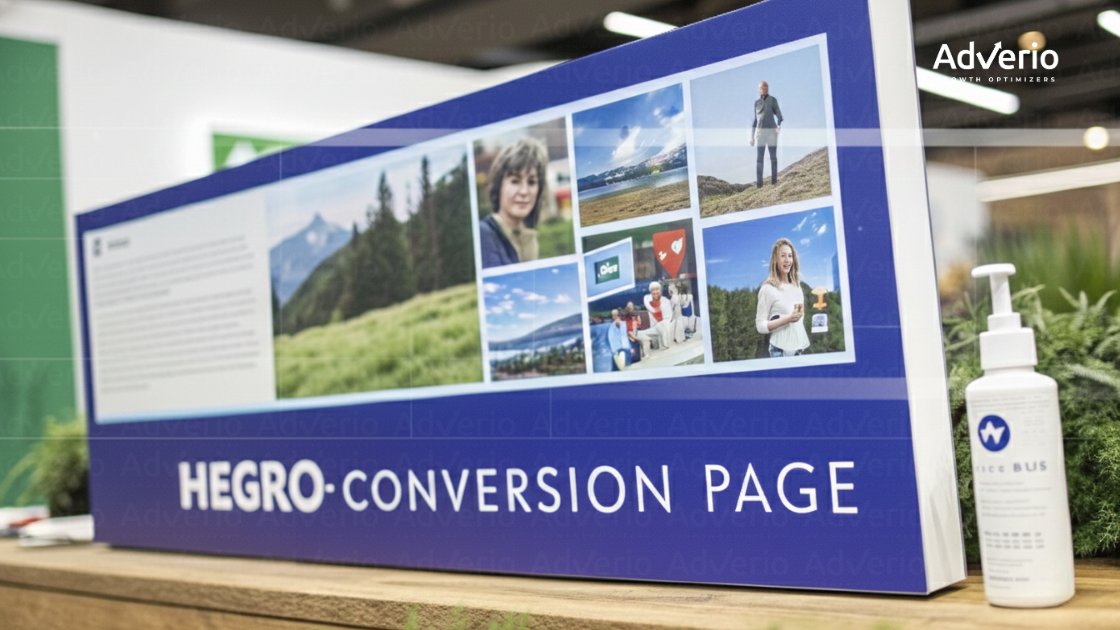
Your product visuals aren’t just for show. They are your primary sales tool in a world where customers can’t physically touch your product. Low-quality, uninspired images and videos are the digital equivalent of a dusty, dimly lit storefront. They kill trust on sight.
High-impact visual merchandising has to do three things, no exceptions:
- Communicate Value Instantly: Your main image must be crystal clear and stop the scroll. Secondary images and video then act like a visual sales pitch, hammering home key features, benefits, and use cases.
- Show, Don’t Just Tell: Lifestyle images, infographics, and short videos are non-negotiable. Show your product solving the customer’s problem in a real-world context. This helps them visualize owning it and justifies the purchase.
- Answer Questions Visually: Use your image and video slots to tackle common questions head-on. Include dimensions, show what’s in the box, and compare different models. Every question you answer visually is one less reason for a potential customer to hesitate or bounce.
If you really want to stand out and build that next level of trust, consider how you might leverage advanced 3D product rendering techniques for your visuals. This can deliver a photorealistic quality that standard photography often struggles with, giving you a sharp competitive edge.
2. Benefit-Driven Copywriting That Connects
Stop stuffing keywords. Yes, SEO is crucial, but your title and bullet points are written for humans first and the A9 algorithm second. The biggest mistake brands make is listing features instead of selling benefits. A customer doesn’t care that your drill has a lithium-ion battery; they care that it holds a charge for their entire project without dying.
Your title is your headline—it must grab attention and telegraph the single most important benefit. Your bullet points should then expand on that promise, translating every single feature into a tangible outcome for the customer.
Feature: “Made with 100% Egyptian Cotton.”
Benefit: “Experience breathable, hotel-quality comfort that keeps you cool all night for a deeper, more restful sleep.”
This shift—from what your product is to what your product does for the customer—is the absolute cornerstone of effective Amazon conversion rate optimization. It speaks directly to their needs and desires, making the purchase feel both logical and emotional. Our complete guide to amazon-listing-optimization dives much deeper into crafting copy that actually sells.
3. Social Proof That Builds Unshakeable Trust
In the anonymous world of e-commerce, social proof is currency. A high review count and a strong star rating are often the most powerful conversion drivers on your entire page. They serve as an unbiased endorsement, telling new customers that buying from you is a safe, smart choice.
But it’s not just about the numbers. The quality, velocity, and overall rating of your reviews matter immensely.
- Review Quality & Quantity: A detailed, positive review that talks about specific product features is far more impactful than a simple “great product.” These are the reviews that build a narrative, helping new buyers overcome skepticism. A higher count provides more confidence.
- Review Velocity: A steady stream of new reviews signals to both customers and the Amazon algorithm that your product is relevant and in demand. A product with 500 reviews, all from two years ago, feels stale and risky.
- Overall Rating: This is non-negotiable. A drop from 4.5 to 3.9 stars can cripple your CVR and send your ad costs skyrocketing. A low rating is a direct signal to shoppers—and the ad algorithm—that there’s a problem.
A solid review generation strategy isn’t a “nice-to-have”; it’s a core pillar of a profitable Amazon business.
4. Advanced Catalog Strategy & Competitive Intelligence
Once you’ve got a solid, high-converting product page, it’s time to stop thinking like a vendor and start acting like a category leader. This is where you pull the advanced levers that drive real market share and create a durable competitive advantage.
The amateur move? Slashing prices at the first sign of slowing sales. That’s not a strategy; it’s a race to the bottom.
The real game of Amazon conversion rate optimization is played with surgical precision. It’s about using promotions, catalog structure, and competitive intelligence to influence shopper behavior. This is how you play chess, not checkers.
- Strategic Pricing and Promotions: Price is a massive factor, but blindly lowering it is almost never the answer. Instead, master the perception of value. That little green coupon badge on a search results page is a visual magnet, boosting click-through rates and creating urgency. A well-timed 5% coupon often outperforms a permanent 10% price drop. To take this a step further, check out our deep dive into the Amazon anchor pricing strategy for a framework that attracts customers without sacrificing your bottom line.
- Competitive Monitoring: You have to know your rival’s next move. Are they running a deal? Monitor their inventory levels. Are they about to stock out? That’s your signal to bid more aggressively and capture their market share. Do you run deals at the same time to defend your turf, or on opposite weeks to scoop up shoppers when your rival is full price? The answer depends entirely on your goal—defend or attack.
- Variation Optimization: If you sell different colors, sizes, or pack counts, consolidate them into a single listing. This is non-negotiable. It pools all your sales velocity and reviews, creating a powerful social proof engine that benefits every single “child” ASIN.
- Strategic Bundling: Use Amazon’s Virtual Product Bundle tool to create complementary product packages that make sense. If you sell a coffee maker, bundle it with your best-selling beans. This not only increases Average Order Value (AOV) but also introduces customers to other products in your catalog.
- Subscribe & Save (S&S): For any consumable product, S&S is the ultimate lever for locking in customer lifetime value (cLTV). Offering a small discount for recurring purchases is a tiny price to pay for predictable, recurring revenue.
These aren’t just minor tweaks. This is about architecting a selling environment that makes it easier and more compelling for customers to choose you.
The CRO & Advertising Flywheel
Your conversion rate doesn’t exist in a vacuum; it’s the fuel for your entire advertising engine. Brands that treat listing optimization and paid media as separate functions are intentionally capping their own growth.
When your listing converts, Amazon’s algorithm rewards that relevance with higher ad rank and lower CPC.
Why High Conversion Rates Lower CPC
While competitors with leaky listings have to be conservative with their bids, a high-converting product can afford to pay more to win top-of-search placements.
When your conversion rate is 20% and your competitor’s is 10%, you can theoretically bid twice as much for a click and still achieve the same ACoS. This is how market leaders are built—not by outspending the competition, but by out-converting them.
This advantage lets you dominate priority keywords, especially when paired with a smart Amazon ad placement strategy.
How PPC Data Improves Conversion
PPC campaigns are a goldmine of customer intent data. By analyzing your Search Term reports, you can identify the exact phrases and questions that high-converting customers are using.
- High-Converting Search Terms: Are customers searching for “waterproof hiking boots for rocky terrain”? Make sure your title, bullets, and A+ Content directly address durability and suitability for rugged environments.
- Low-Converting, High-Impression Terms: If a term gets lots of clicks but few sales, it points to a mismatch between customer expectation and what your listing delivers. This is a clear signal to refine your copy or main image to better align with that search intent.
Once conversion is dialed in, Amazon DSP retargeting becomes a high-ROI lever instead of wasted spend.
From Plateau to Profit: Adopting the CRO Mindset
You’ve got the playbook. You know how to find and plug the leaks in your conversion funnel. But the brands that truly dominate their categories on Amazon understand a critical secret: Amazon conversion rate optimization isn’t a project you finish. It’s a relentless system of testing, learning, and iterating that builds a genuine competitive advantage over time.
This isn’t about finding one silver bullet to magically fix your sales. It’s about meticulously building a robust, predictable growth engine, piece by piece. It’s how you turn your Amazon presence from a cost center into a true profit driver. When you adopt this mindset, you stop just reacting to problems and start proactively engineering your own success.
Time to Get to Work
Every test you run, every data point you analyze, and every listing you refine adds another layer to your brand’s defensibility on the platform. This continuous improvement loop is what separates the brands that stagnate from those that eventually own their categories.
To really embed this CRO mindset, it’s helpful to see how these principles apply across the board. You can discover some proven strategies for e-commerce sales growth and conversions that perfectly complement what you’re doing on Amazon.
For brands ready to break past frustrating plateaus and build a predictable, profitable engine on Amazon, the first step is getting a clear, honest picture of your potential. Don’t let another quarter slip by with a leaky funnel and wasted ad spend.
Indecision is a decision in itself—one that costs you market share every single day. The data is available, the tools are ready, and the opportunity is waiting.
The only real question is whether you’re prepared to act on it. Stop guessing what works and start knowing. Your profit depends on it.
Got Questions About Amazon CRO? We’ve Got Answers.
Here are a few of the most common questions brands ask us about dialing in their conversion rates on Amazon.
What’s a Good Conversion Rate on Amazon, Anyway?
There’s no single magic number, but a healthy benchmark to aim for is 10-15%. That said, this number can swing wildly depending on your category and price point. Amazon’s conversion rates already blow typical e-commerce out of the water, but context is everything.
A simple, sub-$20 product might easily hit 15-20%, while a more considered purchase over $100 could see a conversion rate closer to 3-5%. The real goal isn’t hitting some arbitrary average; it’s about consistently outperforming your direct competitors on your most important keywords.
Pro Tip: Stop guessing. Dig into your Search Query Performance reports to find the real benchmark for your specific market. You can learn more about how to interpret these numbers from this deep dive into category-specific Amazon conversion rates.
How Much Does A+ Content Really Affect Conversion?
A lot. Well-executed A+ Content can realistically boost your conversion rate by 3-10%. This is your one chance to break free from the standard bullet points and actually tell a compelling brand story.
Use it to show your product in action, answer common questions with clear infographics, and build the kind of trust that justifies a premium price. Think of it as your digital in-store display—it’s absolutely critical for setting your product apart when a competitor is just one scroll away. Neglecting it is just leaving money on the table.
Can I Actually A/B Test My Amazon Listings?
Yes, and you absolutely should be. Amazon’s ‘Manage Your Experiments’ tool is a non-negotiable part of any serious Amazon conversion rate optimization strategy.
It allows brand-registered sellers to run clean, data-driven split tests on titles, main images, bullet points, and A+ Content. This tool finally removes the guesswork and gives you definitive proof of what actually moves the needle with shoppers. It’s time to stop debating which headline is better and start testing.
Growth on Amazon doesn’t come from spending more; it comes from converting better. If your listings aren’t built to convert, every ad dollar is working against you. Book Your ROI Forecast with Adverio.