



Table of Contents
If you’re trying to lower Amazon TACoS by tweaking bids, you’re solving the wrong problem. Your TACoS problem is actually a conversion problem wearing an advertising costume. And it will keep getting worse.
The only durable path to reducing TACoS is to fix your conversion efficiency first. This is why most 7–8 figure brands hit a profitability ceiling, watching their TACoS creep up quarter after quarter while profits evaporate. You can’t grow without spending more, but when you spend more, profitability drops. Sound familiar?
Stop letting your competitors win sales that should have been yours. It’s time to diagnose the real problem. Book your ROI Forecast and we’ll map exactly where your profit is leaking across conversion, traffic, and catalog.
At-a-Glance: Your TACoS Diagnostic Starting Point
This table breaks down the core concepts around TACoS, highlighting where most brands get it wrong. It’s a quick diagnostic to see if you’re falling into the same traps.
| Metric/Concept | What It Means For Your Brand | Why Most Fixes Fail |
|---|---|---|
| TACoS Formula | (Total Ad Spend ÷ Total Sales) x 100 |
Focusing only on this number leads to surface-level optimization without diagnosing root causes. |
| “Good” TACoS | 5% - 15% for mature brands. |
A “good” number can hide a bad trend. A TACoS rising from 8% to 12% is a bigger red flag than a stable 14%. The trend matters more than the number. |
| The ‘Quick Fix’ | Cutting bids on high ACoS keywords. | This is like bailing water without plugging the hole. It often cuts the very keywords driving discovery and organic rank, leading to a drop in total sales and making the problem worse long-term. |
Now it’s time for the real fix.

Why TACoS Keeps Rising Even When You’re “Optimizing” Ads
It’s a story we hear a hundred times. You’re doing everything by the book—tweaking bids, pausing bad keywords, and following every tip from the latest PPC webinar. Yet, your Total Advertising Cost of Sale (TACoS) just keeps creeping up.
Cut the ad spend, and your total sales tank. Push the spend back up, and your profit margins evaporate.
This phenomenon is what we call Optimization Myopia, and it’s the number one reason brands hit a profit plateau on Amazon. It’s what happens when you’re so hyper-focused on surface-level ad metrics like ACoS that you completely miss the foundational issues actually driving your TACoS.
Your ads aren’t the problem. Your target is.
Your ad campaigns don’t operate in a vacuum. They are a direct reflection of your entire Amazon ecosystem. Rising TACoS is a symptom of deeper profit leaks, like slipping organic rank, low-quality traffic from lazy targeting, or a bloated catalog where unprofitable SKUs drain your budget. Mastering the fundamentals of your ad account is crucial, and our guide on full-funnel Amazon PPC management provides the baseline knowledge you need.
The TACoS Diagnostic Where the Leak Actually Is
Before you touch another bid or pause one more keyword, stop. When TACoS climbs, the knee-jerk reaction is to start tinkering with ad campaigns. That’s like trying to fix a faulty engine by polishing the hood—it looks busy, but it does nothing.
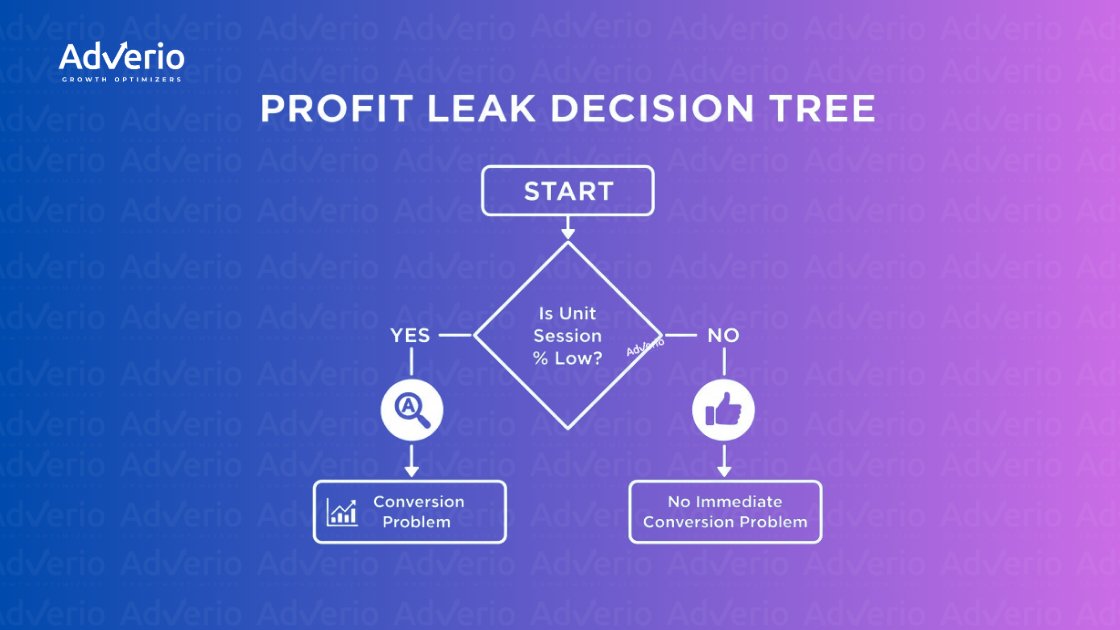
You have to find the root cause. Your profit is leaking from one of three places, and this simple diagnostic will show you exactly where the hole is so you can plug it for good.
Is it a conversion problem?
This is the single most common—and most overlooked—profit leak. If your listing doesn’t convert, you will always overpay for traffic. The metric that tells the whole story is Unit Session Percentage (USP)—Amazon’s term for conversion rate.
-
Your Move: Pull the USP for your top-selling ASINs from Brand Analytics and compare it to the category benchmark.
-
The Red Flag: If your USP is lagging, you have a conversion problem. That gap is a direct measure of how much more you have to spend for every sale. A low USP is a glaring sign that your listing—images, copy, A+ Content, reviews is failing at its one job: turning shoppers into customers. This isn’t an advertising issue; it’s a salesmanship issue. Improving it is the single most important lever you can pull, which is why we have a dedicated process for Amazon conversion rate optimization (CRO) system.
Is it a traffic quality problem?
Not all clicks are created equal. If your ads are pulling in shoppers with zero intent to buy, you’re just lighting money on fire. This happens constantly when campaigns rely too heavily on broad match or automatic targeting without surgical refinement.
-
Your Move: Dive into your Search Term Report. Filter for terms with high spend and zero sales over the last 30-60 days.
-
The Red Flag: Are you selling leather work boots but paying for clicks on “women’s rain boots”? You’re paying for the wrong traffic. Every irrelevant term is a leak in your ad budget. Adding them as negative keywords is the first, most crucial step to plugging it.
Is it a catalog mix problem?
Sometimes, the issue isn’t a single bad listing or campaign. The problem is the overall health of your product catalog. Too many brands use profitable “hero” SKUs to subsidize the ad spend for unprofitable “vanity” SKUs. Your account-level TACoS might look decent, but it’s being propped up by a few winners while others are quietly destroying margin.
-
Your Move: Stop looking at your account-level TACoS. You need to know exactly how to calculate TACoS for every single parent ASIN in your catalog.
-
The Red Flag: Identify the “bleeders”—SKUs with a TACoS way above your account average. Are these products essential, or are they low-margin distractions tanking your overall profitability?
At Adverio, we run this deep-dive analysis using proprietary systems like our LQS (Listing Quality Score) and AMOS (Adverio Marketplace Optimization System) to pinpoint these hidden profit drains and make strategic, profit-driven decisions.
The Right Sequence for Reducing TACoS Profitably
Order of operations is everything. Most brands get it backward: they see a rising TACoS, panic, and immediately start slashing ad bids. It’s the most common mistake in the book, and it’s a guaranteed way to kill your sales velocity and crater your organic rank. Advertising optimization is the last step, not the first.
TACoS only drops when you fix conversion → clean traffic → then optimize ads — in that order.
Stage 1: Fix The Conversion Engine
Before you touch your ad campaigns, your entire focus must be on your product detail pages. Your listing is your digital salesperson. The goal is to maximize your Unit Session Percentage (USP) by overhauling copy, transforming A+ Content into a conversion machine, and auditing all visual assets.
Stage 2: Improve Traffic Quality
Now that your listing is primed to convert, focus on the quality of traffic you send to it. This isn’t about spending less; it’s about eliminating waste. We achieve this through surgical ad structure, aggressively adding negative keywords to cut waste and graduating high-performing terms into precise campaigns using our proprietary Profit Pulse System (PPS).
Stage 3: Optimize For Efficiency
This is the final stage. With a high-converting listing and relevant traffic, you can now optimize bids for maximum profitability. Because your conversion rate is higher, you can often bid more competitively to capture top-of-search placements, driving a “flywheel” effect that boosts both paid and organic sales. This is how you achieve a lower TACoS while simultaneously increasing total revenue and profit.
How Adverio Runs TACoS Compression
Theory is one thing; results are another. We don’t advise. We execute. Rolling up our sleeves to implement a full-funnel compression sequence that expands margins.
Our promise is direct: margin expansion within 30 days and a clear directional performance shift in just 15. This isn’t a guess. It’s a battle-tested system.
For our client Levtex, a leading home goods brand, TACoS had ballooned to over 19%. We started where the real problem was: their listings. We fixed conversion first; we engineered a higher conversion rate before touching a single campaign. The result? We drove their TACoS down toward the 14% target—not by slashing spend, but by making every single dollar work harder.
For the bold apparel brand Shinesty, we deployed a full-funnel strategy that stabilized TACoS monthly and dipped it YoY while simultaneously achieving a 131% increase in Click-Through Rate (CTR) and a 23% lift in Unit Session Percentage (USP). Same spend, more growth. That’s efficiency in action.
This only works with the right systems. Our teams operate with an unfair advantage, using an arsenal of proprietary systems like GEAR, AMOS, SKU Resurrection, and Brand Drain Reversal to uncover and exploit growth opportunities that generic dashboards completely miss.
The data that powers those systems runs through our business intelligence platform, which connects TACoS trends, SKU-level margin, inventory velocity, and ad spend into one operating view rather than separate reports.
We own the full funnel — not just ads. Profit growth isn’t a promise most agencies make. We guarantee it.
FAQs
What Is a Good TACoS for My Category?
Wrong question. While a mature brand often settles between 5% and 15%, the trend is the only thing that matters. A TACoS holding steady at 14% is far healthier than one that has quietly crept from 8% to 12% over the last six months. That rising number is a flashing red light telling you that your conversion efficiency is eroding. Stop chasing benchmarks and start analyzing the trend.
How Long Does It Take to See a Reduction in TACoS?
At Adverio, we guarantee our partners see a directional performance shift within 15 days and tangible margin expansion within 30 days. This speed is only possible because we don’t just jump into your ad account. We attack the root cause—conversion—first. Real, durable TACoS reduction isn’t about quick ad tweaks. It’s about fixing the foundation.
Can I Reduce TACoS Without Lowering My Total Sales?
Yes. Absolutely. In fact, if your total sales drop when you optimize, you’re doing it wrong. The goal isn’t to cut spend; it’s to make every dollar of that spend work harder. When you improve your listing’s conversion rate, your ads convert better, your organic rank gets a boost, and you drive more “free” sales. The exact same ad spend generates a much larger volume of total sales, causing your TACoS percentage to plummet while your total revenue actually increases.
Ready to turn TACoS into a controllable profit lever? The Adverio team doesn’t just manage ads—we own your growth.
Book Your ROI Forecast Today and we’ll show you exactly where your profit is leaking and how we’ll plug the holes.
How to Read Next: