


Table of Contents
If your Amazon growth has plateaued, your problem isn’t traffic; it’s basket size.
Most mid-to-enterprise brands are stuck optimizing ACoS while ignoring the real profit lever: Average Order Value (AOV). That’s how you end up with more orders—but thinner margins.
This guide breaks down how to systematically increase AOV using bundling, merchandising, promotions, and a full-funnel ad strategy, so every click generates more revenue and more profit.
At a Glance
• AOV is the fastest lever for profit growth
• Bundling + promotions + CRO = bigger carts
• Ads should drive higher-value purchases, not just traffic
• Focus on profit per order, not just ACoS
Why Your Amazon Growth Stalled (It’s Not Just Your ACoS)
If your growth has stalled, it’s not your ads—it’s your model. Most brands are stuck in Optimization Myopia: squeezing ACoS while ignoring how much each order is actually worth.
That’s a dead end.
The real engine for profitable scale isn’t a slightly lower ACoS; it’s getting each customer to spend more per transaction. A higher AOV is a far more powerful profit lever than pinching pennies on your campaigns. It requires a total shift in thinking—from being a vendor shipping single-item orders to becoming an architect of larger, more valuable customer carts—something typically driven through structured Amazon account management
The AOV Blind Spot
Most brands chase “average” benchmarks that don’t apply to their catalog. AOV isn’t universal—it’s engineered. The real question is: how do you increase basket size within your own product ecosystem?
For example, Amazon’s baseline AOV is around $52, but that number is practically useless on its own. It jumps to nearly $60 during Prime Day, and Prime members consistently outspend non-Prime shoppers by 15–20%. Electronics can push past $75, while consumables often dip below $50.
This is why benchmarking AOV is useless without context. What matters is profit per order—not averages. The right question isn’t, “What’s a good AOV?” It’s, “How do I engineer a higher AOV for my specific catalog and my customer?”
The brutal truth is that chasing a lower ACoS often leads to a race to the bottom. Profitable scaling comes from increasing the value of every single click, not just reducing its cost.
This is exactly where our Profit-Driven Catalog Optimization system comes in—turning SKU sprawl into a structured revenue engine. Your biggest untapped opportunity isn’t buried in your PPC dashboard; it’s hidden right in your own product assortment.
Let’s look at how the right strategies stack up against common, costly mistakes many brands make when trying to scale.
AOV Growth Levers vs Common Pitfalls
This table breaks down the difference between a strategic, AOV-focused approach and the typical pitfalls that drain profitability.
| Strategic Growth Lever | Common (And Costly) Mistake | Adverio’s Approach |
|---|---|---|
| Intelligent Bundling | Selling single items and hoping for add-ons. | We create “solution kits” that solve a customer’s entire problem in one purchase, naturally increasing cart size. |
| Tiered Promotions | Offering flat discounts that don’t incentivize larger orders. | We build threshold offers (e.g., “Spend $75, save 15%”) that train customers to add more to their cart to unlock value. |
| Catalog-Wide Cross-Selling | Relying solely on Amazon’s “Frequently Bought Together” widget. | We optimize PDPs, A+ Content, and Brand Stores to create a guided shopping experience that highlights complementary products. |
| Profit-First Ad Targeting | Focusing ads on low-priced “hero” SKUs. | We use Sponsored and DSP campaigns to target buyers searching for multi-item solutions or higher-value product categories. |
Seeing the difference? One path leads to incremental gains and margin erosion, while the other builds a sustainable, profitable growth engine.
When you adopt this AOV-first perspective, your entire operation changes. Instead of just selling a product, you start solving a customer’s complete problem in a single transaction. That basket-building approach is the key to breaking through growth plateaus and unlocking your next stage of scale. It’s about moving beyond isolated metrics and building a system where your products work together to drive higher revenue—and more importantly, higher profit from every single order.
Mastering the Art of the Profitable Bundle
Let’s get one thing straight: most brands treat bundling as a cleanup job. It’s their go-to move for offloading slow-moving inventory. That’s a rookie mistake, and it leaves a ton of money on the table.
Profitable bundling isn’t about clearing stock—it’s about engineering higher-value transactions using data-backed SKU relationships. It’s a calculated science for engineering higher-value orders. This is the heart of what we call Profit-Driven Catalog Optimization. The goal is to stop hoping customers add more to their cart and start building irresistible offers they simply can’t refuse.
Digging for Data-Backed Pairings
The “Frequently Bought Together” section on a product page is a decent starting point, but it’s purely reactive. A proactive strategy digs much deeper into Amazon’s own analytics to uncover the real gold.
The only way to do this right is through Amazon-native data—specifically Market Basket Analysis and Product Opportunity Explorer. Market Basket Analysis shows you exactly which of your products are already being purchased together, revealing organic customer behavior. This is ground zero for identifying your most natural, high-converting bundle combinations.
The Product Opportunity Explorer, on the other hand, helps you spot broader customer search trends and gaps in the market. You can use it to find complementary needs your current catalog isn’t addressing, sparking ideas for entirely new solution-based kits.
Bundling shouldn’t be based on assumptions. It should be a direct response to what your customers are already telling you through their purchase data. When you build bundles based on proven behavior, you’re not guessing—you’re executing a data-backed strategy.
This analytical approach is absolutely critical for brands with large, complex catalogs. A brand with 250+ SKUs is looking at hundreds, if not thousands, of potential combinations. Without data, prioritizing them is a nightmare. We use proprietary systems like Profit Pulse System (PPS) to identify bundle combinations with the highest AOV and margin impact.
Physical Kits vs. Virtual Bundles
Once you’ve identified winning combinations, you have two main ways to offer them on Amazon: physical kits or virtual bundles. Each has its own operational and financial trade-offs.
-
Physical Kits: These are pre-packaged bundles with a unique UPC, treated as a single product. They offer a clean customer experience but require dedicated inventory, assembly, and logistics management. That means more operational complexity and cost.
-
Virtual Bundles: This is a killer tool for Brand Registered sellers. It lets you digitally group two to five FBA products, creating a new listing without physically kitting anything. Customers get a small discount, and you get a higher AOV with zero operational overhead.
For most brands, virtual bundles are the superior starting point. They let you test combinations with zero risk. No new UPCs, no pre-packed inventory, and no worries about stranded stock if a pairing flops. You can launch, test, and iterate fast, letting the data guide your long-term strategy.
Finding Hidden Gold in Your Catalog
A massive blind spot for established brands is the dormant potential sitting right in their existing catalog. Over time, some SKUs see sales decline or get lost in the shuffle. Bundling offers a powerful way to perform what we call “SKU Resurrection.”
By pairing a slower-moving but complementary item with a high-traffic “hero” product, you breathe new life into it. The hero product drives the visibility, and the bundle provides the value proposition. This doesn’t just clear aging inventory; it does so profitably, turning a potential loss into a margin-accretive sale.
Understanding and applying these principles of utilizing SKU economics on Amazon is fundamental. It’s how you create bundles that don’t just pump up top-line sales but actually drive bottom-line profit.
Ultimately, mastering the profitable bundle is about shifting your perspective. You’re no longer just selling individual items. You’re creating complete solutions that solve a customer’s entire problem in a single click. This approach not only boosts your AOV but also deepens customer satisfaction, paving the way for repeat business and a much higher lifetime value.
Upselling and Cross-Selling with PPC and DSP
Running generic ad campaigns is a one-way ticket to flat growth. If you really want to bump up your AOV, you have to stop thinking of advertising as just a traffic faucet and start using it to nudge shoppers toward higher-value carts. This is about looking past a narrow focus on ACoS and building a full-funnel strategy where ad spend is tied directly to bigger basket sizes.
Believe it or not, the entire Amazon advertising suite—Sponsored Products, Brands, Display, and even the Amazon DSP Management—can be geared toward building larger orders. It’s all about creating an ecosystem where every ad works together, not just to make a sale, but to make a bigger sale.
Using PPC for On-Page Cross-Promotion
Your product detail pages (PDPs) are the most valuable real estate you have on Amazon. It’s a classic mistake to let competitor ads run wild on this space, basically paying to send your hard-earned traffic to someone else. The smart move? Use your own ads to own your listings.
By running low-bid Sponsored Products Product Targeting campaigns, you can feature your own complementary items right on your hero product pages. Picture this: a customer is looking at your best-selling tent, and right below, they see your ads for sleeping bags and camping chairs. Just like that, you’re controlling the narrative, blocking competitors, and making it dead simple for shoppers to get everything they need from you.
This tactic turns a single product page into a curated mini-storefront, guiding a shopping experience that naturally leads to a higher AOV.
Sponsored Display for Smart Upselling
Sponsored Display gives you a powerful retargeting tool that’s tailor-made for upselling. You can set up campaigns targeting shoppers who checked out your entry-level or mid-tier products but never pulled the trigger. Instead of just hitting them with the same ad again, you serve them an ad for your premium, higher-margin version.
This is the old-school “good, better, best” strategy, but supercharged:
-
Audience: Shoppers who viewed your standard $50 coffee maker in the last 30 days.
-
Ad Creative: An ad featuring your premium $90 model that also has an espresso function.
-
Placement: That ad follows them around on and off Amazon, reminding them there’s a better option available.
This play intercepts a customer’s indecision and reframes it as a chance to upgrade, pushing your AOV up one person at a time. It’s a surgical move that goes way beyond basic retargeting into strategic value-building.
Unleashing DSP for Advanced Audience Building
This is where you get into full-funnel mastery. The Amazon DSP lets you build hyper-specific audiences that PPC just can’t touch, opening the door for sophisticated upsell and cross-sell plays that drive serious AOV growth.
With DSP, you can create audiences of past customers who bought specific products. For instance, you could build a segment of everyone who purchased your “starter kit” in the last 180 days and then hit them with video ads for the “pro-level” upgrade or a subscription for refills. This turns one-time buyers into repeat, high-value customers. You can dive deeper into these tactics by exploring our comprehensive guide to enhancing your reach with Amazon DSP ads.
Your ad strategy shouldn’t just find new customers; it should increase the value of the ones you already have. DSP is the tool that makes this happen at scale.
This kind of segmentation is how you reverse Brand Drain—that frustrating moment when a customer buys your entry-level product and then jumps to a competitor for their next purchase. DSP lets you own that relationship and guide them up your own value ladder.
Every day, Amazon customers place about 12.87 million orders globally. What’s fascinating is that while the average item price is around $143, the average order value is way lower, somewhere between $52–$60. That gap is your opportunity. Customers are already buying multiple items, and a smart, layered ad strategy is the fastest way to make sure those extra items are yours. Combining targeted PPC with advanced DSP audiences lets you systematically engineer bigger baskets and drive real, profitable growth.
Turning Clicks Into Larger Carts with CRO
Driving traffic is just the first step. If your product pages and Brand Store aren’t actively working to build a bigger basket, you’re essentially paying for clicks that leak profit. This is where a holistic approach to Conversion Rate Optimization (CRO) comes into play—it’s all about turning that hard-won traffic into much higher-value transactions.
Forget about generic, static listings. Your pages need to be active sales tools, constantly guiding shoppers toward a larger checkout. By implementing sound conversion rate optimization best practices, you can transform your pages from simple product showcases into powerful AOV-boosting machines.
Architecting High-Value Shopping Experiences
Your A+ Content and Brand Store are your best, and most underutilized, assets for cross-selling and upselling—especially when backed by strong Amazon listing optimization services. So many brands waste this prime real estate on fluffy marketing copy and glamour shots. A smarter approach uses this space to explicitly showcase bundles, comparison charts, and grids of complementary items.
Think about it from the shopper’s perspective: they land on your page looking for a single product. Your job is to immediately show them how that one item fits into a broader solution you offer.
-
A+ Content Comparison Charts: Stop just comparing your product to the competition. Instead, compare it to your other products. Build out “good, better, best” charts that clearly spell out the value of upgrading to a premium version or a pre-made bundle.
-
Brand Store Collections: Your Storefront should never be a random catalog dump. Curate it. Build collections around specific needs or use cases, like a “Complete Car Detailing Kit” or a “New Parent Survival Pack.” This simple shift reframes the purchase from buying one thing to solving a whole problem.
This kind of proactive merchandising takes control of the customer journey, making it not just easy but logical for them to add more to their cart.
The Psychology of Smart Promotions
Promotions can be a double-edged sword. Slap a simple discount on a product, and you risk devaluing it while conditioning customers to always wait for a sale. The real goal isn’t just to sell cheaper; it’s to reward shoppers for spending more—especially when paired with strategies like Amazon anchor pricing strategy.
Strategic promotions are engineered to increase basket size, not just to move a single unit at a lower price—especially when using structured approaches like Amazon brand tailored promotions strategy.
A 10% off coupon on one item actually lowers your AOV. But a “Buy 3, Get 15% Off” promotion fundamentally changes buying behavior and lifts AOV. The first is a discount; the second is an incentive.
Here’s how you can structure offers that build bigger carts without torching your margins:
-
Tiered Discounts: “Save 10% on orders over $50, 15% on orders over $75.” This gives shoppers a clear threshold to hit, encouraging them to add just one more item to unlock a better deal—especially when paired with structured approaches like coupons vs lightning deals vs best deals on Amazon.
-
Multi-Buy Offers: “Buy 2, Save 10%; Buy 3, Save 20%.” This is a goldmine for consumables like supplements, coffee, or cleaning supplies because it directly increases Units Per Transaction (UPT).
-
Free Shipping Thresholds: If you’re an FBM seller, setting a free shipping minimum is one of the oldest and most reliable AOV tactics in the e-commerce playbook. If your current AOV is $28, setting that threshold at $35 is a powerful nudge.
These promotions work because they empower the customer. They feel like they’re making a smart choice and earning a reward, not just getting a handout.
Before deploying a promotion, it’s crucial to align the tactic with your specific AOV goal. Some promotions are better for increasing units per transaction, while others are designed to push customers toward a higher spending threshold.
AOV-Focused Promotion Strategy Matrix
| Promotion Type | Primary Goal | Best For… | Potential Pitfall |
|---|---|---|---|
| Multi-Buy Discount | Increase Units Per Transaction (UPT) | Consumable or frequently repurchased items (e.g., supplements, pet food). | Can devalue single-unit purchases if not positioned as a “stock up and save” offer. |
| Tiered Discount | Increase Spend Threshold | Catalogs with a wide range of price points where adding one more item is easy. | Setting thresholds too high can discourage shoppers who are far from the next tier. |
| Free Shipping Threshold | Nudge Small Carts Over a Limit | FBM sellers whose average cart size is just below a profitable shipping threshold. | Irrelevant for FBA sellers; can feel punitive if the threshold seems unreachable. |
| “Buy X, Get Y” | Introduce New or Complementary Products | Brands with a clear “hero” product and multiple accessories or related items. | The “Get Y” item must have a high perceived value, or the offer will fall flat. |
Choosing the right tool for the job is half the battle. This matrix helps clarify which promotional lever to pull based on what you’re trying to achieve with your AOV.
Engineering Listings for a Bigger Checkout
Every single element on your product detail page—every bullet, every image—contributes to conversion and, by extension, your AOV. At Adverio, we use our proprietary Listing Quality Score (LQS) framework to audit and rebuild listings from the ground up. A huge part of this process is ensuring that every part of the page is optimized to suggest and encourage additional purchases.
Listing optimization isn’t about keywords—it’s about engineering purchase behavior across your catalog. It’s about crafting a compelling story that showcases the full value of your ecosystem. Your lifestyle images shouldn’t just show one product being used; they should show a collection of your products working together as a complete system. Your bullet points can subtly reference complementary items, planting the seed for a multi-item purchase right from the start.
By taking a holistic CRO approach, you stop leaving your AOV to chance. You start to systematically guide the shopping experience, steering every click toward a larger, more profitable cart.
Your AOV Growth Playbook from Strategy to Execution
All the theory in the world doesn’t mean much until you put it into practice. It’s time to stop just looking at your sales data and start actively shaping it. This is your playbook for pulling the right levers—a clear, actionable plan for setting up and measuring tests for your bundles, promotions, and pricing.
Most importantly, we’re going to expand your focus. Chasing a higher AOV is good, but building a more profitable business is the real goal.
Think of it like this: AOV growth isn’t one single action. It’s a series of smart optimizations you make at every single customer touchpoint, from the ad they click to the final items they add to their cart.
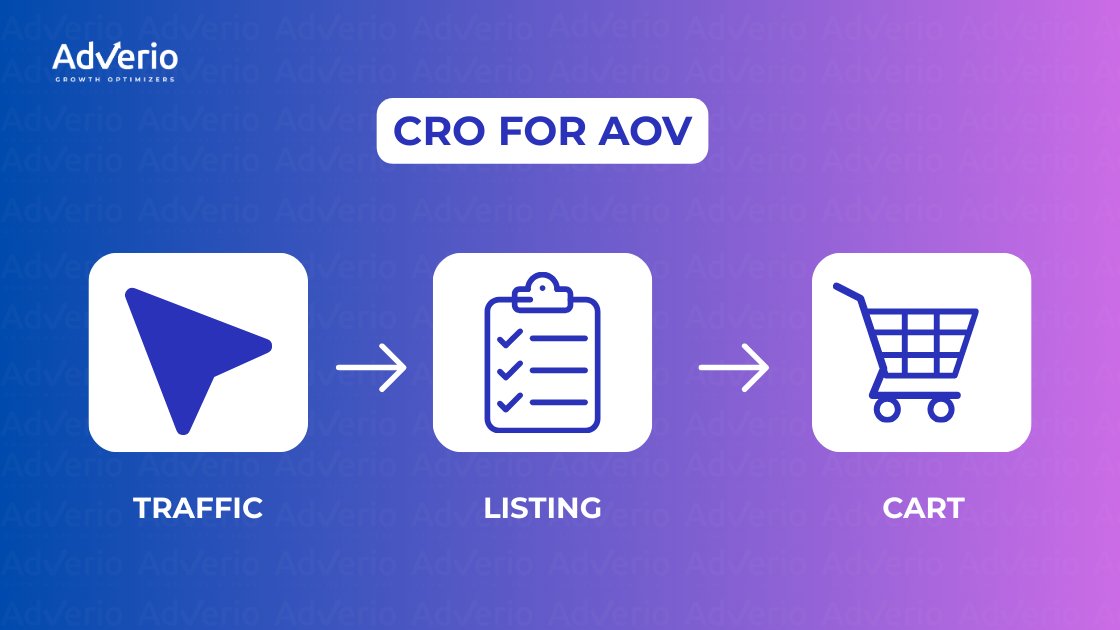
This entire funnel is your playing field. Every stage is an opportunity to guide customers toward a bigger, better cart.
Setting Up Your A/B Tests
Guesswork is a margin killer. A disciplined A/B testing approach is the only way to know for sure which AOV strategies work for your specific products and customers. The key is isolating one variable at a time to get clean, reliable data you can actually trust.
Here are a few simple tests to get you started:
-
Bundle Combinations: Don’t just throw products together and hope for the best. Pull the data from your Market Basket Analysis report. Create two different virtual bundles pairing your top-selling “hero” product with two different, logical add-ons. Run them for 30 days and see which combo drives a higher conversion rate and, crucially, a better total margin.
-
Pricing Thresholds: Test two different tiered promotions to find the sweet spot. For two weeks, run an offer like “Save 10% on orders over $50.” Then, switch it up to “Save 15% on orders over $75” for the next two weeks. At the end, compare the uplift in AOV and overall profit between the two.
-
Promotional Offers: Pit a multi-buy deal against a bundle discount. For one month, run a “Buy 2, Save 15%” offer on a popular consumable item. The next month, swap that out for a pre-built two-pack virtual bundle with a similar discount. The goal here is to see which tactic drives a higher Units Per Transaction (UPT).
Tracking the Right KPIs
AOV is the headline metric, but it doesn’t tell the whole story. If you obsess over it in isolation, you can easily end up chasing bigger orders that are actually less profitable. An effective AOV strategy always balances basket size with margin health.
Your real goal isn’t just a higher AOV; it’s a higher profitable AOV. If you increase average cart size by 20% but your margin per order drops by 30%, you’ve gone backward.
To get the full picture, you need to track a handful of core metrics together:
-
Average Order Value (AOV): The main indicator of basket size.
-
Units Per Transaction (UPT): Tells you if customers are buying more items per order.
-
Margin Per Order: The bottom line—your actual profit after COGS and fees for each sale.
-
Customer Lifetime Value (cLTV): Measures the long-term value you get from each customer.
A higher AOV is a powerful engine for a healthier cLTV, but you need to be intentional about it. For a deeper dive into making your customer base more valuable over the long haul, you’ll also want to understand how to improve Customer Lifetime Value.
What to Do Next: A Checklist for Immediate Action
Enough analyzing. It’s time to start doing. Here’s a simple checklist to get these AOV growth strategies rolling today:
-
Pull Your Market Basket Analysis Report: Find the top 3 items most frequently bought together in your catalog.
-
Create One Virtual Bundle: Take your top “hero” product and pair it with the #1 co-purchased item from your report. Price the bundle with a 5-10% discount compared to buying them separately.
-
Launch a Tiered Promotion: Set a spending threshold that’s about 20% higher than your current AOV. If your AOV is $40, try a “Save 10% on orders over $50” promotion.
-
Update One A+ Content Module: Add a comparison chart that cross-sells complementary products from your catalog, not just comparing the good-better-best versions of the same item.
-
Set Up a Tracking Dashboard: Start monitoring AOV, UPT, and margin per order on a weekly basis. Then, don’t touch anything for at least 30 days to let the data stabilize before you make any conclusions.
Don’t forget about the big sales events. With U.S. Prime Day sales hitting around $14.2 billion and AOV figures jumping well above the typical $50 mark, it’s the perfect time to put these strategies to the test. Sellers who prepare their bundles and tiered deals specifically for these high-traffic windows always see the biggest lift.
This entire process—data analysis, hypothesis testing, execution, and measurement—is exactly what our Growth Cultivator framework is built to do. It’s not a one-time fix but a continuous cycle of optimization. By following this playbook, you move from guesswork to a deliberate, data-driven system for building bigger, more profitable carts.
How Adverio Increases AOV at Scale
Increasing AOV isn’t a tactic—it’s a system.
At Adverio, we combine Profit-Driven Catalog Optimization, Intelligent Growth Marketing, and CRO into a unified execution model.
That means:
-
Bundles driven by real purchase data
-
Ads optimized for incrementality—not just ROAS
-
Listings engineered to cross-sell and upsell
If you want AOV growth that actually improves margin—not just revenue—this is where most brands get it wrong.
👉 Explore our Amazon PPC Management Services
Frequently Asked Questions About Increasing Amazon AOV
Brands trying to bump up their Amazon AOV often hit the same walls. Let’s cut through the noise with some straight answers to the questions we hear all the time.
What Is a Good AOV on Amazon?
Honestly, there’s no magic number. A “good” AOV is completely relative to your category. A beauty brand selling consumables might be thrilled with a $35 AOV, while an automotive parts seller is probably shooting for something closer to $150.
Stop asking “What’s a good AOV?” The better question is, “Is my AOV trending up, and is it profitable?” The real win is consistent, margin-accretive growth, not hitting some arbitrary industry benchmark. We use proprietary tools like our GEAR analysis to dial in a target AOV that actually makes sense for a brand’s specific catalog and profit goals.
Do Coupons and Discounts Actually Hurt My AOV?
They absolutely can—if you’re just slapping discounts on single items without a strategy. That’s a fast track to training customers to wait for sales, which almost always drags down your AOV over the long run.
But when done right, strategic promotions are one of the most powerful tools you have to increase AOV. The difference is all in the structure.
-
A “Buy 3, save 20%” coupon encourages buying more units.
-
A tiered discount like “Save 10% on orders over $50, 15% on orders over $75” gives shoppers a direct incentive to add more to their cart.
The key is to structure your offers to reward customers for spending more. This shifts the entire focus from simply discounting a product to stacking value and building a bigger, more profitable basket.
This approach flips promotions from a margin-killing tactic into a smart lever for boosting the value of every single order.
How Do I Create and Manage Virtual Bundles Effectively?
Amazon’s Virtual Bundles are a fantastic, low-risk way to test product combinations without having to commit to physical inventory. But to make them work, you need a disciplined process.
-
Start with the Data: Dive into Amazon’s Market Basket report. See what your customers are already buying together. Don’t guess—let actual purchase behavior lead the way.
-
Get Your Brand Registry in Order: The main “hero” item in your bundle must be Brand Registered. No exceptions.
-
Create Unique Content: Don’t just copy and paste descriptions from the individual product pages. You need to build a compelling, unique listing for the bundle that sells the solution—why these products are perfect together.
-
Price for Value: The bundle has to be a better deal than buying the items separately. A 5-10% discount is a solid starting point.
-
Watch Performance Like a Hawk: Track sales, of course, but also keep a close eye on your overall AOV and margin per order to see the real impact.
For brands with big, complex catalogs, this can get out of hand fast. At Adverio, we use our own catalog optimization systems to spot, manage, and scale the most profitable bundle opportunities, turning a headache of a catalog into a strategic asset.
What Is the Fastest Way to Increase My Amazon AOV Today?
The single biggest move you can make right now is a strategic catalog analysis. Seriously. Before you tweak a single ad campaign or launch any promotions, you have to understand how your products relate to each other.
First, pinpoint your “hero” products—the ones with high traffic and steady sales. Next, find the logical, complementary “add-on” items that are usually cheaper but solve a related problem.
Think of it this way: if your hero product is a premium leather dog leash, the perfect add-on is a matching collar.
Your immediate next step? Create one or two Virtual Bundles pairing these items. It requires zero new inventory, no complicated logistics, and it’s the absolute fastest way to test a hypothesis for boosting AOV. This is the first pillar of our Growth Cultivator framework for a reason—it gets results by making the most of what you already have.
If your growth is stuck, it’s not a traffic problem—it’s a basket architecture problem.
Adverio builds full-funnel systems that increase AOV, margin, and incrementality—not just sales volume.
Book Your ROI Forecast and see exactly where your profit is being left on the table.