


A winning seasonal pricing strategy on Amazon isn’t about discounting harder during Black Friday. It’s about setting a price band before the buy, then defending it through the peak and the clearance that follows.
Price is the last lever in the chain, not the first. Landed cost, order quantity and timing all sit upstream of it, and by the time the promotional calendar goes out, most of your margin has already been decided.
Which is why two sellers can run identical deal calendars and end the season in opposite places. One bought right. The other is pricing around a purchase order that was wrong in June.
At a Glance
Table of Contents
Five things to take away
- Seasonal pricing is an inventory decision that shows up as a price. Work backward from the purchase order.
- Peak and post-peak are one season, one number. A profitable November and a January that clears at cost is a loss recorded late.
- Total ad cost as a share of total revenue, read across the whole arc, is the measure that shows what the season delivered.
- Liquidation depth is feedback on the buy. Nothing else tells you as plainly whether the purchase order was right.
- January is predictably the cheapest sourcing month in many categories, because your competitors are clearing at or below cost.
Quick Answer:
An Amazon seasonal pricing strategy sets a price band before inventory is purchased, raises prices gradually as organic demand builds ahead of a peak event, uses promotions against that band for rank and share rather than for volume, and treats post-peak liquidation as both a cash recovery window and a purchasing signal for the following year. Price is governed by landed cost, order quantity and timing, so the pricing decision is made at the buy and only executed at the listing. Measure the full arc from ramp through clearance as a single season using total ad cost as a share of total revenue.
Definition
Seasonal pricing on Amazon is the deliberate movement of a product’s price across a demand cycle, the ramp before a peak, the peak itself, and the decline after it. It differs from dynamic repricing, which reacts to competitor moves in real time, and from promotional discounting, which lowers price to buy volume. Seasonal pricing sets the band. Repricing and promotions operate inside it.
BEFORE THE CALENDAR GOES OUT
Your promotional calendar is finished and your purchase orders went out in June. One of those two documents already decided your margin.
| ✓Your landed cost against the price band you need |
| ✓Your purchase calendar and your pricing calendar, as one document |
| ✓Your TACoS across the full season, not the peak weeks |
Get My Season Priced Before The Buy
15 minutes. Bring one season of purchase orders.
1. Why price is the last lever
When seasonality hits, the reflex is to discount instead of plan. Competitor markdowns get matched, margin bleeds through the promotional window, and the hope is that volume covers it.
That’s how margins quietly die.
The proactive version reads historical data to find when to buy low and when to hold firm ahead of a demand surge. It means reading the market’s rhythm instead of the dates on a calendar.
The arbitrage mindset
Seasonal pricing works because scarcity changes buyer behavior. Limited availability, time-bound relevance and predictable demand spikes justify a premium if inventory, ads and timing are aligned. Miss the alignment and the premium reads as overpricing.
Optimization myopia
Optimizing ACoS while ignoring margin, inventory risk and incremental growth is how a seasonal plan fails while every dashboard stays green. A working strategy has to integrate three things at once.
What to do
- Align the calendars. Your purchasing calendar and your pricing calendar have to be the same document. If they live in two places, they will disagree in November.
- Ramp ad spend to support price increases. Advertising should support price increases during peak demand rather than only to promote discounts.
- Choose the promotional tool deliberately. Understand the differences between coupons, Best Deals, and Lightning Deals on Amazon before defaulting to any of them.
What to avoid
- Treating ACoS as the seasonal scoreboard. It measures the ad account, not the season.
- Building the promotional calendar before the purchasing calendar is locked.
- Assuming a repricer will handle it. A repricer defends a band. It can’t set one.
At Adverio the purchasing calendar and the pricing calendar are built as one sequence, so pricing, advertising and inventory move together instead of arguing.


2. Forecast before you buy
Any effective seasonal pricing strategy starts with data. Guesswork is a margin killer.
Forecasting goes past the obvious peaks like Black Friday. The margin hides in micro-seasons: short profitable windows created by competitor stockouts, weather, or a niche trend that never appears on a retail calendar. The premium is easiest to hold there, because nobody else is bidding for the same shopper.
As an operating rule, look back at least two full seasons. Anything less is pricing without context, because a single year can’t separate a trend from a one-off.
Amazon’s own data
Amazon gives you the tools to decode market demand. Almost nobody reads them past the summary tab.
- Product Opportunity Explorer. This shows unmet demand. Analyze historical search volume to see when customers start looking. A spike in searches for winter coats in September tells you demand is building while your competitors are still planning.
- Search Query Performance. Opportunity Explorer shows you the market. Search Query Performance shows you your place in it. Track impression share for seasonal keywords over time. High impressions with low clicks before peak is a pricing or content problem, and it’s cheap to fix in September and expensive to fix in November.
Reading two seasons of history is straightforward on twelve parents and a different job entirely on twelve hundred. Where the catalog is large and variant-heavy, the constraint is usually not the forecast. It is that nobody can see the catalog cleanly enough to build one. Amazon catalog management closes that gap first.
Third-party price history
Amazon’s data tells you about demand. It tells you almost nothing about what your competitors did with their prices. Price-history tools close that gap, letting you see when a rival raised prices or ran out of stock last year.
Pricing decisions sit downstream of forecasting and inventory alignment. To sharpen your predictions, dig into e-commerce demand forecast methods.
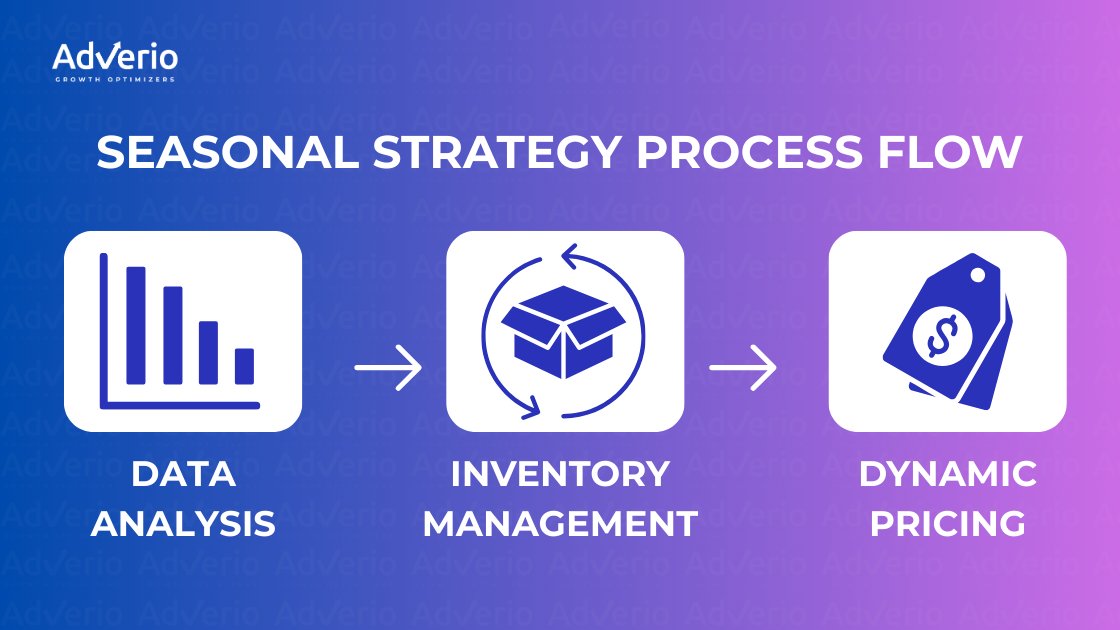
A successful seasonal forecast tells you more than when to stock up. It tells you when to liquidate aging inventory before a price crash, and when to hold firm right before a competitor stocks out. Both are timing calls.
What to do
- Pull two full seasons of your own sales, price and stock history before modeling anything.
- Map competitor stockouts from last year. Those dates are your highest-margin windows this year.
- Set the price band, then size the buy against it. Not the other way around.
What to avoid
- Forecasting demand without forecasting competitor supply. Your price ceiling is set by who else is in stock.
- Planning only around named events. The unnamed windows carry less competition.
- Buying to a revenue target. Buy to a margin band.
If your pricing still reacts after demand spikes, you’re already late.
|
+1,119%
Profit Growth
Levtex Home
 |
+586%
Profit Growth
Karat
 |
+833%
Revenue Growth
Crazy Dog
 |
3. Build margin before the promotional window
Once the forecast is locked, both halves of the year need a plan. Peak builds the margin. What happens after it decides whether you keep any.
Peak season price maximization
Peak is about controlled aggression. The goal is to build margin before the promotional frenzy starts.
Start rolling out gradual price increases roughly a month to six weeks ahead of a major event. As organic demand climbs, a rising Best Sellers Rank supports a higher price point without the conversion penalty you’d expect, because rank is doing work that price would otherwise have to do. Done cleanly, this adds incremental margin before a single promotion runs.
Deploying promotions with a job attached
When high-traffic events hit, every promotion needs a stated objective. Promotions without intent are margin leaks with a calendar entry.
- Lightning Deals buy velocity. The return is the rank improvement that keeps paying for weeks after the deal ends.
- Coupons capture price-sensitive shoppers without permanently cutting your list price, which makes them a core part of any Amazon anchor pricing strategy.
- Sale prices are tactical. Use them to match a specific competitor or clear specific inventory, never as a default setting.
Relying on promotions to carry all of your peak volume is the expensive way to do it. Build the margin on organic sales through price increases, then spend promotions on rank and share.
What to do
- Name the job of every promotion before it goes in the calendar. Velocity, rank, share, or clearance.
- Raise price while rank is still climbing.
- Hold one promotional slot in reserve for a competitor stockout you can’t predict.
What to avoid
- Discounting to hit a volume number. You’ll hit it and lose the margin that made it worth hitting.
- Running Lightning Deals on inventory you can’t replenish.
- Cutting list price when a coupon would do the same job reversibly.
4. Execute the peak
Once the strategy is set, execution is the whole job. Here is what that looks like week to week.
Put Amazon’s marketing tools to work
- DSP plus sponsored ads. Use Amazon DSP and other upper-funnel tactics to build custom creative, then use lower-cost sponsored ads to hold visibility. Run correctly, this lifts conversion efficiency and pulls TACoS down without brute-force spend.
- Optimized creative. Enhance your main image, gallery and A+ Content to tell the story of your seasonal items. Show the scarcity in the imagery. Stating it in a bullet point does less work.
Optimize for seasonal search
- Keyword rotation. Rotate season-specific text and alt text into your A+ Content to capitalize on just-in-time indexing. Fresh seasonal terms indexed early give your paid campaigns something to bid on before competitors are in the auction.
- Real-time adjustments. Work seasonal keywords into titles, descriptions and backend search terms. Monitor search query data and adjust while it still matters.

Create exclusivity and urgency
Communicate limited availability in both quantity and time. Scarcity encourages faster decisions, and Amazon’s inventory tools let you hold stock levels that meet demand without oversupplying into the clearance window.
For a deeper dive, our guide on how to achieve optimal pricing on Amazon works through the math.
What to do
- Index seasonal keywords early, while the auction is cheap.
- Put the scarcity in the imagery.
- Watch search query performance daily during peak weeks.
What to avoid
- Launching seasonal creative the week of the event. Indexing takes time you won’t have.
- Overstocking to avoid a stockout. Every unit you don’t sell at peak gets sold in the clearance window at a worse price.
FOUR WEEKS OUT
Your prices are climbing and your rank is holding, so the plan is working. Then the ad account starts bidding like it is still July.
| ✓Your ad ramp, timed to the rank that carries the price |
| ✓Your promotional slots, each with a stated job |
| ✓Your organic margin before the first deal runs |
Put My Ad Spend Behind My Price
20 minutes. Bring your last peak and the January after it.
5. Liquidate, re-buy, and read the season back
The moment the holiday rush ends, the instinct is to call it done. That’s the most expensive assumption in the calendar. The post-peak window is where disciplined brands separate from desperate ones, and it does three jobs at once.
Clear the stock without trashing the brand
The objective flips here. Margin percentage stops being the measure, and inventory velocity and cash recovery take over.
Deep markdowns read as desperation. Four things that do not.
- Build high-value bundles. Pair a seasonal overstock item with an evergreen bestseller. Slow units move and average order value climbs, without a headline discount.
- Run targeted clearance instead of a general sale. Build a dedicated last-chance section in your storefront, then use DSP audiences to reach shoppers who viewed the seasonal product and didn’t buy.
- Meet gift card demand. January brings a wave of motivated buyers holding balances. A modest new-year offer captures them without a fire-sale price.
- Target new customers specifically. Offer the discount only to shoppers who’ve never bought from you. You’re buying a customer here, and the unit is incidental.

The arbitrage buy window
While your team is liquidating, your purchasing team should be buying.
January is predictably the cheapest month to source inventory in many categories, for exactly the reason you’re clearing your own: your competitors are dumping stock at or below cost. Analyze historical pricing to find which products hit their floor in Q1, make strategic bulk buys, and warehouse that inventory until demand and prices climb again.
The post-peak period is a financial position. You sell high and buy low in the same stretch, and the market’s own cycle funds next season’s margin.
Read the season back
The data from late December through January is the honest read, and it is only accurate while it is fresh.
- Which promotions returned, once you net out the margin given away?
- At what price point did conversion drop off?
- Which keywords spiked, and how early?
- Where did inventory run too thin or too heavy?
That last question is the one that matters most, because it’s direct feedback on the buy. How much you’re clearing, and at what recovery rate, tells you whether the purchase order was right. Treat liquidation as an operations chore and you throw away the signal you paid for.
All of it feeds the next peak, alongside a strong post-event advertising strategy to hold the rank you bought.
What to do
- Record your recovery rate on every liquidated unit and carry it into next year’s buy.
- Buy while your competitors clear. The window is short and predictable.
- Run the post-mortem in January, not in June when the detail is gone.
What to avoid
- Treating peak and clearance as two separate results. They’re one season.
- Deep sitewide markdowns that reset your customers’ price expectations permanently.
- Skipping the post-mortem because the numbers were acceptable. Acceptable hides the buy error.
Decision grid
If two of these sit with the same person and the rest sit with nobody, that’s the constraint. Not the pricing.
How Adverio Helps
Adverio runs Amazon, Walmart and Target for consumer brands with profit as the scoreboard. On seasonal categories that means the buy, the price band and the promotional calendar are sequenced as one plan, and the season is read back as a single number rather than a good peak followed by a bad January. See Amazon catalog management.
Frequently asked questions
When should I start raising prices before Black Friday?
Begin the ramp roughly four to six weeks out, in small increments rather than one step. The mechanism is rank. As organic demand builds, your Best Sellers Rank rises, and a stronger rank absorbs a higher price without the conversion drop you’d see in a flat-demand month. Raising in one move signals the change to shoppers and to repricing competitors. Raising gradually reads as normal price movement.
Start too late and you’re raising into the promotional window, where every competitor is moving the other way and your increase looks like an error.
Does raising prices before peak hurt my Best Sellers Rank?
Not if demand is rising and the increase is gradual. Rank responds to sales velocity, and during a demand ramp velocity can climb even while price rises, because more shoppers are entering the category than your price change is turning away.
The risk is raising into flat demand. If you’re increasing price before the search volume moves, you’ll lose velocity, lose rank, and then need a discount to recover the position you just gave up. Watch search volume before you watch the calendar.
What’s the right discount depth for post-holiday liquidation?
There isn’t a single number, because the right depth is whatever clears the units inside your storage cost window. Work it backward. Take your monthly storage and capital cost per unit, multiply by the months you’d hold it, and that is what a deeper discount is worth avoiding.
Structure matters more than depth. A bundle, a targeted new-customer offer or a dedicated clearance section moves inventory without teaching your whole customer base that your product goes on sale every January.
How do I price a seasonal product in its first year with no history?
Use category history instead of product history. Pull the price and rank trajectory of the three closest competing products through last year’s cycle, and use their ramp timing and peak pricing as your band.
Then buy conservatively and price to learn. A first-year seasonal product should be sized to sell through rather than to maximize volume, because your real output in year one is a clean demand curve you can buy against next year. Overbuying in year one is how a good seasonal product becomes a two-year margin problem.
Closing
Seasonal margin isn’t won in the promotional calendar. It’s won at the purchase order, and everything after that is execution.
NEXT SEASON STARTS IN JANUARY
The peak is over and the numbers came in acceptable. Acceptable is where the buy error hides.
| ✓Your recovery rate on every liquidated unit |
| ✓Your January buy window, priced from last year’s floor |
| ✓Your post-mortem while the detail is still there |
30 minutes. Bring your last 90 days.