


Most Amazon brands are obsessed with ACoS, and it’s quietly capping their growth.
For too many brands, the obsessive focus on front-end advertising cost is their biggest blind spot, a classic case of Optimization Myopia. While your competitors are stuck tweaking bids for a single sale, market leaders are playing an entirely different game. Their focus? Maximizing Amazon customer lifetime value (CLV).
Ready to stop optimizing for single sales and start building durable profit?
Book Your ROI Forecast and see what your customer base is actually worth.
Beyond ACoS: Why Amazon Customer Lifetime Value Matters More
Table of Contents
Most brands are stuck renting customers instead of building long-term value. They pour money into PPC, celebrate a low ACoS, and then immediately start the hunt for the next transaction. This short-term thinking ignores the real prize: long-term profitability built on repeat purchases and actual brand loyalty.
Customer Lifetime Value is the total profit your business can expect from a single customer over their entire relationship with your brand. It’s a fundamental shift from asking, “How much did this one sale cost?” to “How much is this customer relationship actually worth?”
Ditching Short-Term Metrics for Strategic Growth
The obsession with metrics like Advertising Cost of Sales (ACoS) is understandable but dangerously incomplete. It only measures the efficiency of a single ad click leading to a single purchase. That’s it. It tells you nothing about whether that customer will ever return, buy another product from your catalog, or recommend you to a friend.
This narrow focus leads to short-sighted decisions that look efficient—but kill long-term profit. You might prematurely kill a campaign with a high ACoS, not realizing it acquires customers who ultimately spend 3-5x more over their lifetime than those from a “cheaper” campaign. This is where the CLV-first mindset changes everything.
By focusing on the cumulative value each customer brings, companies can make data-driven decisions that lead to lasting, profitable relationships. It’s the pivot from a transactional focus to a relationship-centered strategy.
The True North Star for Profitability
Adopting CLV as your north-star metric transforms your entire Amazon strategy. It gives you a far more accurate framework for evaluating performance and making smarter investments across the board.
A CLV-driven approach allows you to:
-
Justify Higher Acquisition Costs: You can confidently spend more to acquire a customer when you know their long-term value will deliver a healthy return.
-
Optimize Product Development: Pinpoint which products attract high-value, repeat buyers and use that data to inform your catalog expansion.
-
Refine Marketing Efforts: Allocate budget to the channels and campaigns that consistently deliver customers with the highest CLV, not just the lowest initial CAC.
-
Build a Defensible Brand Asset: Instead of constantly fighting for one-off sales in a crowded marketplace, you build a loyal customer base that provides predictable, recurring revenue.
It’s time to stop renting customers and start building a profitable, long-term asset. The most successful brands have already made this shift. The only question is, when will you?
How to Calculate Amazon Customer Lifetime Value (Even With Amazon’s Data Limits)
Calculating customer lifetime value on Amazon feels like trying to navigate in the dark for most brands. You don’t get the clean, individual customer data you would on your own DTC site, making it seem impossible to know what a customer is truly worth.
But here’s the thing: waiting for perfect data is a losing game. You can build a powerful, directionally accurate CLV model using the information Amazon does give you. Forget the complex predictive algorithms for now. A practical Amazon CLV calculation boils down to three core pieces.
CLV = (Average Order Value x Purchase Frequency) x Customer Lifespan
This formula gives you a clear financial snapshot of an average customer’s value over time. The trick is knowing where to dig up these numbers in Amazon’s ecosystem and, more importantly, what to do with them once you have them.
Unpacking the Core CLV Metrics
To get this formula working, you’ll need to pull a few specific data points from Seller Central and Brand Analytics. Each one tells a critical part of your customer’s story.
Here’s a breakdown of the essential metrics required to estimate CLV on Amazon, where to find them, and why they’re so important for your profitability analysis.
Core Metrics for Amazon CLV Calculation
| Metric | Definition | Where to Find on Amazon | Strategic Importance |
|---|---|---|---|
| Average Order Value (AOV) | The average dollar amount spent each time a customer places an order. | Seller Central > Business Reports (Total Sales / Number of Orders) | A direct lever for CLV. Increasing AOV through bundles or upsells immediately boosts the value of each customer. |
| Purchase Frequency | How often the average customer buys from you within a specific period (usually a year). | Brand Analytics > Repeat Purchase Behavior Report | Signals brand loyalty and product satisfaction. A higher frequency means customers are actively choosing you over competitors. |
| Customer Lifespan | The estimated length of time a customer continues to purchase from your brand. | This is an estimate based on cohort retention data and industry benchmarks. | The most difficult metric to pin down, but crucial for long-term planning. It justifies higher acquisition costs. |
Each of these metrics provides a piece of the puzzle. AOV tells you the value of a single transaction, Purchase Frequency tells you how often those transactions happen, and Lifespan puts a time horizon on that value stream.
Let’s dig into where to find these numbers and how to handle the trickiest one—lifespan.
-
Average Order Value (AOV): This one’s the easiest. Head into your Business Reports in Seller Central. Just divide your total sales by the number of orders over a set period like 90 days or a full year. If your AOV is going up, your CLV is going up. Simple as that.
-
Purchase Frequency: This metric shows how often a customer comes back to buy within a year. Your go-to source is the “Repeat Purchase Behavior” report in Brand Analytics. It breaks down orders from unique customers, which lets you calculate the average number of orders per customer annually.
-
Customer Lifespan: This is where it gets tricky on Amazon. A widely used benchmark for many consumer goods categories is an average customer lifetime of 2–3 years. This isn’t a random guess; it’s based on observed retention patterns. For instance, if a brand sees 30-40% of its first-time buyers come back within a year and 15-25% are still active after 24-36 months, a 2.5-year average lifespan is a solid working assumption.
Putting It All Together: A Practical Example
Let’s run the numbers with a hypothetical brand. Say your data shows:
-
AOV: $55
-
Purchase Frequency: 2.5 orders per year
-
Estimated Customer Lifespan: 2 years
Your estimated Amazon CLV would be:
($55 x 2.5) x 2 = $275
This $275 figure is your new North Star. This isn’t a vanity metric—it defines exactly how aggressive you can be with acquisition without hurting profit. If you’re spending $50 on PPC to get that customer, your LTV:CAC ratio is over 5:1, which is a fantastic position to be in. For a broader look at LTV calculation methods, from simple formulas to more advanced models, you can check out resources on How to Calculate Customer LTV.
This simple calculation completely changes how you think about your business. It shifts your focus from chasing cheap clicks and obsessing over short-term ACoS to investing in high-value, long-term customer relationships. Suddenly, you have the data to confidently outbid competitors who are still stuck in the weeds, fighting over scraps.
Identifying Your High-Value Customer Cohorts
Here’s a hard truth: not every customer is created equal. A small, almost hidden segment of your buyers is likely driving a massive chunk of your total profit. The real trick is to stop looking at averages and start identifying these high-value customer cohorts—groups of shoppers who share common traits and deliver far better long-term returns.
This whole process kicks off with cohort analysis. It’s a fancy term for a simple idea: grouping customers by the month they made their first purchase. By tracking the “January Cohort” against the “April Cohort,” you can see exactly how their value grows over time. This immediately shows you which acquisition periods brought in the best, most profitable buyers, shifting you from a generic strategy to one that doubles down on your most valuable relationships.
Pinpointing Your Ideal Customer Profile
Once you have your cohorts, you can dig into their behavior to figure out what makes your best buyers tick. Are they coming back more often? Is their average order value higher? Do they buy across your entire catalog?
You’re looking for clear patterns, like:
-
Higher Purchase Frequency: Your top customers aren’t one-and-done. They come back multiple times a year.
-
Larger AOV: These shoppers consistently buy bundles, grab premium versions, or just load up their carts with multiple items in a single checkout.
-
Cross-Category Buying: When a customer starts buying from different parts of your product line, it’s a huge signal of brand trust.
-
Subscribe & Save Adoption: Anyone who signs up for recurring deliveries is, by definition, a high-CLV customer you need to pay attention to.
Nailing these characteristics helps you build a detailed profile of your ideal customer. From there, you can work backward to fine-tune your acquisition strategies, specifically targeting new shoppers who look and act just like your current rockstars.
This flowchart breaks down how customer value builds over time. It all starts with the first AOV and then compounds with every repeat purchase, stretching out the customer’s lifespan with your brand.
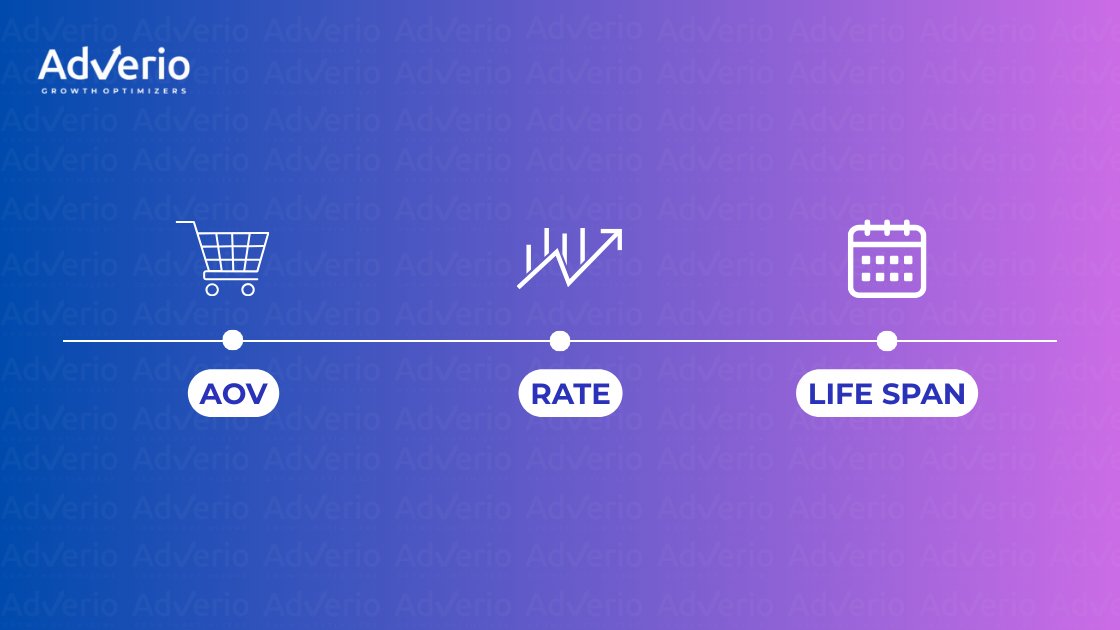
As you can see, maximizing Amazon customer lifetime value isn’t about tweaking one metric in isolation. It’s about strategically improving all of these interconnected parts at once.
This is where advanced analytics platforms really shine. They use actual Amazon order data to build incredibly granular, cohort-based LTV models. These tools consistently find that a small segment of customers often drives the majority of long-term revenue for established brands. Think about that. For a brand doing $5 million a year, its most loyal buyers could be responsible for up to $3.5 million of that revenue. By identifying who these people are, you can tailor your ad spend and retention efforts to maximize long-term profitability. You can learn more about finding these critical segments and how advanced analytics platforms measure Amazon CLV.
Strategic Levers to Maximize Amazon CLV
Boosting your Amazon customer lifetime value isn’t a game of chance; it’s about pulling the right strategic levers. The top-performing brands don’t just find new customers—they have a system for cultivating long-term value from every single one. This is a core idea behind Adverio’s Growth Cultivator framework.
These strategies go way beyond the simple one-and-done sale. They’re designed to build a powerful growth engine that turns first-time buyers into loyal, repeat purchasers who consistently drive profit.
Lock in Recurring Revenue with Subscribe & Save
If you sell anything consumable, Amazon’s Subscribe & Save (S&S) program is an absolute must-have for growing CLV. It automates repeat buys, effectively locking in a predictable revenue stream and stretching the customer lifespan dramatically.
On average, products in the S&S program consistently outperform non-subscription SKUs on repeat purchase behavior. Plain and simple, it works.
To get the most out of it:
-
Offer a compelling discount: That initial S&S discount (usually 5-15%) isn’t a cost; it’s your acquisition fee for a high-value, long-term customer.
-
Promote it everywhere: Use your A+ Content and main image stack to shout about the savings and convenience. Make it a no-brainer.
-
Stay in stock: Stockouts are the quickest way to kill a subscription and lose that loyalty forever. Get your demand forecasting right.
This program is a direct lever on purchase frequency, one of the foundational pieces of the entire CLV formula.
Build Intelligent Multi-Product Funnels
A single purchase is an opening, not the finish line. The most profitable brands are masters at guiding customers through their entire catalog with smart cross-selling and upselling funnels built right on Amazon.
This is more than just hoping a customer stumbles upon your other products. It’s about strategically placing complementary items where your past buyers can’t miss them. To significantly boost your Amazon CLV, focusing on effective retention marketing strategies is paramount.
By proactively guiding customers from one product to the next, you increase their investment in your brand ecosystem. This not only raises their immediate AOV but also deepens their loyalty, making them less likely to switch to a competitor.
Here are the key tactics for building these funnels:
-
Strategic Bundling: Dive into Brand Analytics and use the “Market Basket Analysis” report. It shows you what customers are already buying together—so go ahead and create virtual bundles to make it official. This bumps up AOV right from the first click.
-
A+ Content Cross-Sells: Dedicate specific modules in your A+ Content to feature related products. If you’re selling a coffee maker, you better have a module linking directly to your coffee filters and descaling solution.
-
Amazon Posts: Use lifestyle shots in Amazon Posts to show multiple products being used together. This creates a visual story that gets people exploring your catalog.
These tactics turn your product detail pages from static sales pages into gateways to your entire brand. When done correctly, you can begin connecting your DTC and Amazon shoppers for personalized targeting to create a seamless brand experience across channels.
Re-Engage Past Purchasers with DSP Retargeting
Amazon DSP (Demand-Side Platform) is your best tool for bringing past customers back for another purchase. Unlike PPC, DSP lets you build audiences based on actual buying behaviors, so you can re-engage high-value segments with surgical precision.
For instance, you could run a retargeting campaign that shows a brand-new product only to customers who bought a related item 60-90 days ago. This doesn’t just drive more sales; it makes your marketing spend radically more efficient by focusing on an audience that already knows and trusts you.
Integrating CLV into Your PPC and DSP Campaigns
Adopting a CLV-first mindset completely changes how you manage your ad budget. It’s the move from high-level theory to the daily decisions that actually build a profitable brand. Instead of just chasing a low ACoS, you start making smart investments to acquire the right customers—the ones who will keep buying long after that first click.
This means you get to stop obsessing over simplistic campaign metrics and start using a more durable financial model. When you know a customer cohort is worth $300 on average, you can confidently spend $75 to acquire them. This might push your initial ACoS higher than what your competitors are comfortable with, but that’s the point. They’re playing for one sale; you’re building a long-term asset.
Using LTV:CAC to Set Smarter Bids
Your LTV:CAC ratio is the ultimate gut check for PPC success. For most brands, a healthy target is 3:1 or better. That means for every dollar you put into acquisition, you get at least three dollars back in contribution margin over that customer’s entire relationship with your brand.
This ratio gives you the power to be more aggressive and strategic with your bidding:
-
High-Value Keywords: Find the search terms that bring in customers with the highest historical CLV. You can afford to bid much higher on these because the long-term return makes the upfront cost a bargain.
-
New-to-Brand (NTB) Focus: Make NTB metrics a priority in your campaigns. Winning one new high-LTV customer is worth far more than getting another small, incremental sale from someone who already buys from you.
-
Balanced TACoS: Look at Total Advertising Cost of Sales (TACoS) to see how your ad spend is really impacting total revenue. A CLV focus means you can stomach a temporarily higher TACoS during growth phases because you know the investment will pay off down the line.
When you have this data, bidding stops being a guessing game. You’re no longer just reacting to daily ACoS swings; you’re running a calculated playbook to acquire your most valuable customers.
Leveraging DSP for High-Impact Retargeting
PPC is your go-to for acquisition, but Amazon DSP is your engine for retention and growing that CLV. Unlike Sponsored Ads, DSP lets you create super-specific audiences from past purchase behavior, so you can re-engage customers with surgical precision.
DSP turns your advertising from a blunt instrument into a scalpel. You can target past buyers with complementary products, bring back lapsed customers with special deals, and build lookalike audiences modeled on your absolute best shoppers.
For example, you could run a retargeting campaign that only shows a new accessory to customers who bought your main product between 90 and 180 days ago. This keeps your ad spend hyper-focused on an audience that is ready to buy again. Once you get these tactics down, you learn how to use the Amazon Demand-Side Platform (DSP) as a core part of your retention strategy, not just an awareness tool.
This blended approach—using PPC for smart acquisition and DSP for targeted retention—is how you build a resilient advertising machine. Every dollar you spend becomes a strategic investment in maximizing Amazon customer lifetime value and locking in sustainable, long-term profit.
Building Your CLV Measurement Dashboard
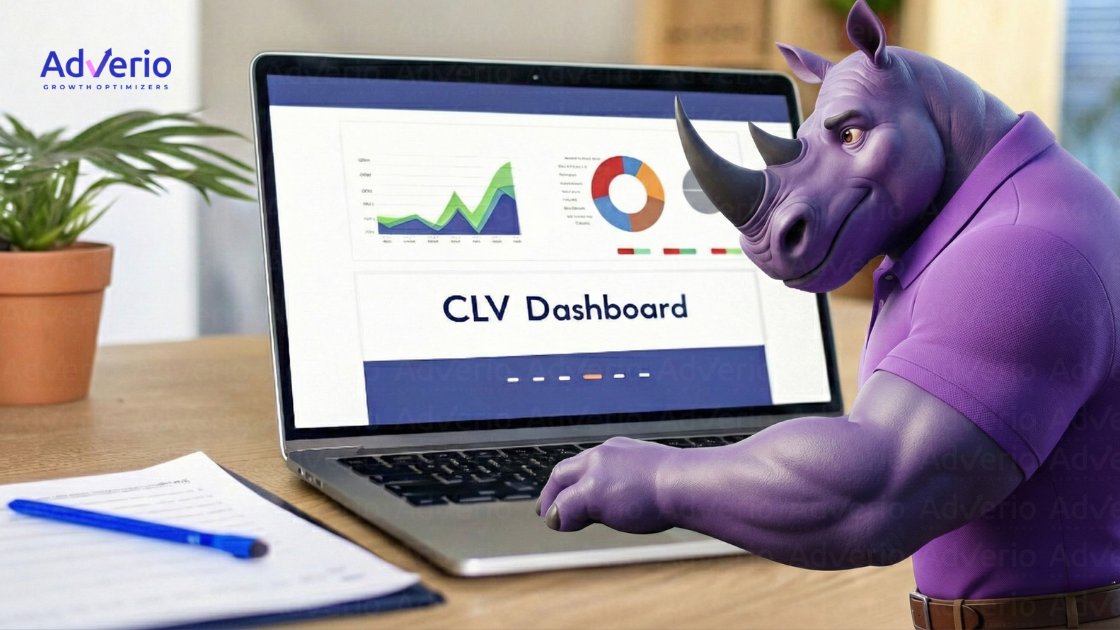
You can’t manage what you don’t measure. If you’re serious about making Amazon customer lifetime value a pillar of your growth strategy, you need a solid, centralized way to track it. Piecing together reports from Seller Central just won’t cut it. A dedicated CLV dashboard becomes your single source of truth for customer profitability.
This isn’t about chasing vanity metrics. It’s about monitoring the vital signs of your customer base and answering critical questions at a glance. How healthy are my customer relationships? Are my acquisition and retention efforts actually working? Your dashboard should tell you.
Key Metrics for Your CLV Dashboard
A powerful dashboard does more than just display data; it reveals the story behind the numbers. It connects the dots between different metrics to show you trends that siloed reports would completely miss.
Your CLV dashboard needs to track these core KPIs:
-
Repeat Purchase Rate (by Cohort): Don’t settle for a single, overall rate. Break it down by the month of acquisition. This will show you if customers you gained during a Q4 promotion are more or less valuable than the ones you brought in during a slower Q1.
-
AOV Trends: Is your average order value ticking up or down? A rising AOV is a dead giveaway that your bundling and cross-selling tactics are hitting the mark.
-
LTV:CAC Ratio Over Time: This is your ultimate profitability gauge. Keep a close eye on this ratio to make sure your acquisition costs are sustainable and your customer value is actually growing.
-
CLV by Acquisition Channel: Find out which channels—be it specific PPC campaigns, DSP audiences, or even off-Amazon traffic—are bringing in the most valuable customers, not just the cheapest ones.
Amazon itself is obsessed with this, building sophisticated models to predict the value of its Prime members. Some estimates peg a U.S. Prime member’s lifetime value at $1,500–$2,500 or more, thanks to higher buying frequency and fierce loyalty. This is exactly why strategies like FBA and Prime-exclusive deals are so critical—they attract the right kind of customer. You can even see some public examples of how AWS models customer lifetime value analytics.
Moving Beyond Basic Reporting
The standard reports in Seller Central simply can’t give you this level of insight. They lack the full-funnel view required to link ad spend to long-term customer value. This is where a proper business intelligence solution becomes a necessity, not a luxury.
A dedicated BI platform, for example, can pull together data from your ads, listings, inventory, and pricing into one profit-focused view. The dashboard below is a great example of how you can visualize these complex datasets to get a clear, actionable picture of performance.
This kind of unified view empowers you to make sharp, data-backed decisions that drive long-term value. With the right dashboard, you stop reacting to daily sales dips and start strategically managing your most important asset: your customers. You can explore how Adverio provides a clear, full-funnel view of performance through its custom business intelligence dashboards.
How Adverio Turns CLV Into a Profit Engine
Tracking Amazon customer lifetime value is useless if it doesn’t change how you spend, price, and scale. Adverio operationalizes CLV through our Growth Cultivator framework, connecting PPC, DSP, pricing, and catalog strategy into one profit system. Instead of optimizing channels in isolation, we model how acquisition, retention, and repeat behavior compound over time, so every dollar spent is justified by long-term return.
See how this works inside our Amazon Growth Strategy services.
Frequently Asked Questions About Amazon CLV
Pivoting to a CLV-focused strategy always brings up some tough questions. We’re cutting through the noise to give you direct, no-nonsense answers to what brands ask when they shift from chasing one-off sales to building long-term profit.
What is a Good LTV to CAC Ratio for an Amazon Brand?
While it varies by category, a healthy benchmark for a growing Amazon brand is an LTV:CAC ratio of at least 3:1.
This means for every dollar you spend acquiring a customer, you should generate at least three dollars in contribution margin over their lifetime. A ratio below this is a major red flag that your acquisition costs are eating your future profits. Top-tier brands often push this to 4:1 or higher by getting smarter with both their ad spend and customer retention.
How Can I Increase My Repeat Purchase Rate on Amazon?
You have several powerful levers at your disposal to drive repeat business. You just need to stop thinking in terms of single transactions and start building a retention system.
-
Master Subscribe & Save: For any consumable, this is your most direct path to automated recurring revenue. It’s a no-brainer.
-
Leverage DSP Retargeting: Use Amazon’s Demand-Side Platform to show new or complementary products only to people who’ve bought from you before.
-
Utilize Brand Follows: Actively use Amazon Posts and your Brand Store to get shoppers to follow your brand. This gives you a direct line to them for new product launches right inside the Amazon ecosystem.
-
Analyze Purchase Behavior: Dig into the ‘Market Basket Analysis’ report in Brand Analytics. It tells you what customers buy together, giving you ready-made ideas for strategic product bundles.
Can I Track a Unified CLV Across Amazon and My DTC Site?
Yes, but it’s not a simple plug-and-play setup. Tracking a unified Amazon customer lifetime value is a technical challenge, but it’s absolutely essential if you want a true omnichannel picture of your business.
The key is a centralized analytics platform that can pull data from both Amazon (via its API) and your DTC platform, like Shopify. This requires smart deduplication logic to avoid counting a customer who buys on both channels as two separate people. Tools like Amazon Attribution are also critical for connecting the dots between your off-Amazon marketing and the sales they drive on Amazon. A strategic partner can build this unified view, ensuring your CLV calculations are both accurate and holistic.