


A smart post-event advertising strategy does more than just follow up—it turns a one-time event spend into a predictable revenue engine. The goal here is to get past generic “thanks for stopping by” emails and build a disciplined, multi-channel plan that converts those face-to-face interactions into measurable sales, whether on Amazon, Target, Walmart, or your own site.
This isn’t about blasting everyone with the same ad. It’s about a profit-first approach to retargeting attendees with creative that’s hyper-relevant to your conversation, digging into the event data, and turning fresh leads into long-term customers.
Stop guessing if your event spend paid off. Let’s build a plan to prove it.
The Goldmine You’re Ignoring After Every Event
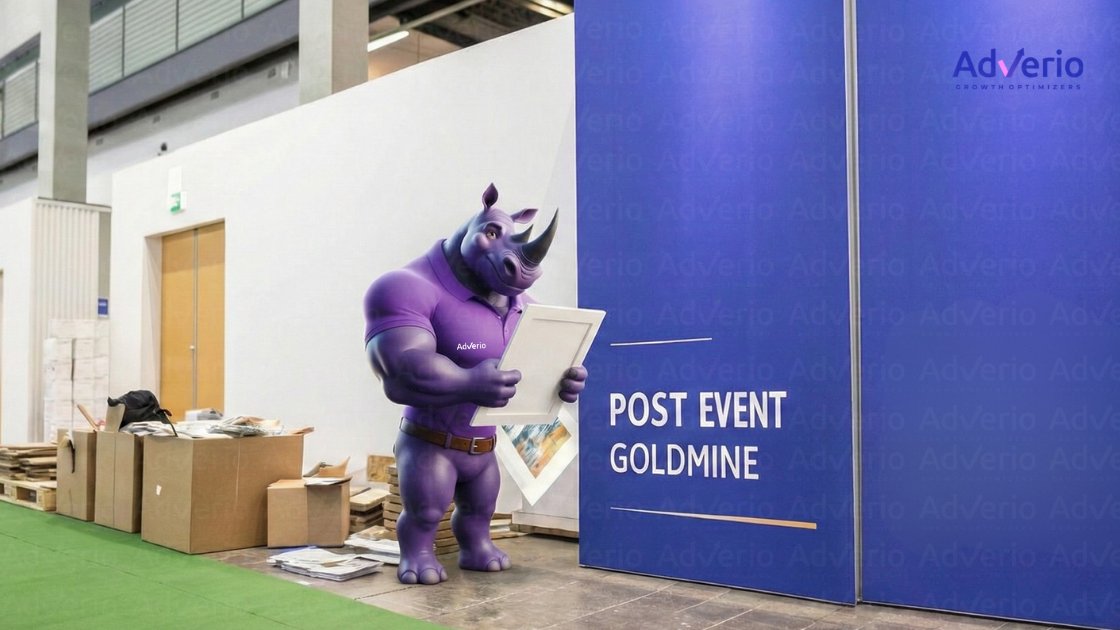
The booth comes down, the handshakes are done, and your team heads for the airport. For most brands, the event is over. For growth-focused brands, the real work is just beginning. We’ve seen millions in potential revenue left on the table because brands treat the event itself as the finish line, failing to connect that in-person buzz to a rigorous advertising follow-through.
This mindset is a massive mistake. The event isn’t the ROI driver; it’s the catalyst. The real value is captured in the days and weeks that follow, but only if you have a plan ready to go.
Navigating the Post-Event Hangover
What do most brands do after an event? They go dark. They assume attendees will remember their conversation and seek them out when it’s time to buy.
They won’t.
This is the post-event ‘hangover’—that critical window where shoppers are “hung over” from the noise and take a few days to open their wallets again. Your competitors are probably silent, which creates a perfect opening for you to own the conversation.
The biggest mistake is treating post-event follow-up as an administrative task. It’s a high-stakes marketing campaign that needs its own budget, creative, and performance metrics. Treat it like an afterthought, and you’re guaranteed to lose the momentum you just paid thousands to create.
A dedicated post-event ad strategy is non-negotiable if you want to dominate modern marketplaces. It’s how you transform a high-cost, high-effort event into a predictable, measurable revenue stream by converting leads who are already warmed up. Think about it: research shows that 77% of consumers report increased trust in a brand after an in-person event interaction. That’s a powerful foundation for ads designed to turn attention into profitable sales.
This is also where connecting your customer touchpoints is so critical. A unified view of your audience lets you refine your follow-up with incredible precision. A solid strategy for connecting your DTC and Amazon shoppers for personalized targeting is essential here, making sure your message hits home no matter where they first saw you.
The rest of this guide is a playbook for doing exactly that—turning handshakes into sustained growth and market share.
Building Your Post-Event Intelligence Dashboard
You can’t optimize what you don’t measure.
Before you spend a single dollar on your post-event ads, you need a single source of truth—a command center that moves beyond vanity metrics. Without it, you’re just throwing money into the wind and hoping for the best.
This isn’t about pulling a few reports from Amazon Ads and calling it a day. It’s about building a consolidated dashboard that tracks the right KPIs across all your channels. This intelligence hub gives you a clear picture of baseline performance before the event, allowing you to accurately attribute lift and make ruthless, data-driven decisions.
Defining Your Core Metrics
Forget chasing a low ACoS; that’s Optimization Myopia. A truly effective post-event dashboard focuses on a handful of metrics that tell a complete story about audience intent and campaign profitability.
Build a post-event KPI table that includes:
- Click-Through Rate (CTR): Measures how compelling your ad creative and messaging are. A high CTR after an event tells you the message is hitting home with the right people.
- Conversion Rate (CVR): The ultimate test of your offer and listing. Are the people clicking actually buying? A spike here shows your ads are reaching high-intent shoppers ready to convert.
- ROAS / TACoS: This one-two punch gives you the full picture of advertising profitability. ROAS measures the direct return, while Total Advertising Cost of Sales (TACoS) shows how ad spend impacts your total revenue—not just ad-driven sales.
- New-to-Brand (NTB) Percentage: This metric is crucial. It tells you how many of your post-event buyers are brand new customers, proving your event successfully expanded your audience.
- Average Order Value (AOV): Are event attendees buying more than your average customer? Tracking AOV helps you understand the quality of the leads you generated.
- Top-of-Search Impression Share: This metric reveals your brand’s visibility. Winning this placement after an event is key to capturing shoppers actively searching for solutions they just discovered.
Pulling this data from Amazon Seller Central, Walmart Connect, and Target’s Roundel is just the first step. The real power comes from consolidating it into a unified view. This is where you can see the holistic impact of your efforts—something siloed platform reports will never show you.
From Raw Data to Strategic Insight
A spreadsheet is not a strategy. Once the data is consolidated, the real work begins: interpreting what it’s telling you.
Seeing a high CTR but low CVR? That points to a disconnect between your ad and your product detail page. Is your NTB percentage flat? Your targeting might be too narrow, only reaching existing customers.
Don’t let your team get lost in the weeds of endless data points. Your dashboard should answer one simple question at a glance: Is this campaign driving profitable growth, or is it just creating noise? If the answer isn’t immediately obvious, the dashboard isn’t working.
This level of analysis turns raw numbers into actionable intelligence. For brands looking to scale, developing a sophisticated approach to business intelligence is fundamental for marketplace growth, allowing you to move from reactive adjustments to predictive strategy.
For continuously refining your post-event strategy and maximizing returns, consider methods for optimizing post-campaign influencer efforts for better ROI as part of your broader analytics framework.
The table below breaks down the essential KPIs for your post-event advertising dashboard, their strategic importance, and target benchmarks to get you started.
Post-Event KPI Tracking Framework
| KPI | What It Measures | Why It Matters for Post-Event Strategy | Target Benchmark (Example) |
|---|---|---|---|
| CTR | Ad creative & messaging relevance | Confirms your event messaging resonates with the retargeted audience. | >0.75% for Sponsored Display |
| CVR | Offer & product page effectiveness | Validates that high-intent traffic from the event is converting into sales. | >10% for retargeting campaigns |
| ROAS | Direct return on ad spend | Measures the immediate profitability of your campaigns targeting attendees. | 4:1 or higher |
| TACoS | Ad spend’s impact on total sales | Shows if your ad investment is creating a halo effect on organic sales. | <15% and trending down |
| NTB % | New customer acquisition | Proves the event successfully expanded your customer base, not just retargeted existing fans. | >60% of post-event sales |
| AOV | Average purchase size | Indicates if event attendees are higher-value customers than your typical shopper. | 15%+ higher than account average |
| Top-of-Search IS | Brand visibility for key terms | Measures your ability to capture demand from attendees searching after the event. | >50% for core branded terms |
With this command center in place, you’re no longer guessing. You have a clear, objective view of what’s working, what isn’t, and exactly where to allocate your next dollar for maximum impact.
Your 30-Day Post-Event Re-Engagement Playbook
Strategy without execution is a hallucination. It’s time to put your data to work with a disciplined 30-day re-engagement plan that turns event momentum into measurable revenue.
This isn’t a generic template. It’s an operational guide for your audiences, bids, creatives, and budgets across high-impact channels like Amazon DSP and Sponsored Ads. The goal is simple: move prospects from brand recall to a sale without torching your budget on messaging that doesn’t land.
Tiering Your Audiences for Maximum Impact
Let’s be honest: not all event leads are created equal. Blasting the same ad to a CEO who asked for a demo and someone who just walked past your booth is a recipe for wasted spend. So, the first move in your post event advertising strategy is to slice your attendee list into tiers based on their intent.
- Tier 1: High-Intent Prospects: These are your hottest leads. Think demo requests, deep conversations with your sales team, or key decision-makers you pinpointed. They get your most direct, conversion-focused ads right away.
- Tier 2: Engaged Attendees: This group stopped by for a real chat, attended a session you sponsored, or dropped a business card for a giveaway. They’re warm leads who just need a little nurturing to move down the funnel.
- Tier 3: General Attendees: This is your broadest audience, mostly badge scans and general registration lists. The goal here is simple brand recall and education—warming them up for later.
Data-driven segmentation isn’t negotiable if you care about efficiency. We consistently see high-intent segments, retargeted with tailored creative, deliver 2–3x higher conversion rates and 30–60% higher average order value than spray-and-pray follow-ups.
This structured approach—from consolidating data to setting baselines and attributing lift—is key to getting your reporting right from the start.
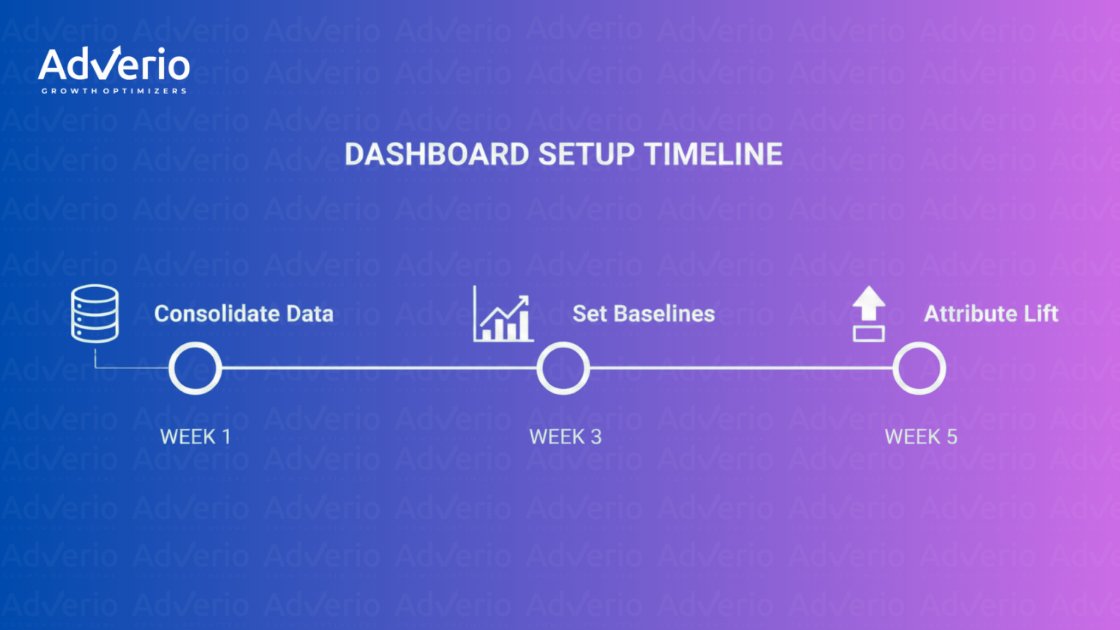
This methodical process makes sure your post-event analysis is built on a solid foundation, allowing for accurate ROI calculation every time.
The Week-by-Week Breakdown
With your audiences tiered, you can now sequence your advertising to hit them at just the right time. This phased approach aligns your message and budget with where they are in their post-event journey. As you map this out, it helps to ground your plan in the fundamentals of creating effective ad strategies to get the most out of every dollar.
Days 1-7: Brand Recall & Reinforcement
The goal for the first week is simple: stay top-of-mind. Attendees are drowning in emails and just getting back into their routine. Your ads should be a friendly reminder of the connection you made, not a hard sell.
- Channels: Amazon Sponsored Display, Meta Ads (using email lists for custom audiences), LinkedIn Ads.
- Audiences: Target all three tiers, but tweak the creative for each.
- Messaging: Focus on recall. Use visuals from the event—your booth, your team—and copy like, “Great connecting at [Event Name]!”
- Budget: Put 30% of your post-event budget here. This is an awareness play, so focus on impressions and reach.
Days 8-21: Consideration & Education
Okay, you’ve re-established contact. Now it’s time to nurture. People are past the event “hangover” and are more open to actually considering solutions. Shift your messaging from “remember us?” to “here’s how we help.”
- Channels: Amazon DSP, Google Search (for your branded terms), YouTube Ads (retargeting website visitors).
- Audiences: Zero in on Tier 1 and Tier 2. Use DSP to retarget attendees who browsed your product pages on Amazon after the event.
- Messaging: Highlight key product benefits, share a powerful customer testimonial, or link to a relevant case study. Directly address the pain points you discussed at the show.
- Budget: Allocate 50% of your budget here. This is your primary consideration phase, so keep a close eye on CTR and conversion rates.
The middle of the month is where you win or lose. Your competitors have gone silent, but the prospect’s problems haven’t disappeared. This is your window to prove you were listening and that you have the solution they need.
For brands on Amazon, this is the perfect time to deploy more advanced tactics. Understanding how to use the Amazon Demand-Side Platform (DSP) gives you a massive advantage in reaching these mid-funnel audiences both on and off Amazon.
Days 22-30: Conversion & Urgency
In the final week, the focus shifts entirely to driving a decision. Your audience is warmed up and educated; now it’s time for a clear call to action.
- Channels: Amazon Sponsored Products (targeting specific ASINs), Google Shopping, direct email offers.
- Audiences: Prioritize Tier 1 and the most engaged folks from Tier 2 (e.g., users who watched 75% of your video ad).
- Messaging: Introduce a compelling, time-sensitive offer. Think an event-exclusive discount, a free consultation, or a product bundle they can’t get anywhere else.
- Budget: Use the final 20% of your budget for a targeted push. Here, ROAS is the only KPI that matters.
By following this structured 30-day playbook, you stop sending sporadic follow-ups and start building a predictable system for turning event interest into real, sustained revenue.
Crafting Your Post-Event Creative Arsenal

This is where most brands drop the ball. They spend thousands on a great event experience, only to follow up with the same generic, evergreen ads they run year-round. You’ve already made a personal connection—falling back on bland creative is the fastest way to erase all that goodwill.
An effective post event advertising strategy depends on creative that feels like a natural continuation of the conversation you started on the event floor. Your ads have to instantly remind attendees who you are and why they stopped to talk in the first place.
Shifting from Evergreen to Event-Specific Messaging
The guiding principle is simple: your ads should look and feel like they were made exclusively for the people you met. This isn’t just about tweaking a headline; it’s a complete pivot in both your copy and visuals.
Take a look at your standard creative. Those Amazon Sponsored Brands videos and Meta carousel ads? They were built for a cold audience. For the warm leads you just spent three days nurturing, you need to add layers of context and familiarity.
Here’s how to think about the shift:
- Evergreen Focus: Broad benefits, problem/solution, general branding.
- Event-Specific Focus: Direct references, shared experiences, exclusive offers.
The goal is to trigger their memory. When they see your ad, they shouldn’t just think, “Oh, that brand.” They should think, “Oh, right, the people I talked to at [Event Name].” That immediate recognition is what separates an ad they ignore from an ad they click.
Ad Copy Templates That Actually Convert
Your ad copy has to do the heavy lifting. It needs to bridge the gap between the convention center and their social feed, and it must feel direct, personal, and compelling. Ditch the corporate-speak.
The best post-event ad copy feels less like an ad and more like a personal follow-up note sent at scale. If it sounds like something a salesperson would never actually say to a prospect, don’t put it in your ad.
Try these frameworks for different platforms and funnel stages:
For Meta & LinkedIn (Awareness/Recall – Days 1-7):
- Headline: Great Connecting at [Event Name]!
- Body: It was great discussing [Key Pain Point] with so many of you at [Event Name] last week. If you didn’t get a chance to see how our [Product Name] solves this, check out this quick demo.
- CTA: Watch Now
For Amazon DSP & Sponsored Display (Consideration – Days 8-21):
- Headline: The [Solution] We Discussed at [Event Name].
- Body: Ready to stop struggling with [Problem]? See why brands we met at the show are choosing [Product Name] to drive growth.
- CTA: Shop Now
For Google Search & Email (Conversion – Days 22-30):
- Headline: Your Exclusive [Event Name] Offer Expires Soon
- Body: As a thank you for stopping by our booth, here’s a special offer on the [Product Category] you were interested in. Don’t miss out.
- CTA: Claim Your Offer
Visually Reinforcing the Connection
Visuals are just as crucial as copy. Stock photos and generic product shots are a waste of ad spend here. Your creative needs to scream, “We were there with you.”
Here are a few high-impact tactics we use:
- Use Booth Photography: Get professional shots of your booth—ideally showing your team interacting with attendees. Use these in your display and social ads for an immediate visual anchor. It proves you were there.
- Showcase Event-Specific Offers: If you have an exclusive discount, make it the hero of your creative. Use bold text overlays like “[Event Name] Attendee Exclusive: 20% Off.” Make it impossible to miss.
- Create Behind-the-Scenes Video: A short, authentic video of your team setting up, presenting, or just working the floor can perform incredibly well. It feels less like a polished ad and more like a real update, perfect for an Amazon Sponsored Brands video or a Meta Reel.
By aligning your messaging and visuals with the event itself, you build a cohesive follow-up that converts. This is what separates brands that turn events into revenue from those that just end up with a pile of unscanned business cards.
From Event Buzz to Evergreen Sales Growth
The event halo is temporary. That initial burst of engagement you paid for has a shelf life, and if you’re only focused on the first few weeks, you’re letting high-value leads slip away. A smart post event advertising strategy doesn’t just stop after 30 days; it folds right into your evergreen campaigns, turning that one-time spend into a long-term growth engine.
Your goal is to transition newly acquired customers and high-intent audiences into your standard marketing funnels without losing the connection you just built. This means taking a hard look at your 30-day re-engagement data, figuring out which segments and creative actually worked, and using those insights to sharpen your ongoing Amazon PPC and DSP strategies.
Analyzing Your 30-Day Campaign Performance
After the 30-day push, it’s time to switch from doing to thinking. Your dashboard holds the keys to what comes next. Don’t just glance at ROAS—dig into the metrics that tell the real story of who responded and why.
Build a final post-event KPI table to get a clear picture:
- CTR: Which ad visuals and headlines got the most clicks?
- CVR: Did your High-Intent, Engaged, or General audience tier convert best?
- ROAS/TACoS: What was the true profitability of the campaign, including its lift on total sales?
- NTB%: Did the event actually bring new customers into your ecosystem?
- AOV: Did event attendees spend more than your average shopper?
- Top-of-Search Share: How well did you own the search results when attendees went looking for you?
These answers are your roadmap. They tell you exactly which messages to amplify and which audiences to double down on for the months ahead.
Shifting from Holiday to Evergreen Messaging
Next up: draft a playbook to shift from holiday to evergreen messaging by category. This needs to be a smooth handoff, not an abrupt change that feels jarring to your new audience.
Too many brands kill momentum by abruptly switching from personalized, event-centric ads to generic, one-size-fits-all creative. You’ve earned their attention; don’t lose it by treating them like a cold lead again.
Start by segmenting the customers you just won. For instance, if someone bought a specific product after seeing a demo, your ads should now show them complementary products or advanced ways to use what they already own. Tools like Amazon Brand Analytics (specifically Market Basket Analysis) are perfect for finding these cross-sell opportunities.
As hybrid events become the norm, your media strategy has to keep up. With some studies showing that 97% of marketers expect hybrid adoption to grow, you’re now dealing with a mix of in-person and digital signals. Virtual attendees often have higher immediate online engagement, so you need to be agile and ready to shift ad spend to digital formats where you can measure everything precisely. You can find more data on these trends and discover insights about the evolution of tradeshows at Wavecnct.com.
Building a Long-Term Asset
Ultimately, your post event advertising strategy is about turning a temporary spike into a permanent advantage. The data, audiences, and learnings you’ve gathered are now powerful assets for your evergreen campaigns.
Your high-converting attendee segments can be used to build stronger lookalike audiences on platforms like Meta and Amazon DSP, expanding your reach to new prospects who look just like your best new customers. The ad copy and visuals that won during your 30-day push should be folded into your standard creative library, sharpening your evergreen messaging for everyone.
Follow this process, and the event stops being a one-off expense. It becomes a strategic investment that feeds your growth engine for months, strengthening your market position and delivering real ROI long after the booth comes down.
Stop Guessing and Start Growing After Events
Running a sophisticated post-event ad strategy is a high-stakes game. It takes deep, channel-specific expertise across Amazon, Walmart, and Target, not to mention the right tech to manage audience segments and bids at scale. If your team is already stretched thin or your current agency doesn’t truly speak marketplace, you’re leaving predictable revenue on the table.
This isn’t just another task to check off the list; it’s a critical growth lever. Trying to wing it without dedicated specialists is a fast track to wasted ad spend, missed sales, and watching your event ROI evaporate.
The gap between a brand that nails its post-event campaign and one that doesn’t is the difference between turning a high-cost event into a profit center or just another expense.
Adverio is a strategic growth partner, not just another agency pushing buttons. We see the whole picture. Our proprietary Growth Cultivator framework was engineered to turn your event investments into predictable, measurable, and often triple-digit growth. We go way beyond generic follow-ups, putting a disciplined system in place that converts handshakes into loyal customers and sustained market share.
Stop wondering if your event spend actually paid off. Let our Growth Evangelists build you a custom ROI Forecast. We’ll show you exactly how to unlock the hidden revenue sleeping in your post-event audiences and map out a clear path to turning that potential into profit.
[Book Your ROI Forecast]
Your Top Questions, Answered
Here are the most common questions we get about building and executing a profitable post-event advertising strategy.
How Much Should I Budget for Post-Event Advertising?
A good starting point is to set aside 20-35% of your total event sponsorship cost for your post-event ad campaigns. So, if you dropped $50,000 on a trade show, you should plan for a $10,000-$17,500 ad budget to follow up.
This isn’t just a random number. It’s what’s needed to meaningfully retarget attendees across multiple channels for at least a month. Your final number will shift based on audience size and campaign goals, but underfunding your follow-up is one of the most common—and costly—mistakes brands make.
What’s the Ideal Timeline for Launching Post-Event Ads?
Move fast. You need to launch your initial brand recall campaigns within 24-48 hours after the event ends. You’re trying to capitalize on that peak memory before the “event hangover” kicks in and people forget who they talked to. An immediate, gentle nudge while the experience is fresh goes a long way.
The real magic happens between 7 and 21 days post-event. This is your critical window for engagement and purchase intent. Your full strategy should be deployed during this period, with a plan to roll your best-performing audiences into evergreen campaigns after about 30-45 days.
Which Channels Are Most Effective for Post-Event Retargeting?
Don’t put all your eggs in one basket. A multi-channel approach is non-negotiable for getting this right. For e-commerce brands, here’s what your playbook should look like:
- Amazon DSP and Sponsored Display: Absolutely essential. This is how you retarget people on the platform where the final purchase actually happens.
- Paid Social (Meta, LinkedIn): Perfect for uploading those attendee email lists and continuing the conversation right in their social feeds.
- Search Ads (Google Ads, Amazon): You need to be there when they search. Bid on your branded terms and event-related keywords to capture high-intent lookups.
- Email Nurture Sequences: This is your direct line. It’s critical for personalized follow-ups and guiding high-value leads down the funnel.
Executing a sophisticated post-event strategy requires deep marketplace expertise. At Adverio, we turn your event spend into a predictable revenue engine using our proprietary Growth Cultivator framework. Stop leaving money on the table.