


Scaling on Amazon isn’t hard—but scaling profitably is where most brands fail. You pour cash into PPC expecting growth, but the profits just don’t show up. You’re not alone. Too many established brands pour money into PPC while profits stall—a condition we call Optimization Myopia. It’s a myopic focus on surface-level metrics like ACoS that masks deeper profitability issues, turning your ad account into a busy-looking cash bonfire.
The good news? The biggest profit leaks aren’t complex, hidden problems. They’re a handful of recurring, entirely fixable errors. It’s time to stop treating your ad spend like a cost center and start architecting it as a precision-guided growth engine.
This article cuts the fluff and exposes the eight most common Amazon PPC mistakes brands make. We won’t just tell you what’s broken; we’ll provide a no-nonsense framework to diagnose and fix each one. You’ll learn how to:
-
Diagnose profit drains using specific reports and data points.
-
Implement sharp, actionable fixes with clear instructions.
-
Systematize your strategy to prevent these errors from happening again.
Forget vague advice. This is a practical playbook designed to help you plug the leaks, shift from ‘spending’ to ‘investing,’ and reclaim control over your brand’s profitability on the marketplace.
If PPC spend is rising, but profits aren’t, it’s time for a different strategy. 👉 Book Your ROI Forecast
1. Running Campaigns Without a Negative Keyword Strategy
Table of Contents
One of the most frequent and costly Amazon PPC mistakes is launching campaigns without a robust negative keyword strategy. Advertisers throw broad match keywords into the ring but fail to build negative lists, letting ads show up for completely irrelevant searches. This doesn’t just waste money on clicks that will never convert; it feeds Amazon’s algorithm bad data, crippling long-term performance.
Imagine an apparel brand bidding on “running shoes” in broad match, only to have their ads appear for “hiking boots” or “men’s dress shoes.” Every click is a guaranteed waste of budget and a direct drain on profit.
How to Detect This Mistake
-
High ACoS with Low Conversion Rates: Check your campaigns. If an ad group has a high Advertising Cost of Sales (ACoS) and a low conversion rate despite tons of impressions and clicks, it’s a massive red flag.
-
Review the Search Query Performance Report: This is your primary diagnostic tool. In your ad console, run this report and hunt for queries that are clearly irrelevant to your product yet are burning through your budget.
How to Fix and Prevent It
A proactive approach isn’t optional for profit-driven advertising. Don’t wait for wasted spend to pile up; build your defenses from day one. This is a core component of a sophisticated Amazon backend keyword strategy.
-
Build Proactive Negative Lists: Before launching, create a master negative keyword list. Include competitor brand names, irrelevant product categories (e.g., negating “men’s” in a women’s apparel campaign), and low-intent modifiers like “free,” “cheap,” or “DIY.”
-
Conduct Weekly Search Query “Harvesting”: For the first 60 days of any new campaign, review the Search Query Performance report weekly. Identify and add any new irrelevant queries to your negative keyword lists at both the campaign and ad group levels.
-
Use Tiered Match Types: Structure your campaigns with intent. Use exact match for your highest-converting, branded terms. Use phrase match for core category terms. Reserve broad match for discovery campaigns, but only when paired with an aggressive negative keyword strategy to control its reach. This tiered approach maximizes relevance while stopping the financial bleed from one of the most common Amazon PPC mistakes brands make.
2. Setting Uniform Bids on Every Keyword
Another one of the most common Amazon PPC mistakes is adopting a static, one-size-fits-all bidding approach. This happens when advertisers set the same bid across all keywords and match types, ignoring conversion potential, profit margins, or placement performance. This lack of data-driven optimization leads to over-bidding on junk keywords while underfunding the terms that actually drive profitable sales.
For example, a brand might bid a flat $2.50 on everything, from generic category terms to high-intent branded searches. A sharper competitor bids $0.80 on low-intent keywords and strategically invests $3.50 only on high-converting branded terms, achieving a far lower Total Advertising Cost of Sales (TACoS). This undisciplined approach is a surefire way to incinerate your budget.
How to Detect This Mistake
-
Stagnant or High Keyword-Level ACoS: Dive into your campaign’s keyword-level performance. If you see numerous keywords with high spend and an ACoS that blows past your profit threshold, you’re over-bidding.
-
Poor Placement Performance: Analyze your placement reports. If your top-of-search placements have a low conversion rate but are eating the majority of your budget, your bids aren’t optimized for performance. The goal isn’t just to be at the top; it’s to be at the top profitably.
-
Uniform Bid Values: A quick scan of your campaigns will reveal this. If most keywords have identical or very similar bids, it’s a clear sign a dynamic, performance-based strategy is missing.
How to Fix and Prevent It
A sophisticated bid strategy moves beyond simple cost-per-click management to maximizing profit for every dollar spent. This requires segmenting keywords and adjusting bids based on strategic value and historical performance.
-
Create Tiered Bidding Structures: Segment your keywords into logical tiers. For instance: Branded Keywords (high bids, target 5-15% ACoS), Core Category Keywords (medium bids, target 20-30% ACoS), and Long-Tail/Discovery Keywords (lower test bids, target 10-40% ACoS). This ensures your budget is allocated to what works.
-
Leverage Dynamic Bidding and Placement Modifiers: Use Amazon’s “Dynamic bids – down only” setting to stop overspending on unlikely conversions. For top-performing campaigns, test “Dynamic bids – up and down.” Additionally, apply bid multipliers for top-of-search placements only on keywords with a proven history of converting well there. For more details, review this guide to Amazon ad placements strategy.
-
Implement Weekly Bid Optimization: Review keyword-level ACoS weekly. Systematically reduce bids by 10-15% on keywords that consistently miss your profitability targets. Conversely, increase bids on high-performers to capture more impression share. This continuous adjustment cycle is crucial for stopping the financial drain caused by this common Amazon PPC mistake.
3. Using a Disorganized Campaign Structure
A messy campaign structure is like trying to navigate a dense forest without a map—inefficient, costly, and a dead end. Many brands fall into this trap by lumping hundreds of different SKUs into a single campaign, mixing match types, or relying solely on automatic targeting. This is one of the most debilitating common Amazon PPC mistakes brands make because it completely cripples your ability to analyze performance, optimize bids, and scale with any real strategy.
For instance, a supplement brand might mix its brand-defense keywords (e.g., “Brand X vitamin C”) with discovery keywords (e.g., “best immune support supplement”) in one campaign. The high conversion rate on the branded term masks the awful performance of the discovery term, leading to a “break-even” ACoS that hides significant wasted spend.
How to Detect This Mistake
-
“Blended” Performance Metrics: Look for campaigns with a moderate ACoS that contain a huge variety of products or keywords. This often hides a top-performing segment propping up a large, unprofitable tail. A single campaign with 100+ SKUs is a major red flag.
-
Inability to Isolate Variables: Can you confidently say how your branded keywords are performing versus your non-brand keywords? If the answer is no, your structure is broken.
-
Limited Use of Campaign Types: Review your campaign manager. If 90% of your budget is in Sponsored Products Automatic campaigns, you’re missing out on strategic control.
How to Fix and Prevent It
A disciplined, segmented structure is the foundation of a scalable, profitable ad account. It provides the clarity needed to make sharp, data-driven decisions instead of managing by averages. For a deeper look, Adverio provides a comprehensive guide on structuring Amazon PPC campaigns effectively.
-
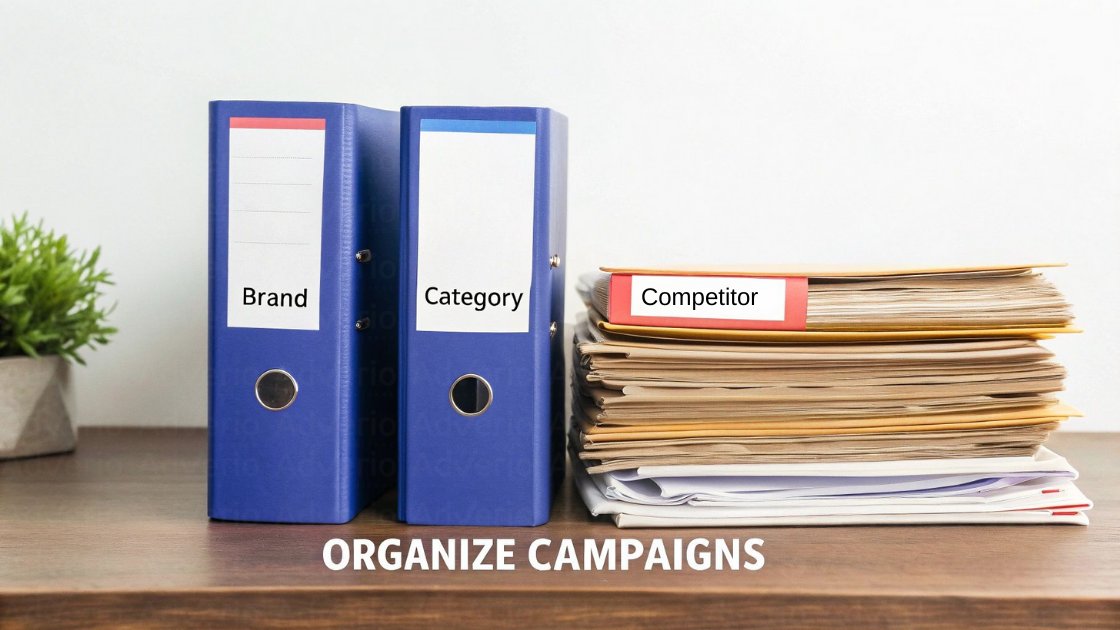
Implement a Core Campaign Architecture: At a minimum, separate campaigns by strategic intent: Brand (defending your brand name), Category (targeting general, non-brand terms), and Competitor (targeting rival brands).
-
Segment by Product Tiers: Group your products into campaigns based on performance and margin. Create campaigns for your Tier 1 (top sellers, high margin), Tier 2 (growth products), and Tier 3 (liquidation or low margin) SKUs. This lets you allocate budget and set bids according to business goals.
-
Use Parallel Automatic and Manual Campaigns: Never rely on just one. Run automatic campaigns to harvest new, relevant search terms. Once you identify high-converting queries, “graduate” them to a dedicated manual campaign with an exact match type for precise bidding control.
4. Driving Paid Traffic to Unoptimized Listings
One of the most widespread Amazon PPC mistakes is pouring budget into ads while ignoring the product detail page. This creates a leaky bucket where expensive, qualified traffic hits a listing that isn’t built to convert. A weak listing undermines every dollar spent on PPC, artificially inflating your TACoS and handing an easy win to your rivals.
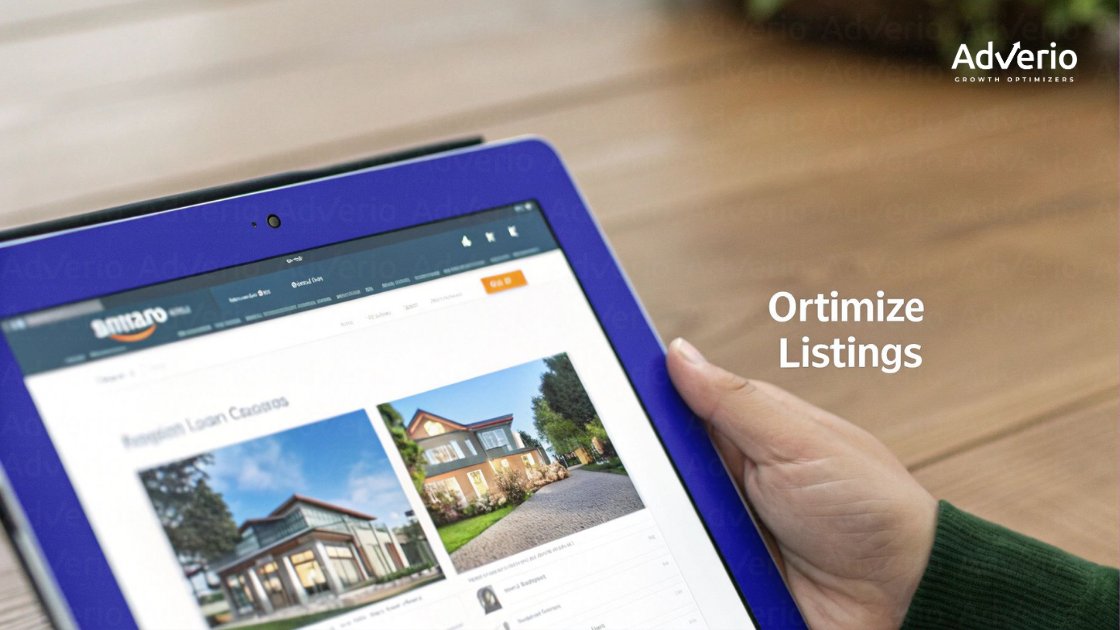
Imagine a brand spending $100K a month on ads with a respectable 18% ACoS, but its listing has outdated images and a weak description. If 40% of paid clicks bounce immediately, the true cost of each conversion skyrockets. Ads can only bring shoppers to the page; they can’t force them to buy from a listing they don’t trust.
How to Detect This Mistake
-
High Spend with Stagnant TACoS: If your ACoS looks good but your Total Advertising Cost of Sales (TACoS) remains high or is climbing, your ad spend isn’t generating enough organic lift. This almost always points to a conversion problem on the listing itself.
-
Low Unit Session Percentage Rate: In your Business Reports, check the “Detail Page Sales and Traffic” report. A low Unit Session Percentage (your conversion rate) despite high traffic from PPC is a clear signal the listing is failing to close the deal.
-
Negative Reviews and Low Star Rating: A product with a rating below 4.5 stars or a growing number of negative reviews will struggle to convert, no matter how much traffic you send it. Social proof is king.
How to Fix and Prevent It
A successful Amazon strategy integrates paid media with a relentless focus on conversion rate optimization. The product listing is your digital salesperson, and it must be equipped to close. This is a core part of our holistic Amazon listing optimization services.
-
Conduct a Competitive Listing Audit: Analyze the top five competitors for your main keywords. Scrutinize their titles, images, A+ Content, and review counts. Identify the gaps in your own listing and create an action plan to crush their quality.
-
Develop High-Converting A+ Content: Go beyond basic descriptions. Use A+ Content modules with lifestyle imagery, product-in-use shots, comparison charts, and trust signals to tell your brand story and solve customer pain points.
-
Implement a Proactive Review Strategy: A crucial part of optimizing your listings involves effectively managing Amazon product reviews to maintain buyer confidence. Aim to exceed category benchmarks, typically targeting 50-200+ reviews with a 4.5+ star rating. By treating your listing as a conversion engine, you ensure your ad spend works smarter, not just harder.
5. Scaling Ad Spend Without Profit Discipline
A critical error brands make is allocating budgets evenly across campaigns without data-driven prioritization.
This “peanut butter spread” approach treats high-profit branded campaigns and speculative competitor campaigns as equals. Worse still is scaling ad spend aggressively based on top-line sales growth while ignoring margin deterioration and rising Total Advertising Cost of Sales (TACoS), leading to profitless revenue.
This common Amazon PPC mistake transforms advertising from a profit driver into an expense.
A brand might allocate $15,000 to a branded campaign with a 6% ACoS and a 25% margin, and another $15,000 to a competitor campaign with a 35% ACoS and a razor-thin 2% margin. This equal allocation actively suppresses profitability by overfunding low-return efforts and underfunding high-return ones.
How to Detect This Mistake
-
Stagnant or Declining TACoS: If your overall TACoS is flat or increasing despite rising ad spend and sales, your growth is inefficient. You’re spending more to acquire each dollar of total revenue, eroding your bottom line.
-
Analyze Profitability by Campaign: Export your campaign data and combine it with your product-level Cost of Goods Sold (COGS). If campaigns driving significant spend have a post-ad-spend margin below your target, your budget allocation is broken.
-
Review Margin Trends: If your overall business margin is decreasing as Amazon sales grow, it’s highly likely your ad scaling strategy is focused on low-margin products or acquiring customers at an unprofitable cost.
How to Fix and Prevent It
Shift your budget allocation model from being sales-based to being profit-based. Every dollar of ad spend should be treated as an investment expected to generate a specific return, not just a sale.
This is the foundation of profit-first Amazon PPC management—where budget decisions are driven by contribution margin, not vanity revenue. This requires discipline and a commitment to data.
-
Establish a Profit-Based Budget Framework: Allocate ad spend in proportion to each campaign’s actual contribution margin, not just its sales volume. High-margin campaigns get a larger share of the budget to maximize profitable growth.
-
Create Profitability Tiers: Mandate ACoS targets based on campaign type. For example, Tier 1 (Branded Search) might require an 8-15% ACoS, Tier 2 (Category Keywords) a 15-25% ACoS, and Tier 3 (Discovery/Competitor) a 25-40% ACoS. Adjust budgets to keep campaigns within their designated tiers.
-
Implement Quarterly Budget Reallocations: Conduct formal reviews of campaign performance against actual margin contribution. Systematically shift budget away from underperformers and reinvest it into your highest-ROI activities.
-
Set Automated Pause Thresholds: Use rules or software to automatically pause any campaign that exceeds its ACoS threshold for more than 14 consecutive days without a clear justification. This prevents sustained financial leakage from one of the most insidious common Amazon PPC mistakes brands make.
6. Ignoring DSP and Relying Only on Sponsored Products
One of the biggest strategic mistakes brands make is treating Amazon advertising as a single-tactic channel. They pour their entire budget into Sponsored Products, chasing immediate conversions while ignoring the upper-funnel and retargeting power of Sponsored Brands, Sponsored Display, and the Amazon Demand-Side Platform (DSP). This siloed approach leaves massive revenue on the table, creating a leaky funnel that fails to capture new audiences or re-engage interested shoppers.
This is a classic case of “Optimization Myopia,” an over-focus on bottom-funnel metrics like ACoS at the expense of holistic growth. A brand might hit a great ACoS on Sponsored Products, but its total market share stays flat because it isn’t attracting new customers. Competitors using a full-funnel strategy are building brand awareness and capturing shoppers before they even search, driving more efficient conversions in the long run.
How to Detect This Mistake
-
Advertising Portfolio is 90%+ Sponsored Products: Check your campaign manager. If your ad spend is almost exclusively in Sponsored Products, you’re operating in a silo.
-
Stagnant New-to-Brand (NTB) Metrics: In your Brand Metrics dashboard, check your NTB customer percentage. A low or declining rate means you’re not effectively acquiring new customers.
-
High Cart Abandonment with No Retargeting: If your cart abandonment rate is high and you have no Sponsored Display or DSP remarketing campaigns active, you’re letting warm leads walk away for free.
How to Fix and Prevent It
Moving from a single tactic to a full-funnel strategy requires a deliberate shift in mindset and budget. The goal is to create a cohesive customer journey, not just snipe at bottom-funnel keywords. Implementing a strategy that includes enhancing your reach with Amazon DSP ads is a crucial first step.
-
Structure Campaigns by Funnel Stage: Allocate your budget strategically. A balanced model might look like: 20-30% to Awareness (DSP prospecting), 30-40% to Consideration (Sponsored Brands, Sponsored Display category targeting), and 30-50% to Conversion (Sponsored Products).
-
Launch Sponsored Display Remarketing Immediately: This is a high-ROI quick win. Create audiences to retarget shoppers who viewed your products but didn’t buy. This tactic alone can capture significant revenue at a very low ACoS.
-
Utilize DSP for Advanced Audience Targeting: Go beyond keywords. Use DSP to build lookalike audiences from your existing customer base, reaching new shoppers with similar traits. Target users based on lifestyle segments, in-market interests, and competitor product views to build a pipeline of future customers.
-
Defend Your Brand with Sponsored Brands: Run Sponsored Brands campaigns targeting your own branded keywords. This defends your valuable SERP real estate from competitors and directs loyal customers to your Storefront, often at a lower CPC than conquesting campaigns. This proactive defense is critical to avoiding one of the most common Amazon PPC mistakes.
7. Flying Blind to Competitive Activity and Share of Voice
One of the most insidious Amazon PPC mistakes is optimizing in a vacuum. Advertisers set campaigns and bids based on internal goals like ACoS, then leave them on autopilot, completely blind to the competitive landscape. This static approach ignores new market entrants, aggressive competitor bids, and crucial shifts in market share, leading to either dramatic overspending or a quiet erosion of visibility.
Imagine a brand dominating its category with a 45% impression share. When three new competitors enter and bid aggressively, that brand’s share can plummet to 22% within a quarter if they fail to react. This isn’t just a vanity metric; it’s a direct precursor to a 50% drop in traffic and revenue.
How to Detect This Mistake
-
Sudden Drop in Impressions and Clicks: If your campaigns were stable and suddenly see a sharp decline in impressions despite unchanged bids, it’s a strong sign competitors are outbidding you and pushing you out of top placements.
-
Declining Organic and Ad-Attributed Rank: Use a rank tracking tool. A steady slide down the search results page indicates competitors are gaining ground, likely through more aggressive advertising.
-
Analyze Your Auction Insights Report: This report shows how often your ads appear compared to competitors. If a new brand suddenly appears or a rival’s impression share spikes, your competitive environment has changed.
How to Fix and Prevent It
Treating the competitive landscape as a key data source is critical for sustained growth. To benchmark against rivals, a crucial metric to track is your Share of Voice (SOV) marketing.
-
Implement Competitive Intelligence Tools: Use software to systematically track competitor bids, pricing, review velocity, and estimated sales for your top keywords. This provides the context for proactive, not reactive, bid adjustments.
-
Monitor Share of Voice (SOV) Weekly: Calculate your SOV for priority keyword segments. If your SOV drops by more than 15-20% month-over-month, it’s a critical alert to investigate competitive pressure and adjust your bidding to defend your market position.
-
Create a Seasonal Competitive Calendar: Proactively map out historical periods of high competition (e.g., Q4, Prime Day). Pre-budget for defensive bid increases 30-60 days in advance to protect your visibility when CPCs are guaranteed to spike. This is far more effective than scrambling to react mid-season.
8. Sticking to a “Set It and Forget It” Creative Strategy
Many brands adopt a “set it and forget it” approach to their ad assets, a critical error in a competitive marketplace. They launch campaigns with a single creative, one landing page, and a fixed offer, ignoring the massive potential of A/B testing. This static strategy leaves significant performance gains on the table, as untested elements often fail to resonate with audiences, leading to lower conversion rates and diminished ROAS.
For instance, an athletic brand testing two Sponsored Display creatives found that a lifestyle image of an athlete achieved a 3.8% conversion rate and 10% ACOS, while a generic product shot only managed 2.1% conversion and 18% ACOS. The failure to test this simple variable is a prime example of the common Amazon PPC mistakes brands make, as it directly suppresses profitability.
How to Detect This Mistake
-
Stagnant or Declining Conversion Rates: If your campaign’s conversion rates have plateaued or are declining despite consistent traffic, it’s a strong sign your creative or offer has gone stale.
-
Low Click-Through Rates (CTR) on Display Ads: For Sponsored Display and DSP campaigns, a low CTR often points to uninspired creative. Compare your CTR to category benchmarks; significant underperformance signals a creative problem.
-
Uniformity Across Ad Assets: A quick audit of your campaigns will reveal this mistake. If all your ads for a product line use the same image, headline, and call-to-action, you aren’t testing—and therefore aren’t optimizing.
How to Fix and Prevent It
A structured testing framework is essential for unlocking incremental growth and improving conversion rate optimization on Amazon across your paid traffic. The goal is to continuously iterate based on data, not assumptions.
-
Isolate Variables for Testing: Create a testing roadmap. Test one element at a time to accurately measure its impact. Start with high-impact variables like the main image (lifestyle vs. product shot), then move to headlines (benefit-driven vs. feature-driven).
-
Test Promotional Strategies: Don’t assume your standard offer is optimal. Systematically test different promotions like coupon codes (5%, 10%, 15% off) or bundle offers. Measure the lift in conversion rate and incremental revenue against the margin impact to find the profitable sweet spot.
-
Segment Creative by Funnel Stage: Tailor your assets to the audience’s position in the buying journey. Use brand story and lifestyle creative for top-of-funnel awareness campaigns (DSP). For consideration and conversion, test creative that highlights product benefits, social proof, and urgency.
-
Leverage Seasonal Opportunities: Develop and test holiday-themed or seasonal creative during peak periods like Q4 or back-to-school. This relevant messaging consistently outperforms evergreen creative by 20-40%.
8 Common Amazon PPC Mistakes Compared
| Item | Implementation complexity | Resource requirements | Expected outcomes | Ideal use cases | Key advantages |
|---|---|---|---|---|---|
| Neglecting Negative Keywords and Poor Keyword Strategy | Low–Medium — straightforward to add negatives but requires ongoing refinement | Weekly Search Query Performance reviews, keyword research, negative lists maintenance | Reduce wasted impressions and TACoS; improved ROAS (typical TACoS ↓15–30%) | Broad-match discovery campaigns; new launches lacking negatives | Rapid discovery of terms and high initial impression volume; low upfront setup |
| Ignoring Bid Strategy and Over-Bidding on Low-Performing Keywords | Medium–High — needs bid tiers, modeling and automation | Bid management tools, keyword-level ACOS tracking, dynamic bidding, weekly reviews | More profitable scaling and lower TACoS (typical TACoS ↓20–35%, margin ↑25–50%) | Accounts with uniform bids or high CPCs; scaling efforts needing margin control | Short-term visibility and volume gains; simpler management when used naively |
| Poor Campaign Structure and Over-Reliance on Single Campaign Type | Medium — requires account segmentation and naming conventions | Time to restructure campaigns, product-tiering, BI visualization | Clearer profitability signals; uncovers unprofitable tails; TACoS ↓25–40% after restructuring | Accounts with monolithic campaigns or many SKUs | Faster launch and simplified reporting for small setups |
| Failing to Optimize Product Listings and Relying Solely on Paid Advertising | Medium — involves creative, content and review programs | A+ content, lifestyle photography, review generation, listing audits | Higher conversion rates and organic lift (conversion ↑15–40%; TACoS ↓20–35%) | Brands driving paid traffic to weak listings; low conversion rates | Immediate paid-driven visibility and faster time-to-revenue |
| Inconsistent Budget Allocation and Scaling Without Profitability Discipline | Medium — requires profit-based frameworks and governance | Integration of pricing/COGS/refunds, quarterly budget reviews, scenario modeling | Better margin and ROAS (margin ↑15–30%; ROAS ↑20–40%) | Multi-campaign accounts scaling by volume rather than profit | Simpler execution with equal allocation; short-term revenue growth |
| Neglecting DSP and Over-Reliance on Sponsored Products Alone | Medium–High — multi-channel setup and cross-channel coordination | DSP expertise, creative assets for awareness, cross-campaign measurement | More efficient funnel; TACoS ↓15–25%; DSP adds incremental revenue (≈10–20%) | Brands needing awareness, prospecting, and retargeting beyond SP | Simpler single-channel management and direct SP attribution |
| Failing to Monitor Competitive Activity and Share of Voice Dynamics | Medium — requires tooling and active alerts | Competitive intelligence tools, weekly SOV/bid monitoring, creative/price tracking | Prevents TACoS inflation and visibility loss (prevents TACoS ↑10–20%; SOV gains 5–15%) | Highly competitive categories, dynamic pricing or seasonal markets | Reduced analytical overhead when ignored; focus on own performance |
| Not Testing Creative, Landing Pages, and Promotional Strategies | Low–Medium — testing frameworks are simple but require discipline | Creative production, A/B testing plan, conversion tracking, test duration | Conversion lift and lower TACoS (conversion ↑15–30%; TACoS ↓12–25%) | Low-converting ads/listings, high-spend campaigns where creative matters | Faster campaign launches with lower upfront creative cost |
Stop Guessing and Start Growing with Precision
Amazon advertising isn’t a puzzle; it’s a system. Most brands just run it without controls. The path from launch to profitable growth is littered with traps, and even experienced brands make the same common Amazon PPC mistakes that drain budgets and kill momentum. We’ve dissected eight of the most costly errors, moving beyond surface-level advice to give you a clear, actionable playbook for course correction.
From the quiet profit-killer of a neglected negative keyword list to the loud, cash-burning fire of over-bidding on vanity keywords, each mistake is a leak in your growth engine. Disorganized campaigns create data chaos. Unoptimized listings cripple brilliant ad strategies. A siloed focus on Sponsored Products leaves massive opportunities on the table. The theme is clear: reactive, isolated tactics are a recipe for stagnation. True scale comes from a proactive, integrated, and disciplined strategy.
The Shift from Advertiser to Growth Architect
Mastering Amazon PPC isn’t just about tweaking bids and ACoS. It’s a fundamental mindset shift. You must evolve from a simple advertiser into a strategic growth architect who understands the entire commercial ecosystem. This means:
-
Connecting the Dots: Recognizing that PPC performance is directly tied to listing quality, inventory health, competitive positioning, and review strategy. You can’t optimize one in a vacuum.
-
Adopting a Profit-First Mentality: Moving beyond Optimization Myopia, where chasing a low ACoS comes at the expense of total profit. True success is measured by the dollars that hit your bottom line, not by vanity metrics.
-
Embracing a Full-Funnel View: Acknowledging that the customer journey doesn’t start with a Sponsored Product click. Leveraging Amazon DSP to build brand awareness and retarget high-intent shoppers creates a powerful flywheel that boosts the efficiency of all your advertising.
-
Committing to a Test-and-Learn Culture: Amazon is not a “set it and forget it” channel. Consistent, structured testing of creative, copy, and audience targeting is non-negotiable for staying ahead of the competition.
Avoiding these common Amazon PPC mistakes is the first step. The next is building a system that prevents them from ever happening. This requires a level of sophistication, proprietary technology, and dedicated expertise that can overwhelm internal teams managing hundreds of SKUs, especially when expanding across marketplaces like Target and Walmart. The constant platform updates, shifting algorithms, and aggressive competitors demand a full-time, expert focus.
This is where most internal teams hit a ceiling, and where Adverio steps in. It’s about leveraging a team that has already built the frameworks, developed the technology, and mastered the playbooks to navigate this complexity for you. It’s about turning the chaos of marketplace advertising into a predictable, scalable, and profitable growth channel. The goal isn’t just to fix mistakes; it’s to build an impenetrable system that drives durable success.
The gap between knowing what to do and having the system to execute it consistently is where most brands falter. At Adverio, our Growth Cultivator framework is engineered to systematically eliminate these common Amazon PPC mistakes, transforming your ad spend into a predictable engine for profit. If you’re ready to move past incremental fixes and implement a true growth strategy, book your ROI Forecast with Adverio and let’s build your path to market leadership together.