
+138%
Revenue Growth (Target)
Have a Question? Call Us at +1 (415) 741-5609 to Speak with a Marketplace Expert Today


The Snapshot
Brand Profile
The Results
+138%
Revenue Growth (Target)
+177%
Profit Growth (Target)
+450%
Amazon Growth Since 2020
2,191
SKUs Managed
Starting Condition4-month revenue plateau, growth confined to Amazon.
Executive Summary
Levtex had a problem that looks like success from the outside. A 2,191-SKU catalog spanning home bedding and baby and nursery bedding. A strong Amazon presence. Established retail relationships with Target, Macy's, Kohl's, and Wayfair. But online growth had flatlined for four months. Revenue was stuck. Margins were static. And the multi-channel opportunity in front of the brand was producing almost nothing compared to what the catalog could support.
The issue was not product quality. Levtex makes good product. The issue was that digital retail operations had not kept pace with catalog scale. Amazon was working. Everything else was an afterthought.
Adverio rebuilt the operational foundation. SKU-level profit governance across the catalog. A governed Target digital program built from scratch alongside Amazon. ROI guardrails enforced so profit growth tracked revenue growth from day one. Daily optimization loops that compounded into measurable month-over-month gains.
The catalog was always capable of this. The system governing it needed to change first.
The impact of our partnership with Adverio has been remarkable, and I'm sure it's one that will continue for a long time.
The Objective
Break a 4-month revenue plateau across a 2,191-SKU catalog
Expand from Amazon-primary into a governed digital presence on Target
Grow profit faster than topline: margin improvement had to accompany revenue growth
Free leadership from daily operational firefighting and ad management
Build a system that compounds month-over-month without constant intervention
The Challenge
Four months of flat revenue is not a trend. It is a signal. For Levtex, the signal was clear: the system managing the catalog had hit its ceiling.
2,191 SKUs across Softlines, Home and Kitchen, and Bedding. Large catalogs require a different management approach than small ones. Some products have the margin to support scaled ad investment. Others need listing improvements before spend makes sense. Others are seasonal and need a different pacing strategy than year-round products. The previous approach was not making those distinctions. Budget was distributed. Performance was measured at the account level.
The multi-channel opportunity was the larger gap. Levtex had physical retail relationships with Target, Macy's, Kohl's, Wayfair, and a DTC channel. Digital retail on most of those platforms was either inactive or running without governance. Target in particular had untapped potential. Bedding is a high-consideration purchase on Target. The buyer intent is there. Without a structured digital program, Levtex was leaving its Target shelf space to do all the work while competitors with active programs captured the demand.
The catalog needed SKU-level prioritization. Target needed a dedicated digital program. Leadership needed a system that could run both without requiring their daily involvement.
The System
2,191 SKUs cannot be managed with a single strategy. The first task was analysis: map every SKU by margin structure, conversion rate, seasonal demand profile, and competitive positioning. Products with the margin and conversion potential to support scaled investment were identified and prioritized. Products with structural constraints got flagged for listing work before ad spend expanded on them.
This is the difference between managing a catalog and governing one. Management means applying a consistent approach across all products. Governance means each product earns its budget allocation based on what the data says it can return. Levtex's catalog went from uniform treatment to tiered investment, where every dollar of ad spend was deployed where the math supported it.
The impact shows in the profit number. +177% profit on +138% revenue means margins improved as the system scaled. That ratio does not happen by accident. It happens when budget concentration follows margin data from day one.
High-margin, high-converting SKUs received scaled, profit-gated investment. Budget moved away from products it could not return. Profit grew faster than revenue throughout the engagement.
Levtex had physical presence on Target shelves. Digital on Target was not generating results at the same level. Adverio built a structured Target digital program from the ground up: campaign architecture covering category placements, product page targeting, and seasonal activations, with every campaign governed against ROAS thresholds from launch.
Bedding on Target has distinct buying patterns compared to Amazon. Shoppers often arrive with a specific style or room aesthetic in mind. The campaign structure reflected that: keyword coverage aligned to design-intent queries, not just product-category queries. Seasonal windows, back-to-school, fall refresh, holiday gifting, each received dedicated playbooks with ramp timing and budget pacing tied to conversion confirmation rather than calendar dates.
The Target program did not operate in isolation from Amazon. Products with proven Amazon conversion history were activated on Target first, so the program had early wins to build on rather than starting from a cold base.
Target digital program operational with full-funnel architecture and ROAS governance. +138% revenue and +177% profit in 17 months on Target.
Every campaign expansion was gated by return data. No budget increased without conversion confirmation. No new channel or SKU received scaled investment until margin validation cleared. This is how you avoid the common pattern of scaling revenue while eroding margin, which produces a business that looks bigger but is harder to run.
The ROI guardrails set at the start of the engagement held for the full 17 months. No campaign scaled on momentum alone. Each expansion cleared a margin check first, which is what kept growth from quietly eroding the bottom line.
Profit growth of +177% outpaced revenue growth of +138% across 17 months. Margin guardrails held at every scaling decision.
Month-over-month improvement at catalog scale does not come from quarterly strategy reviews. It comes from daily decisions: keyword harvest and negative match, bid adjustments by placement and time-of-day data, budget pacing calibrated to the performance windows where each SKU category converts most efficiently.
On a 2,191-SKU catalog, each adjustment is small in isolation. The compounding effect over 17 months is not small. Leadership did not have to be involved in these decisions. That was the point. The system ran daily. Leadership ran the business.
Daily optimization loops compounded into sustained month-over-month gains across a 2,191-SKU catalog and multiple channels over 17 months.
Levtex had 2,191 SKUs and a four-month plateau. The catalog was not the problem. If your brand has stalled and the current response has been to optimize harder within the same system, the system is the problem.
Get My Catalog Growth Forecast 15 minutes. We either find the leak or confirm you are already tight.The Results
+138%
Target Revenue Growth
In 17 months
+177%
Target Profit Growth
In 17 months
+450%
Amazon Growth
Since 2020
2,191
SKUs Governed
Tiered by margin and conversion
A four-month plateau reversed into a sustained growth trajectory on a channel that was previously underdelivering.
Profit grew faster than revenue. Every scaling decision was governed against margin targets throughout.
The multi-channel system did not pull investment from Amazon to fund Target. Both channels grew because each was governed independently.
Tiered by margin and conversion data. Budget moved where the math supported it.
to +138% revenue, +177% profit, and a functioning multi-channel digital program across Target and Amazon in 17 months.
This was not a campaign optimization story. The system was replaced. SKU-level governance replaced uniform treatment. A governed Target digital program replaced passive shelf presence. Daily optimization loops replaced quarterly reviews. Profit-gated scaling replaced budget distribution without margin tracking.
A 2,191-SKU catalog with multi-channel retail relationships is an asset. It is also a governance problem if the management infrastructure has not kept pace with the catalog's scale.
Levtex had the catalog, the brand, and the retail relationships. Target shelf space. Amazon presence. DTC channel. Macy's, Kohl's, Wayfair. The raw ingredients for a multi-channel business that compounds. What was missing was a system that could govern 2,191 SKUs by margin data across multiple channels at once without leadership running it by hand.
More effort inside the same system was never going to change the output. The plateau was the system telling Levtex it had produced everything it could. Working it harder would have produced the same flat line.
That is the difference between a business that gets larger and one that gets stronger.
If your brand has a large catalog and the current management approach is not producing steady gains., the question is not whether the catalog can grow more. It is whether the system governing it is built to handle the scale.
The assets were never the problem. The system governing them was. Once that changed, the catalog did what it was always able to do.
+138% revenue. +177% profit. 17 months.
+450% on Amazon since 2020.
If your brand has multi-channel retail presence and the digital programs are not producing results proportional to the catalog depth, we will show you where the system is the constraint and what a governed approach would produce.
15-minute call. No commitment required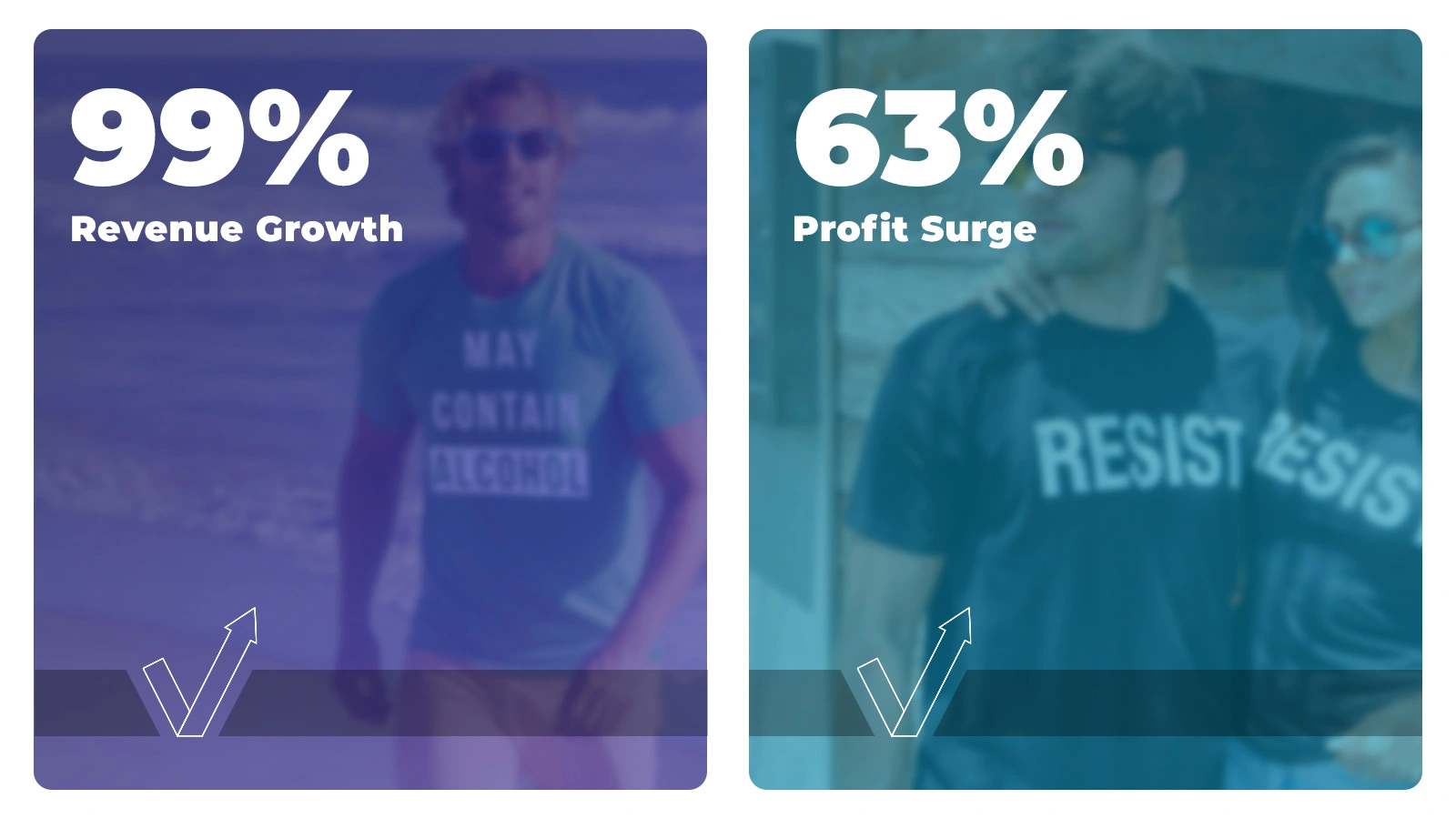

Product Category: Softlines > Apparel > Novelty Tees



Product Category: Softlines > Clothing, Shoes, & Jewelry > Novelties
Explore Case Study
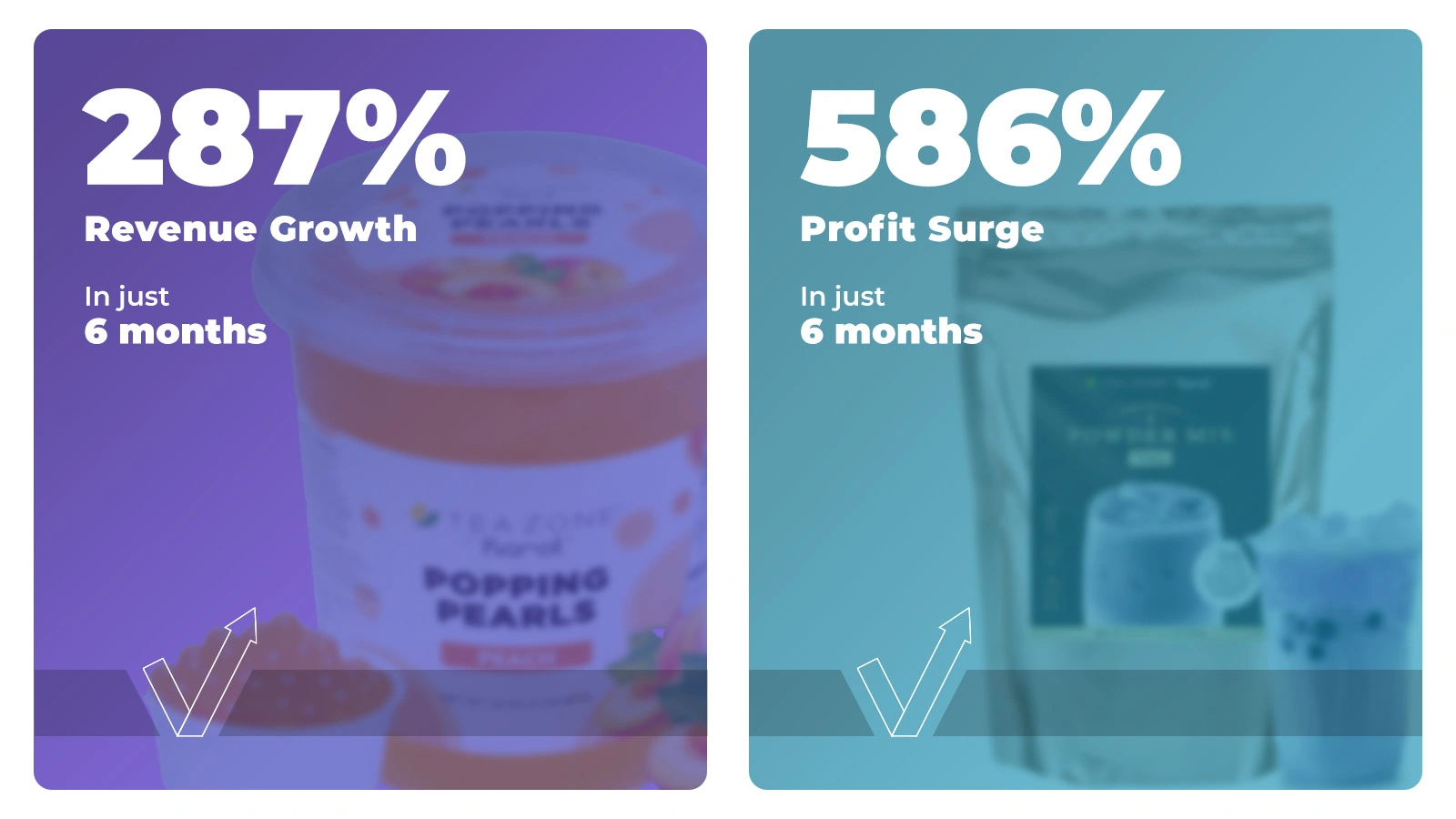

Product Category: Grocery & Gourmet Food + Health & Household Supplies
Explore Case Study
We’ll build your custom roadmap to higher profit.