



Stop treating organic sales on Amazon as “free traffic.” That’s a rookie mindset.
Increasing your organic sales is the single most effective way to build a profitable, high-margin brand that isn’t addicted to ad spend. It’s about earning visibility, not just buying it.
The Hard Truth About Amazon Organic Sales
Table of Contents
Let’s cut through the noise. Most brands get stuck in a cycle of what we call “Optimization Myopia”—obsessing over ACoS while their total profitability erodes. They pour money into ads to chase sales, but their organic foundation is weak, leading to declining profits and plateaued growth.
If this sounds familiar, it’s because you’re treating the symptom, not the cause.
The truth is, organic sales are the bedrock of a sustainable Amazon business. They represent the customers who find and choose your product without a sponsored push. This isn’t luck; it’s the direct result of a product that Amazon’s algorithm has identified as a winner.
Why does this matter?
- Profitability: Every organic sale is a high-margin win, directly improving your bottom line.
- Sustainability: Strong organic rank creates a defensive moat, making your brand less vulnerable to competitor ad blitzes or rising CPCs.
- The Flywheel Effect: Higher organic sales signal relevance to Amazon, which boosts your rankings further, creating a self-sustaining growth loop.
This isn’t theory, this is how profitable Amazon brands actually scale. In Q3 2023, third-party sellers accounted for 61% of all paid units sold on Amazon. This explosive growth wasn’t fueled by ad spend alone; it was driven by brands mastering the art of organic optimization.
The ultimate goal is to lower your Total Advertising Cost of Sales (TACoS). When your organic sales grow, you can spend less on ads to achieve the same total revenue, freeing up capital and driving true profitability.
If you’re constantly fighting fires and wondering why your Amazon sales are down, the problem likely lies in your organic strategy—or lack thereof. Before you can implement tactics, you need to shift your perspective.
Organic growth isn’t a passive outcome; it’s a deliberate, strategic weapon. The following sections will show you exactly how to wield it.
Decoding Amazon’s Ranking Algorithm
Let’s get one thing straight: Amazon’s algorithm isn’t some simple keyword-matching tool. It’s a ruthless sales and profitability machine. Its entire job is to find the products that make Amazon the most money and keep customers coming back, then blast those products to the top of the search results.
To drive more organic sales, you have to stop thinking like a classic SEO and start thinking like a business partner to Amazon. Your goal isn’t just to “optimize for the algorithm.” It’s to prove, with cold hard data, that your product is a top performer that deserves the top spot.
This is the foundation of a scalable Amazon SEO strategy — not keyword stuffing, but profit-weighted relevance signals.
This shift from keywords to performance is everything. The algorithm heavily rewards sales velocity, conversion rates, and overall customer satisfaction. High-converting products signal to Amazon that they are profitable assets, earning them prime real estate in search.
This whole process creates a powerful growth loop for your brand. More organic sales mean better rankings, which lead to even more organic sales.
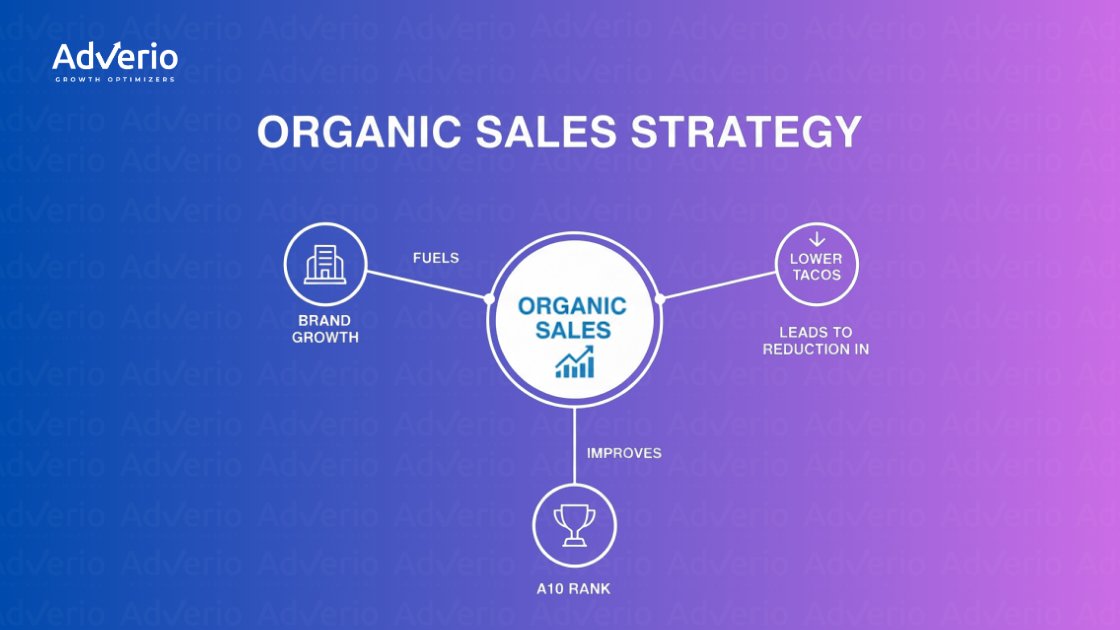
As you can see, a strong organic foundation doesn’t just grow sales; it directly lowers your Total Advertising Cost of Sale (TACoS) and improves your ranking, creating a sustainable growth engine.
Amazon’s Core Organic Ranking Pillars
To really move the needle on organic rank, you need to understand the fundamental signals the algorithm is looking for. Think of these as the pillars holding up your entire organic strategy. Neglecting any one of them can cause the whole thing to crumble.
Here’s a breakdown of what really matters to Amazon and how you can deliver on it.
| Ranking Pillar | What It Signals to Amazon | Key Action for Your Brand |
|---|---|---|
| Sales Velocity | “This product is popular and in high demand right now.” | Drive consistent, daily sales through a mix of organic and paid traffic. Avoid erratic spikes followed by dead periods. |
| Conversion Rate | “When we send shoppers to this listing, they buy. It’s a profitable click for us.” | Obsess over your Unit Session Percentage. Optimize every element of your listing—images, copy, price—to close the sale. |
| Keyword Relevance | “This product is a perfect match for what the customer is searching for.” | Go beyond just stuffing keywords. Understand user intent and master how to find low competition keywords that align perfectly with your product’s solution. |
| Customer Reviews | “People who buy this product are happy with their purchase.” | Proactively manage your reputation. A high star rating and a steady stream of positive reviews build trust and boost conversions. |
| Inventory Health | “This seller is reliable and can consistently fulfill orders.” | Never stock out on your hero products. Maintain a strong Inventory Performance Index (IPI) score to show Amazon you’re a dependable partner. |
| Content Completeness | “This listing provides a great shopping experience that helps customers decide.” | Maximize your listing with high-res images, A+ Content, and benefit-driven copy. A complete, quality listing just converts better. |
These pillars aren’t just a checklist; they’re interconnected signals that tell Amazon a single, powerful story about your product’s profitability and reliability.
The Make-or-Break Performance Metrics
Let’s dig a little deeper into the most critical signals.
Your sales velocity—the speed and volume of your sales—is the loudest signal you can send. Consistent, high-volume sales prove your product is in demand. Sporadic spikes are nice, but the algorithm rewards steady, predictable performance far more.
Even more important is your conversion rate, which Amazon calls the Unit Session Percentage. This metric is king. A high conversion rate proves your listing effectively turns clicks into cash, telling Amazon that when they send you traffic, you close the deal.
Of course, keyword relevance is still the foundation. Your listing must be perfectly aligned with what a customer is actually searching for.
The algorithm doesn’t reward keyword stuffing. It rewards listings that answer a customer’s search query so effectively that a purchase becomes the obvious next step.
Don’t Forget the Trust Signals
Beyond pure performance, the algorithm also weighs factors that signal a great customer experience and operational excellence. These build trust with both shoppers and the algorithm itself.
Customer reviews and your star rating are non-negotiable social proof. A high rating and a constant flow of positive reviews directly impact click-through rates and conversions.
Your inventory health is also a major trust signal. If you’re constantly stocking out, you’re telling Amazon you’re unreliable. The algorithm will demote listings that can’t fulfill orders, because that creates a bad experience and costs Amazon money.
Finally, the completeness and quality of your content matter immensely. A fully built-out listing with great images, A+ Content, and clear, persuasive copy is a conversion machine. To get a handle on this, you can discover how Adverio’s Listing Quality Score (LQS) framework tackles this.
Master these factors, and you’ll stop chasing rankings and start earning them for good.
10 Ways to Increase Organic Sales on Amazon
Most Amazon advice fails because it ignores how Amazon actually ranks products. Scaling organic sales on Amazon isn’t about finding a single “hack.” It’s about executing a series of deliberate, interconnected strategies that build on each other to create unstoppable momentum. The brands that truly win don’t just optimize listings; they engineer a superior customer journey from the first click to the final purchase.
Here are ten no-nonsense, high-impact plays designed for established brands ready to move beyond the basics. Think of each one as a lever you can pull to directly influence your organic ranking and, more importantly, your profitability.

1. Optimize Product Listings for SEO
The algorithm no longer rewards clumsy keyword stuffing; it rewards conversions. Your product listing is your digital salesperson, and it needs to be persuasive, clear, and compelling enough to close the deal. Blend functional benefits with emotional triggers.
Structure your copy for scanners, not readers:
- Titles: Start with your main keyword, brand name, and the single most compelling benefit.
- Bullet Points: Every bullet point should tackle a key feature and translate it into a tangible benefit. Using a consistent format (like Benefit-Driven Header: Explanation) makes them incredibly easy to scan.
- Backend Search Terms: This is where you offload your secondary and long-tail keywords. Don’t waste space repeating words from your title or bullets. Use this hidden real estate for synonyms and different use cases.
2. Improve Product Images and A+ Content
Your images are the single most critical factor for driving click-through rate (CTR) and converting shoppers. Your image stack should tell a complete story: a crystal-clear main image, infographics calling out features, lifestyle shots showing the product in use, and comparison charts to make the decision easy.
A+ Content is your final sales pitch. Use it to build your brand story, dive deeper into specs, and tackle common customer questions with a detailed FAQ section. A great way to boost engagement here is to learn how to create compelling product videos that showcase your product in action.
3. Drive External Traffic with Amazon Attribution
Relying only on Amazon’s internal traffic is a defensive game. The winning move is to go on offense by driving your own traffic from external sources. The algorithm loves this because you’re bringing new customers into Amazon’s ecosystem.
By using Amazon Attribution, you can tag links from your email, social media campaigns, or influencer partnerships. This lets you measure exactly which channels are driving sales and sends a direct, positive signal to the ranking algorithm.
A brand that actively drives external traffic is signaling to Amazon that it has demand beyond the marketplace. This is a powerful indicator of brand authority and is heavily weighted in ranking decisions.
Focus on warm, high-intent traffic. Sending a flood of unqualified clicks will crush your conversion rate and hurt your rank.
4. Launch with Reviews (Ethically)
On Amazon, social proof is everything. A product with only a handful of reviews will struggle to convert. You need a proactive, repeatable strategy for generating early reviews.
For new products, the Amazon Vine program is the most effective and compliant way to get those crucial first reviews. Enrolling your products gives you access to a pool of trusted reviewers, quickly building the social proof you need.
For ongoing review generation, brand inserts are great—as long as they are compliant with Amazon’s Terms of Service. The key is to never ask for a positive review. Instead, direct customers to a warranty registration or offer helpful content.
5. Improve Your Conversion Rate (Unit Session %)
Your Unit Session Percentage is your North Star metric for organic ranking. A high conversion rate tells Amazon your listing is incredibly effective at turning traffic into revenue—and the algorithm will reward you with more traffic.
Constantly test and refine:
- Test your main image: Does a lifestyle shot get a better CTR than a standard product shot?
- Adjust your price: Experiment with small price drops or add a coupon to see how it impacts conversion.
- Analyze variations: Are some child ASINs converting poorly? They could be dragging down the entire parent listing.
Improving your Unit Session Percentage by even 0.5% can have a massive impact on your organic rank over time.
6. Avoid Stockouts and Inventory Issues
Stockouts are silent killers of organic rank. When your product goes out of stock, you lose all sales velocity. Your rank plummets, and it’s incredibly difficult to claw that momentum back.
Your Inventory Performance Index (IPI) score is a direct reflection of your operational efficiency. A low IPI signals that you’re an unreliable partner, and your rankings will suffer.
- Always aim to maintain 30-60 days of cover for your top-selling SKUs.
- Address stranded inventory immediately.
- Remove excess inventory to improve your score.
Learning how professional Amazon listing optimization integrates inventory health as a core pillar of a successful growth strategy is non-negotiable.
7. Leverage the Search Query Performance Report
The Search Query Performance (SQP) report is one of the most powerful—and underutilized—tools available. It gives you a direct look at the exact search terms customers are using to find your products.
Use this data to:
- Find “striking distance” keywords: Look for terms where you have high impressions but a low CTR. Optimizing for these is a quick win.
- Discover new long-tail keywords: You’ll uncover customer queries you never would have thought of.
- Double-down on high-converting terms: Identify the queries that drive the most sales and make sure they are front and center in your title and bullet points.
This report takes the guesswork out of keyword optimization.
8. Increase Organic Click-Through Rate (CTR)
A higher CTR tells Amazon that your product is a great match for a customer’s search. A low CTR means you’re leaving money on the table because shoppers aren’t even making it to your page.
There are only four elements visible in search results that impact your CTR:
- Main Image: It has to be bold, clear, and stand out.
- Title: It needs to be readable and communicate your product’s core value.
- Price: It must be perceived as competitive.
- Review Rating: A high star count and a large number of reviews build instant trust.
Systematically test changes to these four elements. An A/B test on your main image can reveal powerful insights into what grabs a shopper’s attention.
9. Price Competitively
Pricing is an active lever in Amazon’s ranking system, not a passive setting. Your price directly impacts your conversion rate, sales velocity, and your ability to win the Buy Box—all critical ranking factors.
While you should never race to the bottom, strategic pricing can give you a significant edge. Monitor your key competitors’ pricing. A slight price advantage can be enough to capture a much larger share of sales. Test different strategies like coupons vs. price drops or promotional pricing to spike sales velocity.
10. Turn Ad Wins Into Organic Growth
Paid and organic sales aren’t separate channels; they are two sides of the same coin. Smart brands use advertising as an accelerator for organic growth.
Use Sponsored Products campaigns to bid aggressively on your most important target keywords. The sales you generate from these ads will increase your sales velocity for that specific term. As your organic rank for that keyword improves, you can gradually pull back your ad spend and let the organic traffic take over. The goal is to achieve a healthy Total Advertising Cost of Sales (TACoS), ideally below 15%.
Organic Sales vs. Paid Sales: Work Together
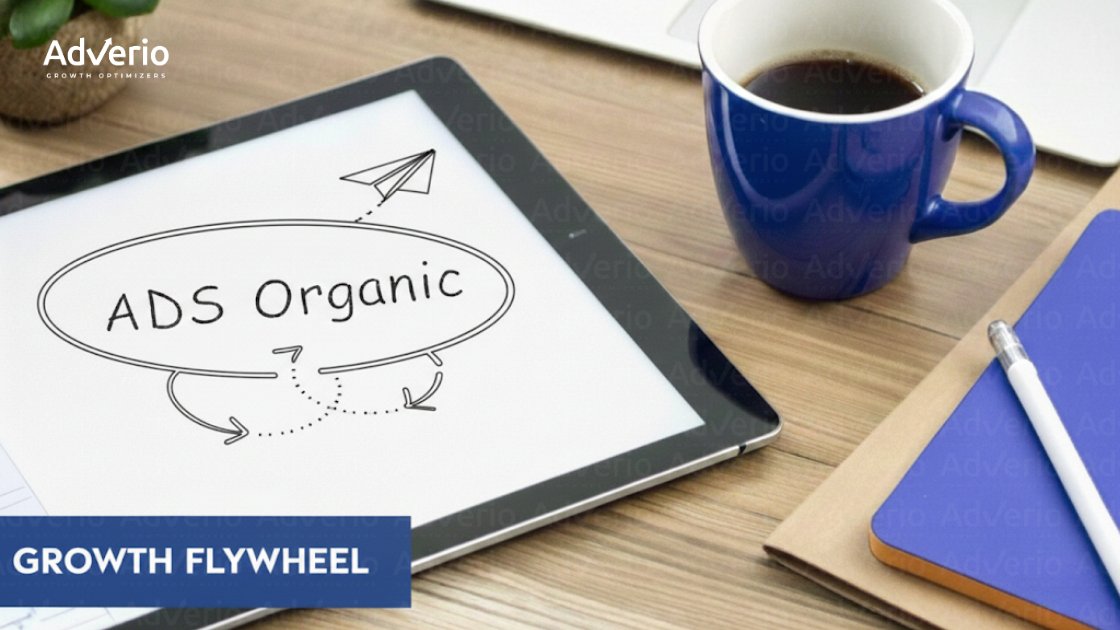
It’s time to kill the myth that paid and organic sales are two separate channels. That’s a limited mindset that throttles growth. The savviest brands treat them as a single, symbiotic system—a growth flywheel where each one makes the other stronger.
Think of paid ads as the initial push that gets a massive flywheel spinning. Once it gains momentum, it keeps turning on its own with far less effort.
How Paid Ads Fuel Organic Rankings
The logic is brutally simple: Amazon’s algorithm is obsessed with sales velocity. When you run a Sponsored Products campaign targeting a high-value keyword, every sale you generate through that ad is a direct signal to the algorithm. You’re telling Amazon, “For this specific keyword, my product converts.” As your sales velocity for that term picks up, your organic rank for it starts to climb.
This kicks off a powerful feedback loop. Once your organic rank hits page one, it starts capturing a huge share of sales on its own. At that point, you can strategically pull back your ad spend for that keyword, letting organic sales carry the weight.
This is how you methodically lower your Total Advertising Cost of Sales (TACoS). Your ads build the initial momentum, and your now-powerful organic rank sustains it, leading to a much more profitable business. This demands a deep understanding of advanced Amazon PPC optimization tips and best practices.
Turning Ad Data Into an SEO Weapon
Forget keyword tools for a second. Your ad campaigns are a goldmine of real-world market intelligence. The search term reports from your PPC campaigns show you the exact words customers are typing right before they buy.
Here’s how to use that intel:
- Find Your “Money” Keywords: Pinpoint the search terms with the highest conversion rates in your ad reports. Make sure they are front and center in your product title and bullets.
- Discover Hidden Gems: You’ll uncover long-tail keywords you would have missed. Weave these into your backend search terms and A+ Content.
- Validate Your SEO Hunches: Ad data helps you stop guessing and focus on the terms that actually drive revenue.
Achieving a Profitable Balance
The end game isn’t to stop spending on ads entirely. It’s to make every ad dollar work smarter by directly contributing to your organic foundation. You’re building an asset, not just renting traffic. A healthy balance between short-term growth and long-term margin is critical.
By treating paid and organic as a unified system, you break free from the expensive cycle of constantly buying traffic. Instead, you’re building a self-sustaining engine that drives profitable, long-term market share.
Stop Playing Whack-a-Mole and Start Building an Engine
A collection of disconnected tactics isn’t a growth plan. It’s a recipe for burnout. For established brands with large catalogs, the real challenge isn’t knowing what to do—it’s executing all of it, all at once, without watching margins evaporate.
Organic sales growth only compounds when it’s driven by a unified Amazon growth strategy across ads, listings, pricing, and inventory.
This is where brands hit a wall. They get trapped in a cycle of flat growth, unpredictable profits, and constant operational fires. This reactive, fragmented approach will never unlock the kind of growth you know your brand is capable of. To truly scale, you have to move from guesswork to a deliberate, unified strategy.
Adopting a Full-Funnel Mindset
Dominating a marketplace isn’t about being good at PPC or having great listings. It’s about building a holistic, profit-driven engine where every single lever—from advertising and listing optimization to inventory and pricing—works in perfect concert.
This philosophy is the bedrock of our proprietary Growth Cultivator framework at Adverio. We integrate complex strategies into a single, cohesive roadmap. Our dedicated pods of Growth Evangelists and Growth Optimizers become a true extension of your team, executing this plan with precision.
We go straight for the core issues that keep great brands stuck:
- Profit-Driven Catalog Optimization: We use advanced tools like our SKU Resurrection and LQS (Listing Quality Score) systems to surgically identify underperforming ASINs and turn them back into profit centers.
- Intelligent Growth Marketing: We blend PPC and DSP not just to chase sales, but to systematically build organic rank and drive down your Total Advertising Cost of Sales (TACoS).
- Holistic Marketplace Conversion Rate Optimization: We obsessively test every component of your presence on Amazon to turn your listings into ruthless conversion machines.
Stop settling for incremental gains. The path to reclaiming market share and achieving measurable, predictable growth is through a fully integrated, expert-led strategy.
If your organic sales are flat or declining, the issue is almost always structural, not tactical.
Book Your Free ROI Forecast and uncover where organic revenue is leaking across your catalog.
Frequently Asked Questions
We hear the same questions from brands trying to crack the code on organic Amazon sales. Here are the straight answers—no fluff, just what you need to know.
How Long Does Amazon SEO Take to Show Results?
There’s no magic number here, but don’t expect a win overnight. When you do a major on-page optimization, you can typically expect to see significant ranking improvements within 4–8 weeks.
It takes time. Amazon’s algorithm has to re-crawl your listing, gather new performance data, and confirm that your updates are actually making things better for the customer. For the high-volume terms that really move the needle, patience is part of the game.
Can I Grow Organic Sales Without Using Ads?
Technically, yes. But it’s like trying to build a fire without kindling—slow, frustrating, and unlikely to work.
Think of paid ads as the accelerator. They feed the algorithm the initial sales velocity it needs to see for your target keywords. That data signals relevance, which boosts your organic rank. The goal isn’t to run ads forever; it’s to use them strategically to get your organic flywheel spinning.
What Is a Good Unit Session Percentage on Amazon?
While benchmarks can vary wildly by category, a “good” Unit Session Percentage is one that’s getting better every month. For many categories, the average hovers around 12-15%.
The number itself isn’t the point. What matters is being better than your direct competitors. If your conversion rate is climbing and you’re stealing their market share, you’re winning. Plain and simple.
For a deeper dive into these and other common brand challenges, feel free to explore our full FAQ page for more expert answers.
Ready to stop guessing and start executing a deliberate, profit-focused growth strategy? At Adverio, we build the integrated systems that turn disconnected tactics into a powerful, self-sustaining sales engine.
Book Your Free ROI Forecast Today