































Amazon DSP Management

Amazon DSP Management

Used strategically to unlock incremental growth, never as a default spend layer

Built for brands with 10–1,000's of SKUs • Powered by Adverio BI (QRY-IQ, Profit Pulse, GMAP, AMOS)

Client LogoFytertech logoClient LogoClient LogoClient LogoClient LogoClient LogoClient LogoClient LogoClient LogoWildflower LogoMacnaught LogoMK Supplements LogoJS LogoHello Health LogoTea Zone LogoTelk Protek LogoCrazy Dog LogoKarat LogoLevtex Baby LogoQPS LogoClient LogoShoe Bond Logo

What Amazon DSP Actually Is (And Isn’t)

Amazon DSP is a programmatic advertising platform that targets shoppers based on purchase behavior — not keywords.

It allows brands to reach audiences both on and off Amazon using first-party data. Unlike Sponsored Ads, DSP does not capture demand — it extends proven demand.

DSP is:

  • Audience-based media buying
  • Dependent on existing conversion signals
  • Most effective after Sponsored Ads maturity

DSP is not:

  • A replacement for Sponsored Ads
  • A default growth channel
  • Effective without clean inputs
DSP only performs when there is something already working to amplify.

Why Most Brands Should Not Use Amazon DSP

(What Most Agencies Won’t Tell You)

Amazon DSP is powerful — but it’s not a default growth lever. For many brands, turning on DSP too early wastes budget, muddies attribution, and hides core performance issues. We’d rather tell you not to use DSP than sell something that won’t grow profit.

  • DSP is CPM-based and expensive without strong conversion economics
  • Attribution can be diluted across channels
  • Can cannibalize Sponsored Ads and organic sales
  • Requires large, stable audiences
  • Still spends when inventory is constrained
  • Can mask weak Sponsored Ads performance

The Most Common Amazon DSP Misconceptions

DSP underperformance is rarely caused by the platform itself.

DSP can replace Sponsored Ads
DSP is primarily an awareness tool
Increased reach guarantees growth
DSP attribution reflects true performance
When DSP is positioned incorrectly, spend increases and profits decrease.

When Amazon DSP Actually Works

Amazon DSP isn’t a default channel—it’s a growth lever that works best when a brand is truly ready for it. The strongest results come when these gating criteria are in place:

Sponsored Ads maturity (80–90+ percentile): Core PPC is already optimized, efficient, and scaled.

Stable inventory & forecasting discipline: Products stay in stock and demand planning is reliable.

Clear incrementality measurement framework: You can measure lift beyond last-click and track true incremental impact.

Budget tolerance for learning periods: You’re prepared for testing phases before efficiency stabilizes.

Defined use cases: Clear goals such as tentpole events, audience expansion, or retargeting—not “always-on” spend without purpose.

DSP is earned, not adopted.

The Data Requirements DSP Depends On

Amazon DSP is highly sensitive to data quality.

Effective DSP requires:

Efficient Sponsored Ads structure
Consistent ASIN-level conversion volume
Stable inventory and demand
Reliable audience signals
Without these inputs, DSP becomes expensive, attribution weakens, and scale becomes unprofitable.

DSP Is About Incrementality — Not Reach

DSP should be evaluated on what it adds, not how far it reaches. High impression volumes and blended ROAS can look impressive on paper, but often mask whether DSP is driving new demand or simply touching conversions that would have happened anyway.

Incrementality vs. blended ROAS

Blended metrics dilute the truth. The real question is whether DSP creates net-new sales beyond your existing channels.

Why impression-based attribution lies

View-throughs often over-credit DSP for conversions driven elsewhere. Visibility does not equal impact.

Measure what DSP adds

Focus on incremental lift, not total attributed revenue.

DSP must beat the baseline

DSP should outperform doing nothing or simply shifting spend to Sponsored Ads.

Adverio Incrementality Score (high level):
A simplified framework to evaluate whether DSP generates measurable lift versus a defined baseline — used to guide investment decisions.

If DSP isn’t incremental, it isn’t working.

How Incrementality Is Evaluated in DSP

DSP performance cannot be evaluated using last-click attribution alone.

Incrementality is measured by comparing results against a defined baseline — not blended channel performance.
If DSP does not generate conversions beyond what would have occurred without it, it is not incremental.
Reported ROAS without baseline comparison is incomplete.

How Adverio Actually Uses DSP

DSP is a controlled deployment channel — activated only when it has a clear strategic role and measurable upside.

01

Retargeting high-intent audiences

Re-engaging shoppers who already showed strong purchase signals.

02

Defending branded search

Protecting demand from competitor conquesting and leakage.

03

Select tentpole launches

Supporting Prime events, seasonal spikes, and major launches.

04

Incremental audience expansion

Scaling only after Sponsored Ads reach saturation.

DSP vs Sponsored Ads
(What Most Agencies Won’t Tell You)

Sponsored Ads First

Sponsored Ads unlock cheaper, faster wins for most brands. They capture active demand and drive efficient growth early.

DSP Comes Later

DSP is a layer after maturity, not before. It works best once Sponsored Ads are optimized and scaled.

The Industry Reality

Many DSP-style targeting features are now available inside Sponsored Ads, making premature DSP spend unnecessary.

What the DSP Engagement Actually Looks Like

A qualification-led engagement model where DSP is activated, validated, and scaled only when data supports it.

Qualification First

Readiness validation before any spend.

Incrementality Review

Expected lift evaluated pre-launch.

Selective AMC Use

Used only when scale supports action.

Pause if Lift Drops

Spend reduced when incrementality fades.

Remove if Margins Erode

Profitability overrides expansion.

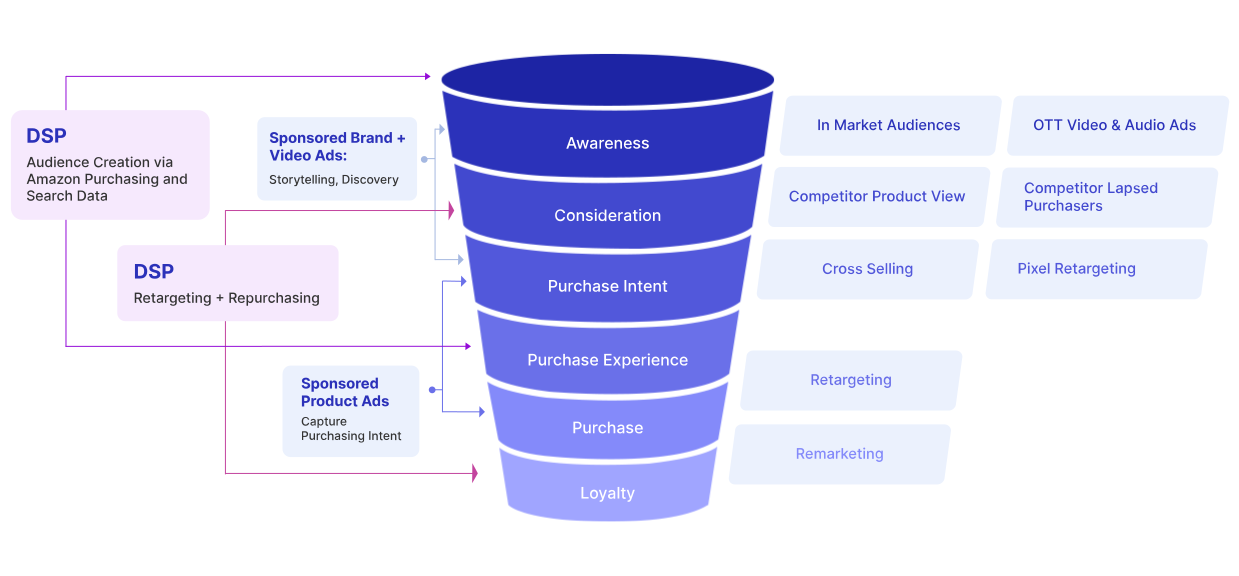
Full-Funnel Ad Strategy

Capture Your Shoppers’ Interest at Every Stage of Their Buying Journey.

Amazon DSP Success Stories

DSP is being strategically deployed after Sponsored Ads maturity to unlock incremental profit during key buyer events. Growth without the typical margin erosion, that's what DSP is supposed to unlock.

+1,119% Profit Surge in 51 Months

Product Category: Softlines > Home & Kitchen > Bedding

+32% Profit Gains in 4 Months

Product Category: Softlines > Apparel > Novelty Tees


Explore Case StudyAdverio Logo

Frequently Asked Questions

Is Amazon DSP worth it for small brands?
In most cases, no.
Amazon DSP performs best when a brand already has consistent conversion volume and mature Sponsored Ads data. For smaller or early-stage brands, DSP usually increases costs without delivering incremental lift.

There is no fixed “right” spend level.

DSP budgets should be based on testable incrementality, not minimums or arbitrary percentages. If DSP cannot outperform a defined baseline, increasing spend only compounds inefficiency.

No, Sponsored Ads capture high-intent demand. DSP extends and supports that demand using audience-based targeting. DSP only works when Sponsored Ads are already efficient and scaled.
No, While DSP can generate awareness, its real value comes from incremental conversion lift. When DSP is structured correctly, it supports revenue growth beyond what Sponsored Ads can achieve alone.
High CPMs usually indicate weak audience signals or premature DSP usage. When Sponsored Ads data is insufficient or audience targeting is too broad, DSP impressions become expensive and less effective.
DSP should be measured against a pre-defined baseline, not last-click attribution.
Incremental performance is evaluated by determining whether DSP generates conversions that would not have occurred without it.
DSP is not an instant-return channel. Initial tests typically focus on validation and measurement. Scaled results come only after DSP proves incremental value over time.
The most common reasons include:
– Launching DSP before Sponsored Ads maturity
– Using DSP as an always-on channel
– Measuring performance without a baseline
– Scaling spend before incrementality is proven
DSP failures are usually strategic, not technical.
No, DSP is most effective when activated during specific growth windows, product launches, or efficiency plateaus. Always-on DSP often leads to diminishing returns.
Yes, if misused.
Poorly structured DSP can cannibalize demand, distort attribution, and mask Sponsored Ads inefficiencies. When managed correctly, DSP complements Sponsored Ads rather than competing with them.
DSP is paused or reduced when incremental lift declines. If DSP no longer outperforms the baseline, continuing spend is no longer justified.

Start With Qualification — Not Spend

We’ll build your custom roadmap to higher profit.