






























Amazon PPC Management That Prioritizes Profit Over Vanity Metrics

Turn ad spend into growth you can trace. We budget from incrementality and scale inside guardrails that hold margin.

New

What Amazon PPC management covers

Amazon PPC management is the control of Sponsored Product, Brand, and Display campaigns. Bid architecture, query sculpting, negative keyword governance, budget allocation. All of it tied to one number, incremental profit. Managed well, every ad dollar either compounds organic rank or leaks margin. The difference is the order the work happens in.

PROFIT-FIRST GROWTH

Ads fixed out of sequence leave margin flat.

Tell us where and what you're selling, we'll show you where your spend is generating net-new growth, and what to fix next.

Loading form...

Bearded Brothers logo Vahdam logo SANS logo Mixology logo Adverio Amazon client brand logo Adverio Amazon client brand logo Adverio Amazon client brand logo Adverio Amazon client brand logo Adverio Amazon client brand logo Adverio Amazon client brand logo Adverio Amazon client brand logo Adverio Amazon client brand logo Adverio Amazon client brand logo Wildflower logo Macnaught logo MK Supplements logo JS Health logo Hello Health logo Karat Tea Zone logo Tekk-Protek logo Crazy Dog T-Shirts logo Karat logo Levtex Baby logo QPS logo Adverio Amazon client brand logo Shoe Bond logo FyterTech logo
Profit leaks

Where Amazon PPC spend leaks before it scales

Each one gets cleared before a bid gets touched.

Amazon's advertising revenue reached $56.2 billion in 2024, growing 18% year-over-year, according to Amazon's Q4 2024 earnings report. That scale means bid efficiency and profit governance are now direct revenue levers, not campaign hygiene.

01 Leak

Incrementality loss and query mismatch: when PPC spend defends instead of grows

Definition

Spend defending sales you'd win organically because campaigns bid on branded and high-rank terms without targeting net-new demand.

Fix

  • Shift qualified generics into PPC campaigns with incrementality targets.
  • Fund the SKUs where the spend appears to be generating net-new revenue, not defending sales already won.
  • Use QRY-IQ to identify when to push or hold based on organic rank and impression share by query class.

Amazon sellers spent an average of 14.7% of their total revenue on advertising in 2025, according to Marketplace Pulse's 2025 seller economics analysis. Without incrementality budgeting, that spend is partially defending sales you'd win anyway.

02 Leak

Conversion readiness gaps in your Amazon advertising strategy

Definition

Clicks don't convert because product pages aren't optimized to support your Amazon advertising strategy.

Fix

  • Optimize PDPs (CRO + SEO) before scaling ad spend.
  • Validate price-to-CVR elasticity for each SKU.
03 Leak

Keyword cannibalization and waste across PPC campaigns

Definition

Multiple PPC campaigns bidding on the same keywords, splitting data and raising CPCs.

Fix

  • Consolidate campaigns by intent and SKU.
  • Cut low-intent or duplicate spend to improve campaign management.

Average Amazon Sponsored Products CPCs increased 15% year-over-year in 2025, reaching an average of $1.85 per click across all categories, according to Teikametrics' 2025 Amazon Advertising Benchmark Report. Cannibalized campaigns accelerate that erosion.

04 Leak

Rank decay and ad waste from poor campaign management

Definition

Rankings drop even with high spend due to weak PDP signals or poor query selection.

Fix

  • Fund only queries justified by PDP readiness and rank velocity.
  • Pause campaigns when TACoS or CVR thresholds are exceeded.
05 Leak

Margin erosion via Buy Box instability in PPC management

Definition

Ads run on listings without stable Buy Box control, eroding margins and hurting overall PPC performance.

Fix

  • Enforce "No Box, No Boost."
  • Promote only when margin math supports sustained spend.

A healthy Amazon TACoS is generally considered to be below 10% for established brands with strong organic velocity, according to Pacvue's 2025 Amazon Advertising Benchmark Report. Adverio's guardrails are calibrated to protect that floor.

Map The Leak To A Fix
We work from the data you already have.

What our PPC work has actually produced

Adverio - BeyBerk 1

+407% Profit Gains in 25 Months

Product Category: Home & Kitchen

Explore Case StudyAmazon
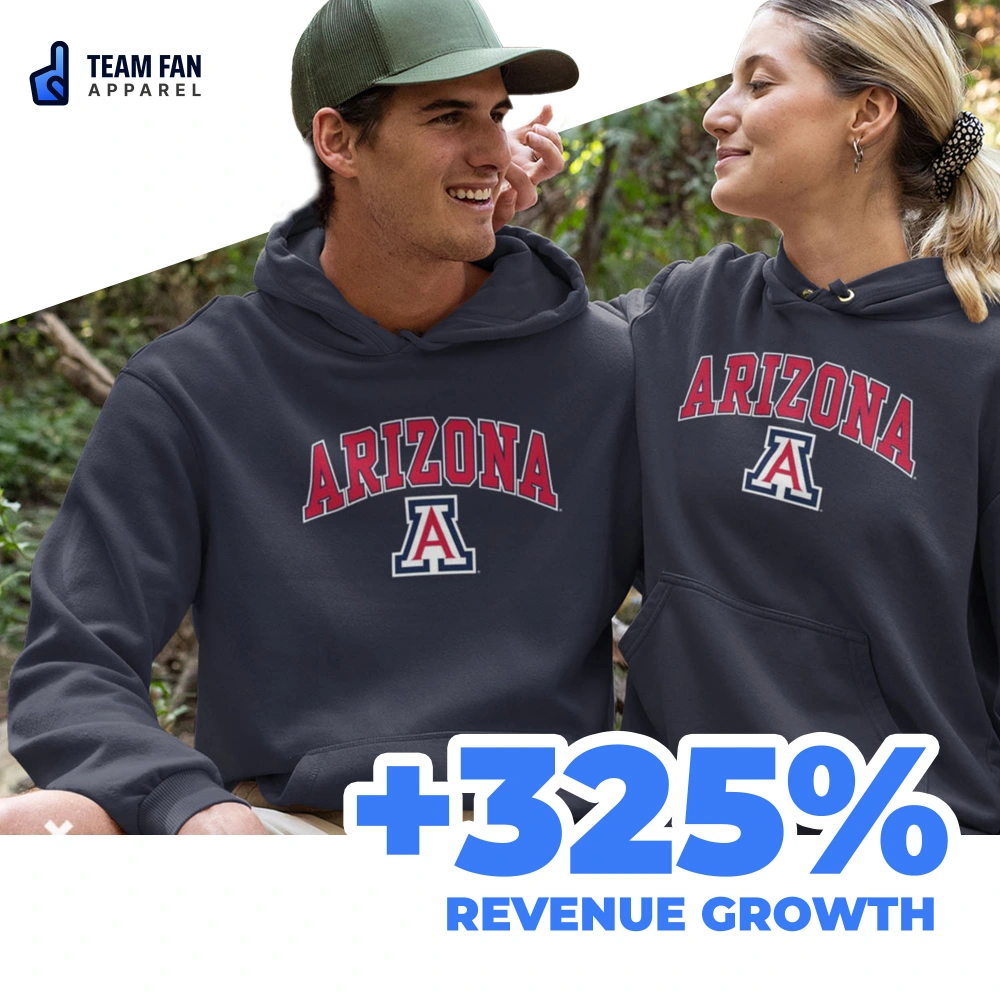
Adverio - Campus Colors Team Fan Apparel 2

Full-Catalog Acceleration in Just 6 Months

Product Category: Softlines > Clothing, Shoes, & Jewelry > Novelties

Explore Case StudyAmazon
Adverio - HemRid 1

+414% Profit Gains in 9 Months

Product Category: Health & Household > Health Care > Over-the-Counter Medication (OTC)

Explore Case StudyAmazon
Automated bidding

Why does automated bidding struggle in the weeks that matter most?

Nearly every provider on this page of results runs an automated bidding platform. The pitch is speed. The model reacts faster than a person and keeps adjusting as data accumulates. On a stable catalog with high volume and predictable demand, that is a fair claim and the automation earns its keep.

The problem is that the weeks worth managing are rarely stable ones.

Automated bidders weight recent performance heavily. That is what makes them responsive, and it is also what makes them wrong at the turns. A demand spike gets read as the new baseline, so bids climb into it. Then the spike passes and the model keeps paying elevated prices into demand that has already left the category.

Prime Day does it. So does a competitor stockout. The correction lags the event by long enough to matter, and the overspend does not show up on a ROAS chart in week one. It shows up in the month's margin.

We manage bids the other way around. Structure first, so the constraints that make spend inefficient are cleared before a bid is tuned. Then human judgment on the moments a model reads wrong, with guardrails calibrated to hold TACoS and conversion rather than chase the last seven days. That is not slower management. It is management that does not accelerate into a turn.

The playbook

How do we actually run an Amazon PPC account?

Eight steps, run in this order. Diagnosis starts at profitability, then traffic, then conversion, then average order value, then advertising.

01

Listing readiness first

Definition

Ads do not run behind a page that cannot convert.

Every listing score (LQS, LCS, LMS, LOS, LRS) reaches 8.0 out of 10 before a dollar of spend goes near it.

Do

Optimize titles, bullets, and A+ content for CRO and SEO. Score page readiness before launch, not after.

Don't

Fund a SKU whose page has not cleared the score.

02

Incrementality budgeting

Definition

Separate net-new sales from what you'd win anyway. Only fund incremental growth.

We shift from branded defense to high-intent generic queries with guardrails in place.

Do

Use incrementality metrics to allocate spend by lift. Apply guardrails to protect margin.

Don't

Measure success purely by ROAS without incremental context.

03

Query sculpting

Definition

Use smarter ad placements to cut CPCs while preserving performance.

We use underutilized ad types and placement combinations to harvest cheaper CPCs while holding scale.

Do

Deploy Autos and Category campaigns to balance CPCs. Continuously refine query match types and negatives.

Don't

Over-rely on Exact or ASIN-only targeting.

04

ASIN and category conquest

Definition

Capture competitor market share by targeting weak listings where your PDPs win.

We identify adjacent competitors with under-optimized PDPs and win placements at lower CPAs.

Do

Target competitor PDPs with lower conversion resistance. Use ASIN targeting to capture incremental buyers.

Don't

Spend on saturated categories with no differentiation.

05

Bidding and placement multipliers

Definition

Smarter controls that stop overspend and maintain efficiency.

We set thresholds and rules that pull back when TACoS rises or conversion dips below guardrails.

Do

Use rule-based automation for real-time bid control. Pause inefficient placements quickly.

Don't

Let automated bids run unchecked without profit monitoring.

06

Buy Box and price-to-CVR protection

Definition

Only promote when you control the Buy Box. Protect margins before clicks.

We enforce "No Box, No Boost" and layer price-elasticity checks to avoid margin-negative spend.

Do

Monitor Buy Box ownership before running ads. Adjust bids dynamically based on price competition.

Don't

Advertise on unstable ASINs or shared Buy Boxes.

07

Creative and storefront testing

Definition

Consistent A/B testing drives higher CTR and conversions across Sponsored Brands and Video.

We continuously test headlines, assets, and storefront flows to improve funnel conversion rates.

Do

Run creative tests for Sponsored Brands and Videos. Align storefront updates to audience behavior data.

Don't

Skip asset testing or reuse static creatives indefinitely.

08

DSP, once the pages are ready

Definition

Scale beyond search with full-funnel retargeting once PDP readiness is proven.

We launch DSP only after CRO and BI validation to maintain profitability through audience refinement and frequency caps.

Do

Use DSP to retarget and expand reach efficiently. Apply frequency caps and BI-driven segmentation.

Don't

Run DSP prematurely before PDP or campaign maturity.

AI shopping layer

What happens to PPC when buyers arrive through an AI assistant?

Search is no longer the only way a shopper reaches a product page. Alexa for Shopping (formerly Rufus) and Amazon's COSMO layer both sit between the buyer and the catalog, reading listings to decide what to surface and what to recommend.

That changes what page readiness means. A listing can be written well for a human, rank fine, convert fine, and still be difficult for an assistant to interpret, which narrows the demand your ads are bidding into. We score machine answerability as its own layer, inside step 01 rather than as something to revisit later.

Two approaches

Two ways to run the same budget

Decision Spend-led Profit-led
Who owns the number The campaign manager owns campaign metrics One operator owns blended profit across the account
What gets funded Whatever returns an acceptable ROAS Queries and SKUs where the revenue appears to be net-new
The number that governs ACoS, campaign by campaign TACoS and margin, account wide
How a losing SKU is handled Bid down until the metric looks acceptable Diagnose the constraint, fix it or stop funding it
What scaling means More spend More spend only where the last increment stayed profitable
What you see monthly Campaign performance Profit in context, with the next decision named
Free scorecard

Not ready for a conversation yet?

Run the five leaks against your own account first. The scorecard grades where listings and spend are losing to readiness, and you keep the result whether or not we ever speak. Brands usually find at least one leak they had not priced.

Score My Account
No call required.

Your Adverio Team

Operators, not order-takers.

One operator owns the outcome, with the full bench reachable behind them.

Your point of contact Brand Strategist

One operator owns your P&L, the roadmap, and the number you are measured on. Before your first strategy call they pull two years of account history and 90 days of advertising detail, then build the plan from your raw data rather than from a sales deck.

The person who builds the strategy is the person who runs the account.

We match your strategist to your catalog, your category, and the shelves you run, then name them at signature. That is why this seat carries a role instead of a headshot.

Amazon Walmart Target Plus

Marketplace specialists inform the plan for every shelf you run. The strategy stays one strategy. What changes by shelf is which levers exist to deliver it.

What that seat carries
Customer experience and conversion

What happens after the click. Detail page, offer posture, and the path from shelf to cart.

Search visibility

Organic rank and the terms your catalog is actually indexed for, not the ones you hoped for.

AI and agentic shopping

Whether an AI assistant quotes your listing when it decides what to add to a cart.

Catalog operations

Variations, flat files, inventory health, and the cases that keep listings live and indexed.

Creative and video

Copy, imagery, A+ content, and video across the listing and the storefront.

Margin recovery

Reimbursements owed back on fulfilled orders, plus carrier and freight overcharges.

Adverio leadership at the San Francisco operations summit

Your leadership team at our San Francisco operations summit.

Mike DanfordCSO and Co-founder
Saket GoenkaDirector of Operations
Alden WonnellCEO and Co-founder

San Francisco Operations Summit

Behind that seat sits the execution bench you can reach directly, covering advertising, copy, design, video, catalog, brand protection, freight, and reimbursements. You deal with one operator. You are never waiting on a queue to reach a specialist.

Advertising Specialist
Campaigns built to margin and TACoS.
Copywriter
Search-led detail page, mobile, and storefront copy.
Graphic Designer
Storefronts, A+ content, and detail pages.
Video Production
Listing, A+, Sponsored Brands, and storefront video.
Catalog Manager
Variations, flat files, inventory, and cases.
Brand Protection
IP and MAP, unauthorized sellers, policy review removals.
Carrier & Freight Recovery
Reviews contracts and recovers overcharges.
Reimbursements Specialist
Recovers reimbursements owed on fulfilled orders.

One team. Every lever. Built around your P&L.

Governance-first growth in practice.

Adverio - design shape1
Key systems

Key systems that power Amazon PPC campaign growth

01 Incrementality

Definition

Adverio's metric for measuring net-new growth, the sales that wouldn't have happened without ad spend.

Use

Determines which SKUs and PPC campaigns drive incremental revenue versus defended sales.

02 QRY-IQQuery Intelligence System

Definition

A proprietary system that monitors organic rank and impression share by query class to guide smarter Amazon PPC strategy.

Use

Identifies when to push or hold Amazon ads based on search intent, competitiveness, and opportunity windows.

03 GEARGrowth Efficiency and Advertising Ratio

Definition

A composite KPI blending CTR, CVR, CPC, AOV, refunds, and mix, helping evaluate advertising efficiency.

Use

Ranks which ad dollars are incremental to margin, scaling profitably, not just spending more on PPC campaigns.

04 Profit Pulse

Definition

Adverio's live P&L system by SKU, integrating ad spend, sales, fees, and freight in real time.

Use

Gives the operator and the finance team the same numbers to argue from.

05 Buy Box Stability and Price to CVR

Definition

Tracks Buy Box ownership and price elasticity to safeguard conversion rates across PPC management workflows.

Use

Stops spend reaching SKUs with an unstable Buy Box or margin-negative pricing.

These systems run together as one decision layer rather than five separate reports. That layer is our business intelligence stack, and every recommendation on your account comes out of it.

What you will see in 30, 60, and 90 days

30
Results
  • Waste cut, bloat trimmed, PDP readiness rising.
  • Query sculpting live. First Incrementality and GEAR lift signals.
  • Guardrails enforced, rank slide stabilized.
60
Results
  • Budget reallocated to qualified generics.
  • Conversion lift on prioritized PDPs, improved TACoS trend.
  • TACoS trend. First creative and storefront tests shipped. ASIN conquest warming up.

90
Results

  • Scaled spend where Incrementality and GEAR validate real growth.
  • Category share rising, efficiency held by guardrails.
  • Board-ready reporting with YoY growth in profit context.

Timelines are typical signals, not promises; complex catalogs and seasonality vary.

What you get every week and every month

Dedicated Strategic Brand Manager

Your brand is managed by a Strategic Marketing Manager and Ads Specialists with proven vertical expertise. No B-team.

Live Consults

Schedule strategy syncs and review sessions at your cadence, with Loom recaps and 1-business-day response times from your Adverio team.

24/7 Dashboard Access

Real-time visibility through our BI dashboard featuring Incrementality, Query IQ, GEAR, YoY trends, and Profit Pulse. Learn more

End-of-Month Digest

A concise monthly summary detailing targets vs. realized performance and the next-month growth plan, delivered straight to your inbox.

Working together

How this works best

This works best when someone on your side can say yes. Not yes to us, yes to a fix: approving a page change, holding a price, pausing a campaign that is technically profitable and strategically wrong. The accounts that stall are rarely the ones with bad data. They are the ones where every decision needs three people and a meeting.

The second thing that helps is honest cost inputs, landed cost and freight and returns included. We can work without them, and the first month becomes reconstruction instead of optimization.

If neither is in place yet, the first conversation is about sequence rather than spend, and that is a useful conversation to have.

FAQ · Seven questions

PPC Management, Frequently Asked Questions

Is this just another "PPC package"?

No. We budget from incrementality and scale with GEAR. If it won't grow profit, it won't make the plan.

Our ROAS looks fine. Why change anything?

Because ROAS can look healthy while margin erodes underneath it. A campaign defending sales you would have won anyway reports beautifully and adds nothing. We separate the two, then show where the next dollar is accretive.

Do you work with Vendor Central?

We partner with Seller Central brands. If that's you, you're in the right place.

How fast will we see movement?

Waste cuts and query sculpting show early signals in 14 to 30 days. Durable growth typically compounds over 60 to 90 days as PDP readiness and rank improve.

How does pricing work?

Flat rate or aligned revenue share. Either way the math comes first: you see what the engagement is expected to move, and what it would take to move it, before a dollar changes hands.

Do you use AI bidding tools?

No, and the section above explains why. The practical version: if your catalog is large, stable, and low variance, automation is a closer call than we make it sound, and we will say so on the call rather than sell you against it.

What has to be true before you scale spend?

Five constraints get cleared first: inventory health, unit economics, page readiness, offer reality, and return risk. Scaling spend past an unresolved constraint buys volume at a loss, so the sequence is not negotiable even when the pressure is to move faster.

Verified Reviews

Testimonials

Verified on Clutch, YouTube, and Upwork. Names and links included.

 Clutch reviews · 5.0 ★ 6 YouTube testimonials + Upwork reviews · 5.0 ★

Ready to stop guessing and start growing (profitably)?

Book the call, or grant read-only Seller Central access and we start from your numbers. Either way you see the math first.

Quick answer

If ad spend is efficient by campaign but margin is flat by month, the problem is sequence, not bidding. Clear the five constraints first. Inventory health, unit economics, page readiness, offer reality, return risk. Then fund the queries that appear to be bringing net-new demand, govern to TACoS rather than campaign ACoS, and hold guardrails through the weeks when demand spikes. The account that scales is the one where a single operator owns blended profit.

References

  1. Amazon Q4 2024 earnings report, Amazon Investor Relations. https://ir.aboutamazon.com/
  2. Marketplace Pulse, 2025 seller economics analysis. https://www.marketplacepulse.com/amazon
  3. Teikametrics, 2025 Amazon Advertising Benchmark Report. https://www.teikametrics.com/blog/amazon-advertising-benchmark-report/
  4. Pacvue, 2025 Amazon Advertising Benchmark Report. https://www.pacvue.com/resources/amazon-advertising-benchmark-report