Amazon Case Study

Crazy Dog Amazon Case Study: +99% Revenue Growth and +63% Profit in 27 Months

+99% Revenue +63% Profit 85,000+ SKUs 27 Months
The Snapshot

At a Glance

Brand Profile
  • Brand Crazy Dog T-Shirts
  • CEO Bill Kingston
  • Category Softlines, Clothing, Shoes and Jewelry, Novelties
  • Catalog 85,000+ SKUs
  • Marketplaces Amazon US, Amazon Canada, plus additional channels
  • Timeframe 27 Months
The Results
+99%
Revenue Growth
+63%
Profit Growth
+40%
Amazon US Growth
+480%
Amazon Canada Growth
Starting Condition: -40% YoY revenue decline, eroding market share.

Executive Summary

Crazy Dog T-Shirts was losing ground. Annual revenue had dropped 40% year over year, market share was slipping, and an 85,000-SKU catalog that should have been an asset was operating like dead weight. The brand had already tried to fix it. Multiple consultancies. Multiple ad managers. Hired and fired in sequence. None moved the number.

The problem was not effort or talent. It was the absence of a system. A catalog that large cannot be managed by applying one tactic across every product and hoping the average works out. Without SKU-level governance, spend chases the wrong products, margin leaks quietly, and a decline turns into a slide.

Adverio rebuilt the foundation. SKU-level profit triage to stop the bleeding. Profit-first campaign architecture with margin guardrails on every dollar. Cross-channel expansion once the US account was stable. Daily optimization loops that compounded month over month.

Within 6 months the double-digit decline was recovered. Over 27 months: +99% revenue, +63% profit. Amazon US grew 40%, Amazon Canada grew 480%. The catalog did not change. The system governing it did.

We used several other advertisers with no real results. With Adverio, we saw a huge revenue jump. It's been a perfect partnership for me.
Bill Kingston CEO, Crazy Dog T-Shirts

The Objective

  1. Reverse a -40% year-over-year revenue decline before it deepened
  2. Restore profitability across an 85,000-SKU catalog
  3. Stabilize and grow market share on Amazon US
  4. Extend proven performance into Amazon Canada and additional channels
  5. Build a system that compounds without constant intervention or another vendor swap

The Challenge

A 40% revenue drop is not a slow quarter. It is a system failure showing up in the numbers.

Crazy Dog had the demand and the catalog. 85,000+ SKUs across Softlines and Novelties. What it did not have was a structure capable of governing that many products profitably. When a catalog gets large enough, uniform management stops working. Some SKUs carry the margin to support aggressive investment. Others bleed budget on every click. Others need listing work before a single ad dollar makes sense. The previous approach was not making those distinctions, so spend spread thin and margin drifted outside any guardrail.

The hiring history made it worse. The brand had cycled through consultancies and ad managers, each one inheriting the last one's mess and adding a new layer of tactics on top. Activity went up. Results did not. That is the trap of treating a structural problem as an effort problem: you keep changing who is pulling the levers without ever asking whether the levers are connected to anything.

DIAGNOSIS: Not a product problem. Not a demand problem. A governance problem at catalog scale. 85,000 SKUs needed tiered, margin-gated management. The decline needed to be stopped before any growth play made sense. And the brand needed one system that held.

A 40% revenue decline on an 85,000-SKU catalog is not a market problem. It is a systems problem. If your brand has cycled through vendors and the number still will not move, the system is the constraint, not the people pulling the levers.

See My Catalog's Upside

15-minute diagnostic. No pitch deck.

Adverio's System: Decline Reversal and Profit-First Catalog Governance

01

SKU-Level Profit Triage

You cannot scale a catalog that is bleeding. The first job was triage. Map all 85,000+ SKUs by margin, conversion rate, and velocity. Find the products still earning their spend, the products quietly draining it, and the products that needed listing work before they deserved another dollar.

Spend got pulled off the losers and concentrated behind proven converters under strict margin control. This is the difference between managing a catalog and governing one. Management spreads budget evenly and reports an average. Governance makes every SKU earn its allocation. That single shift is what stopped the decline.

RESULT:The double-digit year-over-year decline was recovered within 6 months. Budget moved off products it could not return and onto products that could.

02

Profit-First Campaign Architecture

Stopping the decline buys you the right to grow. Growth without margin discipline just rebuilds the same problem at a higher spend level. So every campaign was rebuilt with margin guardrails set from launch. No budget increased without conversion confirmation. No SKU got scaled investment until the return math cleared.

The gap between the two headline numbers tells the story. Revenue grew 99%. Profit grew 63%. Profit growth that tracks alongside revenue does not happen by accident on a catalog this size. It happens when margin governance is built into the campaign structure instead of checked after the fact.

RESULT:Revenue scaled 99% while profit grew 63% across 27 months. Margin guardrails held at every expansion decision.

03

Cross-Channel Expansion

Once the US account was stable and profitable, the same governed system extended outward. Amazon Canada first, where the brand had latent demand and almost no structured presence. It grew 480%. From there the system reached additional channels, each running on its own budget and its own return thresholds.

The point of multi-channel expansion is compounding, not dilution. A channel that borrows budget and attention from the core account does not add value, it redistributes it. Each marketplace here was governed independently, so new channels added share instead of cannibalizing the account that funded them.

RESULT:Amazon US grew 40%. Amazon Canada grew 480%. Expansion compounded market share across multiple channels without diluting margin on the core account.

04

Iterative Daily Optimization

Multi-year growth on a large catalog does not come from quarterly reviews. It comes from daily decisions. Keyword harvest and negative match. Bid adjustments by placement and performance window. Budget pacing calibrated to where each SKU category converts most efficiently.

On 85,000+ SKUs, any single adjustment is small. The compounding effect over 27 months is not. The brand stopped needing to supervise the levers because the system ran the levers. Leadership ran the business.

RESULT:Daily optimization compounded into sustained month-over-month gains across an 85,000-SKU catalog and multiple channels over 27 months.

The Results

+99%
Revenue Growth · 27 months
+63%
Profit Growth · 27 months
+40%
Amazon US Growth
+480%
Amazon Canada Growth

Decline Recovered

Double-digit YoY loss reversed within 6 months

Catalog Governed

85,000+ SKUs tiered by margin, conversion, and velocity

Revenue Growth: +99% over 27 months. A 40% year-over-year decline reversed into sustained, compounding growth.

Profit Growth: +63% over 27 months. Profit scaled alongside revenue because margin guardrails held at every expansion decision.

Amazon Canada Growth: +480%. A near-dormant channel turned into a major contributor once the governed US system was extended to it.

Decline Recovered Within 6 Months. The double-digit YoY loss was stopped and reversed inside the first half-year, before any aggressive scaling play.

Structural Recovery Result

Moved from a -40% YoY decline and eroding share to +99% revenue, +63% profit, and a governed multi-channel program across Amazon US, Amazon Canada, and additional channels in 27 months.

This was not a campaign tune-up. The system was replaced. Tiered SKU governance, margin-gated campaigns, and independent channel control took over from uniform spend and vendor churn.

The Lesson (For Operators)

An 85,000-SKU catalog is an asset. It is also a liability if the system governing it cannot keep pace with its size.

Crazy Dog had the brand, the demand, and the catalog. What it did not have, through multiple consultancies and ad managers, was a system that could govern 85,000 products by margin data instead of averaging them together. The decline was the symptom. The missing system was the cause.

Here is the part operators miss. The brand kept changing who pulled the levers. New consultancy, new ad manager, new tactics. None of it worked, because the problem was never the operator. It was the absence of structure underneath the operator. You can hire the best driver in the world, but if the car has no transmission, you are still not moving.

The number worth sitting with is +63% profit on +99% revenue. Any vendor can manufacture topline growth by spending more. A governed system grows revenue and protects margin at the same time. That is the difference between a business that gets bigger and one that gets stronger.

If your brand has cycled through vendors and the number still will not move, the question is not who to hire next. It is whether anyone has built the system the catalog actually needs.

The Verdict

Crazy Dog had the catalog, the brand, and the demand. What it was missing was a system that could govern 85,000 SKUs profitably and a partner that would stay long enough to build one.

Adverio replaced the system: SKU-level triage to stop the decline, margin-gated campaign architecture, independent channel governance, daily optimization across 85,000+ SKUs and multiple marketplaces.

+99% revenue. +63% profit. 27 months. A 40% decline reversed inside the first 6.

The catalog was always capable of this.

Audit My Amazon Catalog

If your brand has a large catalog, a number heading the wrong way, and a history of vendors who could not move it, we will show you where the system is the constraint and what a governed approach would produce.

Free diagnostic. We either find the leak or confirm you are already governed.

Frequently Asked Questions

How do you reverse a 40% year-over-year revenue decline on Amazon?

You stop the bleeding before you scale. The first move is SKU-level triage across the catalog: identify which products still convert, which are draining budget, and where margin is leaking. Spend gets pulled off the losers and concentrated behind proven converters under strict margin guardrails. For Crazy Dog, that sequence recovered the double-digit decline within 6 months and compounded into 99% revenue growth and 63% profit growth over 27 months.

How do you manage advertising profitably across an 85,000-SKU catalog?

Not by treating every SKU the same. A catalog that size needs tiered governance. High-margin, high-velocity SKUs get scaled investment. Underperformers get listing work before any spend expands on them. Budget concentrates where the math supports it, not where it has historically sat. On 85,000+ SKUs that discipline is why profit grew 63% alongside 99% revenue instead of getting diluted by topline growth.

Why did Crazy Dog expand to Amazon Canada and other channels?

Because the demand was already there and the catalog could support it. Once the US account was stabilized and profitable, the same governed system was extended to Amazon Canada, which grew 480%, then to additional channels. Each marketplace ran on its own budget and its own return thresholds, so expansion compounded share instead of diluting margin on the account that funded it.

Similar Challenges and Results

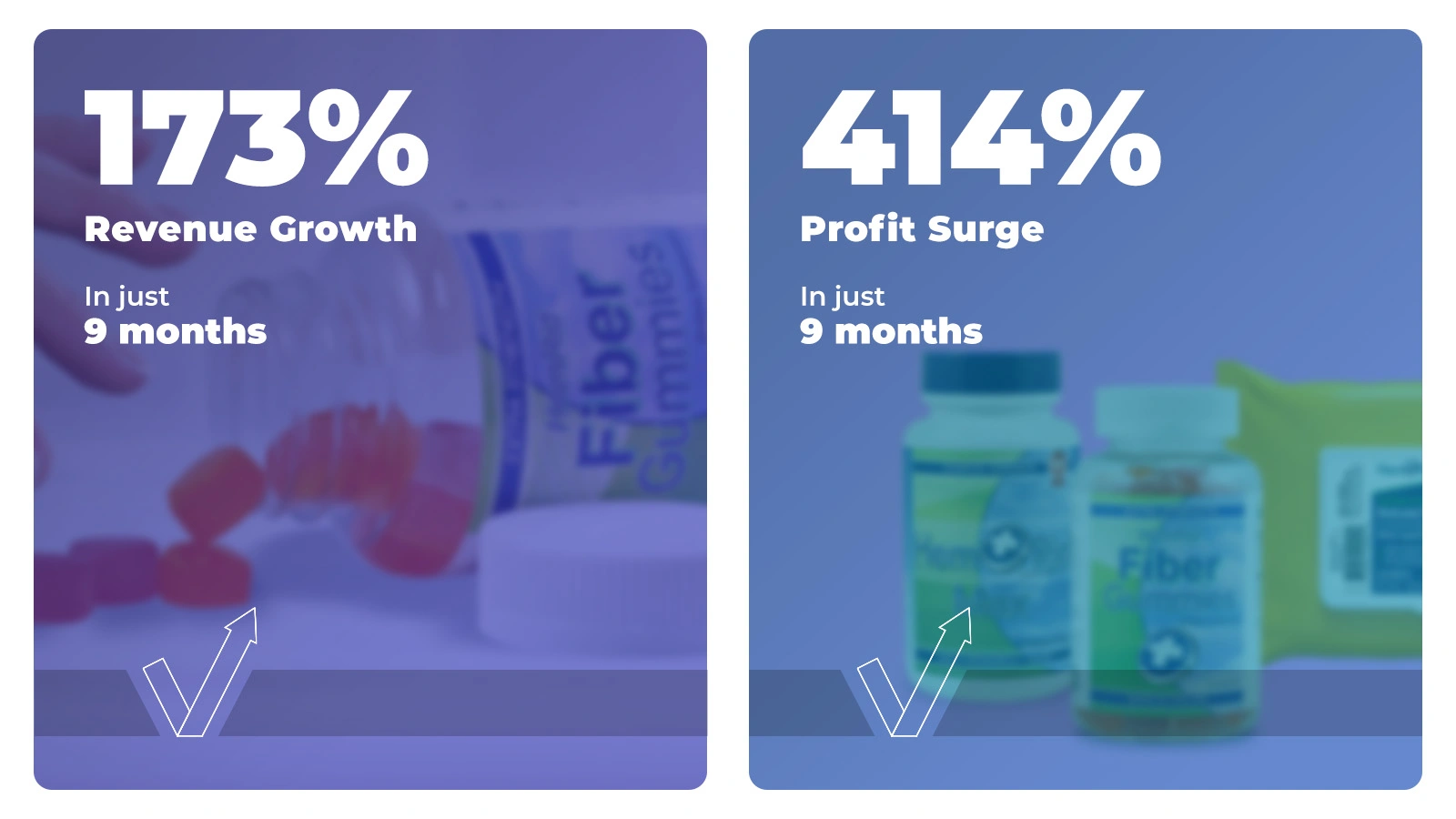
HemRid Amazon case study: +173% revenue growth and +414% profit in 9 months

+173% Revenue Growth and +414% Profit Gains in 9 Months

Product Category: Health & Household > Health Care > Over-the-Counter Medication (OTC)

Explore Case Study
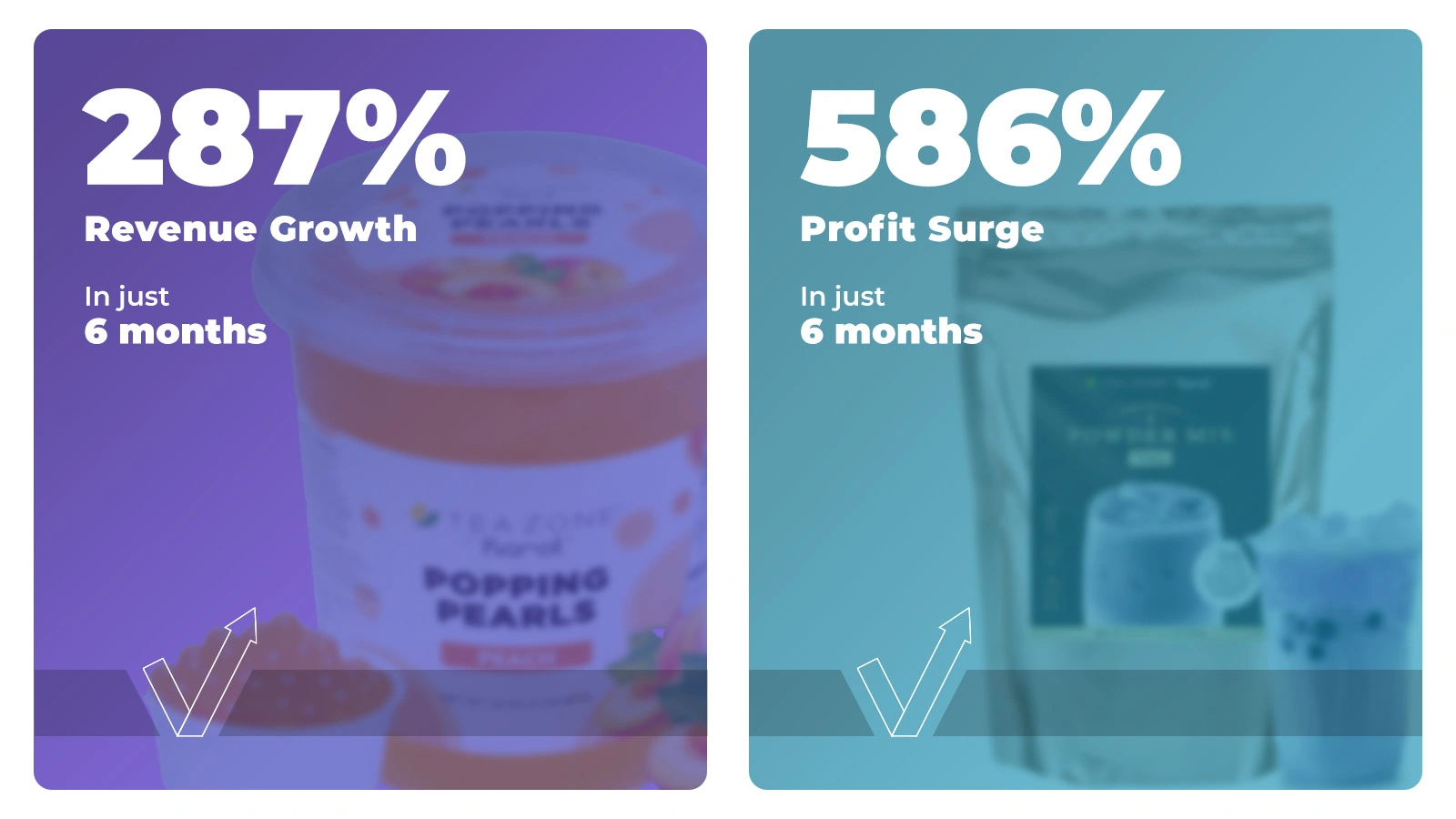
Karat Tea Zone Walmart case study, 287% revenue and 586% profit in 6 months
Adverio - karat transparent.png

+287% Revenue Growth and +586% Profit Gains in 6 Months

Product Category: Grocery & Gourmet Food + Health & Household Supplies


Explore Case Study
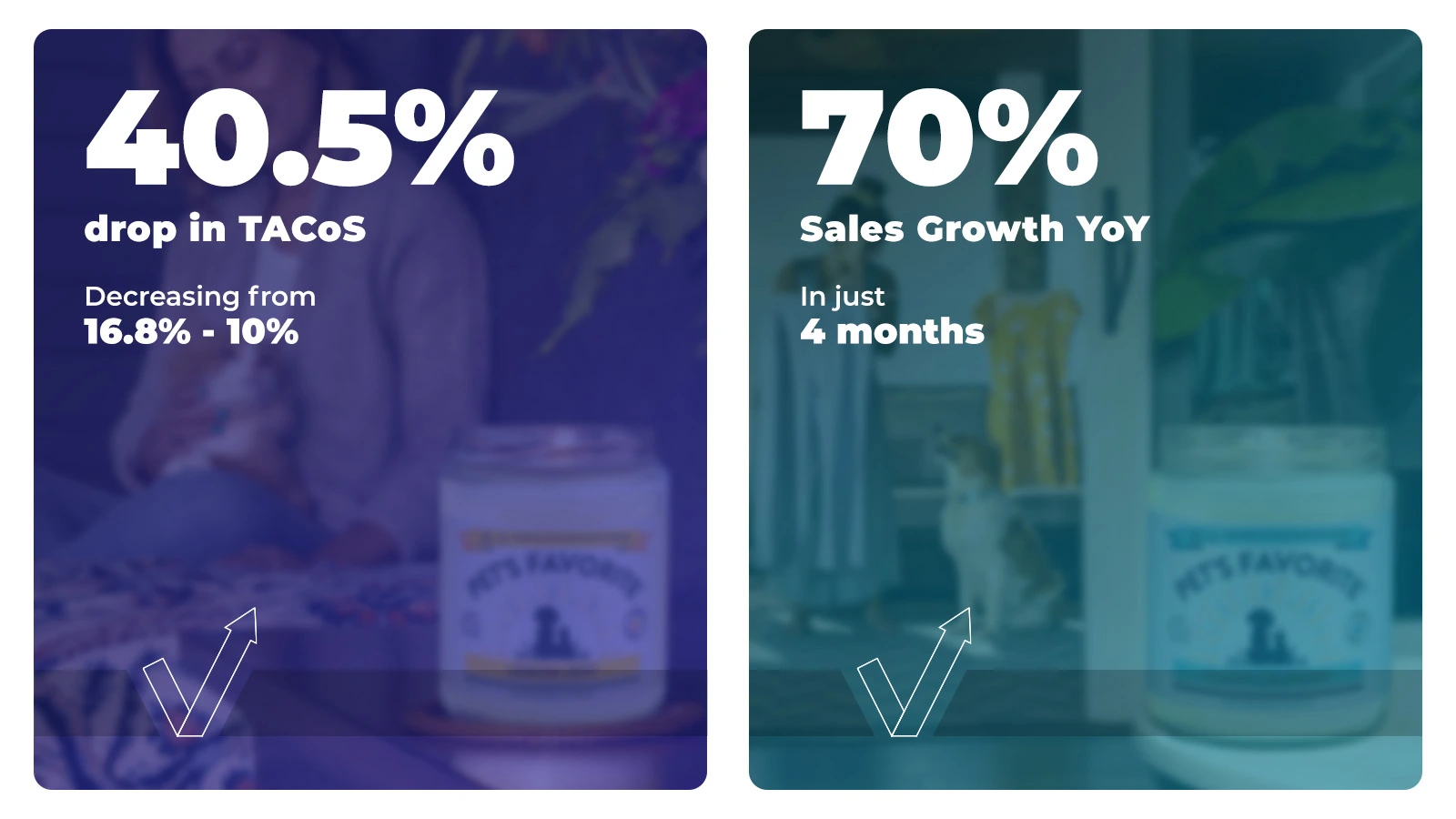
Pets Favorite
Adverio - 7.png

Profitability With 70% Sales Growth YoY - TACoS Dropped to 10% From 16.8%

Product Category: Home & Kitchen > Pet Supplies

Explore Case Study

Ready to Stop Guessing and Start Growing?

We’ll build your custom roadmap to higher profit.